Fast shipping from China is often treated like a carrier problem. Pick DHL instead of a postal line, pay more, and job done. Right?
Well, sometimes. But not usually.
A parcel can fly from Shenzhen to Los Angeles in a day and still reach the customer two weeks later. It may sit at the supplier. Then it waits for warehouse receiving. It misses the daily manifest. Customs asks for a better product description. The local carrier gets an incomplete apartment number. Suddenly the “fast” service is not fast at all.
That is the awkward truth about international delivery: the aircraft is only one part of the clock.
For ecommerce sellers, the useful measure is order-to-door time. It starts when the customer places an order and ends when the parcel is delivered. It includes order processing, picking, packing, export handover, international transit, customs, last mile, and any failed delivery attempt.
This matters commercially. DHL’s
2026 E-Commerce Trends Report surveyed 29,000 shoppers and 5,800 ecommerce businesses across 29 countries. It found that trust and choice of delivery partners matter to seven in ten shoppers. In DHL's
US shopper findings, 66% said they abandon purchases when the delivery offer does not meet expectations, while 62% cited unexpected customs or tax charges.
So, yes, speed matters. Predictability matters too. A reliable eight-day service can be better than a “three-to-seven-day” route that turns into 18 days every other week.
This guide shows how to improve delivery speed when shipping from China without throwing express money at every order. We will find the slow stage first, then fix it.
Delivery Speed from China Is a Chain of Separate Clocks
Google Merchant Center describes overall delivery speed using handling time plus transit time. Its
carrier-based delivery speed guidance also considers warehouse location, customer location, and carrier data.
That is a good starting point, but cross-border delivery needs a few more clocks:
Supplier readiness: Is the product actually finished, labeled, and released?
Inbound time: How long does it take to reach and enter the fulfillment warehouse?
Order handling: How long from paid order to packed parcel?
Carrier handover: Does the parcel leave the same day or wait for the next collection?
Export and line haul: How quickly does it leave China and reach the destination country?
Customs clearance: Is the data complete before arrival?
Last-mile delivery: How many hubs and carrier handoffs remain?
Exception recovery: What happens when an address, duty payment, or delivery attempt fails?
Think of it like a relay race. Buying a faster aircraft is hiring one very quick runner. Nice. But if the baton sits on a table for two days before the runner arrives, the overall race is still slow.
Transit Time Is Not the Same as Order-to-Door Time
This small distinction causes a lot of unhappy customers.
A quote may show “5-8 days.” Ask what the count includes. Is it business days or calendar days? Does it start at warehouse collection, flight departure, or destination customs release? Does it include remote-area delivery? Is the estimate an average, a range, or a service commitment?
A cleaner delivery promise looks like this:
Order handling: 0-1 business day + carrier delivery: 6-9 business days = estimated delivery: 6-10 business days
That is less flashy than “ships in 6 days,” but it is honest. Honest dates convert better than vague speed once a brand has reviews and repeat customers.
Diagnose Why Shipping from China Is Slow Before Changing Carriers
Do not begin with, “Which carrier should we use?” Begin with, “Where did the last 100 late orders lose time?”
Pull tracking and warehouse data. Mark the date and time for these events:
Order paid
Order imported into the warehouse system
Picking started
Parcel packed
Label created
Carrier collected
Export accepted
International departure
Destination arrival
Customs released
Last-mile received
Out for delivery
Delivered
Then calculate the time between milestones. The longest or least predictable gap is the first target.
|
Tracking Pattern
|
Likely Bottleneck
|
First Action
|
|
Label created, no collection scan
|
Warehouse cutoff or carrier pickup
|
Review pack-complete time and pickup schedule
|
|
Several days before export departure
|
Consolidation or flight allocation
|
Ask about dispatch frequency and rollover rate
|
|
Long gap after destination arrival
|
Customs data, duty, or inspection
|
Audit declarations and importer information
|
|
Customs released, then little movement
|
Injection or last-mile handoff
|
Compare destination partners and induction hubs
|
|
Out for delivery, then failed
|
Address, access, or customer availability
|
Validate addresses and send delivery alerts
|
|
Only some SKUs are late
|
Inventory, packing, or product restrictions
|
Review SKU-level fulfillment and route rules
|
Measure the Median and the Bad Tail
Average delivery time hides pain. Nine parcels arriving in six days and one arriving in 36 days produce a 9-day average. The average sounds fine. That tenth customer is not fine.
Track at least:
Median order-to-door time
90th percentile delivery time
On-time delivery rate
Paid-order-to-carrier-scan time
Customs hold rate
First-attempt delivery success
Orders with no tracking update for more than 48 or 72 hours
The 90th percentile is useful. It tells you how long almost all orders take, not just the lucky middle.
Segment the Data Before Drawing Conclusions
Split results by destination country, postcode zone, route, weight band, product type, warehouse, and order date. A line that works well to Germany may perform poorly in Greece. A route that handles apparel may reject perfume or a loose battery.
Also separate normal weeks from Black Friday, Christmas, and Lunar New Year. Shopify’s
cross-border fulfillment guide notes that peak seasons can add 10-15 days and gives an example of 7-12-day delivery stretching beyond 20 days.
One blended number will not show any of that. It is a soup. Not very useful soup, either.
Choose the Fastest Shipping Method That Fits the Order
Express courier is usually the fastest mainstream option for small shipments. It is not automatically the best option for every ecommerce order. A USD 12 phone case cannot carry a USD 30 courier charge forever.
The smart approach is route segmentation. Give each order a shipping method based on destination, product eligibility, weight, value, promised date, and margin.
|
Method
|
Planning Range
|
Good Fit
|
Common Time Leak
|
|
Express courier
|
2-7 business days
|
Urgent, small, high-value orders
|
Customs query or remote-area delivery
|
|
Premium ecommerce line
|
5-12 business days
|
Regular B2C parcels on strong lanes
|
Flight rollover or last-mile handoff
|
|
Tracked economy or postal
|
10-30+ business days
|
Low-value, non-urgent goods
|
Batching, tracking gaps, low-priority induction
|
|
Air freight plus local delivery
|
5-14 days door to door
|
Restocking and medium cargo
|
Airport handling and broker coordination
|
|
China-Europe rail
|
15-25+ days
|
European replenishment between air and sea
|
Terminal and border transfers
|
|
FCL sea freight
|
3-7 weeks door to door
|
Large, planned replenishment
|
Sailing schedule, port, and inland truck
|
|
LCL sea freight
|
4-8+ weeks door to door
|
Smaller non-urgent bulk cargo
|
Origin consolidation and destination deconsolidation
|
These are planning ranges, not promises. Routes, seasons, destinations, product types, and customs status change actual results. Always compare quotes on the same basis: door to door, same postcode, same packed dimensions, same duties arrangement, and the same start date.
Use Express Courier Where Time Has a Real Financial Value
DHL, FedEx, UPS, and similar express networks make sense when delay costs more than the upgrade.
Good examples include:
Product samples holding up a launch
Replacement parts for an angry customer
High-value electronics with enough margin
A stockout that would stop marketplace sales
Documents or components needed for production
Here is a simple example. A brand sells 30 units a day with USD 18 contribution margin per unit. A five-day stockout risks USD 2,700 in contribution margin before ad disruption and ranking loss. Paying an extra USD 500 to airfreight replenishment is not “expensive shipping.” It is the cheaper business decision.
Use Ecommerce Lines for Repeat B2C Lanes
Dedicated ecommerce lines consolidate parcels in China, move them by air, clear them in batches, and inject them into a local delivery network. On a strong lane, this can offer a useful middle ground between postal and express.
Ask more than the headline time:
How many departures run each week?
Which airport or hub receives the parcels?
Who performs customs clearance?
Which carrier handles the last mile?
Does tracking use one number end to end?
What percentage of parcels meet the quoted range?
What happens to an undeliverable parcel?
The carrier name at the final mile can matter as much as the plane leaving China.
Use Air, Rail, and Sea for Inventory Replenishment
For bulk stock, delivery speed is tied to inventory planning. Air freight can rescue a stockout. Rail can be a middle option for parts of Europe. Sea freight protects unit economics when forecasts are stable.
Do not force one mode to carry the full forecast. Split a purchase order if needed. Send enough by air to cover the gap, then move the balance by sea. It is the logistics version of using a taxi to catch up with the bus. A bit clunky, yes, but often sensible.
Cut China Warehouse Handling Time Before the Parcel Moves
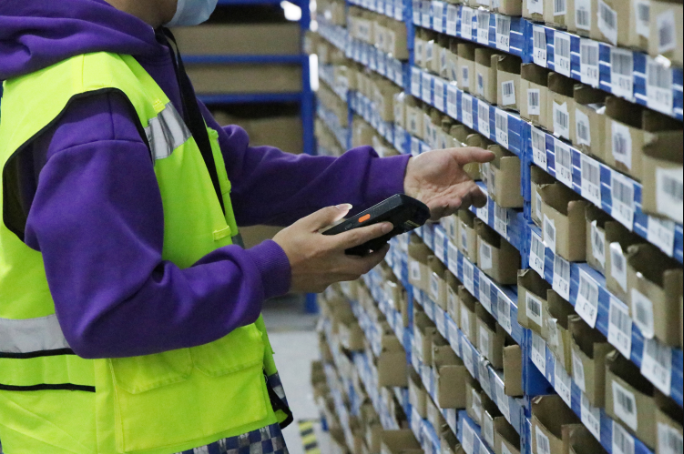
A seller can buy a six-day route and lose three days before collection. That is where a capable China fulfillment operation earns its keep.
Put Inventory Near Suppliers and Export Hubs
Warehouse location affects inbound speed, carrier collections, and access to export capacity. A Shenzhen-area warehouse is close to manufacturing clusters in Shenzhen, Dongguan, Guangzhou, and the wider Pearl River Delta. It also has access to South China air cargo and cross-border logistics networks.
That does not mean Shenzhen is best for every seller. A brand sourcing from Yiwu, Ningbo, Shanghai, or northern China should compare domestic pickup time, supplier concentration, route options, and warehouse service levels. Still, proximity removes waiting. A two-hour factory transfer is easier to control than a three-day domestic journey.
Set a Real Same-Day Dispatch Cutoff
“Same-day shipping” needs a timestamp and conditions. For example:
Paid, in-stock, approved orders received before 12:00 China Standard Time ship the same business day, except restricted products or orders requiring manual review.
The cutoff must leave time for order import, fraud review, picking, packing, carrier label generation, manifest close, and collection. A 5:00 p.m. promise with a 4:30 p.m. carrier pickup is basically decorative.
Track the percentage of eligible orders handed to the carrier on time. If the warehouse says 98%, ask how eligibility is defined. Sometimes the denominator has been on a diet.
Sync Orders Automatically
Manual CSV uploads create delay and missed orders. Connect Shopify, WooCommerce, marketplaces, or an order management system to the warehouse through an app, API, or scheduled order sync.
Automation should send:
Order and payment status
SKU and quantity
Shipping address and contact data
Selected delivery service
Product or customs data where supported
Cancellation and address-change status
The warehouse should return inventory, fulfillment status, carrier, and tracking number. WordPress sellers can use the workflow in this guide to
WooCommerce fulfillment from China.
Pre-Approve Packing Rules
If staff must ask how to pack every unusual order, the queue grows. Define rules for single-item orders, mixed baskets, fragile products, liquids, batteries, bundles, inserts, gift notes, and branded packaging.
Use the warehouse’s
pick and pack service to standardize scanning and packing. For more complex work,
value-added services can cover labeling, kitting, inspection, or repacking before the order rush begins.
Keep Inventory Accurate Enough to Promise Speed
Fast shipping cannot begin with missing stock. Barcode receiving, bin-level inventory, pick scans, cycle counts, and clear stock statuses reduce time wasted searching for units.
Separate available, reserved, QC hold, damaged, returned, and compliance-hold stock. The storefront should only promise inventory that can actually ship.
DHL’s 2026 US shopper findings reported that 68% abandoned purchases because products were out of stock or unavailable. Inventory accuracy is not just a warehouse metric. It sits right in the conversion funnel.
Speed Up Supplier-to-Warehouse Movement in China
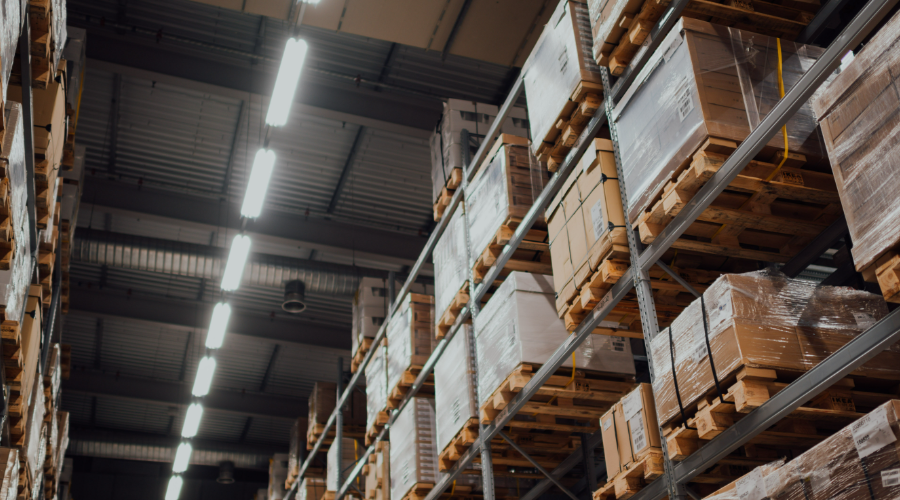
Some “shipping delays” happen before the fulfillment provider ever sees the goods.
Ask for a Goods-Ready Date, Not a Hopeful Ship Date
A supplier’s “ship date” may mean production complete, packed, waiting for balance payment, or collected by a domestic courier. Those are different milestones.
Confirm:
Production completion date
QC date
Labeling and packing completion
Carton count and dimensions
Pickup date
Warehouse delivery appointment
For launches, add a buffer between production and the public delivery promise. If there is no time for inspection or rework, there is no real plan. There is just optimism wearing a hard hat.
Consolidate Without Creating a Waiting Room
Combining goods from several suppliers can reduce shipping cost and simplify international dispatch. It can also make every item wait for the slowest factory.
Set a consolidation deadline. If one low-value component is late, decide whether to ship the ready products, replace the component, or upgrade its domestic delivery. Do not let a USD 0.30 insert hold a USD 20,000 launch hostage.
Move Inspection Upstream
Check high-risk products before they enter sellable inventory. Waiting until order packing to discover a wrong barcode or plug type slows individual orders and creates cancellations.
Inbound QC can verify quantity, variant, packaging, barcode, visible condition, component count, and basic function under an agreed sampling plan. Complex product testing still belongs with a qualified inspection or laboratory process.
Reduce Customs Delays with Better Data Before Departure
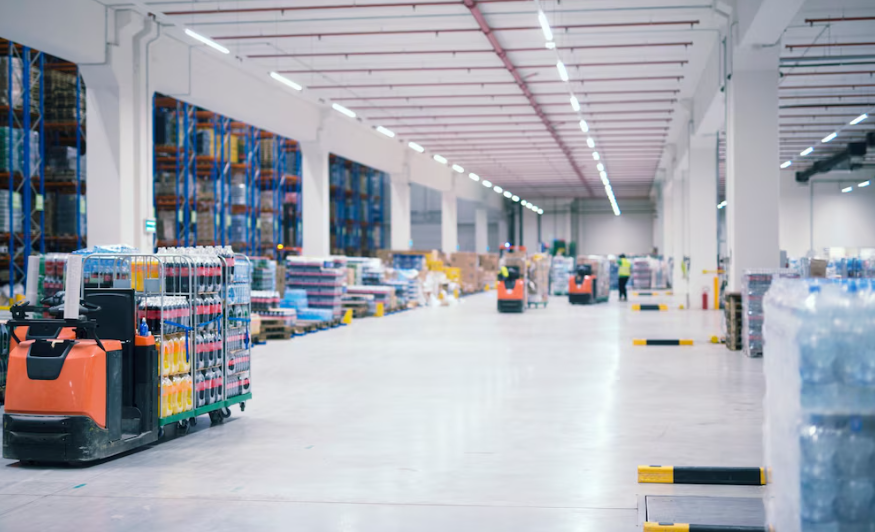
Customs clearance is not completely controllable. Inspections happen. Rules change. Authorities can ask questions. But many slowdowns are avoidable because they begin with vague or mismatched data.
Use Specific Product Descriptions and Defensible HS Codes
“Accessories,” “gift,” “sample,” and “parts” are poor customs descriptions. They do not tell an officer what the goods are.
Use plain descriptions such as:
Cotton men’s T-shirt
Plastic mobile phone case
Stainless-steel pet feeding bowl
USB-powered LED desk lamp
Replacement silicone watch strap
The description, HS code, value, weight, quantity, origin, and sales invoice should tell the same story. The
World Customs Organization’s Harmonized System provides the international six-digit framework used for product classification. Destination countries may add more digits, so the importer or customs adviser should confirm the final code.
Do not undervalue goods to “make customs faster.” It can do the opposite. A value that looks unrealistic may trigger a query, reassessment, penalty, or seizure.
Prepare Customs Information Before the Parcel Arrives
Pre-arrival processing lets customs authorities assess information before the goods physically arrive. The WCO explains in its work on
pre-arrival processing and customs performance that advance data can support faster clearance. In the cited Montenegro express-cargo project, the system enabled parcels to be cleared within one hour of arrival.
The lesson is simple: customs speed starts with data speed.
Send complete electronic data before departure where the route and destination support it. Depending on the shipment, this may include:
Commercial invoice
Packing list
Accurate item descriptions
HS codes
Declared values and currency
Country of origin
Exporter and importer details
Tax, VAT, EORI, or importer identifiers
Product permits or certificates
Battery or dangerous-goods information
Choose DDP or DAP Deliberately
Under DAP, the seller delivers to the named place, but the buyer normally handles import duties, taxes, and import clearance responsibilities under the agreed arrangement. Under DDP, the seller takes on more import responsibility, including duties and taxes.
The
ICC Incoterms rules define cost and risk responsibilities. They do not guarantee a transit time. A badly arranged DDP shipment can still be slow. A well-prepared DAP shipment can clear quickly if the importer responds at once.
For ecommerce, surprise payment requests often cause delay because customers ignore messages or refuse the parcel. A compliant DDP-style delivery setup can reduce that friction when the seller has the right importer and tax process. Read
what ecommerce sellers need to know about DDP shipping from China before treating DDP as a label you can simply tick.
Keep Product Compliance Ready
Faster transport does not bypass product rules. Electronics, wireless devices, cosmetics, food, pet products, children’s goods, medical products, batteries, and products with animal or plant materials may need extra documents or specific routes.
If a product requires a report, registration, responsible person, ingredient file, safety data sheet, or import permit, prepare it before launch. The slowest time to discover a missing document is after the customer has started checking tracking every morning.
Use Packaging Materials That Move Through the Network Cleanly
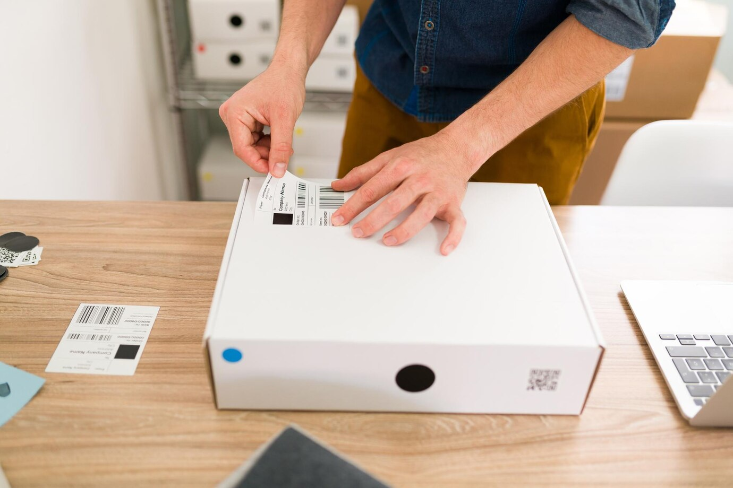
Packaging affects delivery speed in quiet ways. It determines whether a parcel fits an accepted service, survives automated sorting, keeps its label readable, and avoids manual handling.
Right-Size the Parcel
Carriers often bill the greater of actual weight and dimensional weight. Large, light parcels cost more and may fall outside automated-sort limits. A smaller package can qualify for a faster or cheaper route.
Use the smallest safe mailer or carton. Remove empty retail space where the brand allows it. Nest products. Compress soft goods only after checking that they recover properly. The available
packing materials should be selected by product risk, route, and packed dimensions rather than looks alone.
This is a bit like taking a sofa onto a crowded train. Even if it weighs less than a person, it is still awkward. Networks charge for awkward.
Protect Labels and Barcodes
Place the shipping label on a flat surface. Do not wrap it around an edge. Keep tape, straps, and reflective packaging away from the barcode. Remove or cover old labels when reusing a carton.
Thermal labels need enough print contrast to survive several hubs. A parcel with an unreadable barcode may leave the automated line and enter a manual queue. That is a tiny printing problem with a surprisingly large time cost.
Match Protection to the Route
Express does not mean gentle. Ecommerce parcels can pass through many conveyors, bags, cages, aircraft containers, and local vans.
Use crush-resistant cartons for fragile products, sealed secondary bags for liquids, terminal protection for batteries, and internal dividers for items that can hit each other. Test the finished parcel, not only the factory box.
Damage creates the slowest delivery of all: a replacement delivery.
Handle Batteries, Liquids, Magnets, and Other Restricted Goods Early
Some products move slowly because the selected route cannot legally or operationally accept them.
Battery-powered electronics are the classic example. Shipping rules vary depending on battery chemistry, Watt-hour rating, condition, quantity, and whether the battery is installed, packed with equipment, or shipped alone. The
IATA 2026 battery guidance document explains the classification and packing framework for lithium and sodium-ion batteries transported by air.
Collect battery test summaries and specifications during sourcing. Do not wait for the first paid order. The same principle applies to liquids, aerosols, powders, perfumes, strong magnets, food, and branded goods that need authorization.
Create a route-eligibility field for each SKU:
Express approved
Ecommerce line approved
Postal approved
Air cargo only
Surface transport only
Country restricted
Manual review required
Improve Last-Mile Delivery After the Parcel Reaches Its Country

Reddit discussions about China shipping repeat the same frustration: the parcel crosses an ocean quickly, then sits a few hours from the customer for a week. That happens because international line haul and last mile are different networks.
Compare the Destination Carrier, Not Just the China-Side Brand
Ask who performs final delivery in each country. Compare:
Residential coverage
Rural and remote performance
Weekend delivery
Parcel-shop or locker options
Number of delivery attempts
Address-correction process
Proof of delivery
Return-to-sender policy
A route can be excellent in France and weak in a neighboring market because the last-mile partners differ.
Validate Addresses Before Dispatch
Missing apartment numbers, wrong postcodes, unsupported characters, and invalid phone numbers cause avoidable failures. Use checkout validation where possible. Normalize country and province fields. Preserve local-language address data if the carrier supports it.
For higher-risk orders, flag:
PO boxes on routes that do not accept them
Military addresses
Remote islands
Mismatched postcode and city
Missing unit numbers
Phone numbers without a country code
Fixing the address before packing takes minutes. Fixing it after export can take days or become impossible.
Send Proactive Delivery Notifications
Customers should receive tracking when the carrier accepts the parcel, not when a label is merely printed. Send another notification when the parcel clears customs, reaches the last-mile network, goes out for delivery, or hits an exception.
Clear messages reduce missed attempts. They also stop the customer from assuming a tracking gap means the parcel is lost.
SendFromChina provides an online
shipment tracking tool that can help customers or support teams check parcel status.
Use Inventory Placement to Make Delivery Dramatically Faster
At some point, route optimization reaches a physical limit. If customers want two-day delivery in Germany, stock sitting in China cannot reliably meet that promise. The inventory has to move closer.
Direct Fulfillment from China
Keep inventory in a China warehouse and dispatch each order internationally. This works well when:
Demand is spread across many countries
Forecasts are uncertain
SKU count is high
Products are sourced from several Chinese factories
Customers accept cross-border delivery times
The brand wants one flexible stock pool
It is especially useful for testing products and serving long-tail variants. SendFromChina’s
order fulfillment service combines receiving, storage, pick and pack, and international dispatch from China.
Regional or Local Fulfillment
Bulk import stock into a warehouse near the main customer market. Local parcel delivery can then take one to five days, depending on network and address.
This model suits stable demand, repeat orders, heavy products, and markets where customers expect domestic-like delivery. The tradeoff is inventory commitment. Stock can become stranded in the wrong region or variant.
Hybrid Fulfillment
Put fast sellers near customers and keep slower variants or backup stock in China. Use China direct fulfillment when local inventory runs out or when an order contains a long-tail SKU.
This is often the practical middle. It avoids splitting every SKU across every country while still giving popular products a fast option.
|
Inventory Model
|
Delivery Advantage
|
Main Risk
|
Best Use
|
|
China direct
|
One global inventory pool
|
Longer cross-border last mile
|
Testing, global demand, long-tail SKUs
|
|
Regional warehouse
|
Fast domestic delivery
|
Forecast and stranded-stock risk
|
Stable, concentrated volume
|
|
Hybrid
|
Fast best sellers plus flexible backup
|
More inventory rules and systems
|
Scaling brands with mixed SKU velocity
|
Brands serving Europe can use the regional decision framework in
China to Europe fulfillment. The right switch point depends on order concentration, product margin, returns, customs structure, and forecast accuracy.
Apply the Speed Strategy to Different Ecommerce Industries
The same delivery method does not fit every industry. Product shape, value, regulation, and customer urgency change the answer.
Apparel and Soft Goods
Apparel is usually route-friendly, but variant accuracy matters. A fast parcel containing the wrong size is still a failed order.
Use barcode scans by size and color. Compress bulky garments carefully. Keep best-selling sizes in regional stock while shipping uncommon variants from China. The operational details are covered in
apparel fulfillment from China.
Consumer Electronics and Mobile Accessories
Electronics have higher value and may justify express or premium lines. Batteries, plugs, wireless functions, and missing components can slow acceptance or customs.
Pre-approve every SKU and destination. Keep replacement parts ready in China. A cable, adapter, or pump shipped quickly can solve a claim without replacing the whole device. The full workflow appears in this guide to
electronics fulfillment from China.
Beauty, Liquids, and Personal Care
Liquids can leak and some formulas face air-transport or import restrictions. Confirm route acceptance from the full ingredient and safety information. Use cap seals and secondary bags. Do not promise express until the exact SKU is approved.
Pet Products
Collars and toys may use standard ecommerce routes. Electronic feeders need battery review. Pet food and animal-origin treats can face strict destination controls. The category needs product-specific planning, as explained in
pet product fulfillment with 3PL services.
Crowdfunding and Product Launches
Crowdfunding has one large outbound wave, address changes, backer surveys, add-ons, and public delivery promises. A small delay becomes very visible.
Lock addresses at a clear date. Finish regional compliance before mass dispatch. Test sample parcels to major destinations. Divide backers into route groups and avoid waiting for one late component when partial fulfillment is reasonable. The
crowdfunding fulfillment service is designed around these campaign workflows.
B2B Wholesale and Spare Parts
Wholesale replenishment uses a different clock from B2C parcels. A shipment may need pallet preparation, freight booking, export documents, customs brokerage, and delivery appointments.
Use air freight for launch or stockout coverage, then sea or rail for planned volume. Keep small spare parts in parcel-ready inventory so service teams do not wait for the next bulk shipment.
Set Delivery Promises That Customers Can Believe
Improving real speed is half the job. Showing a realistic date at checkout is the other half.
Show a Delivery Date Range by Destination
“Worldwide shipping: 5-10 days” is rarely true for every postcode and product. Build estimates from:
Handling time
Route performance by country
Business days and holidays
Remote-area rules
Product eligibility
Customs model
Current capacity or peak buffer
Use a narrower range only when the data supports it. A wider honest range is better than a fake precise date.
Offer Good, Better, and Fast Options
Give customers a choice where margins and routes allow it:
Economy tracked
Standard priority line
Express courier
Some customers will pay for urgency. Others prefer free delivery. The key is to show the price and estimated date together, not hide the speed difference in a policy page.
Explain Duties and Taxes Before Payment
Unexpected customs charges can stop delivery and damage trust. State whether taxes and duties are prepaid or may be collected on arrival. Use market-specific wording reviewed by the appropriate tax or customs adviser.
Faster delivery is not only movement. It is also removing the moments when a parcel waits for somebody to make a decision.
Build a 30-Day Plan to Reduce Shipping Time from China
You do not need to redesign the whole supply chain on Monday morning. Start with one lane and one product group.
Days 1-7: Measure the Current Journey
Export the last 100-500 delivered orders.
Calculate order-to-scan, scan-to-departure, customs, last-mile, and total time.
Separate results by country, route, product, and warehouse day.
List the five most common delay and support reasons.
Identify the worst delay stage and the 90th percentile.
Days 8-14: Fix Origin Handling
Confirm inventory accuracy for fast sellers.
Set a same-day cutoff and carrier collection schedule.
Automate order import and tracking return.
Pre-approve standard packing rules.
Collect missing customs and restricted-product data.
Days 15-21: Test Better Routes
Select two or three routes for the same destination.
Send comparable test parcels.
Measure full door-to-door time, tracking quality, and final cost.
Check customs and last-mile handoffs.
Keep the existing route as a control group.
Days 22-30: Update Promises and Scale
Set route rules by weight, value, product, and destination.
Update checkout delivery ranges.
Add proactive exception messages.
Review whether fast sellers need regional inventory.
Create a weekly delivery dashboard.
Do not switch every country at once. A/B testing is not only for landing pages. Logistics can be tested too, just with more tape.
How to Compare China Fulfillment Providers for Delivery Speed
A low shipping rate tells you almost nothing about order-to-door performance. Ask providers for operational evidence.
Useful questions include:
What is the order cutoff for same-day dispatch?
What percentage of eligible orders meet that cutoff?
How often does each route depart?
What are the median and 90th percentile delivery times by country?
Which last-mile carrier is used?
How are customs declarations created and checked?
Which products need route pre-approval?
How quickly are tracking numbers returned?
Who monitors stalled or failed parcels?
What happens when a route is suspended or full?
Price the same sample baskets across providers. Include packaging, dimensional weight, remote surcharges, restricted-product handling, failed delivery, return-to-sender, and reshipment. The article on
how to compare China fulfillment quotes gives a complete quote template.
Final Takeaway: Make the Whole Journey Faster
The fastest shipping method from China is usually express courier. That answer is easy. The better answer is more useful: improve the slowest stage of the full order-to-door journey.
If orders sit for two days before packing, fix fulfillment. If parcels wait for consolidation, choose a more frequent line. If customs asks the same question every week, repair the data. If the last mile fails, change the destination partner or improve the address flow. If customers need domestic speed, move proven inventory closer to them.
Speed is not one switch. It is ten small handoffs behaving properly. Get those handoffs right and the whole operation feels quicker, calmer, and, honestly, less mysterious.
FAQs About Improving Delivery Speed When Shipping from China
1. What is the fastest shipping method from China?
Express courier services such as DHL, FedEx, and UPS are usually the fastest mainstream option for small parcels and urgent shipments. Planning ranges are often around two to seven business days to major markets, but customs, remote addresses, product restrictions, and the chosen service level still affect delivery.
2. How can I get faster shipping from China without using express?
Use a premium ecommerce line with frequent departures and a strong last-mile partner. Cut warehouse handling time, submit clean customs data before arrival, right-size the parcel, and validate the address. For steady demand, place best sellers in a regional warehouse and keep slower SKUs in China.
3. Why does my package from China take so long before it leaves the country?
The seller may still be processing the order, waiting for stock, consolidating parcels, preparing export data, or waiting for flight capacity. Check the time between label creation, carrier acceptance, and international departure. A printed label does not always mean the parcel has physically moved.
4. Is air freight faster than DHL or FedEx Express?
Airport-to-airport air freight can look faster on paper, but express couriers manage pickup, customs brokerage, and final delivery in one network. For small shipments, express is often faster door to door. Air freight can be more suitable for larger replenishment cargo when properly coordinated.
5. How long does shipping from China usually take?
Express often takes about two to seven business days, premium ecommerce lines around five to twelve, economy parcels ten to thirty or more, air freight roughly five to fourteen days door to door, and sea freight several weeks. These are planning ranges. Destination, season, product, customs, and last mile can change them.
6. Does DDP shipping make delivery from China faster?
DDP can reduce delays caused by customers being asked to pay duties or taxes before delivery. It does not make the aircraft or vessel faster. Speed depends on a compliant importer setup, accurate declarations, advance data, and timely payment by the responsible party.
7. How can I speed up customs clearance?
Use specific product descriptions, defensible HS codes, realistic values, correct origin, complete importer details, and required permits or product documents. Submit electronic data before arrival where supported. Keep the invoice, packing list, and carrier declaration consistent.
8. Why has tracking stopped updating after the parcel left China?
The parcel may be between carrier systems, moving in a consolidated shipment, waiting for a destination scan, or passing through customs. Some routes do not show every line-haul event. Ask for the last physical milestone and the local tracking number rather than relying only on “information received.”
9. Does a China fulfillment center improve delivery speed?
It can. Inventory stored near suppliers and export hubs can be received, picked, packed, and handed to carriers faster than goods shipped separately by each factory. The result depends on warehouse cutoff times, inventory accuracy, system integration, packing rules, and route frequency.
10. Should I store products in China or in a local warehouse?
Store in China when demand is global, uncertain, or spread across many SKUs. Use local inventory when one region has stable volume and customers expect domestic delivery. A hybrid model often works best: local stock for fast sellers and China stock for long-tail products and backup.
11. Can smaller packaging make delivery faster?
Yes, in some cases. A smaller parcel may qualify for a better route, remain inside automated-sort limits, and avoid oversized handling. It also lowers dimensional weight. Do not remove so much protection that damage and replacement shipments increase.
12. How do batteries affect shipping speed from China?
Battery products need route approval and may require test documentation, specific packing, labels, or dangerous-goods handling. Rules differ for batteries installed in equipment, packed with equipment, and shipped alone. Missing data can cause rejection before the parcel leaves China.
13. When should I upgrade a shipment to express?
Upgrade when the cost of delay is higher than the extra freight cost. Common cases include samples blocking a launch, urgent replacement parts, high-margin orders, marketplace stockouts, and small replenishment shipments that protect sales until bulk cargo arrives.
14. How can I prepare for Chinese New Year and peak-season delays?
Confirm factory closure dates, final production, QC, warehouse receiving cutoffs, and carrier capacity several weeks ahead. Bring forward fast-seller inventory, hold enough packaging, and add a buffer to checkout dates. Do not use quiet-season transit averages for holiday promises.
15. Which delivery speed KPIs should ecommerce sellers track?
Track paid-order-to-carrier-scan time, median order-to-door time, 90th percentile delivery time, on-time delivery rate, customs hold rate, first-attempt delivery success, tracking-gap rate, reshipment rate, and performance by route, country, SKU, and weight band.





 Post Views:1552
 TAGS:
TAGS:
 Want to know about our services, fees or receive a custom quote?