If your products are manufactured or sourced in China, storing inventory in China can be a practical way to ship global ecommerce orders without moving all stock to overseas warehouses first. Instead of importing bulk inventory into the United States, Europe, the UK, Canada, or Australia before demand is clear, sellers can keep products close to suppliers and fulfill orders worldwide from one China-based inventory pool.
This model is useful for Shopify sellers, Amazon FBM sellers, DTC brands, crowdfunding creators, subscription brands, and ecommerce businesses that sell to multiple countries.
In this guide, we explain how to store inventory in China and ship globally, what to prepare before sending products to a China warehouse, and how to manage inventory, orders, pick and pack, shipping routes, tracking, and cost.
What Does It Mean to Store Inventory in China?
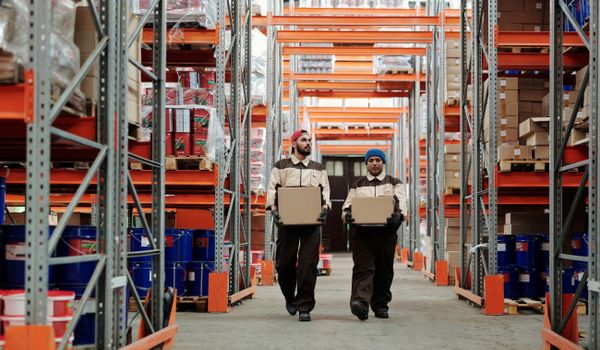
Storing inventory in China means keeping your products in a China-based warehouse or fulfillment center after production or sourcing, then using that warehouse to ship customer orders to global destinations.
This is different from simply using a supplier to ship products one by one. A professional China warehouse should support inventory management, SKU control, ecommerce order processing, pick and pack, packaging, and international shipping.
A complete China inventory storage and fulfillment workflow may include:
Supplier receiving
Inbound quantity checks
SKU labeling
Inventory storage
Stock reporting
Ecommerce platform integration
Order syncing
Pick and pack
Branded packaging or inserts
International shipping
Tracking upload
Replacement or exception handling
Why Ecommerce Sellers Store Inventory in China
The main reason is supplier proximity. If products are made in China, moving them to a China fulfillment center is usually faster and simpler than exporting them to an overseas warehouse immediately.
Storing inventory in China can help sellers:
Reduce factory-to-warehouse lead time
Receive products from multiple suppliers
Test demand in several countries
Avoid splitting stock too early
Reduce upfront regional inventory commitments
Launch new products faster
Ship global orders from one inventory pool
Add inspection, labeling, or packaging before shipment
For example, a brand sourcing electronics accessories from Shenzhen may want to sell to customers in the US, UK, Germany, Canada, Australia, and the Middle East. Instead of placing inventory in several local warehouses at once, the brand can store stock in China and ship orders globally as demand appears.
This is especially useful before order volume is stable enough to justify local warehouses.
When a China Warehouse Makes Sense
A China warehouse is usually a good fit when:
Your products are manufactured or sourced in China
You sell to several countries
You are testing new products
You need flexible inventory placement
Your SKUs have uncertain demand
You want to reduce overstock risk
You use Shopify, Amazon FBM, eBay, WooCommerce, Kickstarter, or Indiegogo
You need kitting, labeling, or custom packaging before shipping
It may be less suitable when:
Almost all customers are in one country
You promise very fast domestic delivery
Product returns must be local
Your goods are difficult to ship internationally
Local inventory is already predictable and profitable
Many growing brands use a hybrid model. They store bestsellers in local warehouses and keep long-tail SKUs, new products, replacements, and global orders in China.
Step 1: Prepare Product and SKU Data
Before sending products to a China warehouse, prepare accurate product data. This helps the warehouse identify, store, pick, and ship products correctly.
Prepare:
Product name
SKU code
Product photos
Variant details
Barcode requirements
Product dimensions
Product weight
Carton dimensions
Units per carton
Supplier name
Packing list
Special handling notes
SKU accuracy is important. If similar products have different colors, sizes, plug types, language versions, or bundle combinations, the warehouse needs clear identification rules.
Poor SKU data can lead to wrong-item shipments, overselling, inventory mismatch, and customer complaints.
Step 2: Send Inventory from Supplier to Warehouse
After production or sourcing is complete, your supplier sends products to the China warehouse.
Before delivery, confirm:
Inbound schedule
Carton labels
SKU names
Packing list
Unit quantity
Inspection requirements
Whether products need relabeling
Whether cartons contain mixed SKUs
Good inbound preparation reduces warehouse receiving time and prevents inventory errors.
When the warehouse receives products, it should check cartons, count quantities, verify SKU labels, and store products in assigned locations. SendFromChina’s
China warehouse service supports inventory receiving, storage, and management for ecommerce sellers.
Step 3: Set Up Inventory Management
Inventory management is the operational core of storing products in China.
A warehouse should help sellers track:
Units on hand
Units reserved for orders
Units damaged or unavailable
SKU-level stock
Low-stock alerts
Inbound inventory
Outbound orders
Replacement inventory
Sellers should review stock regularly and plan replenishment before inventory runs out. This is especially important when ad campaigns, influencer promotions, or seasonal demand can change order volume quickly.
Good inventory visibility helps prevent two costly problems: stockouts and overstock. Stockouts stop sales and damage customer experience. Overstock ties up cash and storage space.
Step 4: Connect Ecommerce Orders
Manual order processing becomes risky as sales grow. If sellers copy addresses from spreadsheets or send orders by email, errors are more likely.
Modern China fulfillment should support ecommerce order workflows such as:
Shopify order syncing
Amazon FBM order processing
eBay orders
WooCommerce orders
Kickstarter or Indiegogo backer shipments
Batch order upload
API workflows
Tracking number upload
Step 5: Pick and Pack Global Orders
When a customer places an order, the warehouse picks the correct product from storage, checks the order details, packs the parcel, applies the shipping label, and prepares it for carrier handoff.
Pick and pack quality affects customer satisfaction directly. Errors can cause wrong items, missing accessories, damaged products, and expensive replacement shipments.
To improve pick and pack accuracy, provide:
SKU photos
Barcode labels
Bundle rules
Packaging instructions
Accessory lists
Fragile handling notes
Country-specific instructions
SendFromChina’s
pick and pack service covers item picking, verification, secure packing, and shipment preparation for international delivery.
Step 6: Add Packaging, Kitting, and Branding
Storing inventory in China does not mean giving up brand control. A good fulfillment provider can support packaging and value-added services.
Common options include:
Branded boxes or mailers
Thank-you cards
Product inserts
Kitting
Bundle assembly
Labeling
FNSKU labels
Quality inspection
Repacking
Protective materials
These services are useful for DTC brands, Amazon sellers, subscription boxes, crowdfunding creators, electronics sellers, beauty brands, and board game creators.
Step 7: Choose Global Shipping Routes
Shipping globally from China requires route selection by country, product type, value, weight, and delivery expectations.
Compare shipping routes by:
Destination country
Delivery speed
Tracking quality
Product restrictions
DDP or DDU availability
Customs process
Last-mile carrier
Cost per parcel
Loss or delay handling
The cheapest route is not always the best route. A route with weak tracking or frequent delays can increase customer support cost and refund risk.
For higher-value products, reliable tracking may be worth the extra cost. For lightweight low-risk products, economy tracked routes may be enough.
Step 8: Handle Customs and Product Restrictions
Some products require special shipping routes or documentation. Before storing inventory in China for global shipping, check restrictions by product type and destination.
Products that may need extra attention include:
Batteries
Electronics
Cosmetics
Liquids
Powders
Magnetic products
Sharp tools
Oversized items
High-value goods
Toys with safety requirements
Sellers should prepare accurate product descriptions, values, country of origin information, and required documentation where applicable.
Step 9: Upload Tracking and Monitor Delivery
Tracking is important for global ecommerce. Customers want to know where their parcel is, especially when it crosses borders.
A fulfillment workflow should include:
Tracking number generation
Tracking upload to store or marketplace
Customer tracking visibility
Delay monitoring
Lost parcel handling
Replacement process
SendFromChina provides shipment lookup through its
tracking page, helping sellers and customers monitor delivery status.
Cost Factors to Consider
Costs usually include:
Inbound receiving
Storage
SKU management
Pick and pack
Packaging materials
Kitting or labeling
International shipping
Customs-related charges
Tracking
Returns or replacements
Sellers should compare total delivered cost, not just the shipping quote. A cheap route can become expensive if it creates delays, damage, or poor tracking.
For a deeper cost framework, sellers can review China fulfillment pricing factors such as receiving, storage, packaging, pick and pack, and international route selection.
Common Mistakes to Avoid
The first mistake is sending inventory without clear SKU labels. This creates receiving delays and picking errors.
The second mistake is storing too much inventory before demand is proven. China warehousing gives flexibility, but sellers should still monitor turnover.
The third mistake is choosing shipping only by price. Delivery reliability and tracking matter.
The fourth mistake is ignoring product restrictions. Battery, liquid, powder, and oversized products require route checks.
The fifth mistake is not preparing packaging instructions. Cross-border parcels need protection against handling, compression, and moisture.
The sixth mistake is not testing a small batch before scaling. A test batch helps verify receiving, storage, pick and pack, shipping, and tracking.
Final Thoughts
Storing inventory in China and shipping globally can be a practical fulfillment strategy for ecommerce sellers whose products are manufactured or sourced in China.
It helps brands stay close to suppliers, reduce inventory placement risk, test international demand, manage global orders from one inventory pool, and add packaging or kitting before shipment.
It is not the perfect model for every business. If most customers are in one country and fast domestic delivery is essential, a local warehouse may be better for bestsellers. But for global ecommerce, new products, long-tail SKUs, and flexible inventory planning, a China warehouse can be a strong foundation.
FAQ
Can I store inventory in China and ship globally?
Yes. Ecommerce sellers can store products in a China warehouse, sync orders from online channels, pick and pack parcels, and ship to customers worldwide.
Who should use a China warehouse?
A China warehouse is useful for sellers whose products are manufactured or sourced in China, especially if they sell to multiple countries or want flexible inventory before local demand is proven.
Is storing inventory in China the same as dropshipping?
No. Dropshipping usually means the seller does not control inventory. China warehouse fulfillment usually means the seller stores owned inventory in a fulfillment center and uses the provider to process orders.
What costs are involved?
Costs may include receiving, storage, SKU management, pick and pack, packaging, kitting, international shipping, customs-related charges, tracking, and replacements.
Can a China warehouse integrate with Shopify?
Yes. Many fulfillment providers support Shopify order syncing, inventory updates, tracking upload, and global shipping workflows.
What products are suitable for China warehouse fulfillment?
Suitable products include electronics accessories, apparel accessories, beauty tools, toys, games, pet products, home goods, board games, and other products manufactured or sourced in China.
How do I choose a China warehouse provider?
Compare warehouse location, inventory accuracy, platform integration, pick and pack quality, shipping coverage, pricing transparency, product restriction support, and tracking visibility.







 Post Views:2142
 TAGS:
TAGS:
 Want to know about our services, fees or receive a custom quote?