




Table of Contents
Get Custom eCommerce Fulfillment Service
Book a Meeting
How to Choose an International Shipping Route by Parcel Weight, Value, and Destination
Time: Aug 10,2026 Author: SFC Source: www.sendfromchina.com
The best international shipping route is not simply the cheapest line on a rate card. It is the route that accepts the product, fits the packed parcel, reaches the exact destination, protects the order value, and keeps the delivery promise at a sensible total cost.
Use these five filters, in order:
- Confirm that the route accepts the product and destination.
- Calculate chargeable weight from the packed parcel.
- Match tracking, insurance, and proof of delivery to the product value.
- Check destination customs, duties, postcode coverage, and returns.
- Compare total delivered cost, realistic speed, and exception performance.
Price comes fifth for a reason. A cheap route that rejects a battery, cannot serve a PO box, or sends the customer a surprise tax bill is not really cheap. It is just trouble with a small price tag.
This guide gives ecommerce sellers a practical selection process for postal services, dedicated lines, express couriers, air freight, sea freight, and hybrid fulfillment.
The Eight Inputs You Need Before Comparing Routes
Choosing a route before measuring the packed parcel is like buying shoes before checking the size. You might get lucky. That is not much of a system, though.
|
Input
|
Example
|
Why it matters
|
Common mistake
|
|
Destination
|
Germany, 10115
|
Controls coverage, zone, customs, and last mile
|
Checking only the country
|
|
Product
|
Aluminum phone stand
|
Determines eligibility and HS classification
|
Writing "accessory"
|
|
Restricted status
|
Built-in lithium battery
|
Limits carriers and transport modes
|
Treating all electronics as ordinary goods
|
|
Packed weight
|
1.35 kg
|
Used for the rate calculation
|
Using product weight only
|
|
Packed dimensions
|
32 x 24 x 12 cm
|
Determines dimensional weight and size limits
|
Measuring before packing
|
|
Customs value
|
USD 68
|
Affects duties, risk, and service limits
|
Confusing retail and customs data
|
|
Delivery target
|
8-12 working days
|
Removes routes that are too slow
|
Using a best-case estimate
|
|
Monthly profile
|
800 orders, 4 markets
|
Affects discounts, automation, and backup routes
|
Quoting one sample parcel only
|
You also need the origin, quantity, packaging type, and any special delivery needs.
Filter 1: Can the Route Carry the Product to That Destination?
Eligibility comes before price. If a route cannot legally or operationally carry the product, the rest of the comparison is noise.
Ordinary Goods vs Restricted or Regulated Goods
Ordinary apparel, books, and simple plastic accessories usually have more route options than:
- Lithium batteries and power banks
- Liquids, perfume, nail products, and aerosols
- Powders and chemicals
- Strong magnets
- Food, plants, and animal products
- Medical or health-related products
- Very large, fragile, or temperature-sensitive goods
A country may allow a product while one carrier refuses it. An air service may accept a battery installed in equipment but reject a loose battery. Another route may require specific marks, packing, or documents.
IATA notes that lithium batteries are dangerous goods and that air shipments are subject to packing, labeling, marking, declaration, and training requirements. Its lithium-battery shipping guidance also explains that relevant rules draw on ICAO instructions and UN standards.
Do not assume that one battery document opens every route. Battery configuration, watt-hour rating, state of charge, package quantity, carrier rules, and destination can all matter.
Check the Exact Destination
Country coverage does not guarantee postcode coverage. Check remote islands, rural areas, PO boxes, military addresses, sanctioned regions, and destinations that require a local phone number or script.
This first filter should leave you with routes that can carry the product to the actual address. Only then should you compare prices.
Filter 2: Calculate Chargeable Weight from the Packed Parcel

Carriers care about both weight and space. A compact metal part and a giant foam cushion can weigh the same, but they do not use the same transport capacity.
Actual Weight vs Dimensional Weight
- Actual weight is what the packed parcel weighs on a scale.
- Dimensional weight converts parcel volume into a billing weight.
- Chargeable weight is the weight used for pricing under that route's rules.
A common metric formula is:
length x width x height / dimensional divisor
The divisor and rounding method vary. Do not copy one carrier's formula into every route comparison.
For its applicable domestic and international ecommerce products, DHL's chargeable-weight guidance says charges use the greater of actual and dimensional weight. Other carriers may use different divisors, minimums, increments, or size rules.
Packaging Materials Can Change the Winning Route
A poly mailer may suit flexible apparel. A padded mailer may protect a small accessory. A corrugated carton, insert, divider, or cushioning may be necessary for fragile goods. Pallets may be required for freight.
Packaging affects:
- Chargeable weight
- Size and girth limits
- Conveyor compatibility
- Damage risk
- Insurance eligibility
- Customer experience
Reducing empty space can lower cost. Removing necessary protection can increase damage and replacement cost. The clever option is not the smallest possible box. It is the smallest safe box.
Weight Bands Are Starting Points, Not Laws
Light parcels often suit postal, economy, or dedicated ecommerce services. Medium parcels may create stronger competition between dedicated lines and express. Larger cartons may justify courier, air freight, or sea comparisons.
But there is no universal "use air freight above 30 kg" rule. Destination, density, dimensions, minimum charges, volume discounts, product restrictions, and service scope can move the break-even point. Use weight bands to create a shortlist, then request a live quote.
Filter 3: Match the Route to Product Value and Margin

Product value does not always change the base freight rate. It changes the financial risk around the route.
Declared Value Is Not a Discount Tool
Use accurate, supportable customs data. Artificially lowering the declared value can create customs, insurance, platform, and customer problems.
Keep these concepts separate:
- Retail price: what the customer pays
- Customs value: the value declared under applicable customs rules
- Replacement cost: what it costs the business to replace the order
- Carrier liability or insured value: the amount recoverable under the service terms
They may not be identical. Ask a customs adviser when valuation is unclear.
High-Value Parcels Need Better Control
For an expensive order, compare full tracking, signature or PIN, useful proof of delivery, insurance, address checks, handoff count, and claim support. Premium express does not automatically mean full-value insurance. Read the liability and excluded-items rules.
Low-Value Parcels Still Have a Loss Budget
Economy delivery may be sensible for a low-value item. Still, include replacement postage, product cost, support time, refunds, and chargeback exposure.
A simple planning idea is:
route price + expected loss and damage cost + support cost = risk-adjusted shipping cost
The lowest label price can lose after the second replacement.
Margin and Urgency Work Together
A low-margin order may not absorb express shipping. A stockout rescue, launch deadline, high-value replacement, or important B2B sample may justify it. Ask what being late costs, not only what being fast costs.
For a deeper service-level comparison, review express versus economy shipping.
Filter 4: Evaluate the Destination, Customs, and Last Mile
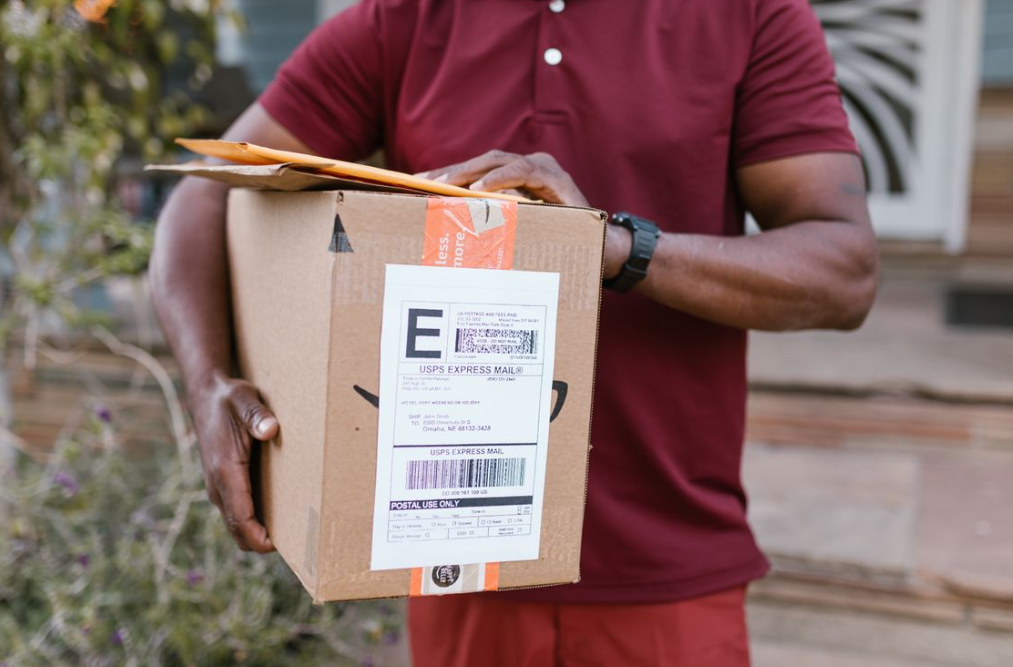
The destination changes more than distance. It affects import rules, taxes, delivery partners, address formats, remote fees, and return options.
HS Classification and Product Description
The World Customs Organization describes the Harmonized System as an international product nomenclature used by more than 200 countries and economies. The WCO says over 98% of merchandise in international trade is classified in HS terms. Its Harmonized System overview explains the six-digit international structure.
Countries may add national digits beyond that level. Use a specific description, correct origin, value, and classification. "Phone accessory" is weak. "Aluminum mobile-phone stand" is better.
DDP vs Buyer-Paid Import Charges
Under a duty-paid route, the seller side arranges import charges so the buyer is less likely to receive a payment request at delivery. Under buyer-paid models, the customer may need to pay duty, VAT, GST, brokerage, or another fee.
DDP can improve the checkout-to-delivery experience, but it is not available for every country, product, value, or tax setup. The detailed DDP shipping from China guide covers that decision more fully.
Remote Areas and Last-Mile Coverage
Check the destination postcode against the route, not just the carrier brand. Ask about:
- Remote-area surcharges
- Residential delivery
- PO boxes and parcel lockers
- Number of delivery attempts
- Address correction
- Signature or POD
- Return-to-sender fees
- Local return options
A slower postal route can outperform an express service when only the postal operator reaches the address cleanly.
Filter 5: Compare International Shipping Route Families
|
Route family
|
Best fit
|
Speed profile
|
Tracking and support
|
Main tradeoff
|
|
Basic postal
|
Very low-value, flexible orders
|
Slow and variable
|
Limited
|
Low cost, weak visibility
|
|
Tracked economy
|
Lightweight, non-urgent DTC parcels
|
Moderate to slow
|
Basic to good
|
Wider delivery window
|
|
Dedicated ecommerce line
|
Repeat parcels on supported lanes
|
Balanced
|
Usually end-to-end
|
Product and postcode rules
|
|
Express courier
|
Urgent, valuable, or important parcels
|
Fast
|
Detailed
|
High cost and surcharges
|
|
Door-to-door air freight
|
Heavier time-sensitive shipments
|
Fast to moderate
|
Depends on provider
|
Minimum charges and customs scope
|
|
Sea parcel or LCL
|
Heavy, bulky, non-urgent goods
|
Slow
|
Milestone-based
|
Long planning window
|
|
Bulk freight plus local fulfillment
|
Proven demand in one market
|
Slow inbound, fast local orders
|
Two linked systems
|
Inventory commitment
|
Postal and economy services can fit lightweight, flexible orders. Dedicated lines often offer a useful balance for repeat ecommerce lanes. Express fits urgent or valuable parcels when chargeable weight and remote fees remain acceptable.
Air freight becomes relevant when a shipment is too large for attractive parcel pricing but too urgent for sea. Compare door-to-door scope with airport-to-airport quotes. For planned, heavy inventory, LCL, pallets, or bulk freight into a local warehouse may reduce unit cost.
SendFromChina's international door-to-door shipping routes include economy, standard, expedited, express, and customized options. Availability still depends on the actual parcel and destination.
A Practical Weight-Value-Destination Decision Matrix
|
Parcel profile
|
First routes to test
|
Routes to question
|
Key check
|
|
0.3 kg low-value accessory to a major city
|
Economy, postal, dedicated line
|
Premium express
|
Minimum charge and tracking
|
|
1.2 kg apparel to a remote postcode
|
Postal and dedicated line
|
Routes with remote fees
|
Postcode and return process
|
|
3 kg battery device to Europe
|
Approved battery line, express
|
Ordinary-goods routes
|
Battery documents and VAT model
|
|
8 kg high-value electronics to the USA
|
Express, secure dedicated line
|
Untracked economy
|
Insurance, POD, customs value
|
|
25 kg ordinary-goods carton to Australia
|
Express and air door-to-door
|
Basic postal
|
Chargeable weight and oversize limits
|
|
80 kg urgent B2B parts
|
Air freight and negotiated express
|
Slow LCL
|
Deadline and door-to-door scope
|
|
300 kg planned replenishment
|
Air vs LCL or sea DDP
|
Parcel-by-parcel express
|
Stock cover and landed cost
|
These are starting shortlists, not booking instructions. Live rates and route rules decide the final choice.
Worked Examples: Choosing Without Guessing
Lightweight Mobile Accessory
A 0.25 kg accessory worth USD 12 ships to major European cities. Economy and dedicated lines deserve the first comparison. Express may consume too much of the order value. The deciding factors are end-to-end tracking, VAT handling, delivery range, and replacement rate.
Bulky but Light Home Product
A 1 kg foam product occupies a large carton and bills at a much higher dimensional weight. Changing from express to economy may help, but packaging redesign should come first. Compression or a better carton can improve every route quote at once.
High-Value Electronics with a Battery
A USD 700 device needs an eligible battery route, accurate documents, strong tracking, insurance review, and useful POD. Economy might save money, but a loss creates a painful replacement. Express or a secure dedicated line may offer better risk-adjusted cost.
Crowdfunding Rewards to Many Countries
One global route rule rarely works. A creator can segment low-value rewards, premium tiers, battery products, and remote destinations. Test major countries first, then keep a manual exception queue for unsupported addresses or unusual pledges.
Heavy Replenishment to a Proven Market
A 300 kg restock may justify air if a stockout is near. Normal replenishment may move by sea. A hybrid plan sends a small rescue batch by air and the balance by sea, keeping sales moving without paying air rates for everything.
Compare Total Delivered Cost, Not the Headline Rate

Use this planning formula:
fulfillment + packaging + freight + fuel and peak fees + remote fees + duties and taxes + brokerage + expected loss and damage + returns = decision cost
Check whether a quote is door-to-door, airport-to-airport, or port-to-port. Confirm weight rounding, remeasurement, fuel, customs, residential delivery, remote areas, insurance, address correction, storage, and returns.
The guide on how to compare China fulfillment quotes provides a broader quote checklist. Also review hidden fulfillment costs before building checkout prices.
Use cost per successfully delivered order where possible. Segment results by country, product, postcode type, and service. A cheap route with frequent refusals can cost more than a slightly higher, cleaner route.
Build Shipping Rules That Scale
Start with simple fields:
- Destination group and postcode status
- Product eligibility
- Chargeable-weight band
- Order-value or risk tier
- Delivery promise
- Preferred and backup route
Send unusual orders to manual review. Examples include restricted goods, oversized parcels, high values, incomplete addresses, and unsupported postcodes.
Before moving all orders, test representative products and several destination types. Track actual delivery time, scan completeness, customs outcomes, damage, failed attempts, returns, and support contacts. Look at the typical result and the slow tail.
For live estimates, use the SFC shipping cost calculator with packed weight, dimensions, and destination details. Confirm current eligibility and final charges before dispatch.
When to Split, Consolidate, or Use Hybrid Routing
Split an urgent or restricted item when it would block the rest of an order. Compare the extra postage with the cost of delaying everything.
Consolidate compatible, low-urgency goods when it reduces repeated handling or minimum charges. Do not wait so long for one supplier that the saving disappears into a missed deadline.
Use hybrid routing when one speed does not fit the business. Direct parcel fulfillment can serve uncertain global demand. Bulk freight can replenish local stock for proven markets. Air can rescue a stockout while sea carries normal replenishment.
Conclusion
Choose an international shipping route by filtering eligibility first, parcel data second, and economics third. Calculate chargeable weight from the final package. Match service control to the product value. Check the actual destination, customs model, last mile, and returns. Then compare total delivered cost and real performance.
The best route is not a permanent winner. Products, rates, regulations, and carrier performance change. Keep a preferred route, a backup, and enough shipment data to know when either one stops working.
Frequently Asked Questions
1. What is the cheapest way to ship a small package internationally?
Tracked postal, economy, or a dedicated ecommerce line is often the first place to look. The winner depends on packed weight, dimensions, destination, product eligibility, tracking, and minimum charges. Compare total cost, not only the basic label price.
2. Is international shipping charged by actual or dimensional weight?
Many services calculate both and use the higher amount as chargeable weight. The divisor, rounding, and size rules vary by route. Measure the finished parcel and use the formula stated in the current service terms.
3. At what weight should I use air freight instead of express courier?
There is no universal cutoff. Compare live door-to-door quotes when courier pricing becomes unattractive. Dimensions, destination, minimum charges, product type, customs scope, volume discounts, and urgency can move the break-even point.
4. Does product value affect international shipping cost?
It may affect insurance, customs charges, service eligibility, signature options, and handling. Even when base freight stays the same, higher value increases the cost of loss, damage, refusal, or weak proof of delivery.
5. What is the best route for a high-value international parcel?
Start with services offering strong tracking, useful POD, suitable insurance, clear claims, and fewer uncertain handoffs. Express may fit, but a secure dedicated line can also work. Confirm liability limits and excluded products.
6. When should an ecommerce seller choose DDP shipping?
Consider DDP when customers expect a clear landed price and surprise import charges may cause refusal. Confirm that the route, product, destination, customs valuation, and tax setup support it before advertising duty-paid delivery.
7. Why is a shipping route unavailable for my product or destination?
The route may reject batteries, liquids, oversized parcels, high values, remote postcodes, PO boxes, or regulated imports. Carrier policy can be stricter than national law. Ask for the exact eligibility reason and required documents.
8. How do remote-area postcodes affect international shipping?
They can add surcharges, days, limited delivery attempts, or a different last-mile partner. Some express routes may be poor fits, while a postal service still covers the address. Validate the postcode before checkout or dispatch.
9. Is it cheaper to split one heavy parcel into two packages?
Sometimes. Splitting may avoid size limits or reduce dimensional weight, but it can create two minimum charges, two customs entries, and two loss risks. Compare the complete cost and customer experience for both options.
10. Should I buy shipping insurance for international orders?
Consider product value, replacement cost, route liability, loss history, theft risk, and claim exclusions. Insurance is more useful when a single loss would materially hurt margin. Read the coverage terms instead of assuming every problem is insured.
 Post Views:1067
 TAGS:
TAGS:
Copyright statement: The copyright of this article belongs to the original author. Please indicate the source for reprinting.
Previous Post
Postal, Dedicated Line, or Express Courier: A Route Selection Framework for Ecommerce
Next Post
TAGS
Hot Research
Get Custom eCommerce Fulfillment Service
Book a Meeting
Get a Custom China Fulfillment Solution with FREE Storage for 30 Days
Want to know about our services, fees or receive a custom quote?
 Want to know about our services, fees or receive a custom quote?
Please fill out the form on the right and we will get back to you within a business day.
The more information you provide, the better our initial response will be.