




Table of Contents
Get Custom eCommerce Fulfillment Service
Book a Meeting
Alibaba vs 1688 for International Buyers: A Complete Guide
Time: Oct 15,2026 Author: SFC Source: www.sendfromchina.com
At first glance, the choice looks simple.
You find a product on Alibaba.com for $3.20 per unit. Then you find something that appears almost identical on 1688 for RMB 12. The 1688 listing looks much cheaper, so the obvious thought is: “Why would I ever buy from Alibaba?”
Well, sometimes 1688 is the better route. But the two prices are not always comparing the same product, service, or responsibility. One quote may include export communication, international payment support, custom packaging, and a supplier that already understands overseas orders. The other may be a domestic wholesale price delivered to a warehouse in China.
That difference matters.
The practical rule is simple: compare the same specification and calculate the full landed cost before choosing a platform.
Alibaba.com is designed mainly for international B2B trade. 1688.com is designed mainly for China’s domestic wholesale market. Both can help you find manufacturers, wholesalers, and trading companies. Neither platform automatically guarantees that a supplier is a factory, that a product is compliant, or that the lowest listing is the best deal.
For an ecommerce brand, the right platform is the one that gives you the best balance of price, quality, communication, payment, buyer protection, export readiness, and repeatability.
Alibaba.com and 1688.com: What Are They?

What Alibaba.com Is Built For
Alibaba.com is an international B2B marketplace. Its listings and workflows are generally aimed at overseas buyers, importers, distributors, retailers, and ecommerce brands.
You will commonly find:
- English-language product pages and supplier communication
- Prices shown in USD or other international currencies
- Suppliers familiar with export conversations
- Requests for quotation and negotiated terms
- Samples, OEM, ODM, private-label, and custom packaging options
- Discussion of shipping terms and export documents
- Payment and order-protection features for eligible transactions
That does not mean every Alibaba supplier is export-ready. It means the platform is built around a more international buying environment. A supplier may already know how to quote FOB, prepare cartons for export, or answer questions about a destination market.
What 1688.com Is Built For
1688.com is a China-focused wholesale marketplace. It is widely used by Chinese retailers, wholesalers, resellers, and domestic businesses sourcing goods inside mainland China.
You will commonly find:
- Chinese-language listings
- RMB or CNY pricing
- Domestic delivery terms
- Domestic payment expectations
- Stock products and wholesale quantities
- Access to suppliers that may not actively market to overseas buyers
The lower-looking price can be valuable. But an overseas buyer may need to add translation, payment support, a China delivery address, supplier communication, inspection, consolidation, export documents, and international freight.
For that reason, 1688 works best when the buyer has a reliable China-side operator, sourcing agent, warehouse, or fulfillment partner.
Do Alibaba and 1688 Use the Same Suppliers?
Sometimes a supplier lists on both platforms. That does not prove that every listing is identical.
The product may differ in:
- Material or component grade
- Size, weight, color, or finish
- Packaging quantity
- Branding and labeling
- Warranty or replacement terms
- Product inspection standard
- Minimum order quantity
- Delivery promise
Product photos are useful for finding leads, but they are not supplier verification. Treat a matching image as a starting point for questions, samples, and written specifications.
For basic corporate context, Alibaba Group describes its ecosystem and businesses on its official company overview. The platform comparison still needs to be made at the product and transaction level.

Alibaba vs 1688 at a Glance
|
Factor
|
Alibaba.com
|
1688.com
|
|
Primary market
|
International B2B trade
|
China domestic wholesale
|
|
Typical interface
|
English and other international-language support
|
Mainly Chinese
|
|
Common currency
|
USD and other international payment currencies
|
RMB / CNY
|
|
Typical buyer
|
Overseas importer, brand, distributor, or business buyer
|
Chinese retailer, wholesaler, reseller, or domestic business buyer
|
|
Listing price
|
Often export-oriented or includes more overseas support
|
Often domestic wholesale pricing
|
|
Default delivery
|
Export terms or international shipping can be discussed
|
Usually delivery to a mainland China address
|
|
MOQ
|
Varies by supplier and customization
|
Varies by seller and product; stock items may have attractive quantities
|
|
Supplier communication
|
English communication is more common
|
Chinese communication is usually required
|
|
Buyer protection
|
May be available on eligible orders paid through the required route
|
Domestic rules and agent arrangements may apply; overseas protection is less straightforward
|
|
Export paperwork
|
Supplier may already understand the process
|
Buyer, agent, or forwarder often coordinates the process
|
|
Best fit
|
New importers, custom projects, and simpler cross-border purchasing
|
Experienced buyers with China-side support, repeat SKUs, and price benchmarking
|
This table is a map, not a promise. A strong 1688 supplier may export smoothly. An Alibaba supplier may be a trading company with limited factory control. Always check the specific seller and order.
Why Is 1688 Often Cheaper Than Alibaba?
The price gap usually comes from the market each platform serves and the work included around the product.
Domestic Versus Export Pricing
A 1688 supplier may quote a domestic wholesale price for goods delivered to a mainland China address. That quote may not include export cartons, international documents, customs coordination, insurance, or overseas support.
An Alibaba quote may include more of that commercial effort, even when the product itself is similar. You are not always paying only for the unit. You may also be paying for a simpler transaction.
Communication and Sales Support
International communication takes time. A supplier may need to translate technical details, explain documents, confirm shipping terms, and answer questions about labeling or destination requirements.
That work can be reflected in the quote or margin. On 1688, the listing is often built for a domestic buyer who already understands the language, payment process, and delivery environment.
Domestic Delivery Versus Export Delivery
The 1688 price may end when the goods arrive at a China address. Your work begins after that point. You still need to receive, count, inspect, consolidate, prepare export paperwork, and arrange international shipping.
An Alibaba supplier may quote delivery to a port, airport, forwarder, or destination under a negotiated Incoterm. It is not automatically cheaper, but the scope is often clearer for international buyers.
Trading-Company Margins and Listing Structure
Some Alibaba listings come from trading companies that add sourcing and export support. Some 1688 listings also come from wholesalers or trading companies. The platform name does not tell you the full supply chain.
The fair comparison is not “Alibaba supplier versus 1688 supplier.” It is “Supplier A versus Supplier B for the same specification, service scope, quality standard, and delivery responsibility.”

Landed Cost: The Fair Way to Compare Alibaba and 1688
Use this formula:
Landed cost = product cost + domestic China delivery + agent or sourcing fee + payment and currency cost + inspection + consolidation and repacking + export documentation + international freight + insurance + duties and taxes + destination handling + fulfillment preparation
The exact list depends on the product and destination, but the principle is stable: the unit price is only one line on the invoice.
|
Cost item
|
Alibaba.com route
|
1688 route
|
|
Product price
|
Often an export-oriented quote
|
Often a domestic RMB quote
|
|
China delivery
|
May be included or quoted separately
|
Usually paid to a China address
|
|
Agent fee
|
May be unnecessary for a direct order
|
Often needed for communication, payment, or purchasing
|
|
Inspection
|
Supplier or third party
|
Usually arranged by the buyer or agent
|
|
Consolidation
|
May be handled by supplier or forwarder
|
Often needed when combining several sellers
|
|
Export documents
|
Supplier may provide or coordinate
|
Agent or forwarder usually coordinates
|
|
International freight
|
Quoted by supplier, forwarder, or buyer
|
Arranged after goods reach the China-side warehouse
|
|
Fulfillment preparation
|
Depends on the supplier and destination
|
Can be handled by a China fulfillment partner
|
An Illustrative Example
Imagine a small brand buys 500 units of a home accessory. These numbers are only an illustration, not a market quote.
The Alibaba route quotes $3.40 per unit, including export-ready cartons. The product subtotal is $1,700. The supplier charges $120 for sample development and $180 for inspection support. International freight and destination charges total $850.
The 1688 route lists the product at the equivalent of $2.30 per unit, so the listing subtotal is $1,150. The buyer then pays $90 for domestic China delivery from several sellers, $180 for agent support, $140 for inspection, $120 for consolidation and repacking, $80 for export documents, and the same $850 for international freight and destination charges.
The 1688 route totals $2,610 before any difference in tax or duty. The Alibaba route totals $2,850. The domestic route still saves money in this example, but not the $550 suggested by the unit-price comparison. The result would change if the order were smaller, if inspection found defects, or if multiple suppliers created more domestic delivery charges.
Why Unit Price Can Mislead Small Brands
Small orders spread fixed charges over fewer units. An agent fee that looks reasonable on a 5,000-unit repeat order may be painful on a 100-unit test order.
Multi-supplier carts also create more receiving work. Each seller may use different cartons, labels, product counts, and delivery schedules. A China warehouse can solve this, but receiving and consolidation are still real operating activities.
Packaging can change the result too. If your destination market needs an English manual, barcode, warning label, plug type, battery mark, or branded carton, the domestic listing is not yet your finished product.
When 1688 Can Win on Total Cost
1688 can be attractive when you have:
- Repeat SKUs with stable specifications
- A trusted Chinese-speaking operator
- Predictable supplier relationships
- Efficient inspection and consolidation
- A China warehouse or fulfillment partner
- Enough volume to spread fixed service costs
- A clear export and shipping process
The more repeatable the operation becomes, the more value you can get from domestic sourcing access.

Language, Currency, and Payment Differences
Language is not just a convenience issue. It affects product accuracy and dispute evidence.
On 1688, the product page, options, packaging notes, and seller messages are generally in Chinese. A translation tool can help you understand the broad meaning, but it may miss a material grade, tolerance, unit, or packaging condition.
On Alibaba.com, English communication is more common, though the quality varies by supplier. Never assume that a translated message means both sides understand the same specification. Use a structured sheet with photos, dimensions, materials, colors, quantities, packaging, and acceptance standards.
Currency creates another layer. A 1688 buyer may need RMB conversion, a domestic payment method, or an agent. Exchange-rate movement and payment fees should be included in the landed-cost sheet.
The safest operating habit is to keep the order record, specification confirmation, payment evidence, sample approval, and inspection result connected. Avoid paying a personal account just because a message says it is faster. Confirm who owns the transaction and what happens if the goods are late or incorrect.

MOQ, Samples, Customization, and Lead Time
There is no universal rule that Alibaba has high MOQs and 1688 has low MOQs. The product and supplier matter more.
1688 may offer attractive quantities for ready-stock products sold to domestic wholesalers. Alibaba suppliers may quote higher quantities when you request a custom logo, custom mold, branded packaging, or export-specific configuration.
Compare these items directly:
- Ready-stock MOQ
- Custom logo MOQ
- Custom packaging MOQ
- Sample availability and sample charge
- Production lead time
- Pre-production sample approval
- Color, material, size, and tolerance
- Reorder consistency
- Replacement and defective-unit policy
An inexpensive sample that cannot be reordered consistently is not a strong sourcing result. On the other hand, a higher Alibaba MOQ may be reasonable if it includes custom development, testing, packaging, and a defined export process.
Supplier Types and Verification
Both platforms can include factories, wholesalers, and trading companies. A trading company is not automatically bad. It may offer a useful assortment or better communication. The key is knowing what you are buying and who controls quality.
Ask for:
- Legal business name and address
- Product-specific production experience
- Current sample photos or video
- Material and component details
- Production capacity and lead time
- Quality-control checkpoints
- Packaging and labeling capability
- Export history, if relevant
- Warranty, replacement, or rework terms
- The identity of the actual production site when it matters
Use platform badges, years on platform, reviews, transaction volume, product photos, and unusually low prices as signals only. None should be treated as proof by itself.
For a high-risk product, consider a factory audit, sample comparison, pre-shipment inspection, or controlled first order. Verification costs money, but failed inventory usually costs more and creates a customer problem at the worst moment.

Buyer Protection and Dispute Risk
Platform protection is useful only when the order qualifies and the buyer follows the required process. The practical questions are more important than the badge on the page:
- Was the order placed through the required platform workflow?
- Was payment made through the approved route?
- Are exact specifications written into the order?
- Are the inspection method and defect tolerance documented?
- Is the delivery deadline clear?
- What evidence is needed for a dispute?
- Who handles a failure after goods arrive at the China warehouse?
On 1688, an overseas buyer may rely more heavily on an agent or forwarder. Put responsibilities in writing. Define who checks quantity, who checks product quality, who stores evidence, who contacts the seller, and who pays for rework or return freight.
Do not confuse a low price with low risk. The risk may simply be sitting in a part of the process that the Alibaba quote included.
Shipping, Export, and Customs Readiness
Buying from a Chinese seller and exporting from China are separate steps.
With 1688, the seller may only need to deliver to a mainland China address. You or your partner then needs to:
- Receive and count the goods.
- Check damage and packaging.
- Confirm product and carton details.
- Consolidate shipments from different sellers.
- Prepare or collect export documents.
- Choose international freight.
- Confirm customs and destination requirements.
- Move approved goods into fulfillment inventory.
Alibaba suppliers may already understand some of these steps, but never assume that “international supplier” means every product is compliant for your destination.
Depending on the product, review commercial invoices, packing lists, HS classification, country-of-origin information, labeling, batteries, electrical requirements, materials, and destination-market rules. EXW and FOB describe different points of responsibility, but a platform listing does not replace a complete shipping agreement.
For brands that need a reliable post-purchase flow, Ecommerce fulfillment in China can connect sourcing decisions with receiving, inventory, and outbound customer orders.
Quality Control, Inspection, and Returns
A simple control sequence looks like this:
- Approve the sample and specification sheet.
- Define acceptable defects and tolerances.
- Inspect incoming or pre-shipment goods.
- Photograph discrepancies and count units.
- Quarantine failed goods.
- Agree on rework, replacement, refund, or disposal.
- Release only approved goods for export or fulfillment.
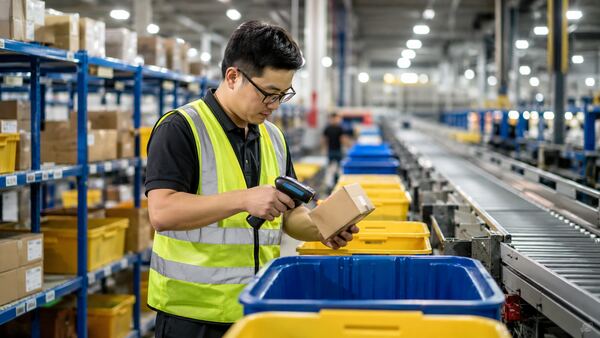
Inspection is especially important when the 1688 price comes from a listing with limited product detail. The inspection should check the things that can create a customer return: dimensions, color, material, function, accessories, packaging, barcode, and quantity.
If goods fail, the cheapest solution is not always returning them to the supplier. Rework in China, replacement parts, repacking, partial credit, or controlled disposal may make more sense depending on product value and urgency.
Alibaba vs 1688 for Different Buyer Types
|
Buyer situation
|
Likely starting point
|
Reason
|
|
First import with no China-side support
|
Alibaba.com
|
Easier communication and more export-oriented workflow
|
|
Repeat buyer with Chinese-speaking operator
|
1688.com or hybrid
|
More domestic sourcing access and price control
|
|
Private-label project
|
Alibaba.com, 1688.com, or direct factory
|
Depends on MOQ, customization, development, and verification
|
|
Multi-supplier ecommerce assortment
|
1688 with consolidation support or hybrid
|
China-side receiving and consolidation become important
|
|
High-compliance product
|
Platform plus professional verification
|
Documentation and testing matter more than listing price
|
|
Small test order
|
Whichever route has lower total cost and acceptable risk
|
Fixed service charges can change the answer
|
|
High-volume stable SKU
|
1688 or direct supplier relationship
|
Repeat process can justify China-side operating support
|
Can You Use Alibaba and 1688 Together?
Yes. A hybrid sourcing workflow can be practical for experienced brands.
- Discover product categories and supplier patterns on both platforms.
- Match exact photos, materials, dimensions, packaging, and SKU details.
- Request samples and verify the supplier identity.
- Use 1688 as a domestic price benchmark, not proof that an Alibaba quote is inflated.
- Choose the channel based on export capability, protection, service, and landed cost.
- Receive goods at a China-side warehouse.
- Inspect, consolidate, repack, and prepare export documents.
- Ship or move approved goods into ecommerce fulfillment inventory.
This approach gives you a wider supplier search without forcing every seller to handle international operations. It also makes the extra work visible instead of pretending that the 1688 listing is the finished purchase.
Alibaba vs 1688 for Ecommerce Fulfillment
The sourcing platform affects what happens after payment. Your downstream operation needs:
- Consistent SKU names and barcodes
- China warehouse receiving
- Quantity and condition checks
- Repacking and branded inserts
- Bundles and kitting
- Inventory visibility
- Reorder planning
- International parcel or freight shipping
- Customer-order fulfillment
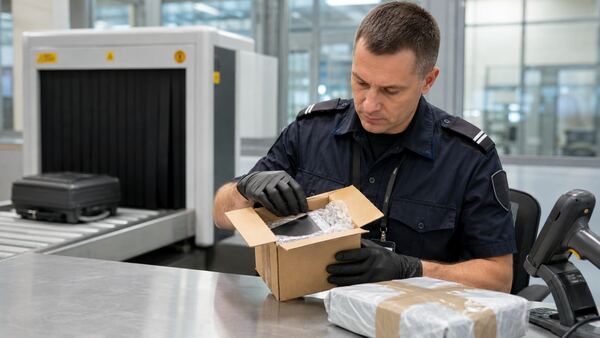
If your product arrives from several 1688 sellers, a warehouse must identify, count, and consolidate it before export. That is where China warehousing becomes part of the sourcing decision, not a separate afterthought.
For shipping and destination delivery, compare the full scope of international shipping from China. A low domestic product price can disappear if cartons are poorly packed, shipments are split, or the freight plan is chosen too late.
After goods are approved, the handoff to an order fulfillment workflow should preserve SKU, quantity, packaging, and inventory status. A sourcing spreadsheet that cannot connect to warehouse stock will create trouble during the first reorder.
Common Mistakes Buyers Make
Comparing Different Specifications
Two listings can look identical while using different materials, sizes, components, or packaging quantities. Build a comparison sheet before comparing prices.
Treating 1688’s Listing Price as Landed Cost
Domestic delivery, agent fees, inspection, consolidation, export, freight, taxes, and fulfillment preparation are still costs.
Assuming Every 1688 Seller Is a Factory
Wholesalers and trading companies can appear on the platform. Verify who makes the product and who controls quality.
Assuming Alibaba Badges Prove Quality
Badges and transaction history may help with screening, but they do not replace a sample, specification, inspection, and written acceptance standard.
Paying Before Agreeing on the Order
Confirm product details, packaging, quantity, delivery date, inspection, and remedy before payment. Verbal promises are hard to enforce when the order record says something else.
Ignoring Domestic Delivery Between Sellers
Five suppliers can mean five deliveries, five receiving records, and five opportunities for delay. Consolidation helps, but it is not free.
Forgetting Destination Requirements
Plugs, voltage, manuals, labels, batteries, materials, and safety standards can turn a cheap product into unsellable inventory.
Failing to Plan Defects and Returns
Decide before buying what happens to failed goods. A return to China may cost more than rework or disposal.
Conclusion
Alibaba.com and 1688.com serve different buying environments.
Alibaba usually offers a smoother international purchasing experience. It can be a sensible starting point for a new importer, a custom product project, or a brand that values simpler communication and export support.
1688 often opens the door to China’s domestic wholesale market. It can work very well for repeat SKUs, stable specifications, larger orders, and brands with a dependable China-side operator. But the lower listing price comes with more responsibility around language, payment, domestic delivery, inspection, consolidation, export, and documentation.
Neither platform is automatically cheaper, safer, or better. Compare the same specification. Calculate landed cost per sellable unit. Decide who owns each step. Then choose the platform that your team can operate consistently, not just the one with the lowest number beside the product photo.
FAQs
1. Is 1688 cheaper than Alibaba?
1688 often shows a lower domestic wholesale price, but it is not always cheaper after agent fees, RMB payment costs, domestic delivery, inspection, consolidation, export, freight, taxes, and fulfillment preparation. Compare the same specification and calculate landed cost before deciding.
2. Can foreigners buy directly from 1688?
Some overseas buyers can access and purchase through available payment and delivery arrangements, but language, RMB payment, domestic delivery, seller communication, and export handling can make the process difficult. A China-side agent, warehouse, or fulfillment partner may simplify the workflow.
3. Do I need an agent to buy from 1688?
Not always. You may manage the process yourself if you have Chinese-language capability, a suitable payment route, a China delivery address, supplier experience, and an export plan. An agent becomes useful when you need translation, purchasing, inspection, consolidation, or supplier coordination.
4. Are Alibaba and 1688 the same company?
They are separate platforms associated with the Alibaba ecosystem, but they serve different markets and buying environments. Alibaba.com focuses on international B2B trade, while 1688 focuses mainly on China’s domestic wholesale market.
5. Is 1688 safe for international buyers?
Safety depends on the supplier, payment route, written order terms, product category, inspection process, and export arrangement. Do not rely only on a listing, badge, or low price. Use samples, verification, clear specifications, and evidence-based acceptance rules.
6. Are 1688 suppliers factories?
Some may be factories, but others may be wholesalers or trading companies. Verify the business identity, production capability, product-specific experience, sample consistency, and quality-control responsibility.
7. Which is better for private-label products, Alibaba or 1688?
Either can work. Alibaba may be easier for international communication and export-oriented custom projects. 1688 may offer useful domestic supplier access and price benchmarks when you have China-side support. MOQ, tooling, packaging, sample approval, and production control should decide the route.
8. How do I calculate the real cost of buying from 1688?
Add product cost, RMB conversion and payment fees, domestic China delivery, agent fees, inspection, consolidation, repacking, export documents, international freight, insurance, duties, taxes, destination handling, and fulfillment preparation. Divide the result by the number of sellable units.
9. Can I use 1688 to source products for Amazon or Shopify?
Yes, but sourcing is only the first step. You still need product compliance, correct labeling, quality control, inventory planning, export documentation, international shipping, and a fulfillment process that supports your sales channel.
10. Should a beginner start with Alibaba or 1688?
Alibaba is often easier for a first international purchase because communication and export expectations may be more familiar. A beginner with a trusted Chinese-speaking partner may also use 1688, especially for small tests or price research. In either case, start with a sample and a complete landed-cost calculation.
 Post Views:9
 TAGS:
TAGS:
Copyright statement: The copyright of this article belongs to the original author. Please indicate the source for reprinting.
Previous Post
Next Post
TAGS
Hot Research
Get Custom eCommerce Fulfillment Service
Book a Meeting
Get a Custom China Fulfillment Solution with FREE Storage for 30 Days
Want to know about our services, fees or receive a custom quote?
 Want to know about our services, fees or receive a custom quote?
Please fill out the form on the right and we will get back to you within a business day.
The more information you provide, the better our initial response will be.