Shipping from China is often treated as a freight decision. For a DTC brand, it is also a brand decision.
The customer does not see your supplier calls, production schedule, warehouse dashboard, or carrier negotiations. They see a parcel on the doorstep. They feel the box. They notice whether the logo is sharp, whether the product moves around inside, and whether the thank-you card promotes a sale that ended three months ago.
That small moment carries a surprising amount of weight.
Custom packaging helps a DTC brand keep control of that moment while products are stored and shipped from China. But a logo on a mailer is not enough. Real control comes from a documented system: approved artwork, fixed materials, measurable tolerances, clear packing instructions, inspections, inventory tracking, and evidence that the warehouse followed the current version.
Think of it like a restaurant recipe. A good photo of the finished dish does not help much if every cook uses different ingredients and guesses the quantities. Packaging works the same way. The design is the picture. The specification and warehouse process are the recipe.
This guide explains how to build that recipe without making fulfillment painfully complicated.
What Brand Control Means in DTC Fulfillment from China
Brand control is not the same as making every parcel fancy. It means the delivered experience matches the promise made on your store, ads, and product page.
For a DTC operation, that control usually covers five areas:
- Visual consistency: logos, colors, typography, imagery, finishes, and tone look correct.
- Product protection: the item arrives clean, complete, and usable.
- Pack accuracy: the customer receives the right SKU, insert, accessory, and promotion.
- Cost discipline: packaging does not quietly inflate parcel weight, storage, or labor charges.
-
Market compliance: labels, warnings, environmental claims, and materials suit the destination.
This is why DTC fulfillment is different from sending wholesale cartons to a retailer. In wholesale, the buyer may open one large case in a stockroom. In DTC, every order becomes a tiny retail store. The shipping parcel, product box, insert, and arrangement all speak for the brand.
A China-based model can support that experience well because stock, packaging vendors, and factories may sit close together. It also creates distance between the brand team and the packing bench. The answer is not to watch every order on a video call. The answer is to make the standard visible and hard to misunderstand.
For a broader view of the operating model, this guide to
DTC fulfillment and its common challenges explains how direct-to-consumer logistics connects inventory, order processing, delivery, and customer experience.
Custom Packaging Is a System, Not Just a Printed Box

Custom packaging is any packaging component created, selected, or applied for a specific product or brand. It can be highly visible, almost invisible, or somewhere in between.
The system may include:
That last point gets missed a lot. The order in which components are placed is part of the packaging. A skincare bottle facing backward under a crumpled leaflet does not feel premium, even if the box itself cost two dollars.
Three Levels of Branded Ecommerce Packaging
Not every brand needs a rigid box with foil stamping on day one. A staged approach is often smarter.
|
Packaging Level
|
Typical Components
|
Best Fit
|
Main Tradeoff
|
|
Generic protective packaging
|
Plain mailer or box, standard void fill, shipping label
|
Product testing and very low volume
|
Cheapest, but offers little brand recognition
|
|
Semi-custom packaging
|
Standard box or mailer plus branded sticker, insert, tape, sleeve, or tissue
|
Growing DTC brands and launch batches
|
Stronger identity with manageable MOQ and storage
|
|
Fully custom packaging
|
Printed structural pack, fitted insert, custom finishes, branded shipper
|
Stable hero SKUs, gifting, subscriptions, premium products
|
Best control, but higher setup cost and inventory risk
|
A useful rule is simple: customize the parts the customer notices, and standardize the parts they do not. A plain outer shipper with a beautiful inner presentation can be better than an expensive printed shipper that arrives scratched and covered in carrier labels.
SFC's
ecommerce packing materials page shows common protective formats such as bubble mailers, cardboard boxes, bubble wrap, and thermal labels. These basic materials are not glamorous, but they form the practical base under any branded layer.
Why Shipping Direct from China Can Dilute a DTC Brand
China is not the problem. Fragmented ownership is.
A typical product may be made by one factory, packed in a retail carton from another supplier, combined with an insert from a local printer, stored by a fulfillment center, and handed to an international carrier. Five parties may touch the order before the customer does.
When nobody owns the final presentation, small compromises stack up:
None of these failures looks huge alone. Together, they make a brand feel improvised.
Factory-Packed Products Can Lock in Mistakes
Having the product factory complete all retail packing may look efficient. It can work for one stable SKU. It becomes harder when you need bundles, country-specific inserts, influencer editions, gifts, or frequent campaign changes.
If 10,000 units are sealed with the wrong URL, the mistake is already sitting inside 10,000 boxes. Fixing it means reopening, reworking, and inspecting the full batch.
Generic Fulfillment Can Erase the Customer Experience
At the other extreme, a warehouse may treat every item as a simple stock unit. The right SKU goes into whatever mailer fits. Operationally, the order is complete. From the customer's view, though, a polished website has suddenly turned into a generic marketplace parcel.
The middle ground is a controlled packing program. Products arrive from factories, approved packaging is stocked separately, and the fulfillment center assembles each order according to rules. SFC's
value-added fulfillment services cover workflows such as custom kitting, assembly, eco-friendly packaging, and subscription boxes.
Build a Packaging Specification That a China Supplier Can Actually Follow

“Make it premium” is not a specification. Neither is “same as the sample.” Those phrases invite interpretation, and interpretation is where consistency starts to wobble.
A packaging specification should turn visual preferences into checkable facts.
Define the Structure and Dimensions
Record:
Do not specify only the box. Define the packed unit. A carton may look perfect when empty but bow outward after the product and cable are inserted. That extra centimeter can affect stacking and shipping cost.
Lock the Artwork and Print Details
The artwork pack should contain the final dieline, fonts or outlined text, linked images, bleed, safe areas, finish callouts, barcode quiet zones, and a revision number.
For color, include a named reference such as a Pantone code when spot-color accuracy matters. Also keep a signed physical color sample. Screen colors vary, office printers vary, and photos taken under warehouse lights vary. A physical reference ends a lot of circular debate.
Specify the acceptable result, not only the method. For example:
Give Every Packaging Version an ID
Use simple codes such as BX-HERO-EN-V4 or INS-WELCOME-EU-V2. Put the code in a quiet area on the component. The warehouse can then scan or visually verify the version.
This sounds fussy until a promotion ends. Without version IDs, “the green card” may refer to three different designs. With IDs, the instruction is clear: stop INS-SPRING-V1 after May 31 and use INS-EVERGREEN-V3 from June 1.
For brands that source several products in South China, keeping packaging coordination close to suppliers can shorten rework loops. The article on
why Shenzhen is strategic for China fulfillment explains the value of nearby factories, packaging vendors, inspection resources, warehouses, and transport links.
Choose Packaging Materials Around the Journey, Not the Mood Board
Material selection starts with the product and shipping route. A lovely soft-touch box is not lovely after it scuffs through twelve handoffs.
|
Material or Format
|
Useful For
|
Watch For
|
Practical Control Point
|
|
Corrugated mailer
|
Apparel, accessories, kits, gifts
|
Corner crush, excess empty space, print rub
|
Define flute, board strength, dimensions, and closure
|
|
Folding carton
|
Cosmetics, electronics, small consumer goods
|
Weak tabs, surface scratches, product movement
|
Add insert support and test loaded carton
|
|
Poly mailer
|
Soft goods and lightweight apparel
|
Puncture, poor recycling fit, wrinkled presentation
|
Set film thickness, seal strength, and warning text
|
|
Paper mailer
|
Flat, light, non-fragile products
|
Moisture and tear resistance
|
Test in humid conditions and on sharp product edges
|
|
Molded pulp insert
|
Electronics, glass, wellness, gift products
|
Tooling cost and dimensional variation
|
Approve cavity fit using production product samples
|
|
Paperboard insert
|
Lightweight products and sets
|
Collapse around heavy items
|
Set fold direction, locking points, and board weight
|
|
Foam insert
|
Fragile or precision products
|
Volume, material claims, destination restrictions
|
Use only where protection benefit is clear
|
|
Tissue, sticker, card
|
Low-cost brand layer
|
Slow packing and inconsistent placement
|
Fix quantity, orientation, fold, and placement in SOP
|
Corrugated Board and Paper Packaging
Corrugated packaging offers protection, printability, and many structural options. But “cardboard” is too broad a purchasing description. Board composition, flute, edge-crush strength, coating, recycled content, humidity, and print method all affect performance.
Paper-based packaging can support a sustainability position, but logos and claims need proof. The
Forest Stewardship Council chain-of-custody system tracks certified forest-based material through production and distribution. A brand should verify whether the relevant supplier is certified and whether it is authorized to apply the label. Buying brown paper and adding a tree icon is not certification.
Flexible Mailers
Mailers can keep weight and volume low, which matters for apparel and other soft products. A custom print also creates a visible brand surface at a lower unit cost than many boxes.
The tradeoff is protection. Sharp buckles, hard corners, liquids, and presentation-sensitive retail cartons may need a stronger outer layer. A mailer that saves thirty cents but causes crushed product boxes is not cheap. It merely moves the cost into returns and customer support.
Inserts and Void Fill
An insert should stop movement with as little material as practical. It should also be easy for a packer to load correctly. If assembly requires three hands and a small engineering degree, error rates will rise on busy days.
Prototype with real production units, including cables, accessories, and manuals. Tiny dimensional changes in the product can turn a snug insert into a wrestling match.
Right-Sized Custom Packaging Protects Both Brand and Margin
Custom packaging affects shipping cost because carriers care about space as well as scale weight. A light product in a large box may be charged by dimensional weight.
Here is a simple example. Suppose a product weighs 600 grams. Its first custom box measures 30 x 24 x 12 cm. A revised structure measures 25 x 20 x 9 cm. The second version uses less space, needs less void fill, occupies less warehouse volume, and may move into a lower billable-weight band.
That is four savings from one design change. Pretty good for removing some air.
Before approving mass production, compare:
- unpacked product dimensions and weight;
- packed product dimensions and weight;
- shipping parcel dimensions and weight;
- dimensional weight on target routes;
- units per master carton;
- master cartons per pallet;
- packaging storage volume;
- damage performance;
-
pack time per order.
Use the
SFC shipping cost calculator to estimate common route costs, then confirm the final quote with actual packed dimensions and product details.
How to Control Samples, Colors, and Finishes Before Mass Production
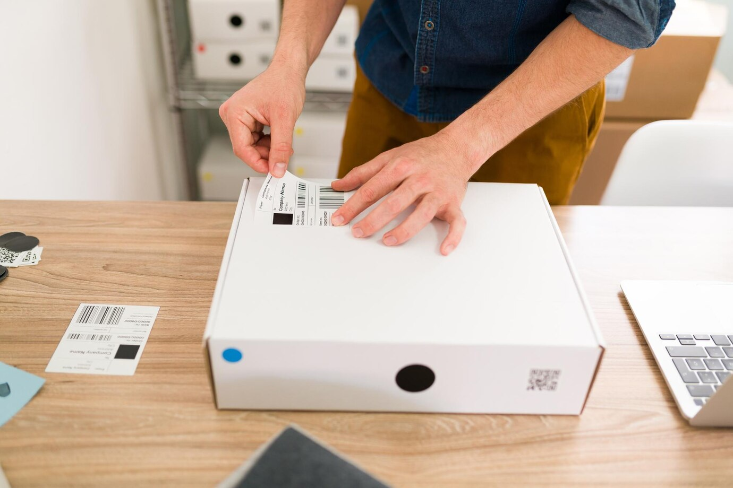
Custom packaging usually fails in the gap between a beautiful digital mockup and a repeatable factory output.
Start With a White Structural Sample
A white sample checks size, folds, locks, product fit, opening sequence, and packability before money is spent on full printing. Put the real product inside. Shake it. Open it like a customer who did not read your design presentation.
Check whether:
Approve a Printed Production Sample
Next, approve a sample made with the intended paper, ink system, coating, lamination, and finishing process. A digital proof is useful for spelling and layout. It cannot fully predict paper texture, spot color, foil, embossing, or how a dark solid print will scuff.
Sign and date the approved physical sample. Keep one with the supplier, one with the fulfillment center, and ideally one with the brand team. Photograph it under controlled lighting for reference, but do not let the photo replace the physical standard.
Define Defects Before They Happen
Create a packaging defect list with three levels:
Sampling should follow a defined plan rather than “check a few boxes.” The current
ISO 2859-1:2026 acceptance-sampling standard provides AQL-indexed schemes for evaluating lots by attributes. Your inspection plan still needs product-specific defect definitions. A standard can tell you how to sample; it cannot decide what your brand considers an unacceptable scuff.
Test the Complete Pack for Real International Shipping
Packaging is a product-plus-package system. Testing an empty box tells you very little about how a loaded order survives parcel networks.
The
ISTA 3A procedure is designed for packaged products weighing 150 lb or less moving through parcel delivery systems. It can include drop, vibration, compression, and atmospheric conditioning elements.
ASTM D4169 is another recognized distribution-testing framework, although the right protocol depends on the shipping unit and route.
For a small DTC brand, formal laboratory testing may not be necessary for every simple textile item. It becomes much more valuable for glass, liquids, electronics, heavy kits, sharp components, and premium goods with costly returns.
At minimum, run controlled pilot shipments to your major markets. Send the production-ready pack, not a hand-wrapped special sample. Ask recipients to photograph:
One successful parcel is encouraging. It is not proof. Use several destinations, carriers, and addresses. Apartment delivery in Paris, a suburban porch in Texas, and a remote postal route in Australia do not create the same handling journey.
Decide Where Final Packing Should Happen in China
There are three common models.
|
Packing Model
|
How It Works
|
Best When
|
Main Brand-Control Risk
|
|
Factory final pack
|
Manufacturer seals the complete customer-ready unit
|
One stable SKU and large repeat runs
|
Changes and country-specific variations require rework
|
|
Fulfillment-center final pack
|
Products and packaging components arrive separately, then the 3PL assembles each order
|
Bundles, inserts, campaigns, multi-supplier products
|
Warehouse needs strong SOPs and component inventory control
|
|
Hybrid pack
|
Factory completes the retail pack; 3PL adds outer protection, cards, labels, or bundles
|
Most growing DTC brands
|
Responsibility can become unclear unless handoff rules are written
|
The hybrid model often gives the best balance. The factory handles packaging that depends on precise product fit. The fulfillment center handles elements that vary by order, destination, campaign, or customer segment.
For example, a headphone factory can seal the product, cable, and manual in an approved retail carton. The China warehouse can then add the correct language card, place the carton in a right-sized shipper, include a loyalty insert for eligible customers, and apply the carrier label in the approved zone.
SFC's
pick-and-pack service describes barcode checks, weight verification, custom packaging, kitting, and order-level packing. Those controls matter because the brand promise is executed one parcel at a time, not one purchase order at a time.
Turn the Approved Design Into a Warehouse Packing SOP
A warehouse SOP should be short enough to use and detailed enough to remove guesswork. A sixty-page brand book is not a packing instruction.
Create a one-page visual sheet for each pack configuration. Show:
Use Barcode and Weight Checks
Visual checks are useful. Scans are better for repeatability.
Each product and packaging component can have an internal SKU or barcode. The pack station confirms that the required items match the order recipe. A final scale check can flag a missing cable, extra product, wrong insert set, or substituted box.
GS1 explains how identifiers and barcodes support product and logistics-unit tracking; its
barcode implementation guidance also distinguishes retail symbols from formats used on outer cases and logistics units. Your customer-facing UPC or EAN and your warehouse's internal component code may serve different jobs. Do not let one be casually copied into the role of the other.
Create a Stop Rule
If the approved box is out of stock, what happens?
“Use something similar” is how brand control disappears. The SOP should say whether the warehouse must pause orders, use a named backup, contact the brand, or downgrade to neutral packaging for a specific channel.
The stop rule protects the customer and the warehouse team. A packer should not have to invent brand policy at 4:45 p.m. during a promotion spike.
Manage Packaging Inventory Like Product Inventory

Custom packaging can stop fulfillment even when the product is in stock. A hero SKU with 2,000 units available but only 80 approved boxes is effectively an 80-unit SKU.
Track packaging components with the same discipline used for products:
This matters more when one insert serves five products, or when one product can use several packaging configurations. The inventory relationship becomes many-to-many. A simple bill of materials, or BOM, keeps it understandable.
Avoid the MOQ Trap
Large packaging orders lower unit cost but increase version risk. A brand may save eight cents per box and then throw away 4,000 boxes after a regulatory label or product claim changes. That is not a saving.
For early-stage brands, start with standard structures plus customized sleeves, stickers, or inserts. Move to fully printed structures after demand and artwork are stable. It is not as cinematic, maybe, but it protects cash.
A China warehouse can hold products from several suppliers and release them through one workflow. The guide to
storing inventory in China and shipping globally covers supplier consolidation, inventory visibility, and direct international order fulfillment.
Keep Brand Control Across Markets, Channels, and Campaigns
One universal pack sounds simple. It may not be suitable everywhere.
Different markets can require different language, recycling marks, importer details, product warnings, battery labels, or disposal instructions. Different sales channels may also have their own barcode and prep rules. A subscription customer may receive a story card that makes no sense in a marketplace order.
Build a rule matrix based on:
Then keep the number of active configurations under control. Personalization is lovely until the packing table looks like an airport departure board.
Use Evergreen and Campaign Components Separately
Keep core brand packaging evergreen. Use replaceable cards, sleeves, stickers, or belly bands for short campaigns. This reduces obsolete inventory and makes transitions cleaner.
For example, the product box can carry stable brand and compliance information. A small insert can carry the seasonal offer. When the campaign ends, only the insert changes.
Define the Customer's First View
Carrier labels, customs pouches, and security tape can cover artwork. Reserve a plain label zone on the outer shipper. If the parcel needs multiple labels, show the warehouse where each one should go.
This is a small design detail with a large effect. The customer cannot enjoy the logo hidden under a thermal label and three routing stickers.
Packaging Standards and Compliance DTC Brands Should Know

No single standard covers every product, material, route, and country. Brands need a stack of relevant requirements.
Transport Performance Standards
ISTA procedures and ASTM practices help teams evaluate whether a packaged product can withstand expected distribution hazards. The applicable test should match parcel, freight, pallet, product, and carrier conditions.
Product and Label Requirements
Packaging may need warnings, traceability information, product identifiers, country-of-origin information, importer details, age grading, batch numbers, ingredient statements, or regulatory marks. The exact requirements depend on the product and destination. A cosmetic, lithium-battery device, pet supplement, and cotton T-shirt should not share one compliance checklist.
Environmental Claims and Packaging Waste Rules
Words such as “eco-friendly,” “recyclable,” and “biodegradable” are marketing claims, not decoration. In the United States, the FTC's
Green Guides summary explains when claims should be qualified and what evidence marketers need. In the EU, the Packaging and Packaging Waste Regulation entered into force in 2025 and
generally applies from August 12, 2026, with requirements covering packaging regardless of material or origin.
Do not print a broad green claim because a supplier said the mailer “looks environmental.” Ask for the material specification, certification scope, test evidence, and exact wording allowed in your selling markets.
Custom Packaging Applications by DTC Industry
The right packaging system changes with the product.
Apparel and Fashion Accessories
Apparel usually benefits from low-volume flexible packs, clean folding, size identification, moisture protection, and easy returns. A branded inner bag or tissue layer can create a neat reveal without forcing every order into a box.
The hard part is SKU accuracy. Size, color, and style can look nearly identical at the packing bench. Barcode scanning and clear location labels matter more than decorative extras. If customers regularly exchange sizes, use packaging that can be resealed without looking ruined.
Consumer Electronics and Mobile Accessories
Electronics need fitted protection, cable and accessory checks, readable serial or batch labels, and route-specific handling for batteries. Packaging should prevent movement without becoming huge.
Use a final weight check to catch missing cables or adapters. Keep device variants visually distinct at the warehouse, even if the customer-facing boxes look similar. A premium matte-black family of cartons looks excellent until the wrong plug type reaches the customer.
Beauty, Skincare, and Wellness
Beauty packaging carries strong visual expectations. It also faces leakage, glass breakage, pumps unlocking, heat, and ingredient or batch-label requirements.
Test the primary container and shipping pack together. Add tamper evidence where appropriate. Keep sample sachets and free gifts under separate market rules because the “little extra” is still a product crossing a border.
Pet Products
Pet accessories may have unusual shapes, chew-resistant materials, fabric variants, or food-contact questions. Pet consumables and supplements bring much stricter labeling and import considerations.
For soft accessories, avoid oversize boxes. For bowls, ceramic items, and devices, protect edges and surfaces. Include care instructions that are useful, not merely cheerful.
Subscription Boxes and Product Bundles
Subscription packaging is an assembly operation. The box may change monthly, and components may arrive from several suppliers. The BOM, cutoff date, assembly sample, and leftover-component plan need to be clear before orders open.
Kitting close to Chinese suppliers can make replenishment and replacement easier, but every monthly change creates a new chance for a version error. Freeze the pack recipe, approve a golden sample, and run a first-article check before the full batch.
A Practical China Custom Packaging Workflow for DTC Brands
Here is a manageable end-to-end process.
Step 1: Map the Customer and Shipping Journey
List the product, target markets, carriers, delivery time, likely handling, sales channels, return method, and customer expectation. A $19 accessory and a $240 gift set do not need the same reveal.
Step 2: Set a Packaging Cost and Parcel Target
Define a maximum packaging cost, packed weight, and outer dimensions. Include storage and assembly, not only the printer's unit quote.
Step 3: Create the Structural Design
Choose the minimum structure that protects the product and presents it well. Test a white sample with real production items.
Step 4: Complete Artwork and Compliance Review
Lock text, colors, barcodes, claims, warnings, country-specific information, and revision numbers. Have the appropriate compliance specialist review regulated content.
Step 5: Approve the Production Sample
Compare the printed sample with the specification. Sign the physical sample and store matching references with the brand, supplier, and warehouse.
Step 6: Inspect the Packaging Batch
Check dimensions, material, print, finish, function, barcode readability, quantity, and master-carton condition. Use a documented sampling plan and quarantine failed lots.
Step 7: Receive Components Into the Warehouse
Assign each component an ID. Count it, photograph it, record the version, and keep unapproved or obsolete stock physically separated.
Step 8: Build and Test the Packing SOP
Time the task with normal warehouse staff. Confirm component scans, assembly sequence, label position, final weight, and exception rules.
Step 9: Run a Small Live Batch
Ship a controlled batch to several real addresses. Review delivery time, damage, unboxing, tracking, and customer-support contacts.
Step 10: Monitor and Improve
Track problems by SKU, packaging version, destination, and carrier. Change one variable at a time where possible. Otherwise, you may fix a dent problem and accidentally create a weight problem.
Metrics That Show Whether Brand Control Is Working
Brand control needs evidence. Useful packaging KPIs include:
|
Metric
|
What It Reveals
|
How to Use It
|
|
Packaging defect rate
|
Print, structure, finish, or material failures
|
Track by supplier, batch, and version
|
|
Pack configuration error rate
|
Wrong insert, box, sample, or bundle
|
Track by order rule and pack station
|
|
Damage rate
|
Protection performance in real delivery
|
Segment by SKU, destination, and carrier
|
|
Dimensional-weight variance
|
Difference between planned and billed parcel size
|
Audit substitute boxes and packing technique
|
|
Average pack time
|
Labor complexity of the design
|
Simplify folds, components, and scanning steps
|
|
Packaging stockout rate
|
Whether components interrupt sales
|
Adjust reorder points and approved backups
|
|
Customer contact rate
|
Confusion, damage, missing parts, or duties
|
Tag support reasons and connect them to pack data
|
|
Obsolete packaging write-off
|
Cost of frequent artwork and campaign changes
|
Use smaller runs or modular components
|
Customer-generated unboxing photos are also useful. They show the real result after international handling, not the tidy sample on a studio table. Shopify's guide to a
memorable unboxing experience makes a helpful distinction: the goal is to add value and create positive brand associations. The warehouse can execute that goal only when the design is operationally clear.
Common Custom Packaging Mistakes When Shipping from China
Buying Before Testing the Shipping Rate
The team approves a dramatic box, orders 5,000 units, and only then discovers the parcel moved into a higher weight band. Calculate the packed shipment first.
Treating the Golden Sample as the Whole Specification
A sample shows the outcome but not every material and tolerance behind it. Keep both the physical reference and the written specification.
Letting Suppliers Make Silent Substitutions
Paper, film, adhesive, coating, or ink changes can alter appearance and performance. Require written approval before substitution and define named backups where continuity matters.
Printing Too Many Seasonal Components
Campaign packaging ages quickly. Put short-lived messages on low-cost, replaceable pieces rather than the main product carton.
Ignoring Pack-Station Ergonomics
A structure that takes four minutes to assemble may be charming in a design meeting and expensive at 2,000 orders per day. Watch a normal operator pack it.
Mixing Old and New Versions
New artwork entering the warehouse does not make old artwork disappear. Use version IDs, quarantine locations, effective dates, and a written disposal or rework decision.
Measuring Success Only by Unit Cost
The lowest-cost box can increase damage, labor, storage, dimensional weight, and refunds. Compare total delivered cost and customer outcome.
How to Evaluate a China Fulfillment Partner for Branded Packaging
Ask for a process demonstration, not a broad “yes, we do custom packaging.”
Useful questions include:
Also ask who owns each decision. The packaging printer may own print quality. The fulfillment center may own assembly accuracy. The brand owns approval and claims. The carrier owns neither, though it will happily reveal weak packaging during transit.
If you need a tailored workflow, use the
SendFromChina contact page to share your SKUs, current packaging, monthly order volume, target countries, and expected customization. A useful quote depends on those details.
The Brand-Control Playbook in One Page
Before mass production:
Before fulfillment:
- inspect the packaging production lot;
- receive each component under its own ID;
- create the packaging BOM;
- write a visual packing SOP;
- define scans, weight checks, and label zones;
- set stockout and substitution rules;
- separate obsolete packaging;
-
run a small live batch.
After launch:
Final Thoughts: Outsource the Work, Keep the Decisions
Custom packaging lets a DTC brand ship from China without looking or feeling generic. More importantly, it gives the team a way to translate brand intent into physical rules.
The box matters. So do the insert, seal, barcode, protective material, label position, pack sequence, version code, and exception process. Brand control lives in all those ordinary details.
You do not need to micromanage every parcel. You do need to decide what “correct” means, record it clearly, and require evidence that the process keeps producing it. Outsource the packing work, sure. Keep ownership of the standard.
That is how a parcel can travel thousands of miles from a China warehouse and still feel unmistakably yours when it arrives.
FAQs About Custom Packaging for DTC Brands Shipping from China
1. What is custom packaging for a DTC brand?
Custom packaging is packaging selected or produced for a specific brand, product, or customer experience. It can include printed boxes, mailers, tissue, tape, fitted inserts, labels, cards, kitting, and a defined packing sequence. It does not have to mean a fully custom box.
2. Can a DTC brand ship directly from China and still use branded packaging?
Yes. Products and packaging can be stored at a China fulfillment center, where orders are picked, packed with approved branded components, labeled, and shipped worldwide. The brand needs clear specifications, component inventory, packing SOPs, and quality checks.
3. Will custom packaging make a parcel look less like it came from China?
It can create a consistent brand experience, but it should not be used to hide legally required origin information. Focus on professional presentation, correct labels, useful communication, and reliable delivery rather than pretending the supply chain does not exist.
4. What is the minimum order quantity for custom packaging in China?
MOQ varies by structure, material, print process, and supplier. Stickers and digital-print inserts may support small runs. Offset-printed boxes, molded inserts, and special finishes often need larger quantities. Ask for both MOQ and economic order quantity because they are not always the same.
5. Should the factory or the China 3PL do the final packing?
Use the factory for stable product-level assembly and fitted retail packaging. Use the 3PL for order-specific inserts, bundles, protective shipping packs, and market variations. A hybrid setup works well for many growing brands.
6. How can I keep packaging colors consistent across Chinese suppliers?
Use defined color references, approved materials, a signed physical production sample, measurable tolerances, and controlled lighting for inspection. Require approval before suppliers change ink, paper, coating, or print method.
7. What packaging materials are best for international ecommerce shipping?
There is no universal best material. Soft apparel may suit a mailer. Fragile electronics may need corrugated protection and a fitted pulp insert. The choice should balance protection, size, weight, presentation, local rules, and actual delivery conditions.
8. How do I stop a fulfillment center from using the wrong insert card?
Give every insert a unique component ID and version. Link it to the correct SKU, market, or campaign in the packing BOM. Use scan confirmation, cutoff dates, physically separate storage, and a rule for disposing of old versions.
9. Does custom packaging increase shipping costs from China?
It can. Heavy, large, or awkward packaging raises actual or dimensional weight. A right-sized custom pack can also reduce cost by removing empty space, void fill, and damage. Compare the complete packed parcel, not the empty box price.
10. How do I test custom packaging before shipping worldwide?
Start with structure and production samples. Test the loaded package for drops, vibration, compression, seal strength, and relevant environmental conditions. Then run pilot shipments to several real destinations and document arrival condition.
11. What should be included in a packaging specification sheet?
Include dimensions, materials, weight, structure, artwork files, colors, finishes, barcodes, label zones, tolerances, defect criteria, version ID, packing sequence, approved substitutes, and reference samples.
12. Is eco-friendly custom packaging always more expensive?
Not always. Right-sizing and reducing components can lower material and shipping costs. Certified materials or specialized formats may cost more. Evaluate the full cost and verify environmental claims instead of relying on vague supplier descriptions.
13. How much packaging inventory should a DTC brand keep in China?
Base the level on sales velocity, production MOQ, supplier lead time, campaign plans, and the cost of a stockout. Include a safety buffer, but avoid holding so much printed stock that a small artwork change creates a large write-off.
14. Can custom packaging support different countries and languages?
Yes. Keep core packaging stable and use modular labels, manuals, sleeves, or cards for market-specific content. Your fulfillment system must map each version to the correct destination and prevent cross-use.
15. What proof should a China fulfillment partner provide for branded packing?
Ask for receiving records, packaging stock reports, approved-sample references, first-article photos, scan logs, weight exceptions, defect reports, and pilot-order results. The exact evidence should match the risk and value of the product.






 Post Views:1172
 TAGS:
TAGS:
 Want to know about our services, fees or receive a custom quote?