

Table of Contents
Get Custom eCommerce Fulfillment Service
Book a Meeting
6 China Ecommerce Fulfillment Companies Official Websites to Compare in 2026
Time: Jul 23,2026 Author: SFC Source: www.sendfromchina.com
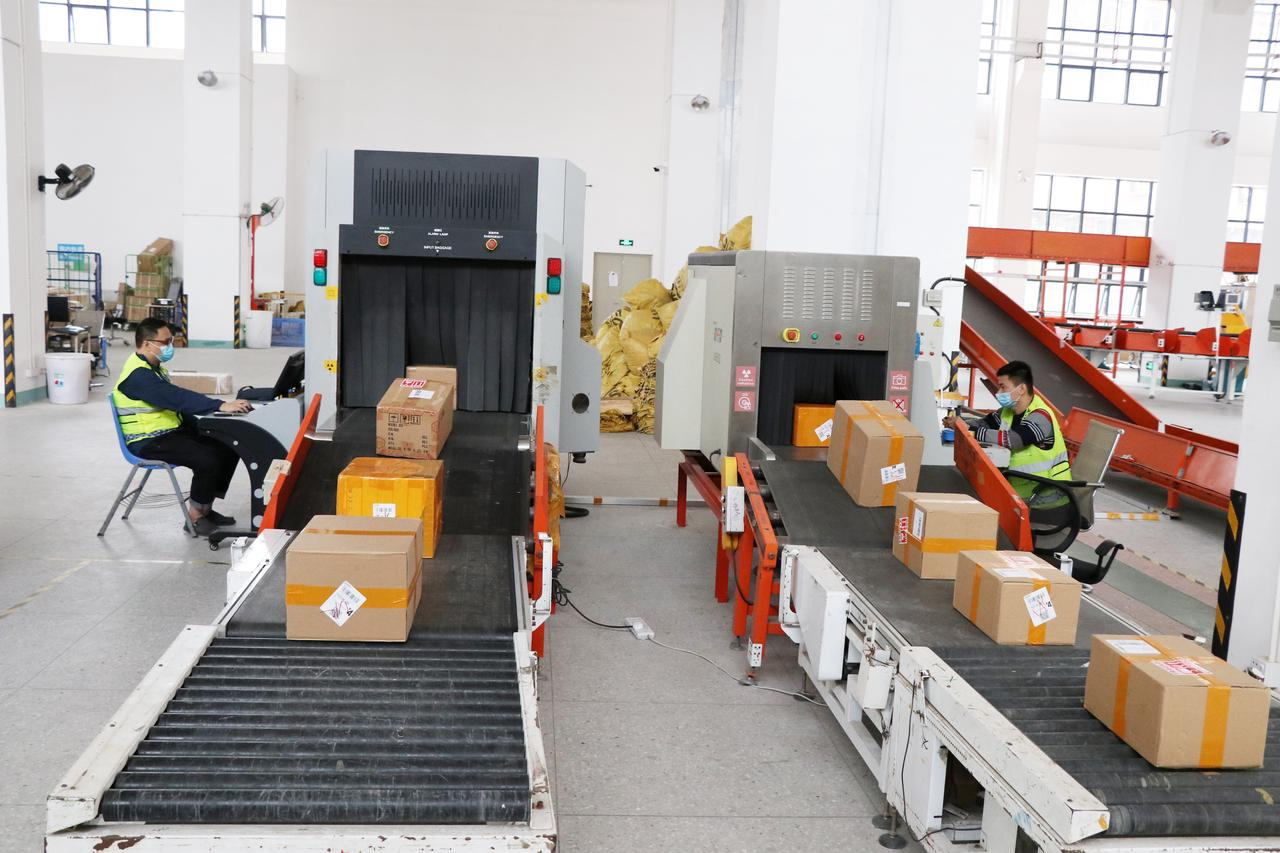
If your products are made in China, you do not necessarily have to move every unit to a US warehouse before you start selling it. A China-based fulfillment partner can receive inventory from your suppliers, store it, process online orders, pick and pack each parcel, and ship directly to customers.

So which providers should you investigate?
Six China ecommerce fulfillment companies with relevant official information are ChinaDivision, EcommOps, Fulfillman, NextSmartShip, Rayfill, and SendFromChina. They are not interchangeable, though. Some focus on inventory-led 3PL operations. Others combine fulfillment with sourcing, dropshipping, freight, or overseas warehouses. Here is the honest answer: there is no defensible universal winner. The right shortlist depends on where you hold inventory, how you send order data, what your products require in the warehouse, and what delivery promise you make to US customers.
This guide compares the six providers using their official websites, then shows you what those websites do—and do not—prove.
Quick Comparison of China Ecommerce Fulfillment Companies
|
Company
|
Operating model suggested by its official site
|
Worth investigating when
|
Official website evidence
|
Verify before signing
|
|
SendFrom
China |
Inventory-led China warehousing and ecommerce fulfillment with pick and pack, value-added work, and international shipping
|
You want to keep owned inventory near Chinese suppliers and fulfill overseas orders from a China-side hub
|
Route-specific terms, full pricing, integration depth, performance evidence, returns, and compensation terms
|
|
|
ChinaDivision
|
China order fulfillment with warehousing, packaging, labeling, and international delivery
|
You want a broad fulfillment workflow connected to China supply
|
Contracting entity, warehouse role, itemized fees, route data, claims, and returns
|
|
|
EcommOps
|
Shenzhen-based direct-from-China fulfillment for DTC brands, with factory and inventory coordination
|
You want fulfillment close to suppliers plus hands-on supply-chain support
|
Minimums, current capacity, integration depth, route-level results, and compensation policy
|
|
|
Fulfillman
|
Fulfillment and dropshipping platform that also offers sourcing, branding, and other services
|
You want sourcing or dropshipping support alongside fulfillment
|
Inventory ownership, fee model, warehouse controls, returns, and the exact role of sourcing agents
|
|
|
NextSmart
Ship |
China, local, and hybrid fulfillment for DTC and crowdfunding brands
|
You are considering how to split inventory between China and destination-market warehouses
|
Exact warehouse and route scope, pricing, integration behavior, claims, and returns
|
|
|
Rayfill
|
China fulfillment, supplier coordination, warehousing, prep, and multiple shipping modes
|
You need pre-warehouse coordination, consolidation, or multichannel preparation
|
Current facility evidence, cutoff rules, route data, fee basis, integrations, and claims process
|
That table is a starting point—not a verdict. Before you compare quotes, you need to make sure you are comparing the same kind of provider.
Why there is no single “best” China fulfillment company
You might be wondering why we are not putting one company at the top and calling the job done.Honestly, that kind of ranking is usually less useful than it looks.
A fulfillment provider can be excellent for a Shopify brand with 20 stable SKUs and completely wrong for a crowdfunding campaign with 15 pledge combinations. A company optimized for direct shipping from China may not be the right choice once your best-selling products need two-day domestic delivery and local returns. Shopify’s 2026 guidance recommends evaluating a 3PL through three broad lenses: operational fit, technology fit, and cost fit. Operational fit includes your products, SKU velocity, peak capacity, kitting and returns. Technology fit covers inventory visibility, order status synchronization, reporting and APIs.
Cost fit requires you to calculate receiving, storage, pick-and-pack, packaging, shipping markups, returns and minimum charges, rather than comparing one advertised rate. See the full Shopify 3PL selection guide.
This matters even more in the United States. DHL’s 2026 U.S. research found that 66% of surveyed shoppers abandon purchases when delivery options do not meet expectations, while 62% have abandoned purchases because of unexpected customs or tax charges. Fulfillment is no longer an invisible warehouse function. It reaches all the way to conversion, customer support and repeat purchasing. See the DHL U.S. E-Commerce Trends findings.
First, Decide Which Fulfillment Model You Actually Need
Inventory-led China 3PL
An inventory-led 3PL receives products you own, records them by SKU, stores them, processes orders, picks and packs parcels, and arranges shipping. This model is usually the closest fit when you already have suppliers and want operational control over inventory.For a deeper explanation of the workflow, see this ecommerce fulfillment from China guide.
Sourcing or dropshipping platform
A sourcing or dropshipping provider may help find products, buy from suppliers, and fulfill orders without the same owned-inventory setup as a traditional 3PL. That can be useful for product testing. But if you need formal receiving, inventory reconciliation, bundles, custom packing rules, or multi-SKU control, ask exactly when the provider becomes the warehouse operator and how your inventory is recorded.
Freight forwarder or parcel provider
A forwarder mainly coordinates the movement of freight. A parcel or carrier-type provider mainly moves packages through shipping networks. Some offer storage or handling, but that does not automatically mean they can run daily ecommerce fulfillment with SKU-level inventory, order syncing, branded packing, and returns.
Overseas warehouse or hybrid network
A US warehouse can support domestic delivery and local returns after inventory is imported in bulk. A hybrid network places some stock in China and some near the destination market.
You might use China inventory for new products, long-tail SKUs, or globally dispersed demand, while holding proven US bestsellers domestically. That is an operating decision, not a slogan. Your product margin, demand stability, working capital, customs exposure, and return rate all matter.
How We Selected These China Ecommerce Fulfillment Companies
This article uses a deliberately simple method. A company had to have a current official page that:
- directly connects the business to fulfillment from China;
- describes at least part of the warehouse-to-customer workflow;
- addresses ecommerce or DTC sellers;
-
provides enough information to identify a plausible best-fit scenario.
Most importantly, we did not score self-published speed, savings, accuracy, customer-count, or warehouse-size figures. Those claims may be worth asking about, but you need the measurement method, date range, sample, exclusions, and contractual relevance before they belong in a buying decision.
The Six Providers, Based on Their Official Websites
SendFromChina: Inventory-Led Fulfillment Near Chinese Suppliers
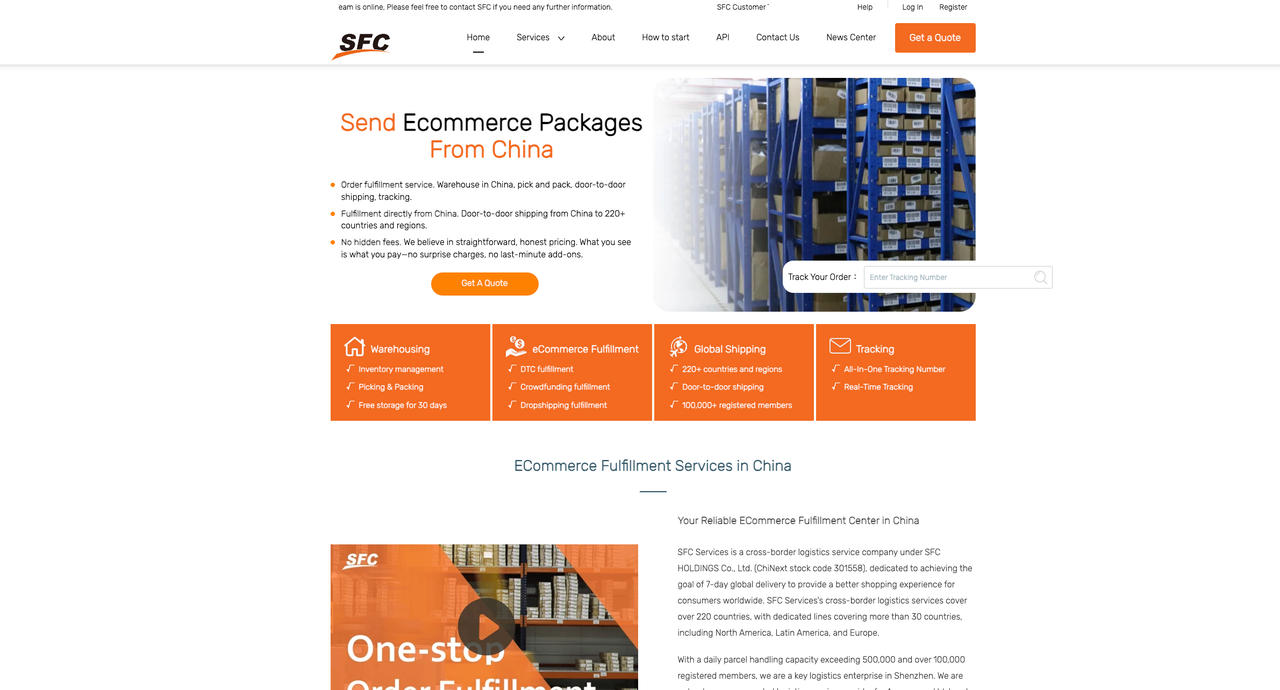
SendFromChina, also referred to as SFC, is a China-based 3PL and order fulfillment provider. Its documented service scope includes China warehousing, inventory management, order fulfillment, pick and pack, packaging-related work, and international shipping.

The clearest fit is an ecommerce brand that owns inventory, sources or manufactures in China, and wants a China-side hub between its suppliers and overseas customers. You can review where SendFromChina describes its company and service background and how brands can keep inventory near suppliers in China.
SFC’s workflow references manual uploads, CSV, webstore-related connections, and API-supported product, ASN, order, and inventory operations. If technical integration matters, inspect the available API and order-data workflows and request a live demonstration of the exact process you need.
Worth evaluating when: You own inventory and need supplier receiving, China warehousing, SKU-level order fulfillment, packing options, and direct international shipping in one workflow.
Ask before signing:
- What are the current fees for receiving, storage, pick and pack, materials, optional work, insurance, and shipping?
- Which route, product, declared-value, and destination restrictions apply?
- How are inventory discrepancies, delayed orders, loss, damage, replacement, and returns handled?
- What is the exact integration method for your store and operational volume?
- Which performance, facility, and customer-case evidence can be shared for your scenario?
ChinaDivision: Broad China Order Fulfillment
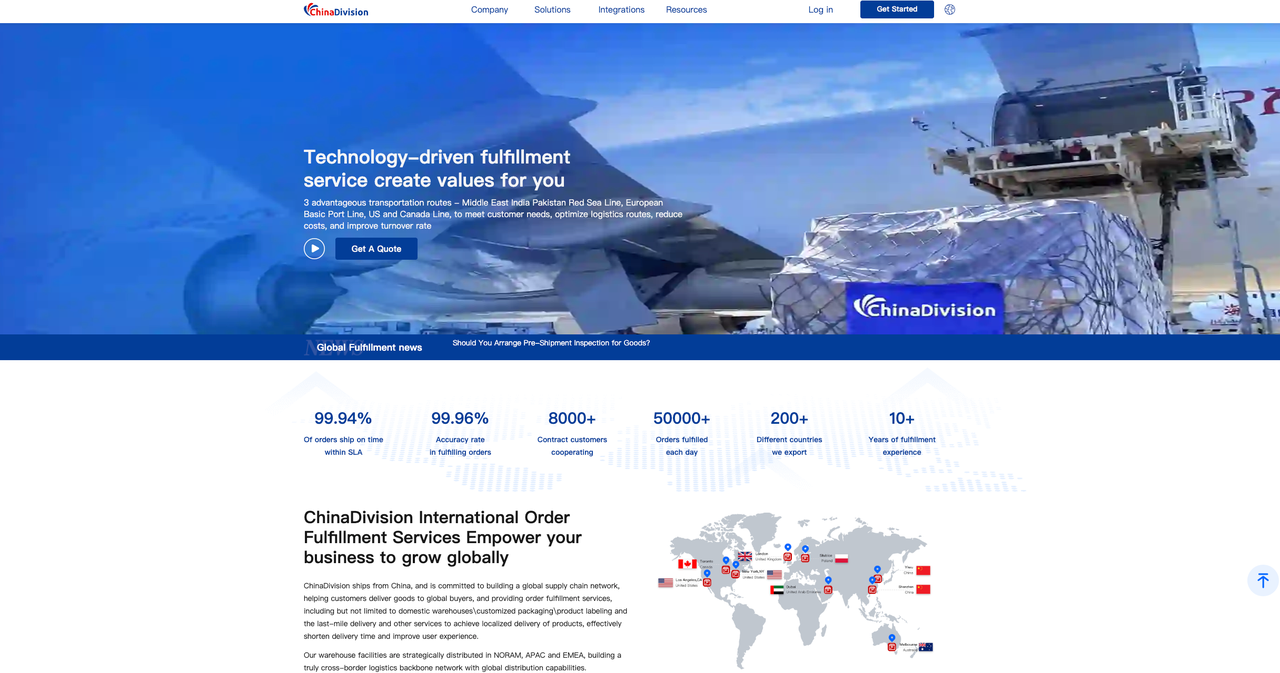
ChinaDivision’s official site presents the company as an international order fulfillment provider shipping from China. It describes warehousing, customized packaging, labeling, order handling, and last-mile delivery as parts of its service mix.

That breadth may suit a seller looking for one provider to discuss several steps of the workflow. At the same time, the official site contains numerous scale and performance claims. Treat those as questions for due diligence—not as independent proof.
Worth evaluating when: You want a broad order-fulfillment conversation that includes storage, parcel preparation, and international delivery.
Ask before signing:
- Which legal entity signs the contract?
- Which warehouse will hold your inventory, and who operates it?
- How are receiving discrepancies and stock adjustments documented?
- Which fees apply to storage, pick and pack, packaging, shipping, exceptions, and returns?
-
What route-specific evidence supports the proposed US service?
EcommOps: Direct-from-China DTC Operations
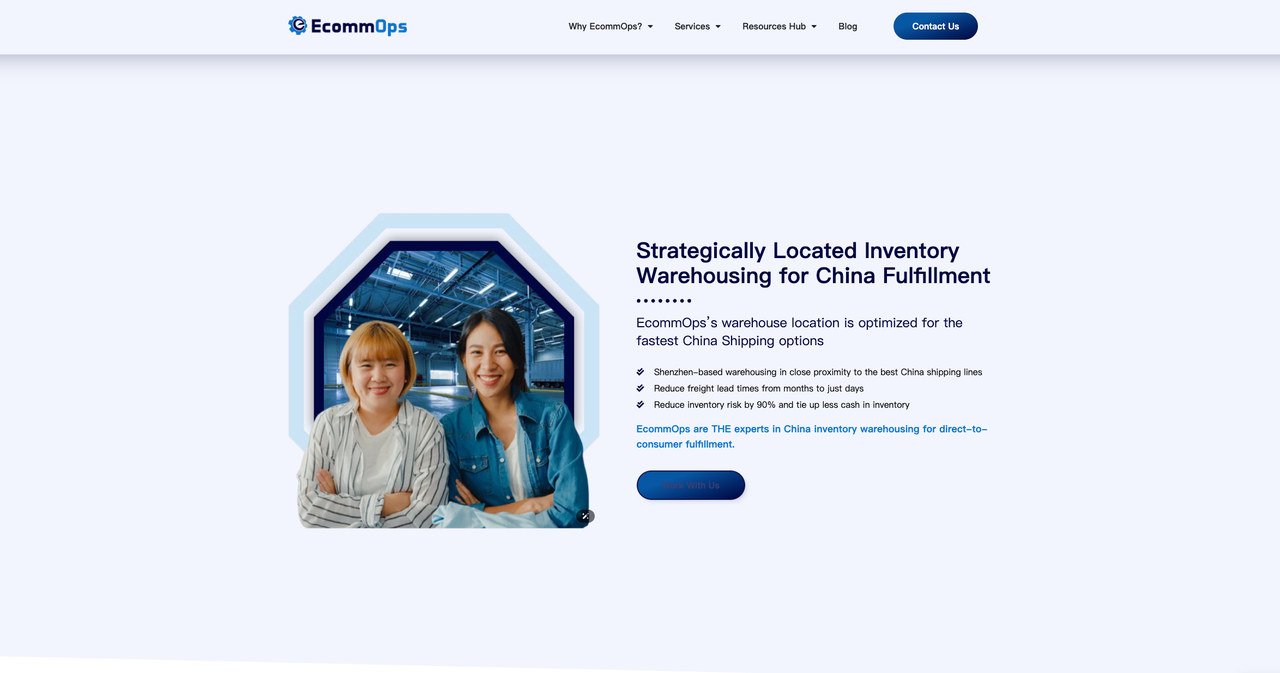
EcommOps describes itself as a China supply-chain and fulfillment company for DTC brands. Its official pages emphasize a Shenzhen warehouse, direct-to-customer fulfillment, supplier coordination, inventory warehousing, branding, and factory relationships.

This is a potentially useful fit if you want a team close to factories and need more than parcel dispatch. However, its website also makes strong performance and savings claims. Ask for current, route-specific evidence rather than assuming those results will apply to your products.
Worth evaluating when: Factory communication, China inventory, packaging, and DTC fulfillment need to work as one operating process.
Ask before signing:
- What order volumes and product types are a good operational fit?
- How does its warehouse system handle SKUs, bundles, and inventory adjustments?
- Which platforms connect directly, and what happens when an order fails to sync?
- How are losses, damages, delays, and returns handled?
-
Can it provide a sample invoice and a dated US-lane performance report?
Fulfillman: Fulfillment Plus Sourcing and Dropshipping
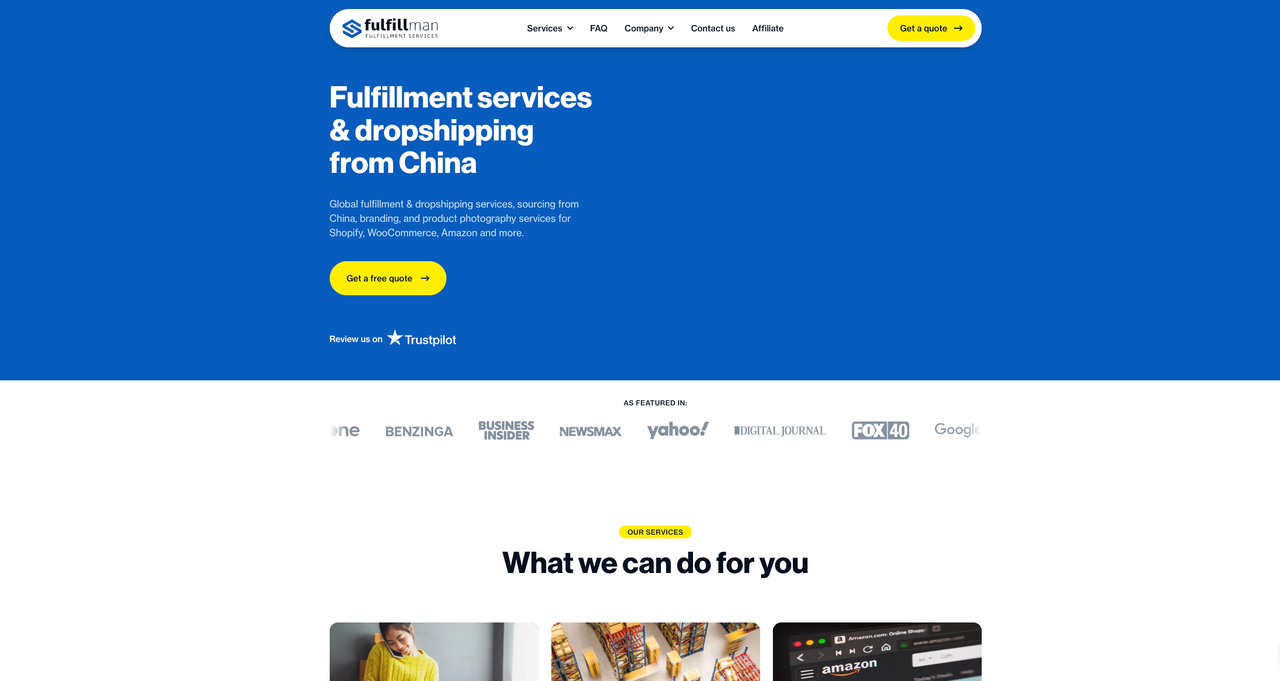
Fulfillman’s official site combines global fulfillment with dropshipping, China sourcing, branding, product photography, FBA-related work, and crowdfunding fulfillment. That makes it broader than a warehouse-only 3PL.

The mixed model can be convenient if you want product and fulfillment support in the same relationship. It can also make comparison harder. Are you buying a sourcing-agent service, using provider-selected suppliers, or storing inventory you already own? Those arrangements create different responsibilities and costs.
Worth evaluating when: You need sourcing or dropshipping assistance in addition to order fulfillment and brand preparation.
Ask before signing:
- Who owns the inventory at each stage?
- Can you use your existing factories without changing suppliers?
- How are product costs separated from fulfillment and shipping fees?
- What warehouse controls and stock reports are available?
-
What happens if an item fails quality review or a customer returns it?
NextSmartShip: China, Local, and Hybrid Fulfillment
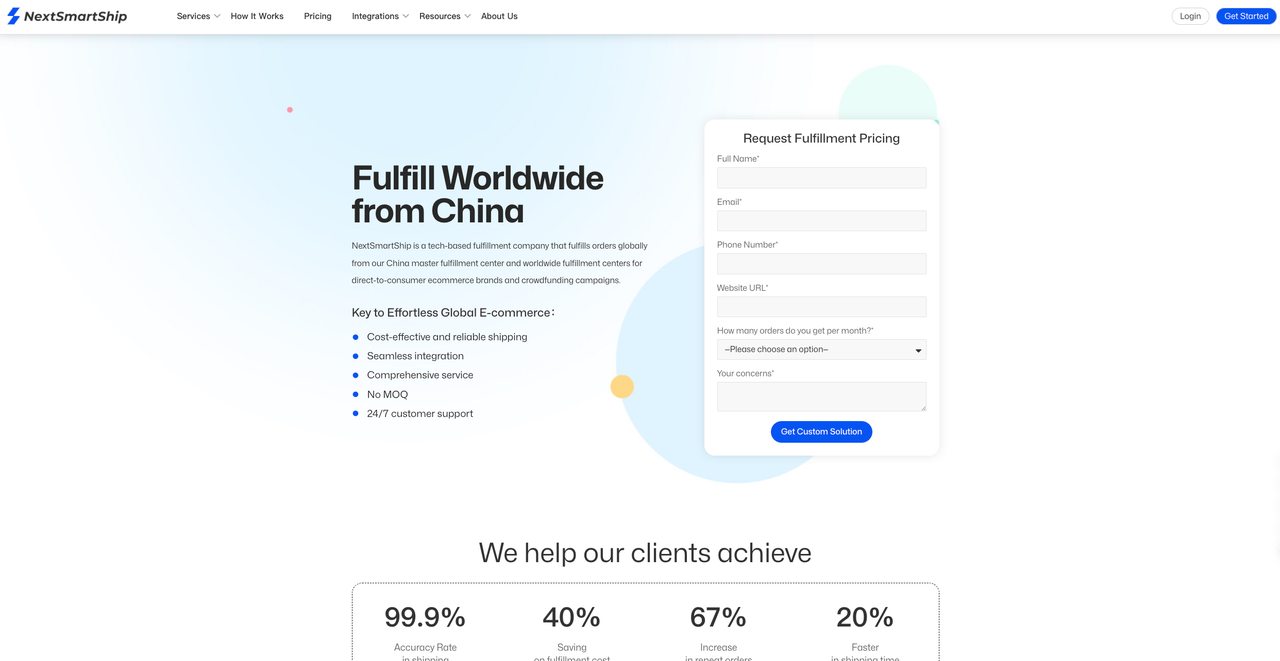
NextSmartShip’s official China fulfillment page describes a technology-based provider serving DTC ecommerce and crowdfunding brands from a China fulfillment center and other locations. Its current positioning also emphasizes hybrid inventory—keeping some products in China and moving selected stock closer to end markets.
That model deserves attention if your answer is not simply “China or America.” You may want flexibility for launches and long-tail SKUs while placing stable US volume in a domestic node.
Worth evaluating when: You want to compare direct-from-China, local, and hybrid inventory strategies within one provider relationship.
Ask before signing:
- Which facilities are operated directly, and which rely on partners?
- How does the system decide where an order is fulfilled?
- What inventory-transfer, storage, and account fees apply in each location?
- Which integrations are native, and how are errors reconciled?
-
What are the claims and returns options for China-origin and US-origin orders?
Rayfill: Supplier Coordination and Fulfillment Preparation
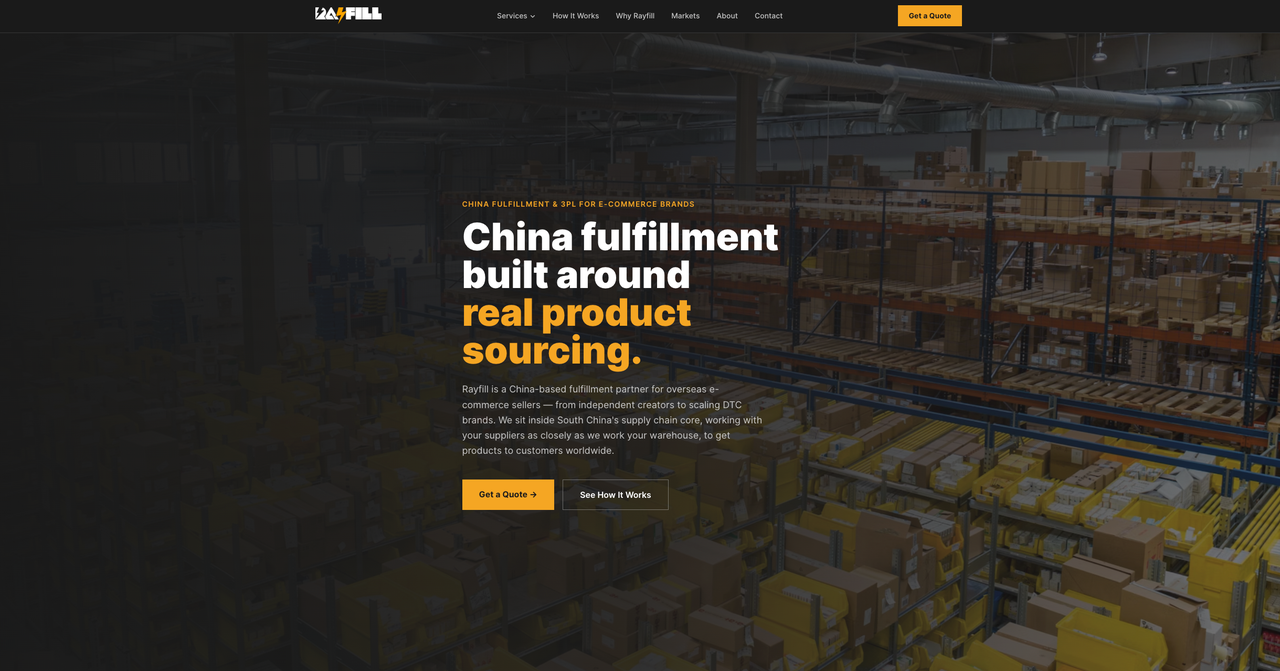
Rayfill’s official site presents China-based fulfillment together with supplier coordination, multi-supplier consolidation, inspection, warehousing, FBA/FBM preparation, branded packaging, and several shipping modes.

That combination may appeal to a brand whose operational problems begin before inventory reaches the warehouse. Still, website statements about facilities, cutoffs, accuracy, destinations, and response time are first-party claims. Request documentation relevant to your account.
Worth evaluating when: You need supplier coordination, consolidation, product preparation, and outbound fulfillment in one China-side workflow.
Ask before signing:
- Which entity operates each listed location?
- What inspection is included, and what requires a separate specification or fee?
- What is the order cutoff, and what exceptions prevent same-day processing?
- How are multichannel orders, inventory, and tracking exchanged?
- What evidence supports the proposed route, service level, and claim process?
What an Official Website Should Prove
An attractive homepage is easy to build. Operational evidence is harder.
Use the following China fulfillment company verification checklist for every provider on your shortlist.
|
Evidence area
|
What to look for
|
What to request if the website is vague
|
|
Company identity
|
Legal or trading name, address, contact path, current About page
|
Contracting entity and warehouse operator
|
|
Warehouse workflow
|
Receiving, ASN, discrepancy handling, storage, picking, packing, dispatch
|
SOP, sample receiving report, and inventory screenshot
|
|
Inventory control
|
SKU and variant handling, bundles, adjustments, replenishment visibility
|
Demo using a sample SKU set
|
|
Order-data flow
|
Manual, CSV, store connection, or API; tracking upload and failure handling
|
Live demo and error-resolution process
|
|
Pricing
|
Receiving, storage, pick and pack, materials, projects, shipping, duties, insurance, and returns
|
Quote using the same SKU and destination inputs for every provider
|
|
Shipping evidence
|
Named route, product eligibility, tracking, delivery range, exclusions, and sample period
|
Dated lane data and written service conditions
|
|
Customs responsibility
|
Entry method, classification inputs, declared value, duty/tax treatment, and responsible party
|
Written responsibility map; professional customs advice where needed
|
|
Claims and returns
|
Loss, damage, delay, insurance, replacement, local return, and disposal rules
|
Public or contractual policy with time limits
|
|
Customer evidence
|
Authorized case with product, constraint, work performed, and bounded result
|
A relevant reference or anonymized case with approval
|
If a provider cannot answer these questions before onboarding, its logo wall and broad service list will not rescue the relationship later.
The US Customs Question Changed—and Old Advice Can Mislead You
If you sell into the United States, do not rely on an old article that says every shipment under $800 enters duty-free.
The US Customs and Border Protection ecommerce FAQ, last modified July 17, 2026, states that the indefinite suspension of the de minimis exemption applies to merchandise valued at $800 or less from all countries, unless a separate exception applies. CBP says formal or informal entry procedures must be used and that a new mail informal-entry process takes effect July 24, 2026.
CBP’s separate de minimis guidance for international mail also says applicable duties, taxes, and fees can depend on factors such as classification, origin, and value.
What does that mean for your provider comparison? You need written answers to practical questions:
- Who has the right and responsibility to make entry?
- Which entry method applies to the proposed route?
- Who supplies the 10-digit HTSUS classification and declared value?
- Which duties, taxes, fees, bonds, or brokerage charges are included in the quote?
-
What happens when data is incomplete or a shipment cannot be released?
This article is not legal, tax, or customs advice. Rules can change, and product-specific requirements matter. Confirm the current treatment with CBP and a qualified customs professional before shipping.
China Fulfillment vs a US Warehouse: A Practical Decision
Should you ship directly from China or move inventory to the US first? Sometimes the right answer is both.
China fulfillment may fit when:
- your factories and packaging suppliers are in China;
- you are launching products or carrying long-tail SKUs;
- demand is spread across several countries;
- you want to avoid committing all inventory to one destination market;
- your customers can accept the route-specific delivery range; and
-
the product, customs process, and landed cost support direct shipping.
A US warehouse may fit when:
- most orders go to US customers;
- domestic delivery speed is central to the offer;
- you need a local returns and refurbishment workflow;
- demand is stable enough to support bulk inventory positioning; and
-
the inbound freight, customs, storage, and working-capital math is favorable.
A hybrid model may fit when:
- proven, high-volume SKUs sit in the US;
- new, seasonal, or low-volume items remain in China; and
-
you have systems and inventory rules that prevent overselling or routing mistakes.
Do the calculation by SKU family, not by brand average. A lightweight accessory, a bulky blanket, and a premium hardcover book can produce completely different answers.
Two Real Fulfillment Examples—and What They Actually Prove
Concrete operations are more useful than generic testimonials. The following examples come from client-supplied SendFromChina project records.
Example 1: Reducing dimensional-weight pressure for blankets
A home-textile brand sourced premium blankets from Chinese suppliers. The products were not especially heavy, but their package volume increased chargeable dimensional weight.
The China-side workflow included supplier receiving, inspection, storage, vacuum compression, carton repacking, and international fulfillment. The operational result was straightforward: the parcels occupied less volume before export, reducing exposure to avoidable dimensional-weight charges without changing the product itself.
What does this prove? Packaging work before export can materially affect the shipping-cost equation for bulky soft goods. It does not prove a universal savings percentage, and vacuum compression will not suit every product.
Example 2: Sorting pledge tiers for a solo card game
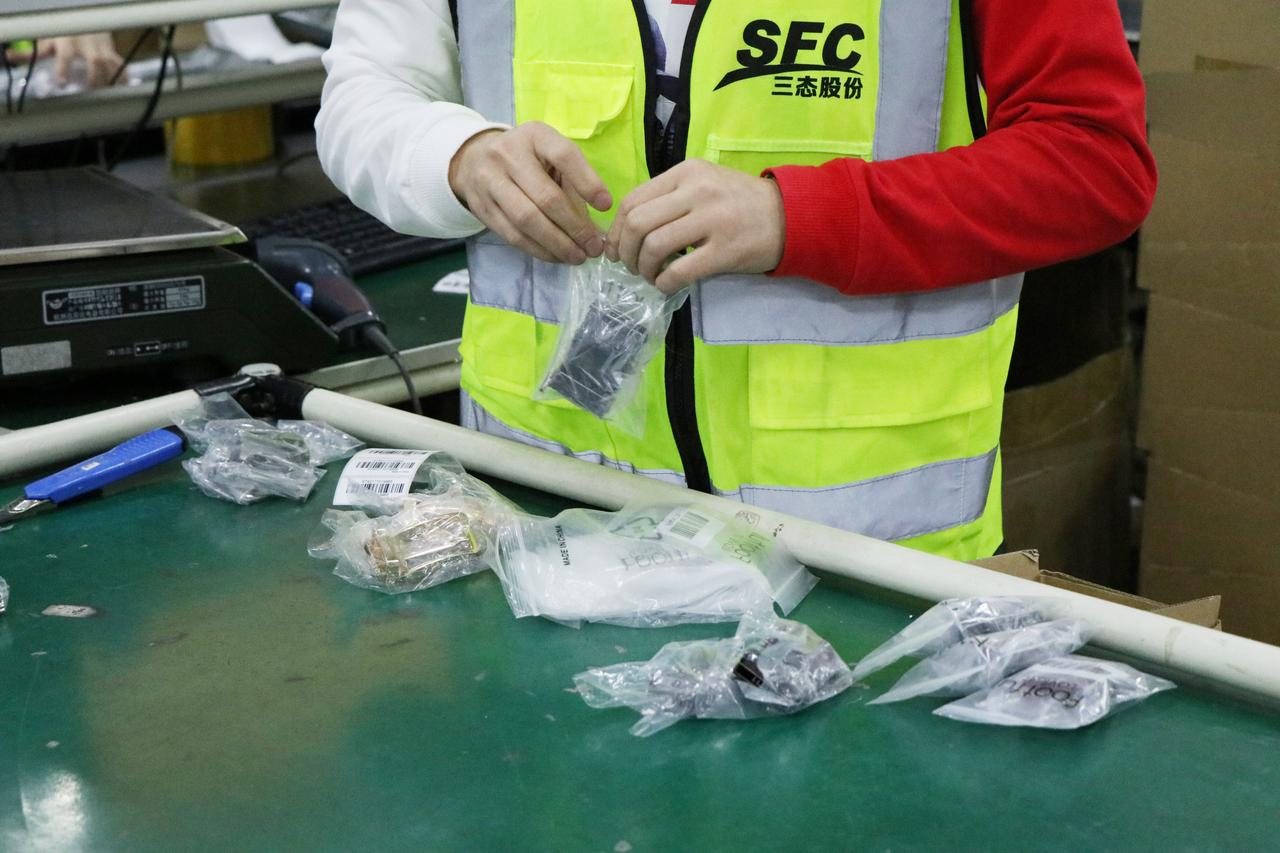
A crowdfunded solo card game was manufactured in China and required post-production fulfillment to overseas backers. The project involved finished-goods receiving, inspection, inventory management, different pledge combinations, add-ons, pick and pack, and international dispatch.
Using one China-side fulfillment hub gave the project a defined workflow between the factory and backers. More importantly, it shows why “we ship worldwide” is not enough evidence for a crowdfunding project. The provider must demonstrate how it maps backer data to SKUs, reward tiers, add-ons, packing instructions, and tracking.
These examples are relevant because they describe the work performed and the constraint addressed. They do not rely on unverified claims of perfect accuracy, guaranteed delivery, or guaranteed savings.

How to Compare China 3PL Pricing Without Fooling Yourself
The lowest shipping line on a quote is not the total fulfillment cost. Honestly, it may not even be the most important line once you add warehouse work and exceptions.
Ask each provider to price the same sample order profile. Include:
- monthly order volume and peak volume;
- SKU and variant count;
- product dimensions, actual weight, and packed dimensions;
- inbound carton count and receiving pattern;
- storage volume and inventory age;
- single-item and multi-item order mix;
- packaging material, inserts, labeling, kitting, or inspection;
- destination mix and requested delivery range;
- product restrictions, batteries, liquids, or other special handling;
- order-data method and any account or integration fees;
- loss, damage, insurance, return, replacement, and disposal assumptions; and
-
customs entry, duties, taxes, brokerage, and other landed-cost items.
You can use SFC’s tool to estimate shipping costs by parcel and destination, but treat the result as an indication. A real quote must reflect the product, route, service level, and optional work agreed with the provider.
Once quotes arrive, normalize them in a spreadsheet. If one quote excludes receiving, returns, duty handling, or packaging, do not compare its headline total with a quote that includes those items.
Run a Pilot Before You Move the Whole Operation
A polished sales call is not a warehouse test.
Start with a controlled SKU set and enough orders to expose the workflow without putting the entire business at risk. Before inventory arrives, agree on:
- SKU names, barcodes, variants, bundles, and product photos;
- ASN and carton-label requirements;
- receiving and discrepancy rules;
- packing instructions and approved materials;
- order import, cancellation, address-change, and tracking workflows;
- the selected US route and customs responsibilities;
- escalation contacts for delays, loss, damage, and inventory issues; and
-
the measurements you will review after the test.
Those measurements might include receiving discrepancies, order-processing exceptions, tracking completeness, packaging defects, delivery distribution, total cost per delivered order, and support resolution quality. Define them before the pilot; otherwise, both sides will remember the test differently.
If you are evaluating SFC, review how the fulfillment setup process works before sending inventory.
Frequently Asked Questions
What are the best China ecommerce fulfillment companies?
There is no universal best provider. ChinaDivision, EcommOps, Fulfillman, NextSmartShip, Rayfill, and SendFromChina all have relevant official fulfillment information, but they represent different mixes of 3PL, sourcing, dropshipping, supplier coordination, and hybrid warehousing. Compare them using the same product, order, destination, cost, integration, and risk inputs.
How do I verify a China fulfillment company’s official website?
Look beyond the homepage. Verify the company identity, warehouse workflow, inventory controls, order-data options, itemized costs, route-specific shipping evidence, customs responsibilities, claims, returns, and authorized customer cases. Record the page URL and the date you checked every dynamic claim.
Can a China fulfillment center process Shopify orders?
Some providers describe Shopify or webstore connections, while others may accept CSV or manually uploaded orders. Ask for a demonstration covering order import, inventory update, cancellation, address changes, shipping selection, tracking upload, and failed-sync handling. A platform logo alone does not prove the full workflow.
Is direct shipping from China to US customers still possible?
It can be, but the route, entry process, product eligibility, duties, taxes, fees, declared value, and responsible parties must be confirmed. Current CBP guidance says the de minimis suspension applies to merchandise valued at $800 or less from all countries unless separately excepted, so older duty-free assumptions may be wrong.
Should I choose China fulfillment or a US warehouse?
Choose based on SKU-level demand, customer expectations, total landed cost, inventory risk, returns, and operating complexity. China fulfillment may suit new or long-tail products near suppliers; a US warehouse may suit stable domestic volume and local returns; a hybrid setup can split those roles.
What should I send to get a comparable China 3PL quote?
Send SKU count, product and packed dimensions, weight, monthly and peak orders, destination mix, storage needs, order mix, packaging requirements, product restrictions, desired route, data workflow, and returns assumptions. Ask every provider to price the same profile.
Final Takeaway
The best China 3PL for your brand is not the company with the longest service list or boldest homepage. It is the provider that can show how your inventory moves from supplier receiving to customer delivery, price that workflow clearly, and document what happens when an order does not go to plan.
Use the six official sites in this guide to build a shortlist. Then verify the warehouse, data flow, customs responsibility, full cost, claims, and returns using the same questions for every provider.
If your products begin in China and you are ready to compare an inventory-led fulfillment workflow, prepare your SKU, order, destination, packaging, and integration details and request a comparable fulfillment quote. The answer should be route- and workflow-specific—not a promise that one provider is always the fastest, cheapest, or best.
Post Views:14
Copyright statement: The copyright of this article belongs to the original author. Please indicate the source for reprinting.
Previous Post
Next Post
10 China Fulfillment Services for Ecommerce Brands in 2026: Compared by Fit
TAGS
Hot Research
Recent News
- What Is Ecommerce Fulfillment? The Definition, Process, and Benefits
- Third Party Logistics Definition, Process, and Advantages
- Where Does Shein Ship From
- 6 China Ecommerce Fulfillment Companies Official Websites to Compare in 2026
- 10 China Fulfillment Services for Ecommerce Brands in 2026: Compared by Fit
Get Custom eCommerce Fulfillment Service
Book a Meeting
Get a Custom China Fulfillment Solution with FREE Storage for 30 Days
Want to know about our services, fees or receive a custom quote?
Please fill out the form on the right and we will get back to you within a business day.
The more information you provide, the better our initial response will be.


TAGS:
Want to know about our services, fees or receive a custom quote?