In an era where speed, accuracy, and flexibility define competitive advantage, warehouses and fulfillment centers are increasingly stepping away from pen-and-paper workflows. For a third-party logistics (3PL) provider like SendFromChina, embracing digital processes such as paperless picking is more than a technological upgrade — it’s a transformation of how you deliver service, manage risks, and scale for growth. In this article, I’ll walk you through what paperless picking is, why it matters, how it works, what to watch out for, and how to implement it effectively — with a tone grounded in real-world experience and practical insight.
1. What Is Paperless Picking?
At its core,
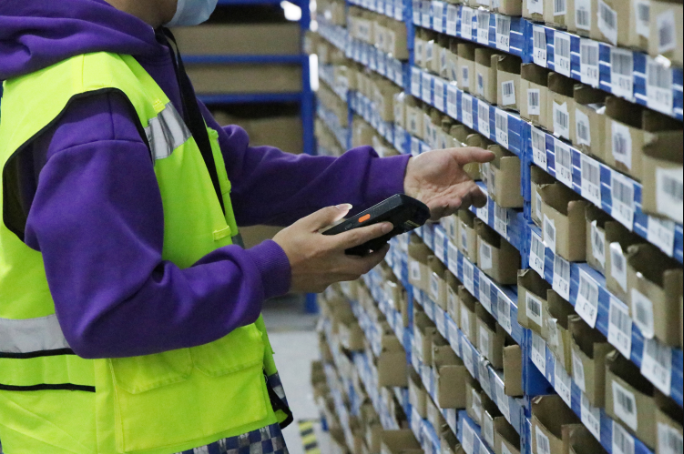
paperless picking replaces the traditional manual use of printed pick lists, packing slips, or paperwork with digital or automated systems. Rather than carrying sheets of paper around a
warehouse, pickers use mobile devices,
barcode or
RFID scanners, wearable terminals, or even voice- or light-guided technologies to receive picking instructions. The
warehouse’s management system (WMS) provides real-time information: what to pick, where it is located, how many units, and where to place them.
In simpler terms: when an order arrives, the system feeds data directly to the picker’s device. The picker confirms each step — typically by scanning or otherwise acknowledging picks — and the system simultaneously updates inventory, order status, and subsequent tasks. No more printing, no more manual cross-outs, no more trailing paperwork.
As one industry definition puts it: paperless picking “eliminates the time-consuming ticking off of individual items on paper lists … replaced by digital or semi-automated systems.”
2. Why It Matters — Key Advantages of Paperless Picking
Switching from paper-based picking to digital processes brings a variety of gains. For a 3PL provider — especially one serving international clients with dynamic order volumes — these benefits can be game-changing.
Increased Accuracy and Reduced Errors
With barcode or RFID scanning, the system verifies each item, preventing mis-picks, miscounts, or wrong
SKUs. Many operators report dramatically lower error rates compared to traditional picking.
Real-time confirmation means inventory is updated instantly — minimizing mismatches between physical stock and system data.
Faster Order Processing and Higher Throughput
Eliminating paperwork reduces the time spent reading, crossing off, and double-checking manually.
Digital guidance (mobile devices, pick-by-light, optimized routing) streamlines the picker’s path through the warehouse, reducing travel time and boosting picks per hour.
For many warehouses — especially during peak periods — throughput increases noticeably, meeting the demand for rapid fulfillment (common in e-commerce).
Real-time Visibility and Inventory Control
As picks are made, inventory records are adjusted in real time. That allows warehouse managers and operations staff to see current
stock levels, order statuses, and even identify slow-moving or overstocked items.
This transparency improves decision-making on restocking, re-ordering, and layout optimization. It also reduces risk of overselling or running out of stock unexpectedly.
Cost Savings Over Time
Less paper — no more printing, no more storage for pick-lists, less waste.
Lower indirect costs: fewer returns due to picking errors, reduced labor wasted on manual paperwork, less time per order, and improved packing/shipping efficiency.
Many adopters report a fairly short payback period (ROI) — often within 1–3 years — depending on scale and volume.
Environmental and Brand Value — Sustainability Counts
Eliminating paper contributes to a more sustainable warehouse operation, less waste, lower carbon footprint.
For a forward-looking
3PL like
SendFromChina, this can be part of your brand’s value proposition to environmentally conscious clients or e-commerce partners.
Scalability, Flexibility & Adaptability
Digital systems can scale as business grows — whether your order volume increases, you add new clients, or expand into multiple warehouses. A paper-based system becomes a bottleneck quickly; paperless picking grows with you.
Because updates are digital and real-time, even last-minute changes (rush orders, cancellations) can be processed without reprinting documents, making operations more agile.
3. How Paperless Picking Works — Technologies & Methods
Paperless picking isn’t one-size-fits-all. Depending on your warehouse’s size, SKU complexity, throughput needs, and budget, you can choose among several technologies or even combine them.
Here are common methods and tools:
Handheld / Mobile Scanners (RF Scanners) or Tablets
This is often the entry point for warehouses starting with paperless picking. Pickers carry handheld scanners or mobile computers — devices that connect to the WMS and display pick lists dynamically. When a picker scans an item, the system confirms the SKU and updates inventory.
Pros: relatively low cost (compared with automation or full robotics), flexible, easy to implement in stages. Cons: picker still uses one hand for the device, which can slow down handling; ergonomics may not be ideal.
Pick-by-Light / Light-Guided Systems
Under this system, shelves or rack positions have LED lights or visual indicators. When the WMS assigns a pick, the relevant light illuminates — guiding the picker to the exact bin or location and showing quantity needed.
Pros: extremely fast for high-volume, high-density warehousing; reduces search time significantly; ideal for small items or high-SKU operations. Cons: higher upfront cost; less flexible if warehouse layout or SKUs change frequently; installing lighting infrastructure takes time.
Pick-by-Voice (Voice-Directed Picking)
Workers wear headsets; the system speaks instructions and the picker confirms via voice or a button. This allows hands-free, eyes-on-the-task picking, ideal for fast-paced or high-volume operations.
Pros: increased comfort, reduced fatigue, high picking efficiency; good if items are bulky, heavy, or require two hands. Cons: less suitable in noisy environments; may struggle if orders involve complex kitting or multiple SKUs per order.
Mixed / Hybrid Systems (Wearables, RFID, Light + Scan, etc.)
Many modern warehouses adopt a hybrid approach: e.g. RF scanners plus pick-by-light; or voice picking for bulk items plus scan-based for small items; or wearable devices such as smart glasses for hands-free scanning and instructions.
Integration with a robust WMS or
ERP is often essential — the system must feed real-time orders, inventory data, and routing logic.
4. What to Watch Out For — Challenges & Potential Drawbacks
Paperless picking is powerful — but it’s not a magic bullet. For smooth implementation, 3PLs should be aware of common pitfalls:
High Initial Investment & Infrastructure Cost
Compared with paper-based picking, digital systems require hardware (scanners, terminals, wearables, wiring, lights), software, perhaps even network infrastructure.
Training staff to use the technology, adapting workflows, and migrating data can add costs — and take time.
Integration and Compatibility Issues
If a warehouse has an existing WMS or ERP, the paperless picking tools must integrate smoothly; some legacy systems might resist such integration, or require customization.
Maintenance and ongoing support — upgrades, software patches, hardware failures — must be planned carefully. System downtime could hamper picking if there’s no fallback.
Change Management & Training Needs
Workers used to paper pick lists may resist change; they may require time to learn and adapt to new workflows. Implementation often demands training and perhaps culture change.
For some warehouses, especially smaller or low-volume ones, the cost-benefit ratio may be less favorable — adoption may not make sense.
Risk of Technical Failures or Downtime
As with any digital or automated infrastructure — power outages, scanner breakdowns, network issues — these can disrupt operations entirely if there is no backup manual process.
Data security and system access control must be managed carefully, especially if using cloud-based systems.
5. Why Paperless Picking Matters for a 3PL
As a third-party logistics provider based in China, SendFromChina operates in a dynamic, fast-moving environment. Your clients may demand quick turnaround, reliability, transparency, and scalability — especially if they are e-commerce sellers shipping to global markets. Here’s why paperless picking is strategically vital for you:
Meeting Client Expectations for Speed & Accuracy: Modern e-commerce customers expect rapid fulfillment and minimal errors. Paperless picking helps deliver that consistently.
Scaling Operations Without Linear Cost Growth: As your client base and order volume grow, you don’t want your labor costs and error rates to grow at the same pace. Digital picking scales more efficiently.
Flexibility to Handle Diverse SKU Mix and Rapid Order Changes: Whether it’s small parcels, bulk shipments, or mixed orders — paperless picking accommodates complex workflows and last-minute changes.
Transparency & Traceability for Clients: Because everything is recorded digitally, you can offer better reporting, real-time tracking, and audit trails — increasingly valuable to international clients concerned with shipment accuracy.
Sustainability & Corporate Responsibility: Many brands and clients now value environmentally responsible supply chains. Paperless picking supports sustainability by reducing waste — a plus to highlight in your marketing.
Competitive Differentiation: By adopting advanced logistics technologies, SendFromChina positions itself as a forward-looking, reliable, and efficient partner — a competitive advantage in the 3PL market.
6. How to Implement Paperless Picking
If you decide to adopt paperless picking, here’s a high-level roadmap (with caveats) to help your warehouse operations transition smoothly.
Assess Your Current Operations & Needs
Analyze current picking processes: average pick time per order, error rates, volume, SKU complexity.
Determine what type of picking (single-item orders, bulk orders, mixed SKUs, e-commerce parcels) dominates your operations.
Evaluate existing infrastructure: do you already have a WMS/ERP? What is the state of your network, hardware, warehouse layout?
Choose the Right Technology Mix
For smaller warehouses or as an entry step: handheld scanners or mobile terminals linked to WMS.
For higher volume, high-density picking: consider pick-by-light, or hybrid systems.
For ergonomic, high-speed operations (e.g. high SKU count, fast movement): consider pick-by-voice or wearables.
Ensure the technology you choose integrates with your WMS and — ideally — with your clients’ order / sales systems (for seamless order import).
Pilot Implementation & Testing
Start with a pilot zone or a part of the warehouse. Implement and test the paperless system. Monitor performance: picking time, error rate, user feedback.
Compare KPIs before and after (throughput, order accuracy, labor cost per order, training time).
Use pilot data to refine workflows before scaling.
Training and Change Management
Provide adequate training and support to pickers and warehouse staff — not just on devices but on the logic of paperless workflows.
Encourage feedback and identify pain points (network latency, device ergonomics, shift patterns).
Gradually transition more operations to paperless; maintain manual backup temporarily to guard against downtime or tech failures.
Scale, Monitor, and Optimize
Once pilot succeeds, roll out across warehouse(s).
Monitor metrics: picking speed, error rate, inventory accuracy, throughput, labor utilization.
Periodically review warehouse layout, SKU slotting, and workflows — digital systems make it easier to re-optimize.
As you grow, consider more advanced upgrades: wearable scanners, pick-by-light rows, even partial automation or robotics (depending on volume and ROI).
7. Common Concerns & Challenges — What You Should Know Before Jumping In
Before you commit, it’s smart to weigh the cons and plan mitigations.
Upfront Cost & ROI Uncertainty: The investment in hardware, software, training can be substantial, especially for smaller warehouses — careful cost-benefit analysis is needed.
Integration Complexity: If you operate legacy systems or multiple warehouses in different geographies, integrating everything can be challenging. Data structures, network infrastructure, and hardware compatibility may cause delays.
Dependence on Technology: System failures — scanner breakdowns, network issues, power outages — can halt picking. A contingency or fallback process (manual or redundant) is wise.
Organizational Resistance: Staff may be used to familiar processes; change management, training, and sometimes cultural shift is required.
Not Always Cost-Effective for Low Volume / Low SKU Diversity / Simple Operations: If your operation is small, or orders are few and simple, the benefits may not outweigh the costs.
8. A Closer Look: Paperless Picking in the Context of 3PL + International Fulfillment
For a 3PL service like SendFromChina — handling clients worldwide — paperless picking brings additional strategic advantages beyond warehouse efficiency.
Global Scalability and Multi-Client Flexibility: As you serve clients with varying demand patterns and SKU assortments, digital systems allow you to allocate and re-allocate resources, slots, and workflows dynamically.
Faster Turnaround for E-commerce Clients: Many e-commerce sellers expect rapid order-to-ship time. With paperless picking, you can meet tight SLAs and become a more attractive partner.
Better Data for Reporting and Transparency: Clients often appreciate visibility: order status, stock levels, error rates. Paperless systems make it easier to provide dashboards or periodic reports.
Competitive Differentiation for Cross-Border Logistics: In cross-border e-commerce, time, accuracy, and handling are critical. A digital, modern warehouse differentiates you from lower-tech competitors.
Sustainability as a Value Proposition: Reducing paper waste resonates with environmentally conscious brands. For European or Western clients especially, sustainability practices can matter for their brand image — you can highlight paperless picking as part of your “green logistics” offering.
9. Conclusion
Paperless picking is more than a trendy upgrade: it’s a fundamental shift in how warehouses operate. For 3PL providers like SendFromChina, adopting paperless picking offers tangible gains — improved accuracy, faster fulfillment, better scalability, cost savings, and stronger client service.
But it’s not a plug-and-play solution. Implementation requires thoughtful planning, investment, training, and sometimes a bit of culture change. Evaluate honestly: consider your current volume, SKU complexity, client needs, and growth plans. Pilot first. Measure results. Scale when the numbers — and the team — are ready.
If done right, paperless picking can become a competitive advantage: enabling you to deliver faster, more reliably, and more cost-effectively — a value your clients will notice and appreciate.
10. FAQs
Q1. What kinds of warehouses benefit most from paperless picking?
A: Warehouses with high order volume, high SKU diversity, fast turnover, or e-commerce fulfillment needs benefit most. Paperless picking helps reduce errors, speed up fulfillment, and handle variable order loads efficiently.
Q2. Is paperless picking expensive to set up?
A: There is a higher upfront cost compared to paper-based methods — hardware, software, training are required. But many operations see return on investment within 1–3 years through labor savings, error reduction, and improved throughput.
Q3. What technologies are commonly used for paperless picking?
A: Typical technologies include handheld/mobile barcode or RFID scanners, tablets or mobile computers, pick-by-light systems, voice-directed picking (headsets), and wearable devices. Many warehouses combine more than one method.
Q4. Does paperless picking eliminate all picking errors?
A: While it significantly reduces errors by verifying each pick and updating inventory in real time, no system is 100% foolproof. There remain risks — e.g. if scanners fail, network issues, or human mis-scans. But error rates are much lower compared to manual, paper-based picking.
Q5. Is paperless picking suitable for small warehouses or low-volume operations?
A: It depends. For small warehouses with low volume or simple workflows, the benefits may not outweigh the cost and complexity. However, if growth is expected, or accuracy and flexibility are important, even small operations might benefit — albeit with a careful cost-benefit analysis first.









 Post Views:1561
 TAGS:
TAGS:
 Want to know about our services, fees or receive a custom quote?