




Table of Contents
Get Custom eCommerce Fulfillment Service
Book a Meeting
How to Improve Delivery Speed with Distributed Warehousing Strategies in China
Time: Dec 10,2025 Author: SFC Source: www.sendfromchina.com
In today’s e-commerce and global supply-chain world, speed matters. Buyers expect parcels to arrive faster than ever. As logistics becomes more competitive, companies that cannot meet fast delivery expectations risk losing customers. For a China-based 3PL brand like SendFromChina, leveraging distributed warehousing — rather than a single central warehouse — can be a powerful differentiator. In this article, we explore how distributed warehousing strategies inside China can dramatically improve delivery speed, reduce costs, and better serve both domestic and international customers.

1. Why Warehousing Strategy Matters: The Basics
Warehousing is not simply about storing goods until they are shipped. It’s a critical node in the supply chain — influencing costs, speed, reliability, and customer satisfaction. Well-run warehouses ensure inventory is ready, orders are processed swiftly, and deliveries dispatched with minimal delay.
But not all warehousing strategies are equal. Where you place your warehouses — and how many you use — affects how quickly goods get to customers. A distributed warehousing or “multi-warehouse” model can offer significant advantages over a single centralized facility.
2. What Is Distributed Warehousing (Multi-Warehouse Fulfillment)
Distributed warehousing — sometimes called multi-warehouse fulfillment, regional warehousing, or decentralized warehousing — involves maintaining inventory in multiple warehouses, often strategically located across different regions, rather than storing all goods in a single central hub.
In the context of China, this could mean placing warehouses close to major manufacturing hubs (e.g. Shenzhen, Guangzhou), near export ports, or near densely populated consumer regions (e.g. the Yangtze River Delta around Shanghai, the Pearl River Delta, coastal metropolises).
Distributed warehousing also often pairs with modern warehouse management systems (WMS), inventory control, and — increasingly — automation, enabling efficient tracking, order-picking, and dispatch across a network of facilities.
3. Core Benefits: Why Distributed Warehousing Speeds Up Delivery
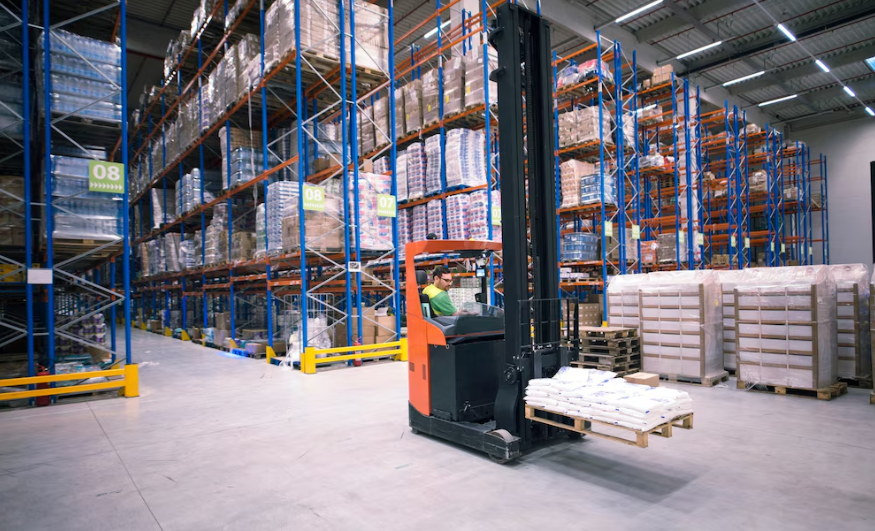
Reduced Transit Distance - Faster Delivery
When inventory sits closer to the customer, goods traverse shorter distances before delivery. Instead of shipping a parcel from one central warehouse across provinces, orders can be fulfilled from the nearest warehouse. That decreases transit time, lowers risk of delays, and enables quicker delivery.
In fast-paced e-commerce markets, delivering “next-day” or “within 48 hours” is often a competitive baseline. A distributed model makes that promise far more realistic and reliable.
Lower Shipping Costs & More Efficient Logistics
Shorter distances don’t just mean speed. They also translate to lower shipping costs — less fuel, fewer miles, less labor per parcel. That’s a big win, especially when many parcels are small-value goods or shipping margins are tight.
Moreover, multi-warehouse strategies enable smarter shipping-zone management: you can designate which warehouse serves which region, balancing load and optimizing logistics routes.
Better Inventory Allocation & Lower Stockout Risk
When you have multiple warehouses, you can distribute stock based on demand patterns or regional sales data. That means high-demand items for East China stay in an East-China warehouse, while demand from Southern China is met from a nearby southern warehouse. This reduces stockouts and overstock — ensuring products are where they need to be when customers order.
Also, a robust WMS across the network provides real-time visibility: you know exactly how much inventory is in each warehouse, which improves replenishment planning and responsiveness.
Scalability and Flexibility — Especially During Peaks
E-commerce is rarely constant. Seasonal sales, promotions, global buying surges — all create spikes. A distributed warehousing network can absorb surge volume by routing orders to less-burdened warehouses, balancing workload and avoiding bottlenecks.
If one warehouse becomes overwhelmed — or temporarily non-operational due to maintenance, local disruption, or seasonal holiday — other warehouses can step in. This redundancy enhances resilience.
Closer to Manufacturing & Ports — Faster Global Fulfillment
For businesses exporting or serving overseas clients, China’s warehouses often cluster around manufacturing zones and coastal export hubs. Placing warehouses near factories or ports reduces lead times for restocking from suppliers.
Furthermore, many warehouses in China — especially those geared toward export and cross-border e-commerce — are bonded warehouses or specialized distribution centers, enabling efficient customs handling, duty deferment, and expedited dispatch abroad.
Improved Order Fulfillment Speed with Automation & Smart Systems
Distributed warehouses in China increasingly adopt modern Warehouse Management Systems, robotics, automation, and data-driven inventory control. This reduces manual handling, cutting errors and speeding up picking, packing, and dispatch.
With automation, the entire fulfillment cycle — from order receipt to dispatch — becomes faster and more predictable. That means fewer delays, improved reliability, and a better experience for customers.
4. Why China — And Why It Matters for International Sellers
For companies sourcing or manufacturing in China — or selling globally via Chinese supply chains — there are unique advantages to leveraging distributed warehousing inside China.
Proximity to manufacturing hubs: Many goods are produced in industrial clusters in Eastern and Southern China (e.g. around Shenzhen, Guangzhou, Zhejiang, Jiangsu). Warehouses near factories reduce time and cost to move goods from factory floor to storage.
Connectivity to ports and export infrastructure: China’s modern transport network — ports, airports, highways, rail — gives logistic providers the ability to dispatch goods domestically or internationally quickly.
Flexible 3PL & fulfillment options: Because many warehouses in China are operated by third-party logistic providers (3PLs) like SendFromChina, clients get access to storage, fulfillment, customs handling, packaging, value-added services — all without needing to build their own infrastructure.
Cost-efficiency: Despite rising labor and land costs, China remains cost-competitive for warehousing, especially given scale and volume.
For international sellers, this means you can enjoy faster lead times, more dependable stock availability, and smoother global dispatch — all while leveraging China's strong logistic backbone.
5. Implementation: How to Build an Effective Distributed Warehousing Strategy in China
Designing a multi-warehouse system is not just about renting multiple spaces. It requires thoughtful planning, good data, and continuous optimization. Below are recommended steps and best practices.
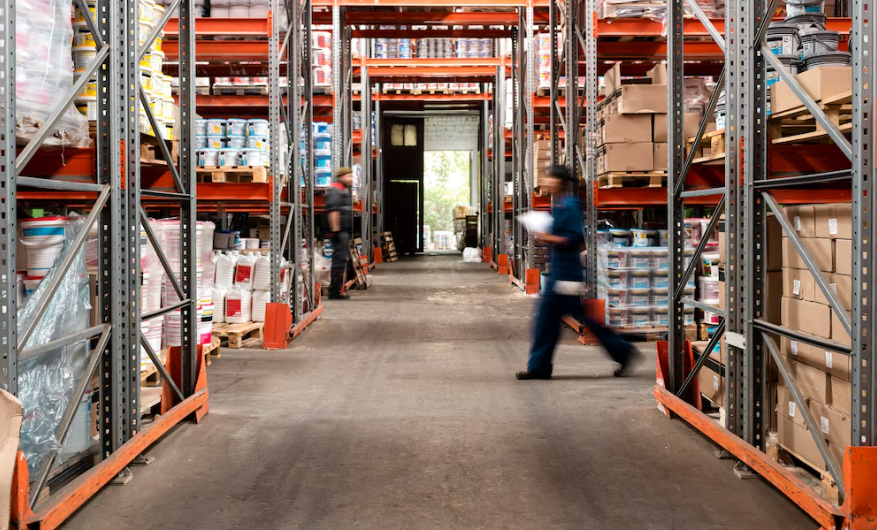
Analyze Sales & Demand Geography
Begin by mapping your customer base: which regions generate the most orders? Where are your high-volume markets located? Also consider manufacturing origins, port/airport access, regional logistics infrastructure. This helps you decide where warehouses should be placed.
For example, if your orders mostly come from East China and Southeast Asia, it makes sense to have a warehouse near manufacturing clusters or a major port city. If you have export customers in Europe or North America, a bonded warehouse near a major export port might reduce lead times.
Segment Inventory Based on Demand Patterns
Not every SKU needs to be in every warehouse. Use sales data, seasonality, and market demand to assign inventory strategically. High-turnover items or items popular in a certain region should be placed closer to those customers. Slow-moving or niche items could be centralized.
This reduces holding costs and avoids overstocking in multiple locations. It also reduces transfer volume between warehouses, which can itself create delay and extra cost.
Implement a Robust Warehouse Management System (WMS) & Integration
A multi-warehouse network loses much of its charm if inventory visibility is poor or orders are mis-routed. Use a WMS that supports multi-location inventory, real-time tracking, demand forecasting and replenishment planning.
Integrate the WMS with your order-management system (OMS) and shipping/carrier systems, so when an order is placed it automatically routes to the optimal warehouse depending on stock, location, and cost/time factors.
Choose the Right Warehouse Types — 3PL, Bonded, Fulfillment, Distribution Centers
Depending on your business needs, you may want a mix of warehouse types:
Fulfillment Warehouses: For rapid order picking, packing, and dispatch. Ideal for e-commerce customers.
Bonded Warehouses: For inventory destined for export — helps with customs, duty deferment, and smoother cross-border logistics.
Distribution Warehouses / Regional Centers: For receiving bulk from factories, sorting, and distributing to fulfillment centers or other warehouses as needed.
Selecting the right warehouse type for each region or purpose helps optimize for cost, compliance, and speed.
Leverage Automation, IoT, and Data Analytics
Modern warehouses in China increasingly adopt automation — robotics, automated picking, smart shelving, IoT sensors, AI-based demand forecasting.
These technologies speed up internal operations, reduce human error, and make fulfillment more predictable. They also enable scalable performance when order volumes surge.
Plan for Redundancy and Risk Management
A distributed network inherently provides resilience. But you should formalize it: make sure critical SKUs are stored in more than one warehouse when feasible; have backup warehouses for high-volume regions; plan for rerouting if one warehouse is overloaded or disrupted (e.g. local holiday, weather events, capacity limits).
Also use data to monitor performance: shipping times, error rates, stockouts — and continuously optimize warehouse assignments and replenishment strategies.
Combine with Smart Shipping and Carrier Selection
Fast warehouses only deliver speed gains if the shipping leg — especially last-mile — is efficient. To maximize the value of distributed warehousing, integrate with reliable domestic carriers or cross-border logistics providers, choose the closest carrier origin points, and plan for zone-based shipping strategies.
6. Data-Driven Advantage: Lessons from Leading Players
Some of the most advanced players in China’s logistics ecosystem have already embraced distributed — or hierarchical — warehousing, combining regional distribution centers with local fulfillment centers. For example, a recent study of JD.com’s logistics network finds that a two-level distribution model (regional + front-distribution centers) significantly improves fulfillment efficiency.
In this study, optimized inventory allocation from regional distribution centers (RDCs) to front-distribution centers (FDCs) increases local order-fulfillment rates, thus minimizing delays and boosting customer satisfaction.
Such data-driven allocation and forecasting — combining demand prediction, inventory optimization, and regional fulfillment — represents the future of high-speed, reliable logistics.
For a 3PL provider like SendFromChina, offering similar strategies — matching inventory allocation with demand, distributing stock across warehouses, and dynamically routing orders — can create real value for clients.
7. Common Pitfalls & How to Avoid Them
Distributed warehousing is powerful — but not automatic. Without careful management, it can lead to inefficiency, inventory fragmentation, and higher complexity. Here are some common pitfalls and how to avoid them:
Inventory fragmentation: Spreading small quantities across too many warehouses can lead to stockouts or overstock. Avoid by using demand data to guide distribution, and consolidating slow-moving SKUs in one or two hubs.
Poor visibility or system mismatches: If your WMS / OMS / shipping systems aren’t integrated, orders may be sent from wrong warehouses, causing delays. Solution: invest in a unified, integrated warehouse-management and order-management platform.
Unbalanced load distribution: Some warehouses may get overloaded while others sit idle. Implement dynamic routing and load-balancing logic to spread demand evenly.
Higher operational complexity / cost: More warehouses means more moving parts — more leases, staffing, systems, management overhead. Mitigate by using 3PL partners who already run optimized distributed networks (like SendFromChina) rather than building from scratch.
Logistics & shipping disconnects: Warehousing speed won’t matter if last-mile delivery is slow. Always pair warehouse placement with thoughtful carrier selection and shipping zone strategies.
8. Why Distributed Warehousing Should Be Part of Your China 3PL Strategy
As supply chains become global and e-commerce customers demand speed, distributed warehousing is less a “nice-to-have” than a “must-have.” For 3PLs operating inside China — a manufacturing powerhouse and export hub — distributed warehousing yields multiple strategic benefits:
Faster time-to-customer domestically and globally.
Lower shipping and logistics costs.
Better inventory management, fewer stockouts, and more reliability.
Scalability to handle seasonal spikes or surges in volume.
Flexibility of warehouse types (bonded, fulfillment, distribution) to suit different client needs.
For a provider like SendFromChina, embracing a distributed network — with optimized inventory allocation, smart WMS platforms, and regional centers — positions you to serve diverse clients: from small-volume e-commerce sellers to large exporters, all with fast turnaround and dependable delivery.
9. Conclusion
In short: distributed warehousing inside China is a strategic lever. It can turn warehousing from a passive storage cost into an active driver of delivery speed, cost savings, and customer satisfaction. Especially for a 3PL provider operating in China, building — or partnering with — a distributed network means you can meet ever-rising expectations for fast, reliable delivery.
If you do it thoughtfully — with data, integrated systems, smart inventory allocation, and logistics-sound execution — the payoff is real: faster deliveries, lower costs, happier customers, and a competitive edge in a crowded market.
10. Frequently Asked Questions (FAQs)
Q: What is “distributed warehousing”?
A: It means using multiple warehouses — in different locations — rather than a single central warehouse, so inventory sits closer to customers.
Q: Does distributed warehousing always cost more because there are more warehouses?
A: Not necessarily. While you manage more facilities, you save on shipping and logistics costs and often reduce stockouts, which can outweigh extra overhead.
Q: How does distributed warehousing improve delivery speed?
A: By reducing distance between warehouse and customer, enabling faster shipping; plus better inventory allocation reduces delays caused by stockouts or warehouse overload.
Q: Do I need special software to manage multiple warehouses efficiently?
A: Yes — a Warehouse Management System (WMS) integrated with your order-management and shipping systems is critical for visibility, inventory tracking, and routing orders to the optimal warehouse.
Q: Is distributed warehousing useful only for big companies?
A: No. Even small-to-medium e-commerce sellers can benefit — especially if they work with experienced 3PL providers who offer shared warehouse services, fulfillment, and smart inventory management.
 Post Views:1377
 TAGS:
TAGS:
Copyright statement: The copyright of this article belongs to the original author. Please indicate the source for reprinting.
Previous Post
How to Manage Returns and Reverse Logistics When Selling Globally
Next Post
TAGS
Hot Research
Get Custom eCommerce Fulfillment Service
Book a Meeting
Get a Custom China Fulfillment Solution with FREE Storage for 30 Days
Want to know about our services, fees or receive a custom quote?
 Want to know about our services, fees or receive a custom quote?
Please fill out the form on the right and we will get back to you within a business day.
The more information you provide, the better our initial response will be.