




Table of Contents
Table of Contents
Your best-selling hoodie sells out on a Friday night, right after an influencer posts about it. Meanwhile 800 phone cases you were pretty sure would move are still on a shelf, quietly eating rent. Sound familiar?
Run short and you lose the sale. Buy too much and your cash sits in cardboard boxes for months. Ecommerce inventory management is how you keep stock somewhere between those two.
This guide covers the process, the main methods, and the formulas with actual numbers plugged in. It also covers multichannel selling and what changes when your products are made in China, which most inventory guides leave out.
What ecommerce inventory management covers
Ecommerce inventory management is how an online business plans, buys, stores, tracks and moves stock so it can fill orders without running out or overbuying. It starts before you place a purchase order. It ends after a return is back on the shelf, or written off.
A few terms get mixed up a lot:
|
Term
|
What it focuses on
|
Simple example
|
|---|---|---|
|
Inventory management
|
How much to buy, when, and where to keep it
|
Ordering 2,000 units before Q4
|
|
Inventory control
|
Keeping records accurate for stock you already have
|
Counting bin A-14 and fixing the system number
|
|
Warehouse management
|
Physical work inside the building
|
Receiving, put-away, picking, packing
|
|
Supply chain management
|
Everything from raw material to customer
|
Supplier choice, freight, customs, delivery
|
The stock you're actually managing
When sellers say inventory they usually mean finished products. In a real warehouse you're juggling more than that:
- Finished goods, the thing the customer buys.
- Components and raw materials, if you assemble, print or bundle anything yourself.
- Packaging materials like mailers, boxes, inserts and tape. Run out of branded boxes and orders stall even with plenty of product on the shelf.
- Kits and bundles. A gift set is one SKU on your store and three SKUs in the warehouse.
- In-transit stock on a boat or truck. You've paid for it but can't sell it yet.
- Safety stock, the buffer for bad weeks.
- Returns waiting to be checked, then restocked, refurbished or written off.
If your system only tracks finished goods, you're working with half the picture.
Why inventory mistakes cost more online
Online shoppers don't wait around. If the product page says in stock and you can't ship, they cancel, maybe leave a bad review, and buy somewhere else. Marketplaces may also push your listing down after a run of cancellations.
Online keeps growing too. The US Census Bureau puts e-commerce at 17.1% of total US retail sales in the second quarter of 2026, about $340.2 billion for the quarter (seasonally adjusted). More orders on more channels gives your stock numbers more chances to drift.
The damage usually shows up in two ways. Stockouts and overselling cost you the sale today and often the customer later. Overstock and dead stock tie up cash, pile on storage fees, and end in a clearance sale that eats your margin.
The ecommerce inventory management process, step by step
Every business runs this a little differently. The loop looks roughly like this.
1. Forecast demand
Start with past sales by SKU. Then adjust for seasonality, promotions, new channels and anything odd, like that one viral week. A spreadsheet is fine early on. Later, software that reads your sales history saves a lot of guessing.
2. Plan purchasing and production
Turn the forecast into purchase orders and check them against minimum order quantities (MOQ), supplier lead time and your cash. A supplier MOQ of 1,000 can force you to hold more stock than you'd pick yourself, so plan for that early.
3. Receive, inspect and label
A lot of inventory errors start at the receiving dock. If 480 units arrive and someone keys in 500, every decision after that runs on a wrong number.
Receiving and labeling
- Give every variant its own SKU. Red medium and red large are different products.
- Use barcodes. The GS1 US barcode guide says each product variation (size, color, style, package) needs its own unique barcode, and a GS1 Company Prefix lets a brand create barcodes for many products at once.
- Check quantity and quality against the purchase order, and log shortages and damage right away.
- Assign a storage location the moment goods are put away.
4. Store and track
Put fast movers near the packing stations and slow movers in the back. Track stock by location, not only as one total.
5. Sync stock across channels
Every sale, return and adjustment should update one central number that all your sales channels read from.
6. Pick, pack and ship
Mistakes here undo the careful work upstream. Scanning each item against the order before you seal the box catches most mis-picks. If packing eats your team's whole day, a pick and pack service can take it off your plate.
7. Handle returns
Inspect returns fast and decide what happens to each one: restock, repackage, refurbish or write off. A return sitting in a corner for three weeks is stock your system can't see.
8. Count and reconcile
Cycle counting instead of a full shutdown count
You don't have to close for a big annual stocktake. Count a small slice every day or week instead. A lot of teams use ABC classes for this: A items (your top sellers) get counted most often, then B, then C. When the same SKU keeps coming up short, look at the process behind it before blaming bad luck.

Inventory management methods and when each one fits
Most brands use two or three of these together.
|
Method
|
How it works
|
Good fit
|
Watch out for
|
|---|---|---|---|
|
Just-in-time (JIT)
|
Order only what you need, close to when you need it
|
Local suppliers, short lead times
|
Any supplier delay hits you fast
|
|
Just-in-case
|
Hold extra stock as a buffer
|
Long or unreliable lead times
|
Ties up cash and space
|
|
ABC analysis
|
Rank SKUs by value or sales and manage A items most tightly
|
Catalogs with lots of SKUs
|
Needs regular re-ranking
|
|
FIFO
|
Ship oldest stock first
|
Most products, especially seasonal ones or dated packaging
|
Needs organized shelves
|
|
FEFO
|
Ship what expires first
|
Beauty, supplements, anything with a shelf life
|
Needs batch and expiry tracking
|
|
LIFO
|
Newest stock goes out first
|
Mostly an accounting choice; not allowed under IFRS
|
Older units can age on the shelf
|
|
EOQ
|
Work out the order size that balances ordering and holding costs
|
Steady, predictable demand
|
Ignores MOQs and price breaks
|
|
Dropshipping
|
Supplier ships straight to the customer
|
Testing products with little cash
|
Less control over quality and delivery time
|
|
Consignment
|
You hold stock and pay only when it sells
|
Retail partnerships
|
Contract terms get tricky
|
|
Kitting and bundling
|
Pre-pack several SKUs as one product
|
Gift sets, starter kits
|
Components still need separate tracking
|
|
Cross-docking
|
Goods move from inbound to outbound with little storage
|
High-volume, fast-moving flows
|
Needs tight timing
|
|
Batch tracking
|
Track units by production lot
|
Recalls, quality control, expiry
|
More data to manage
|
Not sure where to begin? ABC analysis is a good first step, because it shows you which SKUs deserve the most attention.
The inventory formulas you'll actually use
The math is easier with real numbers, so let's use one made-up product: a phone stand that sells about 20 units a day.
Safety stock
The simple version:
Safety stock = (max daily sales × max lead time) − (average daily sales × average lead time)
Say your best day is 30 units, your longest supplier delay is 14 days, average sales are 20 a day and average lead time is 10 days.
(30 × 14) − (20 × 10) = 420 − 200 = 220 units
If your sales data is steady, you can use the statistical version: safety stock = Z × standard deviation of daily demand × √lead time. With Z = 1.65 (roughly a 95% service level), a daily demand deviation of 5 units and a 10-day lead time, that's 1.65 × 5 × 3.16 ≈ 26 units. Quite a gap, right? The simple formula assumes your worst sales day and worst delay land at the same time, so it runs more cautious.
Reorder point
Reorder point = (average daily sales × lead time in days) + safety stock
(20 × 10) + 220 = 420 units
When stock drops to 420, you reorder. Plenty of guides leave safety stock out of this formula. Leave it out and you'll run dry every time a supplier is a few days late.
Economic order quantity (EOQ)
EOQ = √(2 × annual demand × cost per order ÷ holding cost per unit per year)
Annual demand is 7,300 units. Each order costs you $50 in admin and handling, and holding one unit for a year costs $2.
√(2 × 7,300 × 50 ÷ 2) = √365,000 ≈ 604 units per order
Check that against your supplier's MOQ. If the MOQ is 1,000, treat EOQ as a reference point.
Inventory turnover and days of inventory
Inventory turnover = cost of goods sold ÷ average inventory value
Say you sold $240,000 of goods at cost last year and held $60,000 of stock on average. Turnover is 4, so you sold through your stock about four times.
Days of inventory = 365 ÷ turnover, which here is 365 ÷ 4 ≈ 91 days.
Higher turnover usually means leaner stock. Push it too high, though, and stockouts start showing up.
Sell-through rate
Sell-through rate = units sold ÷ units received × 100
You received 600 units this month and sold 450, so sell-through is 75%. Low sell-through on a new SKU is an early sign it could turn into dead stock.
Carrying cost
Carrying cost % = total holding costs ÷ average inventory value × 100
Add up storage, insurance, shrinkage, obsolescence and the cost of the cash tied up in stock, then work out your own number. A product that sits for six months costs more than most sellers expect.

Multichannel inventory management: one source of truth
If you sell on Shopify, Amazon, TikTok Shop and maybe a wholesale account, every channel needs to read from one inventory number. When each platform keeps its own count, you will oversell sooner or later.
Habits that help:
- Keep one master system. Your sales channels show availability, and the real number lives in the master system.
- Show slightly less stock than you have on channels that sync slowly, so one late update doesn't cause an oversell.
- Reserve stock on purpose. If a wholesale order needs 300 units next month, set them aside now so your store can't sell them.
- Track stock by warehouse, so your system knows which location can ship each order.
- Put returns back into the master count as soon as they're checked.
Sourcing from China: lead times, landed cost and where to hold stock
If your products are made in China, your inventory plan has to account for long lead times, extra costs, and a decision about where the stock physically sits.
Long lead times change your reorder math
Back to the phone stand. Say production takes 25 days, and sea freight plus customs and warehouse receiving adds about 35 more (your numbers will vary by route and season). Lead time is now about 60 days instead of 10.
Reorder point = (20 × 60) + safety stock = 1,200 + safety stock.
That's a lot of stock sitting in the pipeline. Longer lead times also mean bigger forecast errors, so safety stock usually grows as well. It's why so many China-sourced brands overbuy some SKUs and run out of others.
Landed cost: what a unit really costs you
The factory price is just the starting point. Landed cost is what it takes to get a unit ready to sell.
|
Cost item
|
Example per unit
|
|---|---|
|
Factory price
|
$6.00
|
|
Freight to destination
|
$1.20
|
|
Import duty (depends on HS code, origin and current rules)
|
$0.60
|
|
Customs brokerage and port fees
|
$0.15
|
|
Inspection and labeling
|
$0.10
|
|
Landed cost
|
$8.05
|
These numbers are only an example. Base your margins and reorder decisions on landed cost, not the factory price.
Where to hold your stock
|
Option
|
How it works
|
Upside
|
Downside
|
|---|---|---|---|
|
Hold stock in China, ship each order direct
|
Goods go into a China warehouse and each order ships as a parcel to the customer
|
Less cash tied up in overseas stock; one pool of inventory for many countries
|
Longer delivery times than domestic shipping
|
|
Ship in bulk to an overseas warehouse
|
Containers or pallets go to a 3PL or your own warehouse near customers
|
Faster local delivery
|
More stock committed early; long reorder cycles
|
|
Send to a marketplace warehouse
|
Bulk stock goes into a marketplace fulfillment program
|
Marketplace shipping perks
|
Storage limits and fees; the stock serves only that channel
|
|
Hybrid
|
Fast movers held near customers, the long tail held in China
|
Balances speed and cash
|
Two locations to keep in sync
|
Many growing brands end up on the hybrid model. For more on the first option, see how to store inventory in China and ship globally. Keeping part of your stock in China warehousing also lets you test new markets without sending a container to each one.
Duties: DDP vs DDU
Somebody pays import taxes on cross-border parcels. With DDP (delivered duty paid), duties are covered upfront and the customer doesn't get a bill at the door. With DDU (delivered duty unpaid), the recipient pays any duties or VAT on arrival. Say clearly on your product pages which one applies. A surprise customs bill is one of the most common reasons parcels get refused.
Restricted goods
Batteries, liquids, powders, magnets and some cosmetics often come with special shipping rules. Check them with your logistics partner before you place the production order, not after the goods are already in a warehouse.

Inventory playbooks by industry
|
Industry
|
Main inventory challenge
|
What helps
|
|---|---|---|
|
Apparel and shoes
|
Many size and color variants; sizes sell unevenly
|
Track at variant level; reorder by size curve, not total units
|
|
Consumer electronics
|
Batteries, serial numbers, warranty returns
|
Serial or batch tracking; confirm battery shipping rules early
|
|
Beauty and personal care
|
Expiry dates and batches
|
FEFO picking; batch tracking for recalls
|
|
Board games and crowdfunding
|
Pledge tiers, add-ons, expansions, many SKUs per order
|
Kitting by reward tier; lock the SKU list before production
|
|
Home textiles
|
Bulky, light items where dimensional weight drives freight cost
|
Vacuum packing and right-sized cartons to cut volume
|
|
Accessories and small gadgets
|
Huge catalogs with a long tail of slow sellers
|
ABC analysis; clear C items before reordering
|
Common ecommerce inventory problems and how to fix them
|
Problem
|
Usual root cause
|
Fix
|
|---|---|---|
|
Overselling
|
Channels sync slowly or keep separate counts
|
One master system; channel buffers
|
|
Frequent stockouts
|
Reorder point ignores lead time or safety stock
|
Recalculate reorder points; review lead times monthly
|
|
Dead stock
|
Overbuying new products; no sell-through tracking
|
Smaller first orders; watch sell-through in the first 30 days
|
|
System count doesn't match the shelf
|
Receiving errors, unscanned moves, slow returns
|
Scan on receipt; cycle counts; process returns daily
|
|
Mis-picks
|
Look-alike SKUs stored together; no scan check
|
Separate look-alike SKUs; scan before packing
|
|
Cash tied up in stock
|
Long lead times plus big MOQs
|
Hold some SKUs in China; negotiate split shipments
|
|
Peak season chaos
|
Forecast built on last month, not last year
|
Plan peak inventory two to three months ahead
|
Choosing ecommerce inventory management software
A spreadsheet works when you have one channel, a handful of SKUs and time to keep it updated. Most sellers outgrow it faster than they expect.
|
Tool type
|
Good for
|
Signs you've outgrown it
|
|---|---|---|
|
Spreadsheets
|
Very early stage, few SKUs, one channel
|
You oversell, or updates take hours each week
|
|
Built-in store inventory
|
Single-platform sellers
|
You add a marketplace or a second warehouse
|
|
Inventory management software
|
Multichannel brands with one or two warehouses
|
You need lot tracking, complex kitting or multi-entity accounting
|
|
Warehouse management system
|
Running your own warehouse
|
You run a full warehouse operation, not just stock tracking
|
|
ERP
|
Larger companies tying inventory to finance and purchasing
|
Usually the last step
|
When you compare tools, check for:
- real-time sync with every channel you sell on
- multi-warehouse and in-transit tracking
- purchase orders and reorder alerts
- kitting and bundles
- batch or expiry tracking, if you need it
- reports on turnover, sell-through and aging stock
- an integration with your 3PL
When to outsource inventory to a 3PL, and how SendFromChina fits
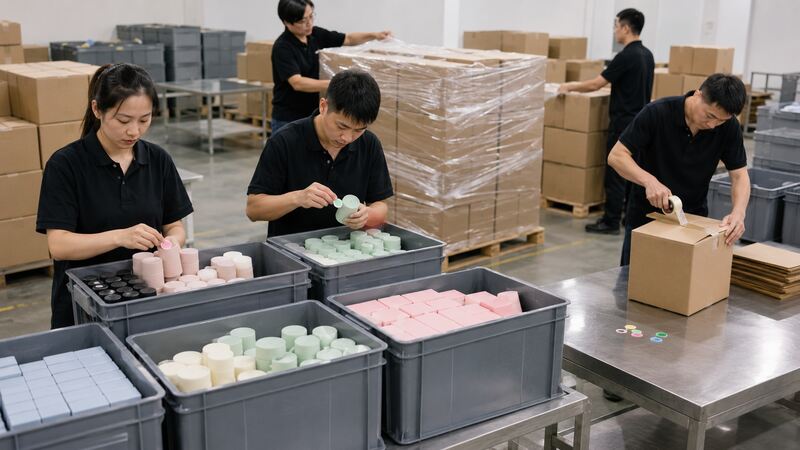
Packing boxes in your garage stops making sense at some point. A third-party logistics provider (3PL) stores your inventory and ships orders for you, so storage costs move with your volume instead of sitting there as a fixed lease.
It might be time if you spend more hours packing than selling, pay rent on space you only fill in peak season, see errors creep up as volume grows, or want to reach new countries without opening a warehouse there.
Questions to ask any 3PL:
- How do you receive, inspect and label incoming stock?
- How does your inventory data connect to my store or system?
- How do you handle cycle counts and discrepancies?
- What does the price include: storage, pick and pack, packaging, shipping?
- What happens with returns, damage and delays?
How SendFromChina fits in
SendFromChina is a China-based third-party fulfillment partner for brands that source or produce in China and sell to overseas customers.
In China, it receives your goods, runs quality checks, labels and stores them, and manages the inventory. When orders come in (manually, by spreadsheet, through store connections or via API), the team picks, packs and ships them with tracking to major overseas destinations. Delivery times depend on route, carrier, customs, product type and season.
On top of that there are value-added services like custom packaging, kitting, inserts, repacking and quality checks. Not every packaging request is included by default. For marketplace sellers it can also prep goods to a marketplace's inbound rules (inspection, packing, labeling), confirmed order by order.
Reference delivery times, in working days. These are references, not guarantees.
|
Destination
|
Reference time
|
|---|---|
|
United States
|
7–12 working days
|
|
United Kingdom
|
3–6 working days
|
|
Australia
|
8–13 working days
|
|
Canada
|
8–13 working days
|
|
European Union
|
8–13 working days
|
Pricing is quote-based. A quote is built from storage, shipping (by route, destination, weight, volume, category and carrier), pick and pack and VAT where applicable. Packaging materials are optional, and barcode or insurance fees may apply.
For DDP shipments, the declared value can't exceed $150, and DDP doesn't deliver to Alaska, Puerto Rico, Hawaii or Guam. With DDU, the recipient is responsible for any VAT or duties.
SendFromChina suits Shopify sellers, DTC brands, crowdfunding creators and board game publishers whose goods are made in China. Highly regulated categories such as medical devices, food, drugs or dangerous goods aren't a fit. If your setup matches, you can read more about order fulfillment from China or this broader guide to ecommerce fulfillment from China.
Conclusion
Most of ecommerce inventory management comes down to small decisions made on time. Clean up your SKUs and barcodes. Set reorder points that include safety stock and your real lead time. Keep one source of truth across channels, and count a little every week.
If your products come from China, plan around landed cost and long lead times, then decide where your stock should sit. Get those right and you'll spend a lot less time firefighting stockouts and overstock.
FAQs
What is ecommerce inventory management?
It's the process of planning, buying, storing, tracking and moving stock for an online store so you can fill orders without running out or overbuying. It covers forecasting, purchasing, receiving, storage, channel sync, fulfillment, returns and counting.
What is inventory in ecommerce, and what are the main types?
Inventory is any goods you hold to sell or to support selling. The main types are finished goods, components or raw materials, packaging materials, kits and bundles, in-transit stock, safety stock and returns.
How do I calculate a reorder point and safety stock?
Reorder point = average daily sales × lead time + safety stock. A simple safety stock formula is (max daily sales × max lead time) − (average daily sales × average lead time). If you sell 20 a day with a 10-day lead time and keep 220 units of safety stock, reorder at 420.
Can I manage ecommerce inventory in Excel?
Yes, at the start. A spreadsheet with SKUs, stock on hand, reorder points and incoming orders works for one channel and a small catalog. Once you sell on several channels, manual updates can't keep up.
When should I switch from spreadsheets to inventory software?
Usually when you oversell, sell on more than one channel, hold stock in more than one place, or spend hours each week updating counts. Any one of these is reason enough.
How do I stop overselling across Shopify, Amazon and other channels?
Use one master inventory system that pushes stock levels to every channel. Keep a small buffer on channels that sync slowly, and reserve stock for wholesale or pre-orders on purpose.
What is the difference between inventory management and inventory control?
Inventory management is the bigger plan: what to buy, how much, when, and where to keep it. Inventory control keeps the records for existing stock accurate through receiving checks, scanning and cycle counts.
How often should I run cycle counts?
Many brands count A items weekly, B items monthly and C items quarterly. A spot count after big events, like a peak sale or a large inbound delivery, also helps.
How do returns affect ecommerce inventory?
A return isn't sellable until someone inspects it. Process returns quickly, decide whether to restock, repackage or write off, and update your master count. Otherwise you'll reorder stock you already have.
Should I store inventory in China or in a US warehouse?
It depends on your products and customers. Holding stock in China commits less cash overseas and lets one pool of inventory serve many countries, with longer delivery times. A US warehouse delivers faster but needs bigger bulk shipments earlier. Many brands do both, with fast sellers near customers and the long tail in China.
 Want to know about our services, fees or receive a custom quote?