




Table of Contents
Get Custom eCommerce Fulfillment Service
Book a Meeting
Supply Chain Management vs. Logistics: A Complete Guide for Ecommerce and Global Businesses
Time: Jul 07,2026 Author: SFC Source: www.sendfromchina.com
Supply chain management and logistics are often used as if they mean the same thing. In everyday ecommerce conversations, a seller might say "our logistics are messy" when they actually mean supplier delays, poor demand planning, inaccurate inventory, weak packaging, high shipping costs, and slow delivery. Another seller might say "we need better supply chain management" when the immediate issue is simply that orders are not being picked, packed, and shipped on time.
The two ideas are closely connected, but they are not identical.
Supply chain management is the bigger system. It covers how a business plans, sources, produces, stores, moves, sells, and replenishes products across suppliers, warehouses, sales channels, logistics partners, and customers. Logistics is a major part of that system. It focuses on how goods, services, and information move and are stored from origin to destination.
For ecommerce sellers, the difference matters because solving the wrong problem wastes time and money. If the issue is a supplier lead-time problem, changing parcel carriers may not help. If the issue is warehouse picking accuracy, renegotiating with a manufacturer may not fix late shipments. If the issue is poor demand planning, faster shipping might only hide the problem for a short time.
This guide explains supply chain management vs. logistics in practical terms, especially for ecommerce sellers that source from China, store inventory in a 3PL warehouse, and ship orders globally.
Supply Chain Management vs Logistics: The Simple Difference for Ecommerce Sellers
The simplest way to understand the difference is this:
Logistics moves and stores goods. Supply chain management designs and coordinates the whole system that makes those goods available.
Logistics is about execution: transportation, warehousing, fulfillment, delivery, returns, and tracking. Supply chain management is about planning and coordination: sourcing, supplier relationships, production timing, inventory strategy, demand forecasting, channel alignment, risk management, and cost optimization.
Is Logistics Part of Supply Chain Management?
Yes. Logistics is part of supply chain management. The Council of Supply Chain Management Professionals explains that supply chain management includes sourcing, procurement, conversion, and logistics management activities, while logistics management is the part of supply chain management that plans, implements, and controls the movement and storage of goods and related information.
That distinction is important. Logistics is not separate from the supply chain. It is one of the most visible and measurable parts of the supply chain because customers directly experience it through delivery speed, tracking, packaging, returns, and damage rates.
Quick Comparison: Logistics vs Supply Chain Management
| Area | Logistics | Supply Chain Management |
| Main focus | Moving and storing goods | Coordinating the full product flow from supplier to customer |
| Time horizon | Short-term and operational | Strategic, tactical, and operational |
| Core activities | Warehousing, pick and pack, transportation, delivery, returns | Sourcing, production, inventory planning, partner management, logistics, demand planning |
| Main goal | Deliver the right goods at the right time and cost | Build an efficient, resilient, profitable supply chain |
| Typical partners | 3PLs, carriers, warehouses, freight forwarders | Suppliers, factories, procurement teams, 3PLs, carriers, sales teams, finance |
| Ecommerce example | Shipping Shopify orders from a warehouse | Deciding where to source, store, replenish, and deliver inventory |
What Is Supply Chain Management in Ecommerce?
Supply chain management is the planning and coordination of everything needed to turn a product idea into a delivered customer order. It includes the upstream side of the business, such as suppliers and manufacturing, and the downstream side, such as warehouses, fulfillment, shipping, returns, and customer experience.
For ecommerce sellers, supply chain management includes:
Product sourcingSupplier selection
Production lead-time planning
Quality control
Inventory forecasting
Purchasing and replenishment
Warehouse placement
Fulfillment model selection
Shipping route planning
Customs and compliance planning
Returns and replacement inventory
Cost and margin control
Risk management
If logistics is the movement of goods, supply chain management is the logic behind why goods move, when they move, where they are stored, and how much inventory the business should hold.
Supply Chain Management Example for a China-Based Ecommerce Seller
Imagine a Shopify brand that sells mobile accessories manufactured in Shenzhen. The supply chain management questions include:
Which supplier should produce the product?How long does production take?
How much inventory should be ordered?
Should inventory stay in China or move to a US/EU warehouse?
Which SKUs need safety stock?
What packaging should be used?
Which countries should the brand sell to?
How should customs data be prepared?
What should happen if demand spikes?
What is the backup plan if a supplier delays production?
These are not only logistics questions. They are supply chain decisions because they affect the full operating model.
Why Supply Chain Management Is Strategic
Supply chain management affects profitability, resilience, and growth. A strong supply chain helps sellers prevent stockouts, reduce overstock, improve cash flow, manage supplier risk, and choose the right fulfillment model.
For example, a seller may save money by ordering a large batch from a supplier, but if the inventory sells slowly, storage cost and cash flow pressure increase. Another seller may reduce delivery time by moving stock to a local warehouse, but if demand is spread across many countries, that strategy may create split shipments and stranded inventory.
Good supply chain management balances cost, speed, inventory risk, customer expectations, and operational complexity.
What Is Logistics Management in Ecommerce?

Logistics management is the planning and control of how goods move and are stored. In ecommerce, logistics is the part of the operation that customers notice most clearly because it affects delivery time, tracking, packaging condition, and returns.
Logistics includes:
Inbound transportationWarehouse receiving
Inventory storage
SKU labeling
Pick and pack
Kitting and bundling
Packaging
Shipping carrier selection
Last-mile delivery
Tracking updates
Reverse logistics and returns
Replacement shipments
If supply chain management asks, "What is the best system for getting products from suppliers to customers?" logistics asks, "How do we physically receive, store, pack, ship, track, and return those products?"
Logistics Example for a China Fulfillment Workflow
For a seller using China fulfillment, logistics activities may include:
Supplier delivers cartons to the warehouseWarehouse receives and checks inventory
SKUs are labeled and stored
Customer orders are imported from Shopify
Warehouse picks the product
The order is packed with suitable materials
A shipping route is selected by destination and product type
Tracking is uploaded
Customer receives the parcel
Returns or replacements are handled if needed
SendFromChina supports these logistics activities through order fulfillment, value-added services, packing materials, and multiple logistics solutions.
Why Logistics Is Operational
Logistics turns plans into customer delivery. Even the best sourcing strategy fails if logistics execution is poor. A seller may have the right product, the right price, and strong demand, but if orders ship late or arrive damaged, customer trust disappears quickly.
Logistics is also where many hidden costs appear: dimensional weight, failed delivery, remote area surcharges, extra packaging, returns, replacement shipments, and customer support tickets.
Supply Chain Management and Logistics Difference by Business Function
The difference becomes clearer when you map each business function.
| Business Function | Supply Chain Management Role | Logistics Role |
| Sourcing | Choose suppliers and negotiate lead times | Coordinate inbound movement from supplier to warehouse |
| Production | Plan production timing and batch size | Receive finished goods after production |
| Quality control | Define inspection standards and risk points | Hold, sort, or process goods based on QC results |
| Inventory | Forecast demand and set reorder points | Store, count, and update stock availability |
| Warehousing | Decide warehouse location strategy | Operate storage, picking, packing, and dispatch |
| Shipping | Decide service promise and landed-cost model | Select routes, generate labels, and ship parcels |
| Customs | Define compliance and tax strategy | Prepare shipment-level data and documents |
| Returns | Set return policy and resale rules | Receive, inspect, restock, dispose, or reship |
| Customer experience | Set delivery promise and support policy | Provide tracking and delivery execution |
In a healthy ecommerce business, supply chain management and logistics work together. The supply chain plan defines the strategy; logistics executes it.
Why the Difference Between Supply Chain Management and Logistics Matters
Understanding the difference is not academic. It helps sellers diagnose problems more accurately.
Problem 1: Late Orders
Late orders may look like a logistics problem, but the root cause might be supply chain planning.
Possible logistics causes:
Warehouse backlogCarrier delay
Bad address
Wrong shipping route
Packaging rework
Possible supply chain causes:
Supplier produced lateInventory arrived late
Demand forecast was wrong
Stock was placed in the wrong warehouse
Product launch date was unrealistic
If the root cause is supplier lead time, switching carriers will not solve the problem. If the root cause is warehouse backlog, changing suppliers will not solve it.
Problem 2: High Shipping Costs
High shipping costs may be logistics-related, but they may also come from upstream supply chain decisions.
Logistics causes include:
Wrong carrierOversized packaging
Inefficient route choice
Remote destination surcharges
Unoptimized service levels
Supply chain causes include:
Product designed too bulkyInventory stored too far from customers
Poor demand forecasting
Too many split shipments
Low order value relative to parcel cost
A seller can reduce shipping cost by using better routes, but long-term improvement may require packaging redesign, product bundling, or different warehouse placement.
Problem 3: Stockouts
Stockouts are usually supply chain problems that become logistics emergencies. When inventory runs out, sellers rush production, upgrade freight, split shipments, or disappoint customers.
Stockouts may happen because:
Demand forecast was too lowSupplier lead time changed
Reorder point was wrong
Inventory data was inaccurate
Sales channels were not synchronized
Safety stock was not planned
Logistics can help move inventory quickly, but supply chain management prevents the stockout from happening in the first place.
How Supply Chain Management and Logistics Work Together in China Fulfillment
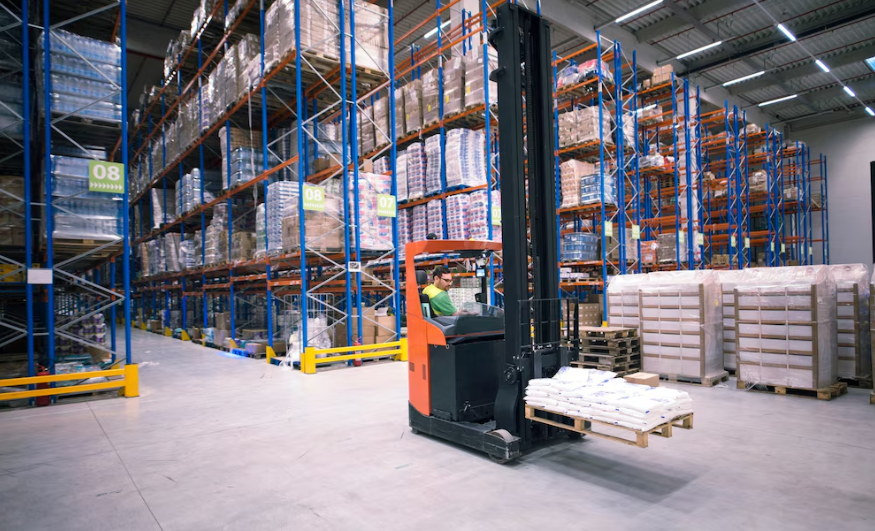
China fulfillment is a useful example because it connects sourcing, manufacturing, warehousing, shipping, and customer delivery in one operating model.
Many ecommerce sellers source products from China but sell to customers worldwide. They must decide whether to store inventory in China, ship bulk inventory to overseas warehouses, or use a hybrid model.
Supply Chain Decisions Before China Fulfillment Starts
Before fulfillment begins, sellers should decide:
Which suppliers will provide inventoryHow production timelines affect launch dates
Whether QC is needed before warehouse receiving
How much inventory to store in China
Whether to split inventory across markets
Which SKUs need safety stock
Whether products require special compliance documents
How returns and replacements will be handled
These are supply chain management decisions.
Logistics Execution After Inventory Arrives
Once inventory arrives at the warehouse, logistics takes over:
Receiving cartonsCounting units
Storing SKUs
Picking customer orders
Packing parcels
Selecting shipping routes
Uploading tracking
Handling failed deliveries
Processing replacement shipments
SendFromChina's China fulfillment services help ecommerce sellers connect these operational steps with global shipping.
Supply Chain vs Logistics for Ecommerce Sellers: Key Cost Differences
Supply chain management affects total business cost. Logistics affects fulfillment and delivery cost. The two overlap, but they should be measured differently.
Supply Chain Costs
Supply chain costs include:
Product sourcing costSupplier management cost
Production cost
Quality control cost
Inventory carrying cost
Freight and replenishment cost
Stockout cost
Overstock cost
Compliance cost
Cash flow cost
Logistics Costs
Logistics costs include:
Inbound transportationWarehouse receiving
Storage
Pick and pack
Kitting
Packaging
Shipping postage
Carrier surcharges
Returns
Replacement shipments
Tracking and exception handling
Cost Comparison Table
| Cost Question | Supply Chain View | Logistics View |
| Why is margin lower than expected? | Product cost, inventory risk, production batch size | Shipping, storage, handling, packaging |
| Why are customers waiting? | Supplier lead time, forecast error, warehouse placement | Warehouse backlog, route delay, failed delivery |
| Why is cash flow tight? | Overstock, large MOQ, slow replenishment cycle | Storage and return costs |
| Why are returns high? | Product quality, sizing, compatibility, supplier issue | Damage, wrong item, failed delivery |
| Why are shipping costs rising? | Product design, warehouse location, demand mix | Carrier rate, dimensional weight, surcharge |
Supply Chain Management vs Logistics KPIs: What to Measure
Sellers should not measure logistics and supply chain performance with the same KPIs only. Some metrics belong to the wider supply chain; others belong to logistics execution.
Supply Chain Management KPIs
Useful supply chain KPIs include:
Supplier on-time deliveryProduction lead time
Forecast accuracy
Inventory turnover
Stockout rate
Overstock value
Reorder cycle time
Gross margin after landed cost
Supplier defect rate
Cash conversion cycle
Logistics Management KPIs
Useful logistics KPIs include:
Order processing timePick accuracy
Packing accuracy
On-time dispatch rate
Delivery time by country
Shipping cost per order
Damage rate
Return rate by reason
Failed delivery rate
Tracking update reliability
KPI Mapping Table
| Business Goal | Supply Chain KPI | Logistics KPI |
| Reduce stockouts | Forecast accuracy, reorder cycle time | Order backlog and inventory update accuracy |
| Improve delivery speed | Warehouse placement strategy | Dispatch time and transit time |
| Lower cost | Landed cost and inventory turnover | Shipping cost per order and packaging cost |
| Improve customer experience | Product availability and quality | Tracking, delivery, damage, and returns |
| Scale globally | Supplier capacity and market allocation | Route coverage and fulfillment throughput |
Where 3PL Providers Fit: Logistics Partner or Supply Chain Partner?
A 3PL provider is usually a logistics partner, but a strong 3PL can support better supply chain decisions too.
Traditional 3PL work includes warehousing, pick and pack, shipping, tracking, and returns. But ecommerce sellers often need more than basic warehouse operations. They need data, route recommendations, packaging advice, kitting support, and guidance on where inventory should be stored.
What a Logistics-Focused 3PL Does
A logistics-focused 3PL helps with:
Receiving inventoryStoring products
Picking orders
Packing parcels
Shipping orders
Managing tracking
Handling returns
What a Supply-Chain-Aware 3PL Adds
A supply-chain-aware 3PL can also help with:
Packaging optimizationSKU organization
Route comparison
Seasonal planning
Replacement inventory planning
Cost visibility
Supplier handoff improvement
Global shipping strategy
This is especially helpful when sellers use a China-based fulfillment partner. A China 3PL can sit close to suppliers and help sellers reduce receiving errors, packaging issues, and global shipping complexity.
Supply Chain Management vs Freight Forwarding vs 3PL Logistics
Ecommerce sellers also confuse supply chain management, logistics, freight forwarding, and 3PL fulfillment. They overlap, but each has a different role.
| Term | Main Role | Ecommerce Example |
| Supply chain management | End-to-end planning and coordination | Decide sourcing, inventory, warehousing, and fulfillment strategy |
| Logistics | Movement and storage of goods | Store products, ship orders, manage returns |
| Freight forwarding | Arrange bulk transportation | Move pallets from China to a US warehouse |
| 3PL fulfillment | Outsourced warehousing and order fulfillment | Pick, pack, and ship Shopify orders |
A freight forwarder may help move inventory between countries, but it may not handle individual ecommerce orders. A 3PL may handle individual orders but may not manage supplier contracts. Supply chain management connects all of these activities into one system.
How Ecommerce Sellers Should Decide Whether the Problem Is Supply Chain or Logistics
When something goes wrong, sellers should trace the problem backward.
Diagnostic Questions for Supply Chain Problems
Ask:
Did the supplier produce on time?Was the demand forecast realistic?
Was inventory ordered early enough?
Was the MOQ too high or too low?
Was quality checked before shipping?
Was inventory placed in the right warehouse?
Was the product designed for efficient shipping?
Was the launch date aligned with production and replenishment?
If the answer points upstream, the issue is likely supply chain management.
Diagnostic Questions for Logistics Problems
Ask:
Did the warehouse receive inventory correctly?Were SKUs labeled clearly?
Were orders picked accurately?
Was packaging suitable for the route?
Was the right shipping service used?
Did tracking update properly?
Did the carrier attempt delivery?
Were returns or replacements handled quickly?
If the answer points to storage, handling, shipping, or delivery, the issue is likely logistics.
Common Mistakes When Sellers Confuse Logistics and Supply Chain Management
Confusing the two can create expensive decisions.
Mistake 1: Changing Carriers When Inventory Planning Is the Real Problem
If a seller keeps running out of stock, changing carriers will not solve the issue. The seller needs better demand planning, reorder points, supplier lead-time tracking, or safety stock.
Mistake 2: Blaming Suppliers for Warehouse Execution Problems
If products are available but orders are shipping late, the issue may be warehouse capacity, SKU labeling, order import errors, or route selection. The supplier may not be the cause.
Mistake 3: Moving Inventory Overseas Without Understanding Demand
Local warehousing can reduce delivery time, but it can also create overstock risk if demand is spread across many markets. Sellers should use data before moving large volumes into one country.
Mistake 4: Treating Packaging as Only a Logistics Detail
Packaging is both a logistics and supply chain issue. It affects shipping cost, damage rate, customer experience, product design, supplier cartonization, and warehouse handling.
Mistake 5: Measuring Only Shipping Cost
Shipping cost is important, but sellers should also measure storage, returns, replacements, customer support, customs delays, and inventory carrying cost.
How Better Supply Chain and Logistics Planning Improves Customer Experience
Customers do not care which internal department caused a delay. They only see whether the product was available, shipped on time, arrived safely, and matched expectations.
Customer Experience Depends on Supply Chain Planning
Supply chain planning affects:
Product availabilityLaunch reliability
Delivery promises
Inventory accuracy
Replacement stock
Product quality
Customer Experience Depends on Logistics Execution
Logistics affects:
Shipping speedTracking visibility
Package condition
Delivery success
Return experience
Support workload
The customer experience is the result of both. A strong product with poor logistics creates frustration. Fast shipping with poor inventory planning creates stockouts. A profitable ecommerce operation needs both.
How SendFromChina Supports Logistics Within a Global Ecommerce Supply Chain
SendFromChina helps ecommerce sellers manage the logistics layer of their supply chain when inventory is sourced or manufactured in China.
China Warehousing and Order Fulfillment
Sellers can store inventory in China and ship orders globally through order fulfillment. This can be useful when customers are spread across multiple countries and the seller wants to avoid moving all inventory to one destination market first.
Value-Added Services for Kitting and SKU Complexity
For sellers with bundles, inserts, labels, repacking, or campaign rewards, value-added services help turn warehouse operations into a more flexible fulfillment workflow.
Packing Materials and Damage Control
Packaging connects logistics cost with customer experience. Sellers can use packing materials to reduce damage, control dimensional weight, and improve the unboxing experience.
Crowdfunding and Kickstarter Fulfillment
Crowdfunding campaigns often need special logistics support because rewards may include add-ons, stretch goals, inserts, and global backer shipping. SendFromChina supports crowdfunding fulfillment, Kickstarter fulfillment, and board game fulfillment.
Multiple Logistics Solutions and Tracking
Different products and destinations need different routes. SendFromChina's multiple logistics solutions help sellers compare shipping options, while the tracking tool supports post-dispatch visibility. Sellers can also use the shipping calculator for early cost planning.
Practical Framework: Build a Supply Chain and Logistics Map
Sellers can avoid confusion by mapping the full product journey.
Step 1: Map the Supply Chain
List:
SuppliersProduction locations
Lead times
MOQs
QC steps
Reorder points
Warehouse locations
Sales channels
Target countries
Compliance requirements
Step 2: Map the Logistics Flow
List:
Inbound transportationWarehouse receiving
Storage method
SKU labeling
Picking rules
Packing materials
Shipping routes
Tracking process
Returns process
Replacement process
Step 3: Identify Where Decisions Are Made
Some decisions belong to the supply chain plan. Others belong to logistics execution.
| Decision | Supply Chain or Logistics? |
| Choose supplier | Supply chain |
| Decide production quantity | Supply chain |
| Select China warehouse | Supply chain and logistics |
| Receive cartons | Logistics |
| Pick and pack orders | Logistics |
| Decide safety stock | Supply chain |
| Choose shipping route | Logistics and supply chain |
| Set delivery promise | Supply chain and logistics |
| Process returns | Logistics |
| Redesign packaging | Supply chain and logistics |
When Should Ecommerce Sellers Review Their Supply Chain and Logistics Model?
Sellers should review the model whenever the business changes.
Review After Product Launch
After launch, compare forecasted demand with real demand. If actual orders are different from expectations, adjust reorder points, inventory placement, and shipping routes.
Review Before Peak Season
Before Q4, major sales events, or seasonal demand spikes, check supplier capacity, warehouse capacity, packaging inventory, and carrier route stability.
Review When Expanding to New Countries
New countries may create new customs requirements, delivery expectations, tax issues, return policies, and route costs.
Review When Adding SKUs or Bundles
New variants, bundles, and accessories increase warehouse complexity. Update SKU maps, packing rules, and inventory forecasts before orders begin.
Final Thoughts: Logistics Executes, Supply Chain Management Orchestrates
The difference between supply chain management and logistics is simple but powerful. Supply chain management is the broader system that plans and coordinates product flow from suppliers to customers. Logistics is the execution layer that stores, moves, packs, ships, tracks, and returns goods.
Ecommerce sellers need both. Strong supply chain management prevents stockouts, overstock, supplier delays, poor inventory placement, and margin problems. Strong logistics management delivers orders accurately, quickly, and cost-effectively.
For sellers sourcing from China, the right fulfillment partner can make logistics easier while supporting better supply chain decisions. A China-based 3PL can receive inventory near suppliers, store products, handle kitting and packaging, choose multiple shipping routes, and help sellers ship globally from one operating hub.
To review your China fulfillment, logistics, or global shipping setup, contact SendFromChina through the contact page.
FAQ: Supply Chain Management vs Logistics
What is the difference between supply chain management and logistics?
Supply chain management is the broader planning and coordination of sourcing, production, inventory, partners, logistics, and customer delivery. Logistics is the part of the supply chain focused on moving, storing, fulfilling, shipping, tracking, and returning goods.
Is logistics part of supply chain management?
Yes. Logistics is part of supply chain management. It handles movement and storage, while supply chain management coordinates the larger system across suppliers, production, inventory, sales channels, and customers.
Why does the difference matter for ecommerce sellers?
The difference matters because sellers need to diagnose problems correctly. A late order may be caused by supplier lead time, inventory planning, warehouse backlog, carrier delay, or wrong route selection. Each cause needs a different solution.
Is a 3PL a logistics provider or supply chain partner?
A 3PL is usually a logistics provider, but a strong 3PL can also support supply chain decisions by providing data, packaging advice, route options, kitting support, and inventory placement guidance.
How does China fulfillment fit into supply chain management?
China fulfillment fits into the logistics layer of a global ecommerce supply chain. It helps sellers store inventory near suppliers, pick and pack orders, prepare packaging, select shipping routes, and deliver products to global customers.
Should ecommerce sellers focus more on logistics or supply chain management?
Sellers need both. Early-stage sellers often focus on logistics execution, while scaling sellers need stronger supply chain management for forecasting, supplier planning, inventory placement, cost control, and resilience.
What are examples of logistics activities?
Logistics activities include inbound transportation, warehouse receiving, storage, pick and pack, kitting, packaging, shipping, tracking, returns, replacement shipments, and last-mile delivery.
What are examples of supply chain management activities?
Supply chain management activities include supplier selection, production planning, demand forecasting, procurement, inventory strategy, compliance planning, warehouse location decisions, risk management, and coordination across partners.
 Post Views:1498
 TAGS:
TAGS:
Copyright statement: The copyright of this article belongs to the original author. Please indicate the source for reprinting.
Previous Post
SendFromChina vs. NextSmartShip vs. ChinaDivision: How to Choose
Next Post
TAGS
Hot Research
Get Custom eCommerce Fulfillment Service
Book a Meeting
Get a Custom China Fulfillment Solution with FREE Storage for 30 Days
Want to know about our services, fees or receive a custom quote?
 Want to know about our services, fees or receive a custom quote?
Please fill out the form on the right and we will get back to you within a business day.
The more information you provide, the better our initial response will be.