




Table of Contents
Get Custom eCommerce Fulfillment Service
Book a Meeting
Understanding Door-to-Door Shipping From China, the Definition, Benefits, Challenges, etc..
Time: Mar 06,2025 Author: SFC Source: www.sendfromchina.com
Last updated: September 2, 2026
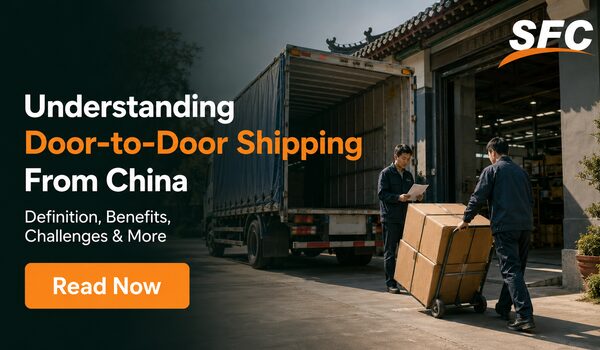
If you're importing goods from China, door-to-door shipping can remove a lot of the daily chasing. Your goods are collected from a supplier or warehouse in China, moved internationally, and delivered to a named address in the destination country.
Sounds simple. Mostly, it is. But one small phrase causes plenty of trouble: “door to door” does not automatically mean “duties paid.” It also doesn't tell you who will act as the importer, who unloads the truck, or whether a delivery appointment is included.
Think of the shipment as a long relay race. A pickup truck, warehouse, airline or vessel, customs broker, and local carrier may all touch the cargo. A good door-to-door provider coordinates those handoffs. The quote still needs to say exactly where the race ends and who pays for each leg.
This updated guide explains the process, shipping methods, documents, costs, timing, packaging standards, and common problems. More importantly, it shows you what to check before accepting an “all-in” quote.
Key Takeaways
- Door-to-door describes the transport scope, from a China pickup point to a named destination. It is not a shipping mode or an Incoterms® rule.
- Express, air freight, sea freight, rail, and road transport can all be arranged as door-to-door services.
- DDP normally places import clearance and duty obligations on the seller. DAP normally places those obligations on the buyer. Both usually leave unloading to the buyer.
- A useful quote names the exact pickup point, delivery point, Incoterm, customs responsibility, tax treatment, and exclusions.
- Total delivery time includes pickup, origin handling, waiting for departure, international transport, customs, destination handling, and final delivery.
- The cheapest freight line is not always the lowest delivered cost. Destination charges, storage, inspections, special delivery services, and duty can flip the result.
What Is Door-to-Door Shipping From China?
Door-to-door shipping from China is a logistics service in which cargo is collected from a supplier, factory, or warehouse in China and delivered to a specified address overseas. That address might be a home, retail store, business warehouse, overseas 3PL, or Amazon fulfillment center.
The forwarder or logistics provider usually coordinates the movement. That does not mean one company physically performs every step. An origin trucker may collect the goods. A warehouse may consolidate them. An airline or ocean carrier handles the main transport. A customs broker clears the shipment, and a local carrier completes delivery.
You get one main point of contact. Behind the scenes, several parties may be doing the work.
This is different from port-to-port shipping. With port-to-port service, the quoted movement may begin at the loading port and end at the destination port. Origin pickup, export handling, destination charges, customs clearance, and delivery can sit outside the price.
What a Door-to-Door Service Usually Includes
| Shipment stage | Commonly included | What still needs confirmation |
| Supplier pickup | Collection from one agreed China address | Waiting time, difficult access, pickup from several factories |
| Origin handling | Receiving, measurement, labels, export preparation | Inspection, repacking, pallets, storage, consolidation |
| Export clearance | Export declaration and related handling | Licenses, inspections, special commodity documents |
| Main transport | Express, air, sea, rail, road, or a combination | Route, service level, transshipment, space guarantee |
| Import clearance | Often coordinated by the provider or its broker | Who is legally responsible, who is the Importer of Record, broker fees |
| Duties and taxes | Included only when the term and quote clearly say so | Tariffs, VAT/GST, disbursement fees, later tax adjustments |
| Destination handling | Cargo release, terminal or deconsolidation steps | Inspection fees, storage, demurrage, detention, port charges |
| Final delivery | Delivery to the named address | Appointment, liftgate, inside delivery, residential or remote-area fees |
| Unloading | Sometimes included by special agreement | Under DAP and DDP, the buyer usually bears unloading responsibility |
The words “usually” and “often” matter here. Door-to-door services are sold in different ways. Never rely on the label alone.
What “To Your Door” May Not Include
The destination needs to be specific. “Los Angeles” is not the same as a warehouse dock in Ontario, California. “Amazon FBA” is not enough either. The provider may need the final fulfillment center, appointment rules, pallet standard, carton labels, and delivery reference.
The following items are common sources of disagreement:
- Import duty, VAT, GST, or customs-related fees;
- Importer of Record services;
- Customs examinations and product testing;
- Destination terminal, deconsolidation, or storage charges;
- Delivery appointments and missed-appointment charges;
- Residential, limited-access, remote-area, or liftgate service;
- Unloading, unpacking, inside delivery, and warehouse receiving;
- Repacking, palletization, inspection, and cargo insurance.
A door-to-door quote should work like a restaurant bill with the menu items shown. If it only says “all included” and gives one number, ask for the ingredients.
Door-to-Door vs DDP, DAP, and Port-to-Port
These terms answer different questions:
- Door-to-door tells you where the transport service starts and ends.
- DDP or DAP allocates obligations, costs, and risk between the seller and buyer under the sales contract.
- Express, air, sea, rail, or road tells you how the goods move.
- Port-to-port describes a narrower transport scope.
One shipment could be sea freight, door-to-door, and sold DAP. Another could be air freight, door-to-door, and sold DDP. No contradiction there.
DDP and DAP Responsibility Matrix
The ICC Academy's explanation of DAP and DDP confirms that the key difference is import clearance. It also notes that goods are delivered ready for unloading under both rules.
| Responsibility | DDP — Delivered Duty Paid | DAP — Delivered at Place |
| Carriage to the named destination | Seller arranges and pays | Seller arranges and pays |
| Export clearance | Seller | Seller |
| Transit customs, if applicable | Seller | Seller |
| Import clearance | Seller | Buyer |
| Import duty and tax | Seller | Buyer |
| Delivery point | Named place and point | Named place and point |
| Risk transfer | At the named destination, ready for unloading | At the named destination, ready for unloading |
| Unloading from the arriving vehicle | Usually buyer | Usually buyer |
| Buyer assistance with required information | May still be required | Required for the buyer's own import process |
Incoterms® allocate responsibilities between the seller and buyer. They do not replace the freight contract, customs law, tax rules, or product regulations. Your freight quote and sales contract should tell the same story.
For a fuller explanation of seller and buyer obligations, see SFC's guide to DDP shipping from China.
Importer of Record and Unloading: Two Details People Miss
The Importer of Record, often shortened to IOR, is the party legally responsible for the import declaration and compliance in the destination country. The exact definition varies by country. It is not merely a name placed on a form.
Under DDP, the seller takes on import clearance. In practice, a foreign seller may need a qualified local entity, registration, broker arrangement, or another legally valid setup. If a forwarder offers a very cheap DDP route but will not explain who imports the goods or how the entry is made, slow down. A low price is not much use if the paperwork puts your inventory at risk.
Unloading is another small detail with a big invoice attached. A truck can arrive at your building and still need a dock, forklift, liftgate, crew, or appointment. Under standard DAP and DDP responsibilities, the buyer usually unloads. If you need more, put it in writing.
Why Some Quotes Still Say DDU
DDU means Delivered Duty Unpaid. You may still see it in emails, rate sheets, and older software. It is not one of the 11 rules in Incoterms® 2020.
In many casual quotes, people use DDU to mean something close to DAP: delivery is arranged, but the buyer handles import clearance and pays duties and taxes. Do not leave that assumption floating around. Write the current rule, named place, and version clearly, for example:
DAP [full named place and point], Incoterms® 2020
That one line prevents a surprising amount of back-and-forth.
How the Door-to-Door Shipping Process Works
The original process is still the right foundation: pickup, preparation, export clearance, international transport, destination handling, and final delivery. Here is what happens at each stage.
Supplier Pickup and Cargo Check
The provider collects goods from the factory or supplier. Before pickup, confirm the ready date, number of cartons, packed dimensions, gross weight, product description, declared value, and pickup contact.
If the supplier gives product dimensions instead of packed carton dimensions, the quote can be wrong before the truck even arrives. Freight companies bill the box, not the product photo.
For sellers with stock arriving at different times, a China warehousing service can provide a controlled receiving point close to suppliers.
Consolidation, Packing, and Export Preparation
Cargo may go to an origin warehouse for measurement, labeling, inspection, repacking, or palletization. Goods from several suppliers can also be combined through consolidated shipping from China.
Consolidation can cut duplicate pickup and international transport costs. It can also create a delay if one supplier is late. One missing carton can hold the whole batch like the friend who still isn't ready when the taxi arrives. Set a consolidation cutoff and decide what happens to late goods.
Packing should match the route. A parcel moving through an express network needs crush resistance. Ocean cargo may need stronger moisture protection. Machinery may need a crate and blocking. You can review suitable packing materials before the final measurements are submitted.
China Export Customs Clearance
The exporter or its appointed party prepares the export declaration and supporting information. Product description, HS classification, quantity, value, origin, and shipping documents need to agree.
Generic descriptions such as “parts,” “gift,” or “sample” can invite questions. Describe what the item is, what it is made of, and what it does. For regulated products, the exporter may also need licenses, inspections, or certificates.
The broader customs clearance process includes more than submitting one form. Customs may request documents, inspect cargo, assess duty, or refer the product to another authority.
Main Carriage by Express, Air, Sea, Rail, or Road
The main transport method is selected according to urgency, cargo size, product restrictions, destination, and budget. Some shipments use several modes. Sea-air combinations, rail plus truck, and air freight with local parcel delivery are common examples.
Tracking quality differs. Express parcels may have frequent scans. Ocean freight tends to have milestone updates, such as departure, arrival, release, and delivery appointment. Do not expect a container to scan like a pizza delivery.
Import Clearance and Destination Handling
At destination, the shipment is presented for import. The broker may need the commercial invoice, packing list, transport document, HS code, origin, importer information, licenses, and product records.
Under DAP, the buyer normally handles and pays for import clearance. Under DDP, the seller does. In both cases, the buyer may still need to provide information or cooperate with a lawful import setup.
LCL sea freight requires deconsolidation before individual shipments are released. This can add handling time and destination charges. FCL avoids LCL deconsolidation, but it can add container detention or unloading pressure if the delivery plan is not ready.
Last-Mile Delivery and Proof of Delivery
After customs release, the local carrier delivers the shipment to the named address. A home, shop, dock-equipped warehouse, construction site, and fulfillment center are not equivalent stops.
Confirm opening hours, access restrictions, appointment rules, unloading equipment, contact details, and proof-of-delivery requirements. SFC's guide to last-mile delivery explains why the final short leg can be one of the most complicated parts.
Express, Air, Sea, Rail, or Truck: Which Method Fits?
The right method depends on the shipment. Speed matters. So do volume, density, product value, destination, and the cost of running out of stock.
| Method | Best fit | Common pricing basis | Main advantage | Watch for |
| Express courier | Samples, urgent parcels, small high-value orders | Chargeable weight | Fast, connected network, frequent tracking | Dimensional weight, remote fees, product restrictions |
| Dedicated ecommerce line | Regular lightweight DTC parcels | Weight band or chargeable weight | Useful balance for recurring online orders | Country coverage, last-mile variation, tracking depth |
| Air freight | Medium-size or urgent commercial cargo | Chargeable weight, plus handling | Faster than sea for larger shipments | Airport handling, screening, minimum charges, final delivery |
| Sea freight LCL | Cargo too large for parcel/air but below a container | W/M, CBM, or minimum charge | Lower transport cost for suitable volume | Consolidation, deconsolidation, destination charges |
| Sea freight FCL | Large or steady-volume shipments | Container and route | Better control for full-container cargo | Utilization, port fees, detention, unloading plan |
| Rail freight | Selected China–Europe routes | Weight, volume, equipment, route | Middle ground between air and sea on some corridors | Border processing, route coverage, capacity |
| Road freight | Regional or cross-border lanes; first and last mile | Distance, truck type, weight, volume | Flexible pickup and delivery | Permits, borders, driver capacity, access restrictions |
Express Courier for Samples and Small Urgent Parcels
Express is usually the fastest mainstream choice. It suits product samples, spare parts, urgent replenishment, and small commercial shipments. DHL, FedEx, UPS, and other networks coordinate pickup, flight, customs processing, and local delivery.
It is convenient, but not automatically simple for every product. Batteries, liquids, powders, branded goods, and high-value items may need extra approval. Dimensional weight can also make a large, light box surprisingly expensive.
Air Freight for Time-Sensitive Commercial Cargo
Air freight works well when cargo is too large or expensive for courier service but cannot wait for ocean transit. It may be airport-to-airport or door-to-door. Those are very different quotes.
A door-to-door air quote should identify origin handling, air freight, destination terminal charges, brokerage, taxes, and local delivery. A low airport rate tells only part of the story.
Sea Freight: LCL vs FCL
LCL places your goods in a shared container. It can be economical for moderate volumes, especially when air freight is too costly. Still, LCL includes consolidation and deconsolidation. More handling means more time, more touchpoints, and sometimes a more confusing list of local charges.
FCL uses a dedicated container. It often suits larger shipments or cargo that needs better separation. You do not need to fill every last centimeter, but poor container utilization raises the cost per unit.
The choice is not simply “small equals LCL, large equals FCL.” Compare total delivered cost, departure frequency, urgency, cargo shape, risk, and the cost of waiting for more stock.
Rail and Truck Freight for Selected Routes
Rail can work for China–Europe cargo that needs to move faster than standard sea freight but does not justify air cost. It is route-dependent. Terminal access, border handling, capacity, and final trucking all matter.
Road freight is essential for pickup and final delivery. It can also be the main cross-border mode on selected regional lanes. Ask whether the quote covers a full truck, shared truck, customs stops, tolls, and special permits.

How Long Does Door-to-Door Shipping From China Take?
The old version of this article listed broad numbers without defining the route or start point. That is risky. A three-day flight does not make a three-day door-to-door shipment.
Use this formula:
Total lead time = supplier preparation + pickup + origin handling + export clearance + departure wait + main transport + import clearance + destination handling + final delivery
Planning Ranges by Shipping Method
The ranges below are for planning, not promises. They assume the cargo is ready, documents are accurate, and the route operates normally.
| Shipping method | Typical door-to-door planning range | Main timing risk |
| Express courier | 3–7 business days | Customs questions, restricted goods, remote delivery |
| Air freight | 5–12 days | Consolidation, screening, flight allocation, destination handling |
| Dedicated ecommerce parcel line | 6–20 days | Destination injection and local carrier variation |
| Rail freight to Europe | 14–25 days | Border processing, terminal handling, route capacity |
| Sea freight | 20–50 days | Sailing schedule, transshipment, congestion, inspections, inland delivery |
These ranges are consistent with SFC's broader guide to shipping time from China. The final postcode can change the estimate. So can a holiday, capacity shortage, customs examination, or missed warehouse appointment.
Ask three timing questions before booking:
- When does the clock start: booking, supplier pickup, warehouse acceptance, flight departure, or vessel departure?
- Is the estimate in business days or calendar days?
- Does it end at the airport, port, local hub, customs release, or signed delivery?
Where Delays Usually Happen
- The supplier is not actually ready on the promised date.
- Packed measurements differ from the booking.
- Cargo misses the warehouse cutoff, flight, rail departure, or vessel.
- Product documents or customs data are incomplete.
- Customs or another authority selects the shipment for inspection.
- LCL cargo waits for deconsolidation and release.
- The receiver cannot accept the proposed delivery appointment.
- The final address is remote or difficult for a truck to access.
Build a buffer around the business deadline, not just the carrier estimate. If stock must arrive before a product launch, “probably on Friday” is not a plan.

How Door-to-Door Shipping Cost Is Calculated
Door-to-door shipping cost depends on the cargo, route, speed, service scope, and market conditions. Fuel prices, demand, capacity, and peak seasons can move rates. This is why a worldwide price per kilogram is rarely useful for long.
Actual Weight, Volumetric Weight, and CBM
Express and air freight commonly use chargeable weight. The carrier compares actual weight with volumetric weight and charges according to its tariff rules. The volumetric formula usually uses package length, width, and height divided by a carrier-specific divisor.
Do not assume every provider uses the same divisor or rounds measurements the same way. Ask.
Ocean LCL often uses weight or measurement rules. Volume is measured in cubic meters, or CBM, and minimum charges may apply. Dense cargo can trigger weight-based rules. FCL pricing starts with the container and route, then adds origin, destination, customs, and delivery costs.
The Full Cost Stack
A practical landed cost from China includes more than international freight. First define the endpoint, then add every cost needed to get saleable goods there.
| Cost item | When it appears | What to confirm |
| Supplier pickup | Cargo moves from factory to origin facility | Number of pickups, access, waiting time |
| Origin handling | Receiving, measuring, documents, labels, export work | Minimums, storage, inspection, repacking |
| Main freight | Express, air, sea, rail, or road transport | Route, service level, fuel or peak surcharges |
| Cargo insurance | Financial protection under policy terms | Insured value, deductible, exclusions, claim process |
| Destination handling | Terminal, release, deconsolidation, documentation | Which charges are included or collect |
| Customs brokerage | Entry preparation and customs communication | Broker fee, disbursement, bond or security costs |
| Duty and tax | Based on destination rules and shipment facts | HS code, origin, value, DDP/DAP treatment |
| Final delivery | Local transport to the named address | Appointment, residential, remote, liftgate, inside delivery |
| Exception costs | Inspection, storage, demurrage, detention, correction | Free time, daily rate, who approves extra cost |
| Receiving and prep | Warehouse or platform intake | Unloading, labels, pallet rules, count and inspection |
Here is a simple example. One quote for 30 cartons looks $400 cheaper. Nice. Then you discover it ends at a destination warehouse, not your warehouse. Brokerage, duty, deconsolidation, and final trucking are extra. The higher quote may be cheaper at the actual endpoint.
Use SFC's shipping cost calculator for a current route estimate, then confirm any customs and special-service charges that the calculator does not include.
A Quote Checklist for Apples-to-Apples Comparison
Give every provider the same information:
- China pickup address and supplier contact;
- Destination address, postcode, and address type;
- Number of cartons or pallets;
- Final packed length, width, height, and gross weight;
- Product name, material, purpose, quantity, and value;
- HS code and country of origin;
- Battery, liquid, powder, magnet, chemical, food, or branded-goods details;
- Earliest pickup date and required delivery date;
- Requested Incoterm and exact named place;
- Importer of Record arrangement;
- Need for insurance, appointment, liftgate, inside delivery, or unloading;
- Quote validity and list of exclusions.
Then ask the provider to mark each cost as included, excluded, or charged only if triggered. That final column is where storage and inspection costs belong.
Documents and Customs Data You May Need
Good documents do not guarantee instant customs release. They do remove many avoidable delays.
Core Commercial Documents
Most commercial shipments need:
- Commercial invoice: seller and buyer details, product description, quantity, unit and total value, currency, origin, and agreed trade terms.
- Packing list: cartons, contents, net and gross weight, dimensions, and packing method.
- Customs data: accurate description, HS code, declared value, country of origin, and importer information.
A commercial invoice is not merely a payment record. Customs uses it with other evidence to assess the transaction, value, classification, and origin.
You can use SFC's HS code and tariff rate checker as a research aid. The importer and customs professional should still validate the classification for the destination country.
Transport Documents Depend on the Mode
The old article treated a Bill of Lading as universal. It isn't.
- Ocean freight: a Bill of Lading, sea waybill, or other ocean transport document may be used.
- Air freight: the transport document is normally an Air Waybill.
- Express courier: the carrier issues a courier waybill or shipping label record.
- Rail or road: the document depends on the route and applicable transport convention.
The transport document identifies the shipment, parties, route, and handling details. It does not replace the commercial invoice or every customs document.
Product-Specific Documents
Some goods need more paperwork. Examples include certificates of origin, import permits, safety data sheets, test reports, dangerous-goods declarations, battery test summaries, sanitary documents, or product registrations.
Requirements depend on the product and destination. A ceramic mug, lithium battery, cosmetic cream, and food supplement may travel in boxes of similar size. Customs does not see them as the same shipment.
2026 U.S. Low-Value Shipment Update
Importers sending China-origin goods to the United States should not assume that a shipment under $800 still enters duty-free under the old treatment. U.S. Customs and Border Protection's current China shipment notice states that importers must pay applicable duties, taxes, and fees on affected shipments that previously entered without payment.
This does not create one flat tax rate for every parcel. Classification, origin, value, product restrictions, entry method, and current trade measures still matter. Get a route-specific review before setting retail prices or promising customers that tax is included.
For more destination detail, compare SFC's current shipping options from China to the United States.
Packaging Materials and Shipping Standards
Packaging has two jobs. It should protect the product, and it should survive the handling system. A beautiful retail box can do the first job on a shelf and fail the second job in a sorting hub.
Match the Packaging to the Journey
| Material or component | Common use | What to check |
| Corrugated carton | Parcels and outer cases | Board strength, empty space, stacking pressure, moisture |
| Cushioning | Fragile products and movement control | Product weight, drop risk, abrasion, static sensitivity |
| Stretch wrap and straps | Stabilizing cartons on pallets | Tension, edge damage, pallet overhang |
| Edge protectors | Supporting strapped or stacked loads | Correct length and compression strength |
| Pallets | Forklift handling and unitized cargo | Size, entry direction, weight capacity, wood rules |
| Wooden crates | Machinery, heavy or fragile cargo | Blocking, bracing, treatment marks, lifting points |
| Desiccants and barriers | Ocean cargo and moisture-sensitive goods | Voyage length, humidity, product compatibility |
| Shipping and handling labels | Routing, compliance, warehouse receiving | Barcode quality, language, placement, destination rules |
Use the final shipping package for measurements. If you add a pallet or wooden crate after quoting, the weight, volume, method, and cost can all change.
When IATA DGR, IMDG Code, or ISPM 15 Matters
Air shipments containing regulated dangerous goods may need special classification, packing, marking, labels, and documents. The IATA Dangerous Goods Regulations are used across the air cargo chain for these tasks.
Packaged dangerous goods moving by sea may fall under the IMDG Code. Raw-wood pallets, crates, and dunnage may need treatment and marking under ISPM 15, depending on the destination and material.
These standards do not apply equally to every shipment. Start with the product. Ask about ingredients, battery type and configuration, flash point, pressure, magnetism, and wood packaging before choosing the route. Finding out after cargo reaches the export warehouse is rather late.

Common Applications by Industry
Door-to-door shipping is useful across many industries, but the operational details change.
| Use case | Typical cargo | Suitable approach | Extra checks |
| DTC ecommerce | Lightweight consumer products, many SKUs | Express or dedicated parcel lines; air for replenishment | Order sync, packaging, tracking return, restricted items |
| Amazon FBA | Cartons or pallets for fulfillment centers | Air, LCL, FCL, or regional trucking | Labels, carton limits, pallet rules, appointments, importer setup |
| Wholesale and retail | Store inventory and bulk cartons | LCL or FCL; air for urgent launches | Delivery dock, unloading, receiving window, seasonal deadline |
| Crowdfunding | Reward kits and multi-country orders | China consolidation plus parcel or bulk delivery | Late components, kitting, address changes, tax treatment |
| Manufacturing | Components, tools, spare parts, machinery | Air for urgent parts; sea or rail for planned stock | Crating, technical description, insurance, downtime cost |
| Electronics | Devices, accessories, battery products | Approved express, air, or sea route | Battery records, dangerous-goods status, anti-static packing |
| Cosmetics and personal care | Creams, liquids, powders, beauty tools | Product-approved parcel, air, or sea service | Ingredients, leakage, destination registration, labeling |
| Furniture and bulky goods | Flat packs, fixtures, large cartons | LCL or FCL door delivery | CBM, stacking, moisture, residential delivery, unloading |
For brands shipping many individual orders, ecommerce fulfillment services connect supplier receiving, storage, order sync, packing, international shipping, and tracking. That workflow is different from moving one bulk shipment to an overseas warehouse.
Common Problems and Practical Solutions
Door-to-door shipping reduces coordination. It does not remove customs rules, bad data, weather, or awkward loading docks. Here are the problems that show up most often.
| Problem | Likely cause | Practical solution |
| A cheap quote becomes expensive | Quote ends early or excludes destination charges | Define the endpoint; request included, excluded, and conditional charges |
| DDP arrangement feels vague | No clear IOR or lawful import process | Ask who makes the entry, under whose name, and with which broker setup |
| Customs hold | Incomplete or inconsistent description, value, origin, or HS code | Review data before pickup; keep invoices and product records ready |
| Cargo misses departure | Supplier delay, wrong dimensions, late documents | Set a cargo-ready deadline and warehouse cutoff; define a fallback plan |
| LCL storage bill | Inspection, release delay, or slow pickup after deconsolidation | Confirm free time, daily charges, broker readiness, and delivery booking |
| FBA delivery rejected | Label, pallet, appointment, or shipment-plan mismatch | Validate the current receiving plan before dispatch and before final delivery |
| Residential delivery surcharge | Address type or unloading need was not disclosed | Provide address type, access, liftgate, and appointment needs in the quote request |
| Tracking seems to disappear | Milestone-based freight tracking, partner handoff | Agree on update milestones and escalation contact before booking |
| Goods arrive damaged | Weak packaging, movement, moisture, stacking, rough handling | Test packaging, secure cargo, photograph packing, and arrange suitable insurance |
| Claim is rejected or reduced | Late notice, poor evidence, exclusion, or limited carrier liability | Note damage at receipt; save photos, packaging, invoices, and file within the deadline |
Be Careful With an Unusually Cheap DDP Quote
Low prices are not automatically suspicious. Efficient consolidation and strong routes can lower cost. The red flag is a provider offering DDP without asking basic questions.
Be cautious if the provider does not request the product description, material, HS code, value, origin, destination postcode, or importer information. Also be cautious if it promises there will never be an inspection or any additional charge. Customs does not sell that promise to freight forwarders.
Cargo Insurance and Carrier Liability Are Not the Same
Cargo insurance can protect against covered financial loss or damage during transit. It does not make the cartons physically safer. Good packaging and handling reduce the chance of damage; insurance deals with eligible loss after something goes wrong.
Carrier liability is different. It may be limited by contract, transport convention, package count, weight, or proof of negligence. The compensation may be far below the commercial value of the goods.
Before buying a policy, check:
- The insured value and currency;
- Whether freight, duty, or expected profit is included;
- Deductible or excess;
- Product, route, and packing exclusions;
- Whether theft, water damage, breakage, or partial loss is covered;
- Survey, notification, and claim deadlines;
- Evidence required, including photos, invoices, packing records, and delivery notes.
SFC's overview of shipping insurance provides more background. For high-value, fragile, unusual, or regulated cargo, ask for the policy wording rather than relying on a one-line rate.

How to Choose a Door-to-Door Shipping Provider in China
Experience and customer service still matter. So do the less glamorous details: scope, compliance, documents, and exception handling.
Questions to Ask Before Booking
- Have you handled this product and route before?
- Which shipping method and service level are you quoting?
- What are the exact pickup and delivery points?
- Which Incoterm and named place apply?
- Who handles export and import clearance?
- Who will be the Importer of Record?
- Are duties, taxes, brokerage, destination charges, and delivery included?
- What special delivery fees can apply?
- When does the transit-time estimate begin and end?
- Which tracking milestones will I receive?
- What happens if customs inspects the shipment?
- What insurance and claims process are available?
A good provider does not need to have a magical answer for everything. It should ask sensible questions, show the service boundary, and explain uncertainty without turning the quote into fog.
What a Strong Quote Looks Like
A strong quote includes:
- Quote number, issue date, and validity period;
- Origin, destination, and postcode;
- Cargo details and chargeable basis;
- Shipping mode and service level;
- Incoterm and named place;
- Itemized inclusions and exclusions;
- Duty and tax treatment;
- Importer arrangement;
- Estimated timeline and its start/end points;
- Conditional charges and approval process;
- Payment, cancellation, and claim terms.
Do not compare two bottom-line numbers until the scopes match. Otherwise, it is like comparing the price of a bicycle with the price of a taxi ride. Both move you, but they are not the same purchase.
How SFC Supports China-Origin Fulfillment
SFC helps ecommerce sellers and importers coordinate work close to their Chinese suppliers. Depending on the project, the workflow can include supplier receiving, warehouse storage, consolidation, basic inspection, labeling, repacking, pick and pack, route comparison, international shipping, and tracking updates.
The right setup depends on the cargo and the endpoint. A stream of DTC parcels needs a different workflow from one LCL shipment to a warehouse. A battery product needs a different review from a cotton T-shirt. A delivery to Amazon needs different labels and appointments from a delivery to a home.
When requesting a solution, send the product details, packed measurements, monthly volume, destinations, sales channels, deadline, and service expectations. The more complete the input, the less guesswork ends up in the quote.
Pre-Shipment Checklist
Before the goods leave the supplier, confirm the following:
- Final pickup address, contact, and cargo-ready date
- Destination address, postcode, address type, and receiving hours
- Carton or pallet count, final dimensions, and gross weight
- Accurate product description, material, purpose, value, origin, and HS code
- Battery, liquid, powder, dangerous-goods, wood, or regulated-product status
- Incoterm, named place, and service endpoint
- Importer of Record and customs broker arrangement
- Duties, taxes, destination fees, delivery services, and exclusions
- Packaging, labels, platform requirements, and unloading plan
- Insurance cover, evidence requirements, and claim deadline
- Estimated timeline, clock start, buffer, and escalation contact
- Tracking milestones and proof-of-delivery process
Save the quote, invoice, packing list, product records, booking confirmation, packing photos, tracking details, and delivery receipt together. When something goes wrong, a tidy folder is far more useful than a heroic search through old chat messages.
Conclusion
Door-to-door shipping from China can make importing much easier. It reduces the number of parties you need to coordinate and gives you one clearer path from the supplier to the final address.
But “door to door” is only the beginning of the description. You still need to know the transport mode, Incoterm, named place, customs responsibility, importer setup, tax treatment, unloading plan, delivery services, and quote exclusions.
Start with the endpoint. Give providers the same cargo data. Compare the full scope, not just the headline rate. Then add a realistic time buffer and keep the paperwork clean. A little work before pickup saves a lot of frantic messages after arrival. Yep, boring preparation wins again.
Frequently Asked Questions
What is door-to-door shipping from China?
It is a logistics service that collects goods from a supplier, factory, or warehouse in China and delivers them to a specified overseas address. The provider coordinates origin transport, international movement, destination handling, and final delivery. Customs clearance may be coordinated too, but the quote and Incoterm determine who is legally responsible and who pays duties and taxes.
Does door-to-door shipping from China include customs clearance?
It often includes coordination of export and import clearance, but responsibility and cost depend on the agreement. Under DDP, the seller is responsible for import clearance and applicable import duties and taxes. Under DAP, the buyer normally handles and pays for import clearance. Always ask who the importer is and whether brokerage, duty, tax, inspections, and related fees are included.
Is door-to-door shipping the same as DDP?
No. Door-to-door describes where the transport service starts and ends. DDP is an Incoterms® rule that places broad transport and import responsibilities on the seller. A door-to-door shipment can also move under DAP, where the buyer handles import clearance and duty. It can travel by express, air, sea, rail, or road.
What is the difference between DDP and DAP shipping?
Under both rules, the seller arranges transport to the named destination and delivers the goods ready for unloading. Under DDP, the seller handles import clearance and pays applicable import duty and tax. Under DAP, the buyer handles and pays for import clearance. The buyer normally unloads under both rules unless the parties arrange otherwise.
How much does door-to-door shipping from China cost?
There is no reliable worldwide flat rate. Cost depends on the route, packed weight and volume, transport mode, product, service speed, customs requirements, duties, destination charges, and final address. Request a live quote using final carton data. Check pickup, export handling, main freight, import charges, taxes, delivery, insurance, and conditional fees separately.
How long does door-to-door shipping from China take?
Express often takes about 3–7 business days, air freight 5–12 days, dedicated ecommerce lines 6–20 days, rail to Europe around 14–25 days, and sea freight roughly 20–50 days. These are planning ranges. The route, cargo-ready date, departure schedule, customs, destination handling, final postcode, and delivery appointment can change the result.
What documents are needed for door-to-door shipping?
Most commercial shipments need a commercial invoice, packing list, accurate customs data, and a mode-specific transport document. Ocean freight may use a Bill of Lading or sea waybill. Air freight uses an Air Waybill, while express uses a courier waybill. Licenses, origin documents, test reports, or dangerous-goods records may also be required.
Who should be the Importer of Record on a DDP shipment?
The party must be legally eligible to act in the destination country and accept the related compliance obligations. Under DDP, the seller is responsible for import clearance, but a foreign seller may need a lawful local arrangement. Ask the provider to identify the importer and customs broker. Do not accept a vague answer or an unexplained third-party name.
Can door-to-door shipping deliver to Amazon FBA or a residential address?
Yes, if the service is designed for that endpoint. Amazon delivery may require a shipment plan, carton or pallet labels, appointment, and current receiving rules. Residential delivery may trigger remote-area, liftgate, limited-access, or appointment fees. Give the exact address type and receiving conditions before the provider quotes the shipment.
Are duties and taxes included in a door-to-door quote?
Only if the quote and agreed term say so. DDP normally includes the seller's responsibility for applicable import duties and taxes. DAP normally leaves them to the buyer. Even an “all-in” quote should list the tax treatment, destination charges, inspections, storage, unloading, and special-delivery fees. Never assume the word “door” means every possible cost is covered.
 Post Views:6708
 TAGS:
TAGS:
Copyright statement: The copyright of this article belongs to the original author. Please indicate the source for reprinting.
Previous Post
What Is Expedited Shipping? How It Works & Differences from Traditional Shipping
Next Post
TAGS
Hot Research
Get Custom eCommerce Fulfillment Service
Book a Meeting
Get a Custom China Fulfillment Solution with FREE Storage for 30 Days
Want to know about our services, fees or receive a custom quote?
 Want to know about our services, fees or receive a custom quote?
Please fill out the form on the right and we will get back to you within a business day.
The more information you provide, the better our initial response will be.