




Table of Contents
What Time Does FedEx Deliver? Hours & Service Times
Time: Dec 30,2025 Author: SFC Source: www.sendfromchina.com
Last updated: September 8, 2026

Timing matters in logistics. That part has not changed. A late parcel can hold up a repair, leave a store without stock, or make an online customer wonder whether anybody is actually watching the order.
What has changed is how much delivery information people now expect. “It should arrive Tuesday” is no longer enough. Recipients want to know whether that means Tuesday morning, Tuesday evening, or a four-hour window that may move during the day.
FedEx usually delivers between 8 a.m. and 8 p.m. local time, Monday through Friday. Residential deliveries may also run on Saturday and Sunday. That is the broad operating window, though. An expedited service may have a much earlier commitment, while a specific package may show its own estimated window in tracking.
Those three clocks are easy to mix up. This guide separates them, compares current service times, and explains what to do when the estimate changes.
Key Takeaways
-
Typical FedEx delivery hours are 8 a.m. to 8 p.m. local time. Expedited services use their own commitment times.
-
“End of day” usually means by 8 p.m. for a normal residential delivery, but it is not a booked appointment.
-
FedEx tracking may show a four-hour estimated delivery window. Not every shipment gets one, and the window can change.
-
FedEx Home Delivery serves residential addresses every day of the week in much of the contiguous U.S. Express weekend availability works differently and can depend on the ZIP code and selected option.
-
FedEx International Priority usually takes 1–3 business days. International Economy usually takes 2–5 business days. Customs can add time beyond those transport ranges.
-
A promised service time, a tracking estimate, and an ecommerce store’s customer-facing ETA are related, but they are not the same thing.
What Time Does FedEx Usually Deliver?
FedEx states that its typical delivery hours are 8 a.m. to 8 p.m., Monday through Friday. Residential deliveries can also take place on Saturday and Sunday. Its tracking and delivery management guide is the best place to check the current general rule.
Still, 8-to-8 is a working range, not a personal appointment. A driver may reach one street at 10 a.m. on Monday and 5 p.m. on Thursday. The route can change with package volume, traffic, priority stops, weather, and the number of deliveries that require a signature.
Think of it like a city bus route. You may know when service starts and stops, but that does not tell you the exact minute the bus will reach your stop.

Residential vs. Commercial Delivery Hours
Address type matters.
Residential routes often continue into the evening because many recipients get home after work. FedEx Home Delivery is designed for homes and supports weekend delivery across its standard service area.
Commercial deliveries are planned around business locations and service commitments. A warehouse that closes at 4 p.m. is a different stop from an apartment building where deliveries continue into the evening. If an urgent shipment is going to a business, use the actual business name, correct suite or dock details, and accurate opening hours.
Do not assume that changing “Company” to a person’s name changes the network. FedEx classifies addresses using its own address data and service rules.
What Does “End of Day” Mean for FedEx?
For a normal FedEx delivery, “end of day” generally means the package should arrive before the carrier’s usual delivery day ends, commonly around 8 p.m. for residential stops.
It does not mean 5 p.m. just because that is the end of an office day. It also does not reserve the final hour for your parcel.
There can be exceptions. A busy peak-season route, traffic incident, severe weather, or local operating issue can push a delivery later or move it to the next day. If tracking still says “out for delivery” at 7:50 p.m., the parcel is not automatically lost. Give the live tracking another look before assuming the worst.
FedEx Delivery Times by Service
FedEx has several service families. Each solves a different job. One is built for an early-morning legal document. Another is built for a pair of shoes that can arrive later in the week.
The table below reflects current general U.S. service information. Exact availability and commitment times depend on the origin, destination ZIP code, shipment date, package details, and any service exception. Check the current FedEx shipping services before making a time-critical promise.
| FedEx service | Typical transit or commitment | Common use | Important note |
| FedEx First Overnight | Next business day by 8, 8:30, or 9 a.m. to most areas | Critical documents, medical items, urgent parts | Availability and exact time vary by ZIP code |
| FedEx Priority Overnight | Next business day by 10:30 a.m. to most contiguous-U.S. businesses and by noon to most residences | Urgent business and residential shipments | Some destinations have later commitments |
| FedEx Standard Overnight | Next business day by 5 p.m. to U.S. businesses and by 8 p.m. to residences | Next-day shipping without an early-morning need | Local service coverage still applies |
| FedEx 2Day A.M. | Second business day by 10:30 a.m. to U.S. businesses and noon to most residences | Samples, documents, perishables | Saturday and destination rules vary |
| FedEx 2Day | Second business day by 5 p.m. to most areas and 8 p.m. to residences | Ecommerce orders, parts, valuable goods | Saturday is available in certain areas, often with an added charge |
| FedEx Express Saver | Third business day by 5 p.m. to businesses and 8 p.m. to residences | Less urgent time-definite parcels | The shipment must meet the local handoff cutoff |
| FedEx Ground | Usually 1–5 business days in the contiguous U.S.; 3–7 days to or from Alaska and Hawaii | Cost-conscious commercial shipping | Transit is mainly based on distance |
| FedEx Home Delivery | Usually 1–5 days in the contiguous U.S.; 3–7 days to or from Alaska and Hawaii | Residential ecommerce parcels | Standard service includes Saturday and Sunday in the contiguous U.S. |
| FedEx International Priority | Usually 1–3 business days | Urgent cross-border parcels | Customs time and destination coverage can change the result |
| FedEx International Economy | Usually 2–5 business days | Less urgent international parcels | Cheaper than priority on many lanes, but not every lane offers the same schedule |
FedEx Overnight: First, Priority, and Standard
The original version of this article grouped the overnight services into broad morning and end-of-day descriptions. The difference is sharper than that.
FedEx First Overnight is the early option. It aims for 8, 8:30, or 9 a.m. in most covered areas on the next business day.
FedEx Priority Overnight moves the commitment later. The typical target is 10:30 a.m. for most businesses in the contiguous U.S. and noon for most residences.
FedEx Standard Overnight is the end-of-day option. Its usual commitment is 5 p.m. for U.S. businesses and 8 p.m. for residences.
Earlier delivery normally costs more. So, well, do not pay for 8 a.m. just because “overnight” sounds good. Pay for it when the recipient really needs the package before the workday gets moving.
The package must also enter the network before the correct local cutoff. A label created at 4 p.m. does not prove FedEx received the box at 4 p.m. Our guide to FedEx Overnight cutoff times explains why the local drop-off or pickup deadline is part of the delivery calculation.
FedEx 2Day and Express Saver
FedEx 2Day has a morning and an end-of-day version.
-
FedEx 2Day A.M. delivers on the second business day, typically by 10:30 a.m. to U.S. businesses and noon to most residences.
-
FedEx 2Day also arrives on the second business day, typically by 5 p.m. to most areas and 8 p.m. to residences.
-
FedEx Express Saver arrives on the third business day, typically by 5 p.m. to businesses and 8 p.m. to residences.
This middle ground is useful for ecommerce orders. The customer gets a clear day, but the seller avoids overnight pricing when the parcel is not genuinely urgent.

FedEx Ground vs. FedEx Home Delivery
FedEx Ground and FedEx Home Delivery share a ground network, but they serve different address needs.
FedEx Ground is commonly used for business deliveries. Transit is usually 1–5 business days within the contiguous U.S. and 3–7 days for shipments to or from Alaska and Hawaii.
FedEx Home Delivery is built for residences. It also takes around 1–5 days in the contiguous U.S. and 3–7 days for Alaska and Hawaii. Its big practical advantage is standard Saturday and Sunday delivery in the contiguous U.S.
Ground speed depends heavily on distance. A parcel moving one state may arrive faster than a three-day air service, while a coast-to-coast parcel may need the full Ground range. Check the origin and destination rather than assuming “air is always faster.”
FedEx SameDay Services
FedEx also offers same-day options for eligible urgent shipments. FedEx SameDay provides door-to-door service across all 50 states, subject to approval, availability, shipment limits, and the booked service.
In 2026, FedEx also introduced SameDay Local for local delivery use cases. Do not treat that as a universal upgrade attached to every Ground shipment. Same-day products have their own booking process, coverage, pricing, and operating model.
For a normal online order, same-day delivery only works when inventory is already close to the customer. Flying a parcel from Shenzhen to Chicago and calling the last few miles “same day” does not make the whole order same day. Nice try, perhaps, but no.
FedEx International Delivery Times
The old version of this guide listed International Priority at 2–4 business days and International Economy at 4–7 days or more. Those ranges needed an update.
-
FedEx International First and FedEx International Priority: usually 1, 2, or 3 business days.
-
FedEx International Economy: usually 2–5 business days.
-
FedEx International Ground to Canadian businesses: usually 2–7 business days.
-
FedEx International Next Flight: can deliver within 24 hours when available and properly booked.
These are transport ranges, not permission to ignore customs. A shipment can reach the destination country quickly and then wait for a commercial invoice, importer response, duty payment, inspection, or product document.
The service timetable is like a train schedule. Customs clearance is more like the security checkpoint. If the paperwork is wrong, the fast train does not rescue the passenger.
When cost matters more than a narrow arrival time, compare express and economy shipping on the same origin, destination, weight, dimensions, customs arrangement, and starting point.

Scheduled Date, Estimated Window, and Commitment Time Are Not the Same
This distinction clears up a surprising amount of delivery confusion.
| Tracking or service term | What it means | Is it guaranteed? |
| Scheduled delivery date | The date FedEx currently expects or schedules the shipment to arrive | It can change after a delay or new scan |
| Estimated delivery window | A narrower time range, often four hours, calculated for an eligible package | No. It is an estimate and may move or disappear |
| Service commitment time | The delivery time attached to a time-definite service for a covered lane | It is contractual only under the applicable service terms and exceptions |
| Store’s customer-facing ETA | The date range shown by an ecommerce seller | It may include warehouse handling and a seller-added buffer |
Scheduled Delivery Date
The scheduled date is based on the service, route, and shipment’s current progress. It becomes more useful after FedEx has physically scanned the parcel.
A retailer can print a label before the box leaves the warehouse. During that gap, tracking may show “label created,” but the delivery clock has not necessarily started in the way the buyer imagines.
If you want a deeper explanation of handling time, transit time, and final arrival, see what delivery time actually includes.
The Four-Hour Estimated Delivery Window
For eligible packages, FedEx tracking may display a four-hour estimated delivery window. That window is more useful than a whole-day range, but it is still guidance.
Some packages do not receive a window. Others receive one only after enough route information becomes available. If the route changes, the system may update or remove it rather than continue showing a range that is no longer credible.
That can feel annoying. Fair enough. Yet a changed estimate is better than a pretty old estimate that has quietly become wrong.
Our article on delivery estimate accuracy explains why a range often tells you more than a single confident-looking timestamp.
Service Commitment Time and the Money-Back Guarantee
A time-definite commitment belongs to the purchased service and eligible route. It is not the same as a four-hour tracking window.
As of this update, the FedEx Money-Back Guarantee terms state that the guarantee was reinstated for packages shipped on or after January 13, 2026, for certain U.S. domestic time-definite services, including First Overnight, Priority Overnight, Standard Overnight, and 2Day A.M. That does not make every late FedEx package refundable.
Eligibility, claims deadlines, exclusions, temporary suspensions, shipment preparation, and the current FedEx Service Guide still matter. Check the live terms before promising a refund to your customer.

Why a FedEx Delivery Window Changes or Disappears
A delivery window can move for very ordinary reasons:
-
the parcel reached the local facility later than planned;
-
the route was rebuilt after the morning sort;
-
severe weather, traffic, or an operational disruption slowed the network;
-
the address needs correction or an apartment number is missing;
-
a previous stop took longer because of access or signature requirements;
-
peak volume added more stops to the route;
-
the shipment missed a connection or was not loaded for that day;
-
international clearance is incomplete.
Do not over-read one scan. A long gap on an international flight may be normal, while a domestic package sitting on “label created” for three days usually deserves a question to the shipper. The meaning of an “in transit” tracking status depends on the scans before and after it.
Does FedEx Deliver on Saturday and Sunday?
Yes, but the answer depends on the service and address.
| Service | Saturday | Sunday | What to check |
| FedEx Home Delivery | Standard residential delivery in the contiguous U.S. | Standard residential delivery in the contiguous U.S. | Destination, holiday status, Alaska/Hawaii exceptions |
| FedEx Ground | Availability depends on route and business service | Do not assume normal Sunday business delivery | Address type and quoted transit result |
| FedEx First Overnight | Available in eligible areas when selected | Not a standard Sunday option | ZIP-code commitment and added conditions |
| FedEx Priority Overnight | Available in eligible areas when selected | Not a standard Sunday option | ZIP code, cutoff, selection, and charge |
| FedEx Standard Overnight | Saturday option in eligible areas | Not a standard Sunday option | Live rate and service result |
| FedEx 2Day | Saturday delivery in certain areas, commonly for an added charge | Not a standard Sunday option | Ship day, destination, and selected option |
| FedEx SameDay | Available based on booked service | Available based on booked service | Prior approval, coverage, shipment details |
Saturday Express commitment times are not always identical to weekday times. For example, a Saturday First Overnight delivery may have a later morning commitment than its weekday counterpart. Never copy a weekday table into a Saturday order confirmation and hope for the best.
FedEx Holiday Hours and 2026 Service Exceptions
FedEx does not treat every U.S. federal holiday in the same way. On one date, Express and Ground may run modified service while FedEx Office stays open. On another, most regular pickup and delivery services may be closed while FedEx Custom Critical remains available.
Use the official FedEx 2026 Holiday Operations Schedule and check the row for the exact service. The important labels are:
-
Open: normal service is planned, though a local location can still have different hours.
-
Modified service: pickups, deliveries, commitments, or location hours may be limited.
-
Closed: that business line is not operating regular service that day.
For holiday campaigns, work backward from the customer’s required date. Add warehouse processing, carrier handoff, transit, weekends, and a sensible peak-season buffer. “Ship by December 23” is not a universal rule. It changes with service and destination.

What Does “Out for Delivery” Mean?
“Out for delivery” generally means the package has reached the destination area and entered the local delivery process for that day. In many cases, it has been assigned to or loaded onto a delivery vehicle.
It does not reveal your stop number. Nor does it promise that the driver will arrive within the next hour.
A package may return to the facility without delivery if the route runs out of operating time, access is blocked, the address cannot be found, a signature is unavailable, or an exception occurs. One missed day is frustrating. It is not, by itself, proof that the parcel has vanished into a black hole.
If it does not arrive:
-
Refresh tracking later that evening and look for a new exception or attempt scan.
-
Check the delivery address and signature requirement.
-
Look for a door tag or delivery-attempt photo.
-
Use Delivery Manager if an eligible change or hold is offered.
-
Contact FedEx or the shipper if there is no useful update by the next operating day.
Missed Delivery, Signatures, Holds, and Delivery Changes

If Nobody Is Home to Sign
What happens next depends on the signature option.
An indirect signature may allow an eligible person or another approved method to complete the delivery. A direct signature generally requires someone at the delivery address. An adult signature requires a person who meets the applicable age and identification rules.
If the required person is unavailable, the driver may leave a door tag and try again. Some shipments can be redirected to an eligible FedEx location. Restrictions set by the shipper, the contents, the service, or local rules can limit those choices.
Do not tell a customer to stay home all day before checking whether the shipment even requires a signature. That is a long day for no reason.
Using FedEx Delivery Manager
FedEx Delivery Manager can provide delivery alerts, map view when available, picture proof, delivery instructions, eligible redirects, and vacation holds. Some changes are free; premium or restricted options may cost money or be unavailable for a particular shipment.
If the shipper has blocked a change, the recipient normally cannot override that control. High-value, regulated, and signature-required shipments often have tighter rules for a good reason.
Packaging, Labels, and Cutoff Times That Affect the Delivery Date
Delivery time does not begin at the customer’s door. It begins with a packable item, a correct label, and a successful carrier handoff.
Basic Packing Materials
A normal parcel may need:
-
a sound corrugated box or approved FedEx packaging;
-
cushioning that stops the item moving inside the box;
-
pressure-sensitive packing tape rather than string or household tape;
-
one clean shipping label on a flat surface;
-
readable barcodes with no tape glare, folds, or old labels underneath;
-
an internal address copy in case the outer label is damaged.
Packaging is not just about preventing damage. A crushed box, unreadable barcode, loose label, or leaking product can be removed from normal flow for inspection or repacking. That changes the arrival time rather quickly, and not in the fun direction.
Special Shipments and Documents
Perishables, laboratory samples, lithium batteries, dangerous goods, and high-value electronics may require specific packaging, markings, documentation, or an approved service.
For international shipments, the commercial invoice and product description matter as much as the outer box. “Accessories” is a weak customs description. “Stainless steel watch straps, non-battery” gives the broker something useful to work with.
Service restrictions vary. For example, FedEx Home Delivery does not accept most hazardous materials, apart from eligible limited-quantity categories. Check product eligibility before selecting the cheapest label.
Local Drop-Off and Pickup Cutoffs
There is no single nationwide drop-off cutoff for every FedEx location. The last acceptance time depends on the location, pickup schedule, service, shipment day, and destination.
This creates a common ecommerce misunderstanding:
-
3:20 p.m.: the warehouse prints a label.
-
5:10 p.m.: the order is packed.
-
5:30 p.m.: the local Express trailer has already left.
-
Next morning: FedEx records the first physical scan.
The customer sees “overnight” and expects the parcel today. Operationally, the package entered the network a day later. Label time and carrier acceptance time are different events.
How Delivery-Time Needs Change by Industry
The fastest service is not automatically the right service. The right answer depends on what is inside, who is waiting, and what a delay costs.
| Industry or use case | What matters most | Practical planning approach |
| DTC ecommerce | Clear ETA, weekend coverage, shipping cost | Use Ground or Home Delivery with a realistic handling buffer |
| Retail replenishment | Store hours and stockout risk | Choose a commercial commitment that arrives while receiving is open |
| Healthcare and laboratories | Time, temperature, traceability | Use an eligible time-definite service and compliant packaging |
| Legal and financial documents | Filing deadline and delivery proof | Select an early service, signature option, and earlier handoff |
| Electronics and high-value goods | Damage prevention, security, signature | Use strong cushioning, correct declared value treatment, and suitable signature control |
| Perishables | Temperature duration and arrival time | Match insulated packaging life to the service plus a delay buffer |
| International ecommerce | Customs data, duty, final-mile performance | Validate the product description and importer data before dispatch |
| B2B parts and repairs | Downtime cost | Compare the express upgrade against the cost of equipment staying idle |
Imagine a $40 replacement part keeping a $20,000 machine offline. The part is cheap; the delay is not. In that case, overnight delivery may be the economical option even when the freight charge looks ugly.
Common FedEx Delivery Problems and What to Do
Problem
Likely reason
What to check first
Next step
Delivery window changed
New scan, route update, volume, weather
Latest tracking event and scheduled date
Follow the updated window; act if an exception appears
No delivery window appears
The shipment is not eligible or there is not enough route data
Whether a scheduled date is still shown
Check later; do not invent a time for the recipient
“Out for delivery” but not delivered
Route, access, signature, or local exception
Attempt scan, door tag, address
Wait for the evening update, then contact support if no useful scan follows
Package requires a signature
Shipper chose a controlled delivery option
Signature type and available recipient
Use an eligible redirect or arrange for someone to receive it
Wrong or incomplete address
Missing unit, postal code issue, address mismatch
Order record and tracking exception
Correct it through the permitted channel; expect possible delay or fee
Weather or operational delay
Network disruption
FedEx service alerts and affected hubs
Reset the ETA and notify the customer early
Holiday delay
Closed or modified service
2026 schedule for the exact business line
Move the ship date earlier or select another eligible service
International shipment stopped
Customs query, duties, importer or document issue
Broker request, invoice, product data
Respond quickly with specific documents; changing carriers mid-clearance rarely helps
Tracking only says “label created”
Seller printed the label but FedEx may not have the package
First physical acceptance scan
Ask the seller when the parcel was handed over
Repeated delivery attempts
Access or recipient availability
Door tag and Delivery Manager options
Arrange a hold, redirect, or an eligible delivery instruction
How Ecommerce Shippers Can Make Delivery Estimates More Reliable
| Problem | Likely reason | What to check first | Next step |
| Delivery window changed | New scan, route update, volume, weather | Latest tracking event and scheduled date | Follow the updated window; act if an exception appears |
| No delivery window appears | The shipment is not eligible or there is not enough route data | Whether a scheduled date is still shown | Check later; do not invent a time for the recipient |
| “Out for delivery” but not delivered | Route, access, signature, or local exception | Attempt scan, door tag, address | Wait for the evening update, then contact support if no useful scan follows |
| Package requires a signature | Shipper chose a controlled delivery option | Signature type and available recipient | Use an eligible redirect or arrange for someone to receive it |
| Wrong or incomplete address | Missing unit, postal code issue, address mismatch | Order record and tracking exception | Correct it through the permitted channel; expect possible delay or fee |
| Weather or operational delay | Network disruption | FedEx service alerts and affected hubs | Reset the ETA and notify the customer early |
| Holiday delay | Closed or modified service | 2026 schedule for the exact business line | Move the ship date earlier or select another eligible service |
| International shipment stopped | Customs query, duties, importer or document issue | Broker request, invoice, product data | Respond quickly with specific documents; changing carriers mid-clearance rarely helps |
| Tracking only says “label created” | Seller printed the label but FedEx may not have the package | First physical acceptance scan | Ask the seller when the parcel was handed over |
| Repeated delivery attempts | Access or recipient availability | Door tag and Delivery Manager options | Arrange a hold, redirect, or an eligible delivery instruction |
Carriers control much of the journey. Sellers still control more than they sometimes admit.
1. Separate Handling Time From Carrier Transit
If the warehouse needs one business day and FedEx Ground needs three, show an estimated four-business-day order-to-door time. Do not advertise “three-day delivery” before the parcel is packed.
2. Use the First Physical Scan as a Milestone
Track label creation and carrier acceptance separately. A label without movement is a warehouse or pickup question, not yet a last-mile question.
3. Validate Addresses Before Buying the Label
Check apartment numbers, ZIP codes, phone numbers, business names, and restricted address types. Address correction is a silly way to lose a day. It happens a lot, though.
4. Build Buffers by Route and Season
Do not add the same buffer everywhere. A stable one-zone Ground lane may need little. A cross-border route during Golden Week, Black Friday, or the Christmas peak needs more.
Look at the median delivery time and the slow tail. Ten parcels arriving in three days and one arriving in twenty can still produce an average that looks harmless. The unhappy customer does not live inside the average.
5. Send Useful Exception Messages
“Your shipment is delayed” is not very useful. A better message says what changed, the new date if known, whether the customer must act, and when you will check again.
6. Match Service Cost to the Cost of Delay
Use express for launches, stockouts, replacement parts, high-value orders, and real deadlines. Use economy for orders with flexible dates and enough margin pressure to justify the longer range.
For a wider operational view, our guide to improving delivery speed from China follows the full journey from supplier readiness to the final attempt.
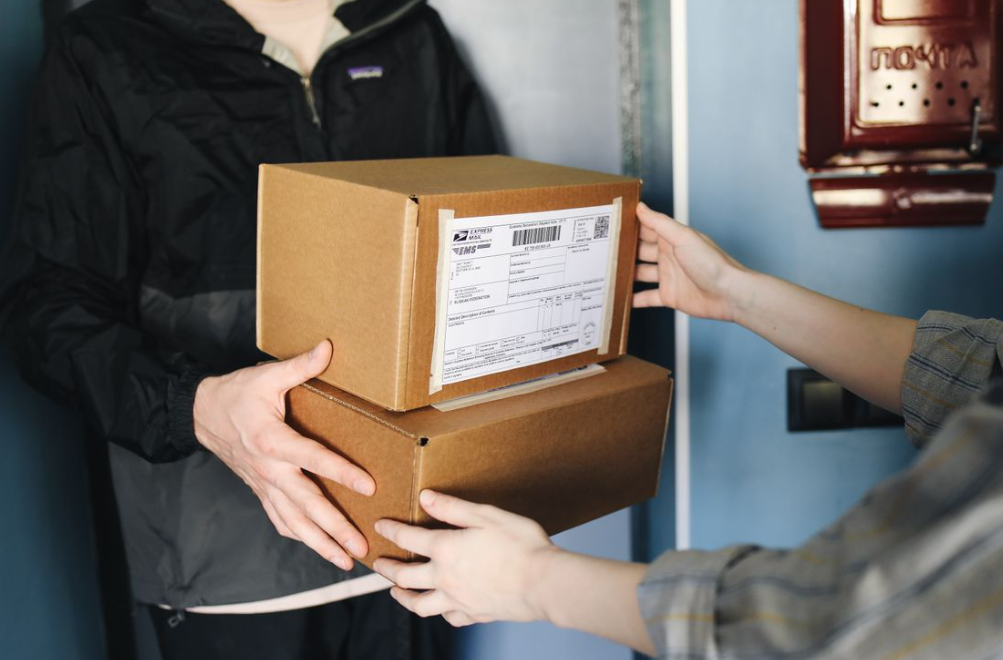
How SFC Supports China-Origin Delivery Planning
FedEx is a carrier. SFC is a fulfillment and logistics provider. The roles overlap at the handoff, but they are not substitutes for each other.
For China-origin orders, the final FedEx delivery time is only one section of the clock. Inventory must first be received, stored, picked, packed, labeled, declared, and handed to the selected shipping channel.
SFC’s ecommerce fulfillment service helps brands manage those pre-carrier steps from China. Its order fulfillment process connects order data, warehouse handling, packing, and dispatch.
That can improve predictability in a few practical ways:
-
orders can be routed by destination, weight, product type, budget, and promised date;
-
warehouse cutoffs can be aligned with carrier collections;
-
customs descriptions and shipment data can be checked before dispatch;
-
tracking milestones can be monitored across international and last-mile delivery;
-
sellers can use more than one carrier or service when a single option does not suit every order.
This is not a promise that every parcel will arrive at the same hour. No honest logistics provider should make that promise. The aim is to remove avoidable waiting before the parcel enters the network and choose a service that fits the customer commitment.
Conclusion
FedEx delivery hours are usually 8 a.m. to 8 p.m., but the useful answer goes deeper. The service tells you the broad commitment. Tracking tells you what is happening to the specific package. The address, day, cutoff, route, signature, weather, holiday status, and customs process can all move the result.
For a parcel arriving today, check the latest tracking event and any estimated window. For a shipment you have not sent yet, compare services using the real origin, destination, package details, and required arrival time. For ecommerce promises, add warehouse handling and a route-specific buffer.
That approach is less flashy than promising everything tomorrow morning. It is also much more likely to keep customers happy.
FAQs About FedEx Delivery Times and Hours
What time does FedEx usually deliver?
Typical FedEx delivery hours are 8 a.m. to 8 p.m. local time, Monday through Friday. Residential deliveries may also run on Saturday and Sunday. Expedited services have their own commitment times.
How late does FedEx deliver, and can a package arrive after 8 p.m.?
FedEx usually stops normal delivery around 8 p.m., but an unusually busy route or local exception can result in a later scan or arrival. Check tracking for the latest status rather than treating 8:00 p.m. as an automatic lost-package signal.
What does “end of day” mean for FedEx?
It generally means by the end of the carrier’s normal delivery day, commonly around 8 p.m. for residential delivery. It is not an appointment time.
Why did my FedEx estimated delivery window change or disappear?
The route or shipment information may have changed. A later facility scan, weather, volume, address issue, or route update can move the window. If FedEx no longer has enough reliable information, the window may disappear.
How accurate is the FedEx scheduled delivery date?
It is usually more useful after FedEx has physically received and scanned the parcel. It can still change after a missed connection, operational delay, weather event, address problem, or customs hold.
Does FedEx deliver on Saturdays and Sundays?
FedEx Home Delivery serves residential addresses on Saturday and Sunday in the contiguous U.S. Several Express services offer eligible Saturday options. Sunday is not standard for every FedEx service, so check the quoted result for the shipment and ZIP code.
What does “out for delivery” mean if the package does not arrive?
It means the parcel entered the local delivery process for the day, but it does not guarantee a specific stop time. Check for an attempt or exception scan later that evening. Contact FedEx or the shipper if there is still no useful update on the next operating day.
What happens if a FedEx package requires a signature and nobody is home?
The driver may leave a door tag and make another attempt. An eligible shipment may be redirected or held at a FedEx location. The available choices depend on the signature type and controls set by the shipper.
Does FedEx deliver on federal holidays?
Sometimes. FedEx service varies by holiday and business line. A date can be open for one service, modified for another, and closed for a third. Check the current holiday operations schedule for the exact service.
How long do FedEx Ground and international deliveries take?
FedEx Ground usually takes 1–5 business days in the contiguous U.S. and 3–7 days to or from Alaska and Hawaii. International Priority usually takes 1–3 business days, while International Economy usually takes 2–5. Customs can add time.
 Post Views:20195
 TAGS:
TAGS:
Copyright statement: The copyright of this article belongs to the original author. Please indicate the source for reprinting.
Previous Post
What Is Delivery Estimate Accuracy? A Logistics Guide
Next Post
Express Shipping vs Economy Shipping from China: Which Should You Use?
TAGS
Hot Research
Get a Custom China Fulfillment Solution with FREE Storage for 30 Days
Want to know about our services, fees or receive a custom quote?
 Want to know about our services, fees or receive a custom quote?
Please fill out the form on the right and we will get back to you within a business day.
The more information you provide, the better our initial response will be.