




Table of Contents
Table of Contents
So you've got a thing. Maybe it's a prototype sitting on your desk. Maybe it's a card game you've play-tested with friends forty times. Or a short film script you can't stop thinking about.
You need people. Money, sure. But also fans, feedback, and maybe a few extra hands.
That's where crowd sourcing websites come in. The tricky part? There are a lot of them now, and they don't all do the same job. Some raise money for one big launch. Some pay you every month. Some hand you design work or real-world feedback.
This guide sorts 15 platforms by what the crowd actually gives you. We'll cover how each one works, what it roughly costs, who it suits, and the part most lists skip: what happens after the money comes in.
Fees below were checked against public pages in October 2026. Platforms change pricing often, so please double-check the live page before you launch. Honestly, that's just good habit.
Crowdsourcing vs Crowdfunding: What Creators Actually Mean
People mix these two words up all the time. Even Google does. Type "crowd sourcing websites" and half the suggestions are about crowdfunding.
Here's the simple version.
Crowdfunding: means many people chip in money to make your project happen. Kickstarter is the classic example.
Crowdsourcing: means many people chip in work, ideas or attention. Think design contests, video briefs or prize challenges.
Crowdfunding is really one type of crowdsourcing. The crowd just happens to bring cash instead of skills.
Four Things a Crowd Can Give You
For creators, it helps to think in four buckets:
|
What you need
|
What the crowd gives
|
Platform type
|
|
Money for one launch
|
Pledges or pre-orders
|
Reward-based crowdfunding
|
|
Steady income
|
Monthly support
|
Membership platforms
|
|
Creative work
|
Designs, videos, solutions
|
Contest and challenge sites
|
|
Reach
|
Shares and referrals
|
Crowd promotion tools
|
Most creators use two or three of these over time. A board game designer might launch on Gamefound, keep fans warm on Patreon, then use a referral tool to push the next campaign. Totally normal.
How We Picked These 15 Platforms
We didn't just grab the biggest names. Each platform had to pass a few simple checks:
Still running in 2026, with recent campaigns or challenges.
Built for creators, not equity investors or charity drives. That's why you won't see stock-based sites here.
Clear rules on money, meaning you can find the fee model without signing up.
Some help after the campaign, like pledge management, late pledges or fulfillment links. This matters more than people think.
We also made sure every platform appears once. Sounds obvious, but a few popular lists repeat the same site to hit their number.
Crowdfunding Platforms for One-Off Creative Projects
This is the group most people mean when they search for crowd sourcing websites. You set a goal, offer rewards, and backers pledge. If it works, you get funded and then you have to deliver.
1. Kickstarter
Kickstarter is still the name everyone knows. Games, gadgets, books, comics, design objects, films. It covers pretty much every creative category.
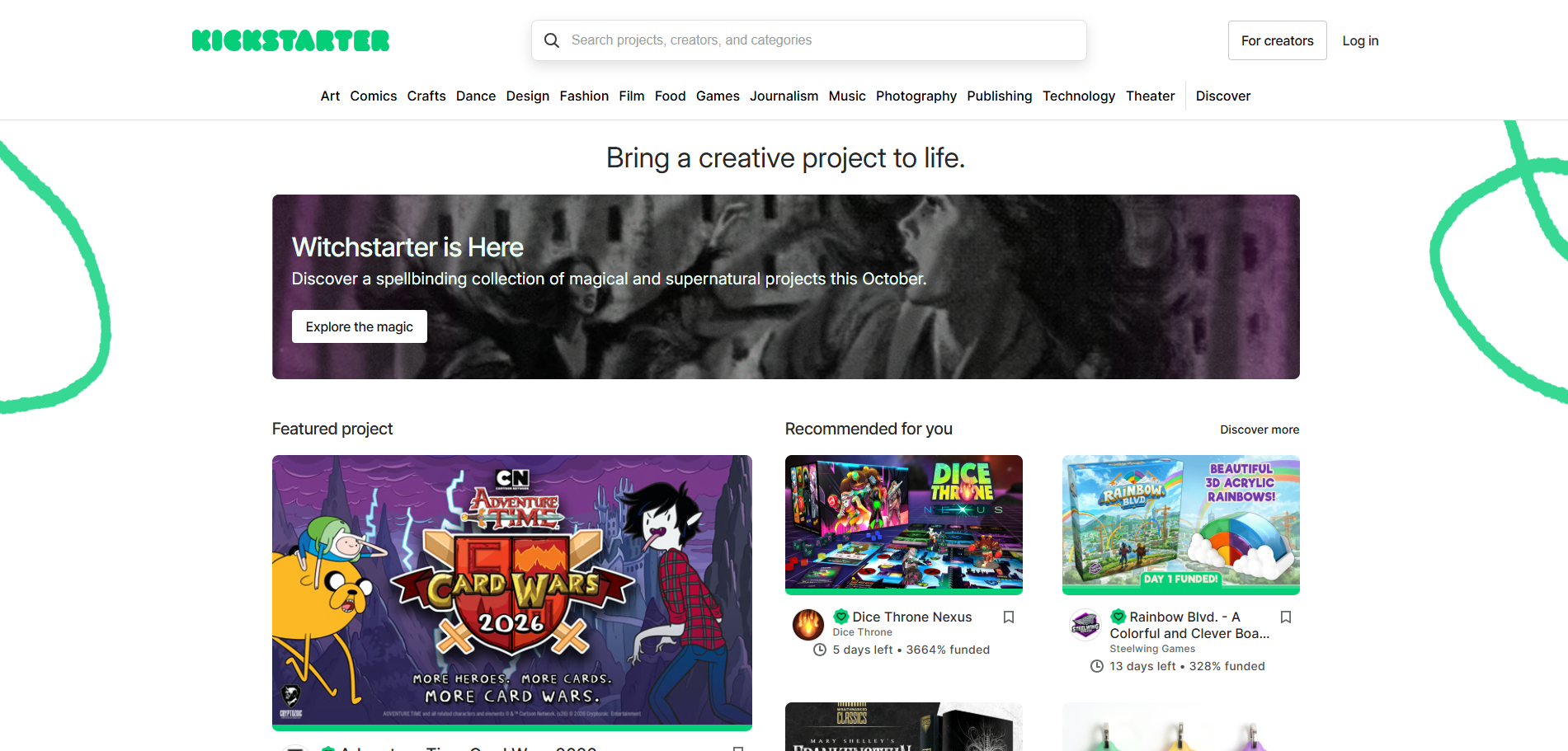
How it works: All-or-nothing. If you hit your goal, backers are charged. If you don't, nobody pays and you owe nothing.
Fees: Kickstarter takes 5% of funds from successful projects. The payment processor adds roughly 3% to 5% on top. So plan on losing around 8% to 10% before you spend a cent on production.
Watch out for: Competition. Your page sits next to thousands of others, so a launch without an email list is kind of like opening a shop in the desert.
2. Indiegogo
Indiegogo has always been strong in tech, gadgets and lifestyle hardware. It also changed a lot recently. Gamefound bought it in July 2025, and the site moved onto Gamefound's technology in October 2025. You can read more about Gamefound's Indiegogo deal and what it means for creators.
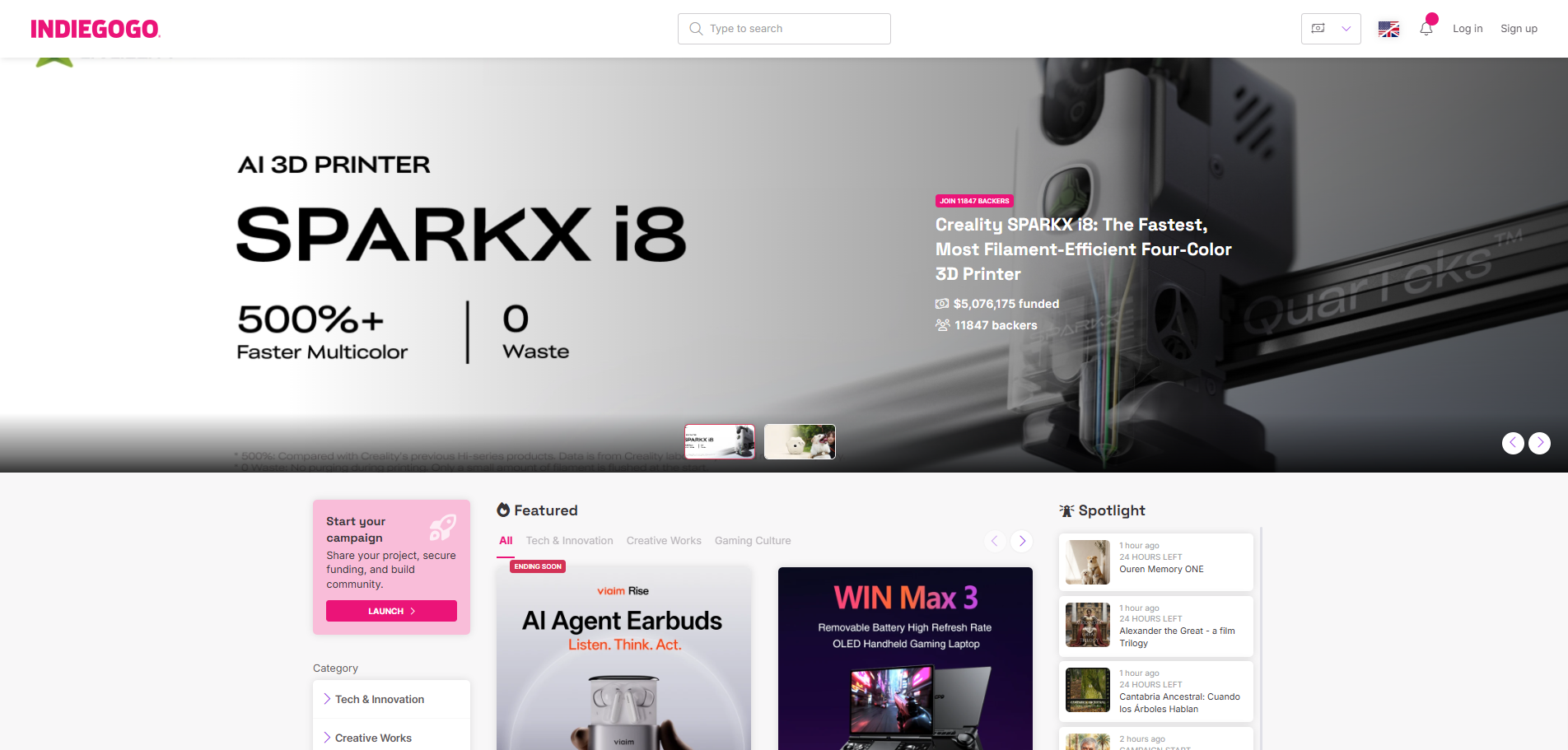
How it works: New campaigns now use fixed funding, so you need to hit the goal. The old InDemand feature is now called Late Pledge. It lets people keep backing after the campaign ends.
Fees: A flat 5% platform fee plus payment processing of about 3% plus $0.20 per transaction, according to public reports on the upgrade.
Watch out for: Older guides still talk about "flexible funding" on Indiegogo. That's out of date for new campaigns.
All-or-Nothing vs Flexible Funding
Quick side note, because this trips people up.
All-or-nothing protects you. If you only raise half your goal, you're not stuck making 500 units with money for 250.
Flexible funding lets you keep whatever you raise. Sounds nice, but it can leave you under-funded and still on the hook for rewards.
For physical products, all-or-nothing is usually the safer bet.
3. Gamefound
If you make board games, card games or miniatures, Gamefound is probably already on your radar. It grew fast in the tabletop world and now owns Indiegogo too.
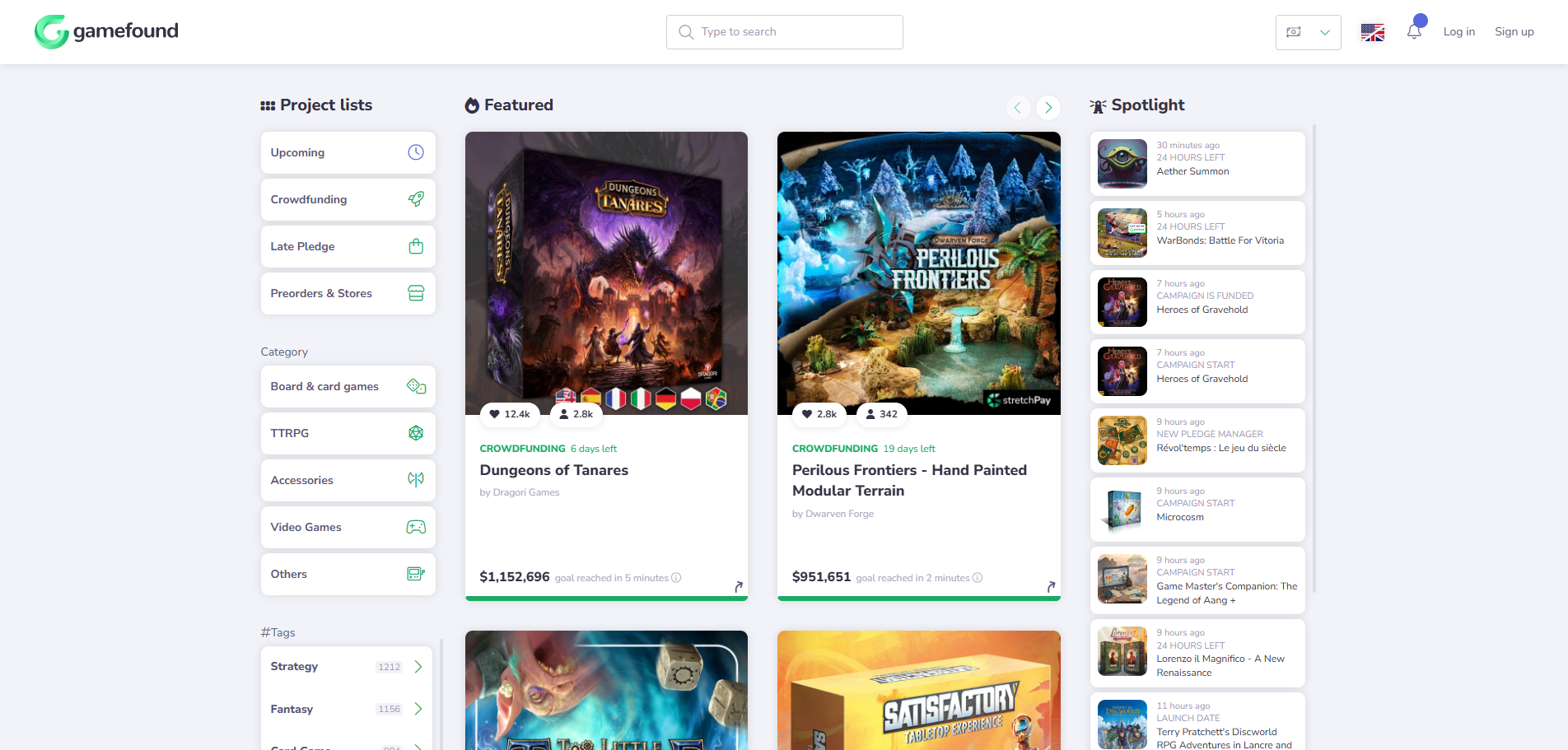
How it works: Campaigns plus a built-in pledge manager. Backers can finish their order, choose add-ons and pay shipping in one place. Late pledges are built in.
Fees: Gamefound says it charges 5% on crowdfunding funds, plus payment processing of 3% and $0.20 per transaction. The same rate applies to late pledges and extra payments in its pledge manager.
Watch out for: It's tabletop-first. A smart water bottle can launch there, but the crowd is mostly gamers.
4. BackerKit Crowdfunding
BackerKit started as a pledge manager. Lots of creators used it after a Kickstarter campaign. Now it runs its own crowdfunding platform too.
How it works: You can run the campaign, the pledge manager and pre-orders in one system. Tabletop, comics and publishing creators like this a lot.
Fees: Its pricing page lists a 5% platform fee plus card processing of 2.9% plus $0.30 per pledge in the US, charged only if you hit your goal.
Watch out for: Fee details differ between BackerKit pages. Check the current plan page before you budget.
5. Crowd Supply
Crowd Supply is for hardware people. Open-source boards, synth modules, sensors, weird and wonderful electronics. The audience is engineers and makers, and they read spec sheets for fun.
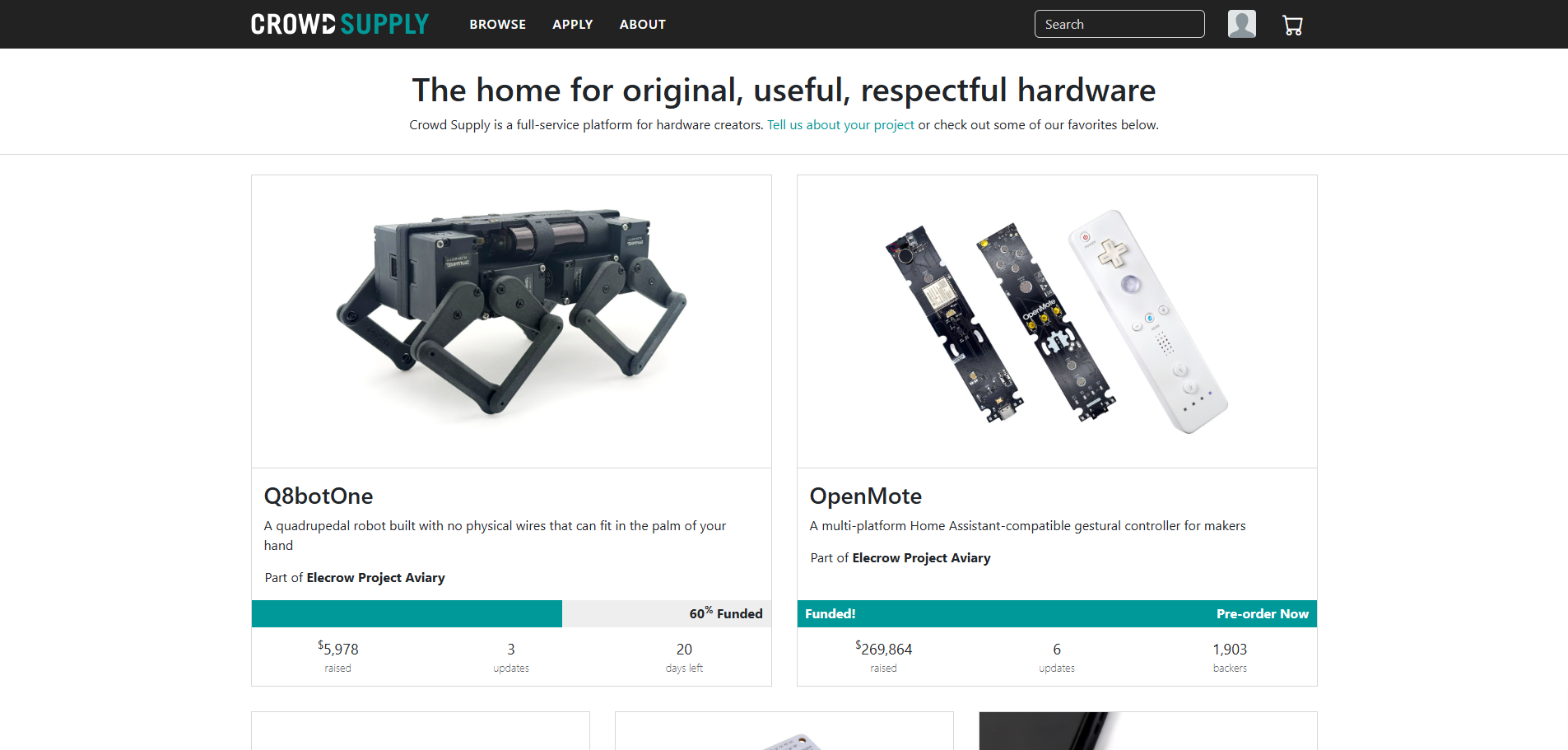
How it works: Projects are reviewed before launch. Crowd Supply also handles a lot of the back end: payments, customer support and shipping through its parent company, Mouser.
Fees: Crowd Supply says it typically takes about 12% of campaign product sales, with no equity. That's higher than Kickstarter. But it covers more of the work.
Watch out for: Not every product gets accepted. If your thing is a lifestyle gadget, this may not be the right room.
6. Ulule
Ulule is big in France and the wider European market. In late 2024 it bought KissKissBankBank, another French crowdfunding site.
How it works: All-or-nothing, with a community that likes indie brands, books, music, food projects and design.
Fees: Ulule's help page lists a commission of 6.67% before VAT on card payments for campaigns under €100,000. VAT depends on your country.
Watch out for: If your audience is mostly in the US, you'll have to bring them yourself.
7. Seed&Spark
Seed&Spark is made for filmmakers and storytellers. Shorts, features, docs, series.
How it works: Projects are reviewed case by case. You need to raise at least 80% of your goal to collect funds. Campaigns that build a solid follower base can also get help thinking about distribution.
Fees: Public sources disagree here. Some say a 5% platform fee plus processing. Others say backers cover costs through tips. Read the current terms on the site before you plan.
Watch out for: It's a niche crowd. That's great for films, not much use for a phone case.
8. Crowdfundr
Crowdfundr is a smaller, lower-key platform. It works best for creators who already have fans and just need a clean place to collect pledges.
How it works: Pick a fee model. Backers can choose to cover some or all fees at checkout.
Fees: A 5% platform fee that supporters can cover, plus payment processing of around 2.9% plus $0.30. Your real cost depends on how many supporters opt in.
Watch out for: There's not much built-in traffic. You bring the crowd, it brings the checkout.
Membership Platforms for Recurring Creator Income
One-off campaigns are a sprint. Memberships are more like a monthly paycheck from your biggest fans. They suit creators who make things all the time, like comics, podcasts, tutorials or 3D print files.
9. Patreon
Patreon is the best-known membership platform. Fans pick a tier and pay every month or per post.
How it works: You offer perks by tier, like early access, behind-the-scenes posts, or monthly rewards.
Fees: For pages launched after August 4, 2025, Patreon moved new creators to a single standard 10% platform fee, plus payment processing. Creators who launched earlier may still be on older plans.
Watch out for: It's not built for one big product launch. Use it to keep fans around between launches.
10. Ko-fi
Ko-fi started as a tip jar, "buy me a coffee" style. Now it also has memberships, commissions and a small shop.
How it works: Fans can tip once, join a membership or buy digital and physical items.
Fees: On the free setup, Ko-fi charges 5% on shop sales, memberships and commissions. Tips can be fee-free depending on your settings. A paid Gold plan removes the platform fee. Payment processors still take their cut.
Watch out for: Pricing for Gold varies by source. Check inside your own dashboard.
Crowdsourcing Sites for Creative Work, Ideas and Promotion
This group flips the script a little. Here, the crowd brings skills, attention or ideas. If you're a designer, illustrator, video maker or inventor, these can pay you. If you're launching something, they can help you get seen.
11. Threadless
Threadless has been crowdsourcing designs since way before it was cool. Artists submit designs, the community votes, and winning work ends up on shirts and other products.
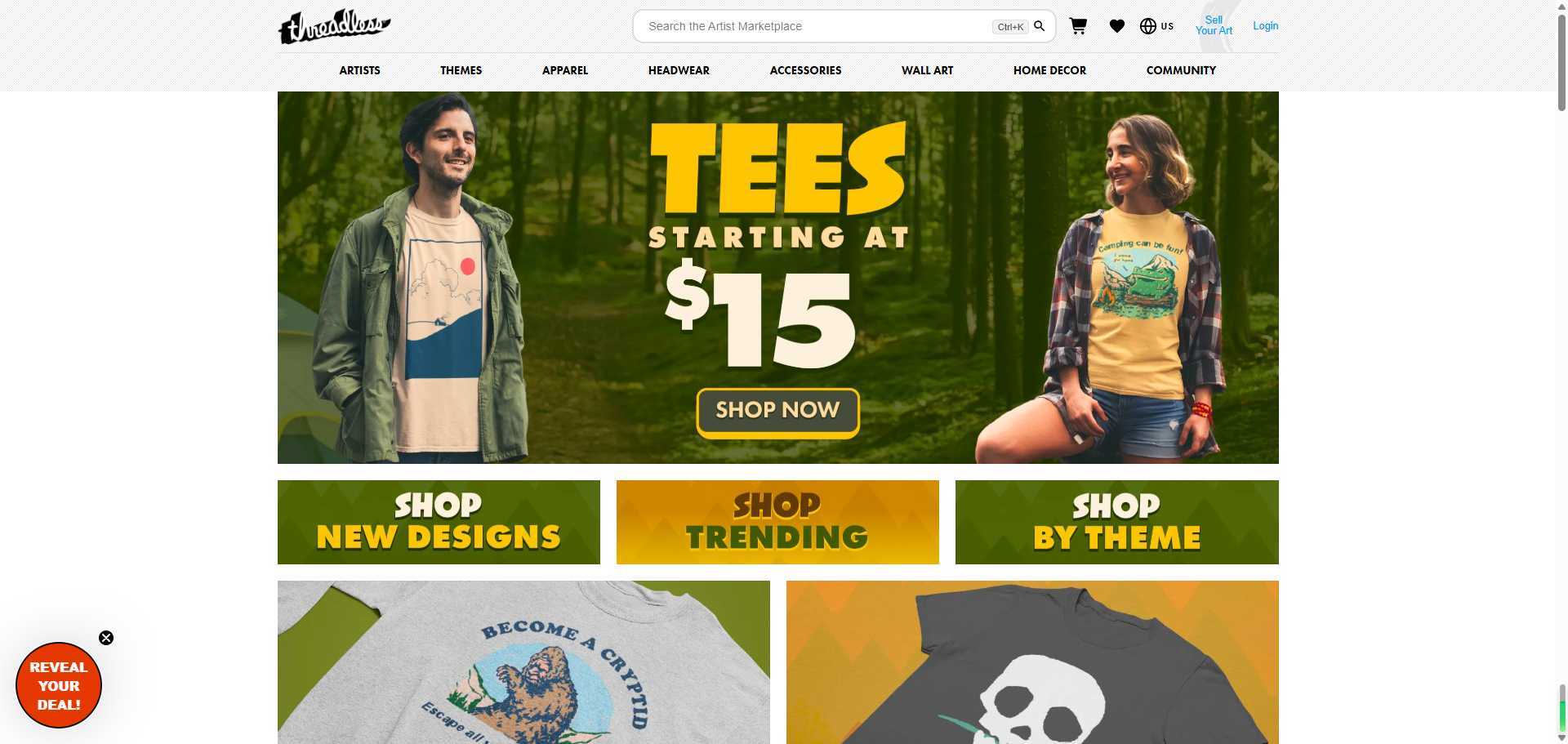
How it works: Artists can open a free Artist Shop and earn on each sale. There are also design challenges, some with licensed brands.
Earnings: Royalties depend on product and price. Threadless doesn't publish one flat rate for everything.
Good for: Illustrators who want their art on products without holding stock.
12. 99designs by Vista
99designs runs design contests. A client posts a brief, designers send concepts, and the client picks a winner.
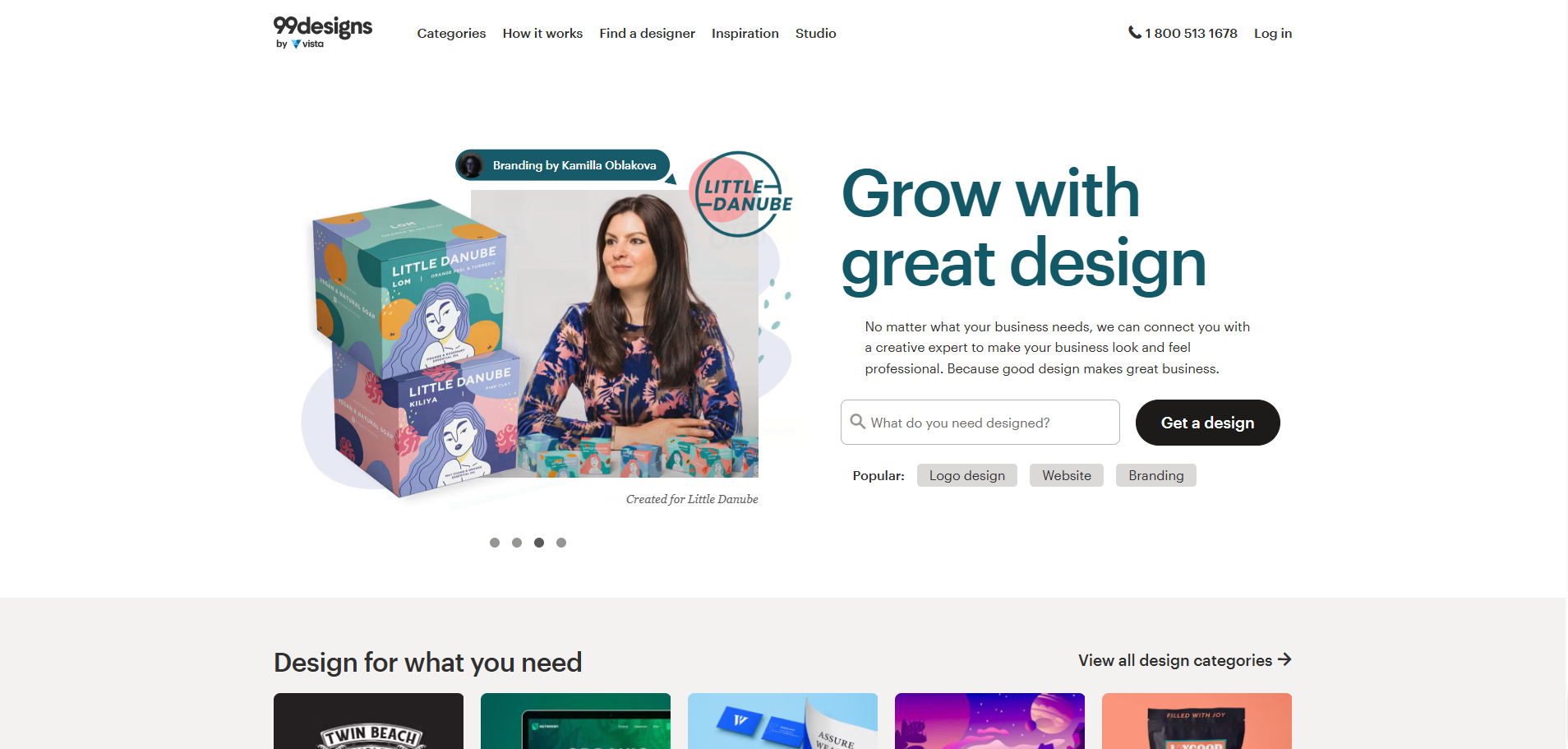
How it works: Clients choose a package. Designers compete in contests or get hired one-on-one.
Pricing: Logo contests start at roughly $249 to $299 for clients, based on public pricing reviews.
Good for: Designers building a portfolio, or creators who need a logo or packaging for their campaign.
13. Tongal
Tongal connects brands with filmmakers, writers and animators. Brands post a brief, creators pitch ideas, and selected creators get paid to produce.
How it works: It's staged. First a pitch, then a video round, with payouts at each stage for chosen work.
Good for: Video creators who want paid brand work and want to build a reel.
14. HeroX
HeroX hosts prize challenges. NASA, government agencies and companies post problems. Anyone can try to solve them.
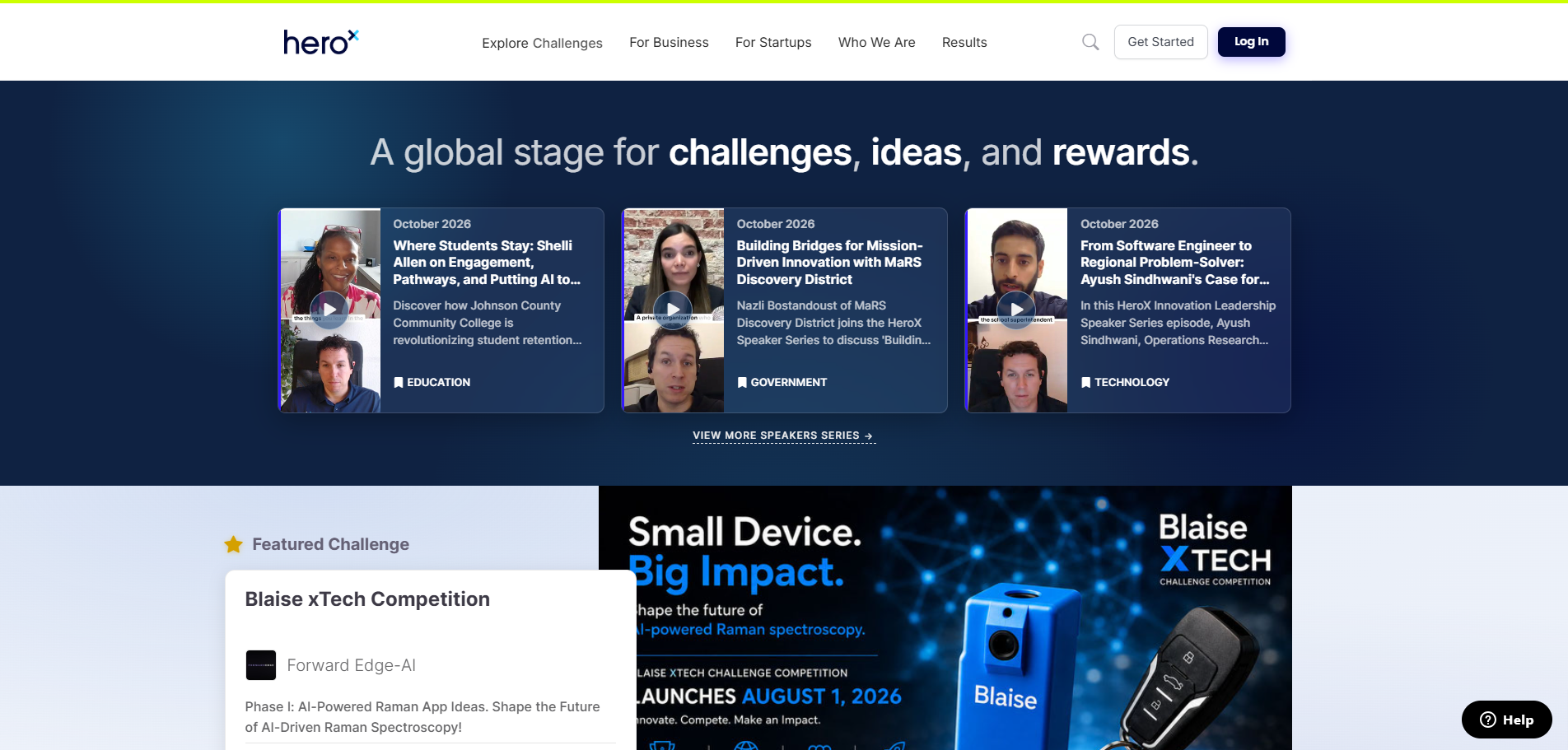
How it works: Sponsors set rules and a prize pool. Solvers sign up for free and submit entries. Challenges often run two to four months.
Good for: Inventors, engineers and data folks who like a tough problem. Some product creators also use it to test ideas in public.
15. Kickbooster
Kickbooster isn't a funding site. It's a referral and affiliate tool for crowdfunding campaigns. Your backers or partners share a link, and they earn a commission when someone backs through it.
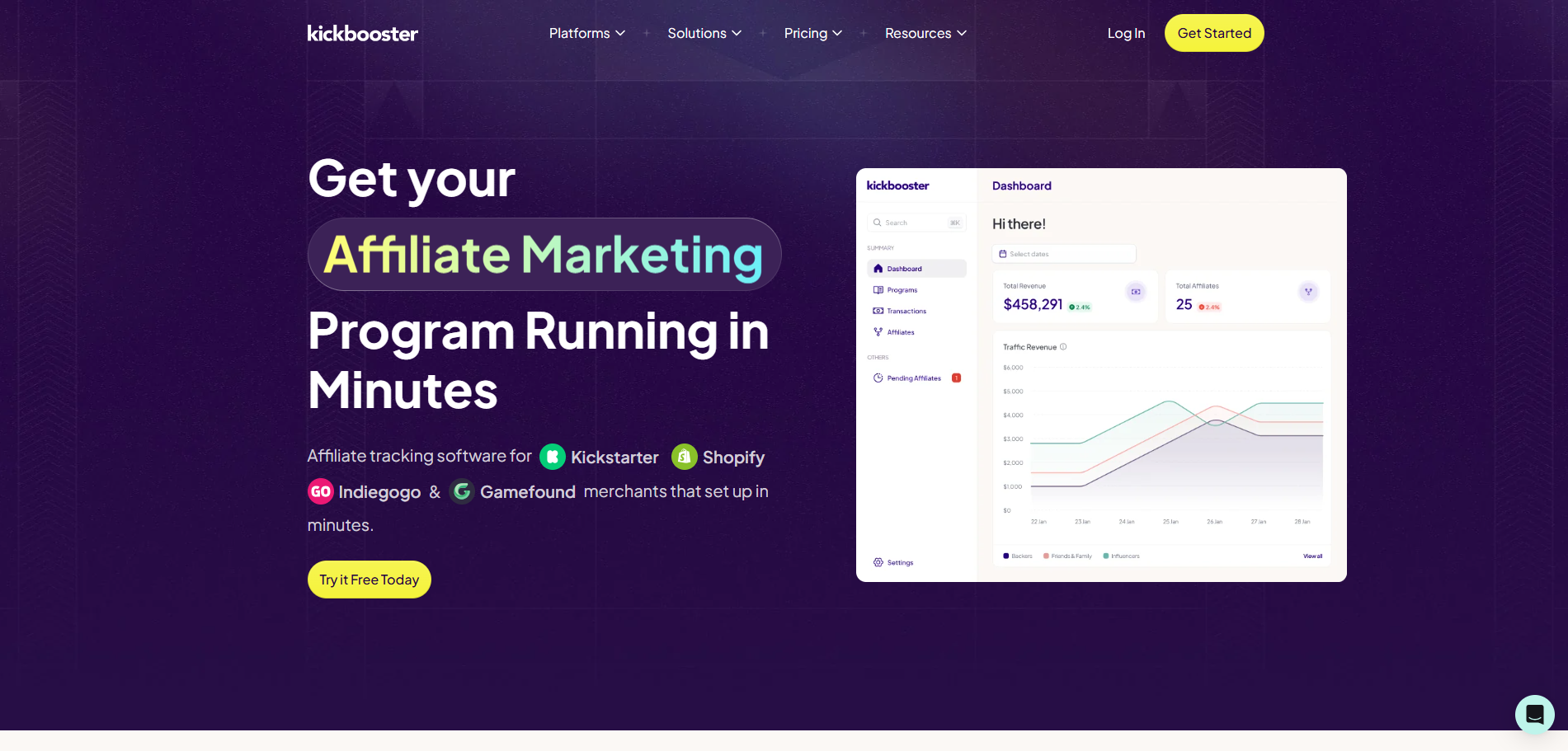
How it works: You connect your Kickstarter or Indiegogo campaign, set a referral rate, and let your crowd do the shouting.
Good for: Creators who already have a campaign live and need more reach without hiring a big agency.
All 15 Crowd Sourcing Websites Side by Side
Fee figures are from public pages as of October 2026. Payment processing is extra unless noted.
|
#
|
Platform
|
Type
|
Funding model
|
Main creator fee
|
Best fit
|
|
1
|
Kickstarter
|
Crowdfunding
|
All-or-nothing
|
5% + 到3–5% processing
|
Most creative projects
|
|
2
|
Indiegogo
|
Crowdfunding
|
Fixed + Late Pledge
|
5% + 到3% + $0.20
|
Tech and gadgets
|
|
3
|
Gamefound
|
Crowdfunding
|
Campaign + pledge manager
|
5% + 3% + $0.20
|
Tabletop games
|
|
4
|
BackerKit Crowdfunding
|
Crowdfunding
|
All-or-nothing
|
5% + 2.9% + $0.30 (US)
|
Games, comics, books
|
|
5
|
Crowd Supply
|
Crowdfunding
|
Curated
|
到12% of sales
|
Open-source hardware
|
|
6
|
Ulule
|
Crowdfunding
|
All-or-nothing
|
6.67% + VAT (cards)
|
European creators
|
|
7
|
Seed&Spark
|
Crowdfunding
|
80% rule
|
Check current terms
|
Film and video
|
|
8
|
Crowdfundr
|
Crowdfunding
|
Flexible fee models
|
5%, backers can cover
|
Creators with fans
|
|
9
|
Patreon
|
Membership
|
Monthly or per post
|
10% for new creators
|
Ongoing content
|
|
10
|
Ko-fi
|
Membership + tips
|
Tips, members, shop
|
0–5% by type
|
Small creators
|
|
11
|
Threadless
|
Crowdsourced design
|
Shop + challenges
|
Royalty per sale
|
Illustrators
|
|
12
|
99designs by Vista
|
Design contests
|
Client-paid contests
|
Client pays from 到$249
|
Designers
|
|
13
|
Tongal
|
Video briefs
|
Staged pitches
|
Paid per selected stage
|
Filmmakers
|
|
14
|
HeroX
|
Prize challenges
|
Sponsor prize pools
|
Free for solvers
|
Inventors, engineers
|
|
15
|
Kickbooster
|
Crowd promotion
|
Referral commissions
|
Set by campaign
|
Live campaigns
|
How to Choose the Right Platform for Your Project
The "right" platform is mostly about who your backers already are. Not about which logo looks nicer.
Board Games and Tabletop
Gamefound and BackerKit lead here, and Kickstarter still pulls huge tabletop numbers. Games come with lots of SKUs, expansions, deluxe editions and add-ons. So pick a platform with a strong pledge manager. Then line up board game fulfillment before you finalize reward tiers, not after.
Gadgets and Hardware
Kickstarter and Indiegogo are the usual pair. If you're torn between them, this Indiegogo vs Kickstarter breakdown goes deeper. For open-source electronics, Crowd Supply is worth a look.
Film and Video
Seed&Spark is built for you. Kickstarter's film category also works well. Tongal is a good side door if you want paid brand work while you raise money.
Art, Illustration and Design
Patreon or Ko-fi for ongoing fans. Threadless for products with your art on them. 99designs if you want client work.
Books, Comics and Zines
Kickstarter and BackerKit both have strong publishing communities. Add a Patreon if you publish in issues or chapters.

After the Campaign: Pledges, Shipping and Fulfillment
Okay, here's the bit that bites people. Hitting your goal feels like the finish line. It isn't. It's more like halfway.
Pledge Managers and Late Pledges
After funding, you need to collect shipping addresses, let backers pick add-ons, and charge shipping. That's what a pledge manager does. Gamefound and BackerKit have one built in. Indiegogo now has Late Pledge. Kickstarter creators usually add a separate tool.
Do this early. Backers move house. Emails bounce. The longer you wait, the messier it gets.
Shipping Costs, Tiers and Add-Ons
A lot of campaigns lose money on shipping. Not on the product.
Some common causes:
Rewards end up heavier or bulkier than planned, so carriers charge by dimensional weight.
Too many tiers and add-ons create dozens of package combinations.
Duties and taxes in some countries surprise backers, and then you get support tickets.
Before launch, it helps to estimate crowdfunding shipping costs by country and package size. Then build that into your pledge prices.
Shipping Rewards From China to Backers Worldwide
Lots of creator products are made in China. That opens up a simple option. Instead of shipping everything to your garage first, you can fulfill straight from China.
SendFromChina is a China-based third-party fulfillment partner that offers crowdfunding fulfillment. In practice that means:
Receiving finished rewards from your factory.
Checking items and storing them in a warehouse in China.
Packing orders by tier, including add-ons and bundles.
Shipping to backers in many countries, with tracking.
Delivery times depend on route, carrier, customs and season, so treat any estimate as a range, not a promise. Costs are quoted per project and usually include storage, pick and pack, packaging and shipping. Ask for a quote with your real reward sizes. That's the only number worth trusting.
Common Mistakes Creators Make on Crowd Platforms
We've seen these again and again:
Launching with no audience. Platforms don't bring backers by magic. Build an email list first.
Too many reward tiers. Every tier is another packing combo. Keep it tight.
Guessing shipping. One heavy box can wipe out your margin.
Leaving fulfillment until the end. Talk to a fulfillment partner while you're still prototyping.
Picking a platform for the logo. Pick it for the crowd that's already there.
Going quiet after funding. Regular updates keep backers patient when things run late. And things usually run a bit late.
Conclusion
There's no single "right" crowd sourcing website. There's the one where your people already hang out.
Need money for one launch? Start with Kickstarter, Indiegogo, Gamefound or BackerKit. Making films? Look at Seed&Spark. Want income every month? Patreon or Ko-fi. Want paid creative work or a design for your campaign? Threadless, 99designs, Tongal and HeroX are worth your time. Need more reach while you're live? Try Kickbooster.
And whatever you pick, plan the boring part early. Pledges, packaging and shipping decide whether backers come back for your next project.
FAQs
What is the difference between crowdsourcing and crowdfunding?
Crowdsourcing means getting work, ideas or help from a large group of people. Crowdfunding is one kind of crowdsourcing where the crowd gives money to fund a project.
Is Kickstarter crowdsourcing or crowdfunding?
Kickstarter is a crowdfunding platform. Backers pledge money in return for rewards. Since it gets support from a crowd, you can also call it a form of crowdsourcing.
Which crowdfunding site is best for creators?
It depends on your project. Kickstarter suits most creative projects. Gamefound and BackerKit are strong for tabletop games. Seed&Spark fits films. Patreon suits creators who post regularly.
What are the best Kickstarter alternatives in 2026?
Popular options include Indiegogo, Gamefound, BackerKit Crowdfunding, Crowd Supply, Ulule, Seed&Spark and Crowdfundr. Each one fits a different type of creator or region.
Which crowdfunding platform is best for board games?
Gamefound, Kickstarter and BackerKit Crowdfunding are the main choices. Gamefound and BackerKit both come with built-in pledge managers, which helps with add-ons and late pledges.
What is the best crowdfunding site for filmmakers?
Seed&Spark is built for film and video. Kickstarter's film category is also popular. Some filmmakers use Tongal for paid brand work alongside their own projects.
How much do crowdfunding platforms charge?
Most reward-based platforms charge around 5% of funds raised, plus payment processing of about 3% and a small per-pledge fee. Some curated platforms charge more because they handle more of the work.
Is all-or-nothing or flexible funding better?
For physical products, all-or-nothing is usually safer. You only get paid if you raise enough to actually make and ship the rewards.
Do I need a pledge manager after my campaign ends?
Usually yes, if you offer add-ons or charge shipping after the campaign. A pledge manager collects addresses, choices and extra payments in one place.
How do I ship crowdfunding rewards to backers worldwide?
Estimate shipping by country and box size before launch. Then work with a fulfillment partner that can store, pack by tier and ship with tracking. If your rewards are made in China, shipping directly from China can save a step.
 Want to know about our services, fees or receive a custom quote?