
Table of Contents
Get Custom eCommerce Fulfillment Service
Book a Meeting
Returnless Refunds for Cross-Border Ecommerce: Costs, Risks, and Use Cases
Time: Sep 09,2026 Author: SFC Source: www.sendfromchina.com

A customer in France orders a $26 accessory from a brand that fulfills from China. The item arrives late, and the customer asks for a refund. Sending the product back costs $29. Receiving and inspecting it would add another $5. If the open-box item can only be sold for $9, the normal return route is already underwater.

That does not mean the seller should refund every low-value order without a return. It means the return decision needs more than a product-price rule.
A returnless refund—also called a refund without return or a keep-the-item refund—gives the customer a financial resolution without requiring the physical product to travel back. For cross-border ecommerce, this can avoid reverse shipping, customs friction, local handling, and long wait times. It can also create margin leakage, fraud exposure, safety concerns, and messy inventory records if the policy is too broad.
The practical framework is:
Screen → Calculate → Decide → Control → Record → Review.
The best use cases are usually low-value accessories, bulky products, non-resellable goods, selected service-recovery cases, and situations where international reverse logistics costs more than realistic recovery value. High-value, serialized, repairable, regulated, or safety-sensitive items need a much tighter process.
This guide explains how to evaluate returnless refunds across markets, channels, and product types. It also shows how a China 3PL can support local returns, inspection, consolidation, repair, and recovery when “keep the item” is not the right answer.
What Is a Returnless Refund?
A returnless refund is a customer refund issued without asking the customer to ship the product back. The customer may keep the item, dispose of it, donate it, or follow a seller-provided local instruction.
It is different from several nearby concepts:
- Partial refund: The customer keeps the product and receives part of the purchase price.
- Replacement without return: The seller sends another product but does not collect the original.
- Store credit: The customer receives credit rather than a cash refund.
- Warranty replacement: A replacement is provided under a product or service warranty.
- Ordinary return: The customer sends the product back for inspection, refund, repair, or restock.
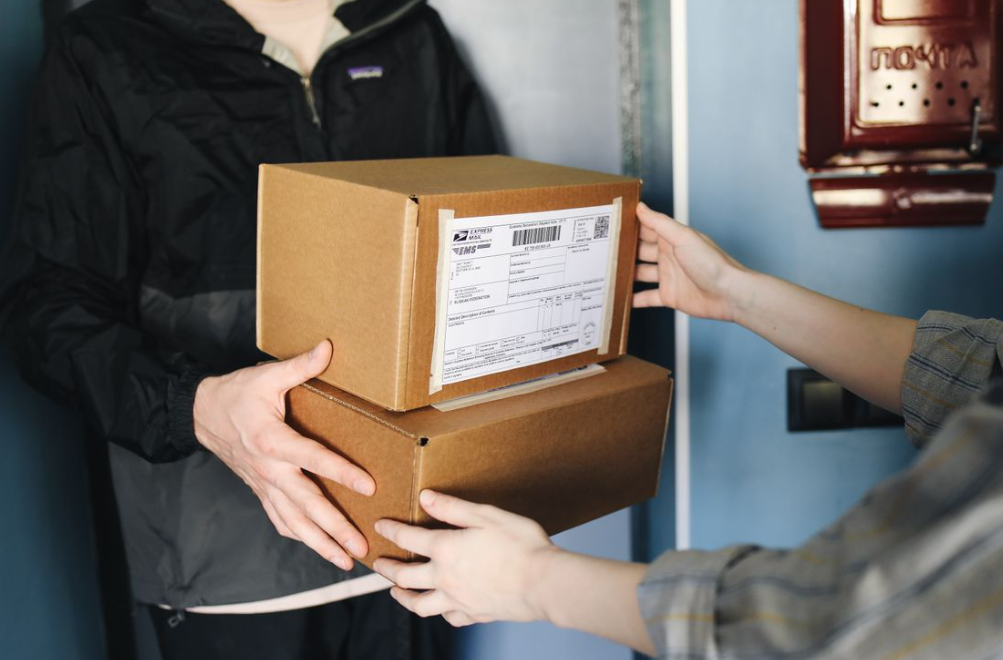
The customer-facing event is simple: money, credit, or a replacement is issued. The business event is more complicated: the seller gives up, or locally manages, the chance to recover the physical unit.
A returnless refund does not automatically remove consumer-rights, marketplace, safety, tax, customs, accounting, or product-disposal obligations. A business still needs a policy that fits the destination market, product, channel, and contract.


Why Cross-Border Sellers Consider Returnless Refunds
International returns have more moving parts than domestic returns. A parcel may need a local label, export paperwork, customs data, import clearance, tax treatment, warehouse receiving, inspection, storage, repair, and a second journey before it creates value again.
Common reasons to consider a no-return resolution include:
- international return postage is higher than the product's recovery value;
- the product is bulky, low-density, or expensive to handle;
- customs and re-import paperwork would take too long;
- the item is opened, worn, damaged, or difficult to resell;
- local disposal, donation, or liquidation is available;
- a fast customer resolution protects retention and support capacity;
- the original item has little value after refund and handling costs.
|
Cost or outcome
|
Traditional return
|
Returnless refund
|
|
Customer refund
|
Usually paid under the policy
|
Usually paid under the policy
|
|
Return label or freight
|
Usually present
|
Avoided
|
|
Receiving and inspection
|
Usually present
|
Avoided or reduced
|
|
Inventory recovery
|
Possible
|
Normally lost unless handled locally
|
|
Fraud exposure
|
Physical return can provide evidence
|
Needs stronger behavior controls
|
|
Customer effort
|
Higher
|
Lower
|
|
Customs complexity
|
Possible on the reverse route
|
Avoided for the physical return, not necessarily the original sale
|
|
Support workload
|
May include label and tracking questions
|
Often faster, but policy disputes can rise
|
The important word is complete. Do not compare only a return label with a refund. Compare the entire cost and likely outcome of each route.


The Core Decision Formula
The formula below is an operating model, not an accounting rule:
Returnless option value = avoided reverse-logistics cost − forgone recovery value − expected fraud loss − local compliance or disposal cost
Compare it with the complete traditional-return outcome:
Traditional-return value = recovered resale, repair, salvage, or supplier value − return freight − duties or taxes − inspection − storage − repack or repair − disposal − support and payment costs
The original selling price is not the recovery value. A $70 product may be worth $35 after opening. A $12 accessory may have almost no value once shipping and inspection are included.
Illustrative Break-Even Example
Suppose a product sold for $35. After a customer opens it, the realistic recovered value is $12.
|
Route
|
Illustrative cost
|
Commercial result
|
|
Direct return to China
|
$22 freight + $5 receiving + $3 inspection
|
Recovery is likely unattractive
|
|
Local return hub
|
$7 label + $3 inspection + $4 local handling
|
Some value may remain
|
|
Bulk consolidation
|
$6 allocated freight + $6 China handling
|
May preserve value if volume is sufficient
|
|
Returnless refund
|
No reverse freight; refund still applies
|
May be best if fraud and disposal risk are low
|
These are planning examples, not quotes. Actual results depend on country, carrier, weight, dimensions, product condition, duties, taxes, local labor, and resale channel.
Include costs that are easy to forget:
- replacement shipment;
- payment-processing fees;
- marketplace charges;
- customer-service time;
- local storage;
- packaging materials;
- inventory aging;
- disposal or recycling certificates;
- claim administration;
- lost seasonal selling time.

The useful question is not “What is the return postage?” It is “Which route preserves the most realistic value while meeting the customer and product requirements?”


Build a Dynamic Eligibility Rule
Avoid a public rule such as “all orders under $30 are refund-without-return.” A fixed threshold is easy for customers to understand, but it is also easy to abuse and may be wrong for different products.
A better rule considers:
- product cost and realistic recovery value;
- return freight and local handling;
- product weight, dimensions, and condition;
- country and currency;
- return rate by SKU;
- customer history and dispute pattern;
- order value and payment risk;
- sales channel;
- product-safety and disposal needs;
- local repair, resale, or consolidation options.
|
Input
|
Lower-risk signal
|
Higher-risk or review signal
|
|
Product value
|
Low realistic recovery value
|
High resale or serialized value
|
|
Reverse freight
|
Higher than recovery value
|
Affordable return route
|
|
Condition
|
Non-resellable or hygiene-sensitive
|
New, sealed, and easy to resell
|
|
Customer history
|
Established, low-dispute customer
|
Repeated refund-only requests
|
|
Country or route
|
High customs friction
|
Reliable local return option
|
|
Channel
|
Controlled DTC policy
|
Marketplace-specific requirement
|
|
Product risk
|
Safe local disposition
|
Battery, liquid, regulated, or unknown risk
|
The rule can route a case to:
- Automatic returnless approval.
- Partial refund.
- Local return hub.
- China consolidation.
- Direct return to China.
- Manual review.
- Normal return or claim process.

Keep the exact fraud signals and thresholds internal. The customer policy should be clear about eligibility, but it does not need to publish a playbook for finding loopholes.


Use Case 1: Low-Value Accessories and Small Parcels
Phone cases, cables, simple accessories, inexpensive household items, and small replacement parts often have a weak reverse-logistics case.
The return label may cost more than the item. Even if the item arrives back in China, the warehouse still needs to receive, inspect, restock, liquidate, or dispose of it. A returnless refund may avoid that chain of small charges. Compare the complete China fulfillment cost structure before setting a threshold.
Still, track the result by SKU. A low-value product with a high refund rate can quietly become a loss leader. Compare its gross margin, support contacts, fraud rate, and repeat purchase behavior.
Use Case 2: Bulky or Expensive-to-Return Products

Large home goods, low-density products, furniture parts, and heavy items can be costly to send back internationally. A local repair partner, pickup, partial refund, liquidation route, or customer keep-it outcome may work better. If returned items later move to China, confirm the available ecommerce shipping services for the product and route.
“Bulky” does not mean automatically eligible. A heavy product may have strong resale value, warranty requirements, or safety risks. Compare local recovery with return freight and inspect the product category before publishing the rule.


Use Case 3: Damaged, Opened, or Non-Resellable Goods
An opened cosmetic, worn garment, incomplete bundle, or product with damaged retail packaging may not return to normal saleable stock.
Possible outcomes include:
- local discount resale;
- repack or repair;
- supplier recovery;
- liquidation;
- donation;
- recycling;
- specialist disposal;
- returnless resolution where safe and permitted.
Batteries, liquids, chemicals, contaminated goods, medical products, food, and other regulated items require special treatment. A seller should not allow an unsafe product to stay with a customer simply because reverse shipping looks expensive.
Use Case 4: Customer-Experience Recovery
A returnless refund can be useful when the product issue is small but the customer experience is not. Examples include a minor cosmetic issue, a late delivery, a missing low-cost accessory, or a packaging problem.
Use a reason code for goodwill cases. Otherwise, the business may mistake a service-recovery decision for a product-level return policy.
Set approval limits. A support agent may approve a small refund, while a high-value replacement, suspected fraud case, or safety issue needs review.
Use Case 5: Marketplace and Platform-Driven Outcomes
Map each channel separately:
- eligibility;
- customer notice;
- refund event;
- inventory treatment;
- seller metrics;
- evidence retention;
- dispute process;
- product-safety escalation.
Do not assume a setting on one marketplace is a universal policy for your DTC store. A platform rule may also change, so confirm current requirements before relying on it.
When Returnless Refunds Backfire

Margin Leakage
The most obvious risk is refunding products that could have been recovered. This happens when the threshold is too generous, the original product price is mistaken for recovery value, or local resale options are ignored.
Review margin by SKU, country, and channel. A policy that works for a $9 accessory may fail for a $28 item with strong local demand.
Refund Abuse and Serial Claimers
Returnless policies can become predictable. Customers may learn the exact value band, use multiple accounts, change delivery addresses, or repeat similar claims.
Useful risk signals include claim frequency, account age, payment identity, delivery address, device or session patterns where lawful and appropriate, SKU risk, reason patterns, order value, and prior disputes.
Use these signals to request more evidence or manual review, not to reject legitimate customers automatically. A fraud control that blocks good customers can cost more than the abuse it prevents.
Brand and Customer Trust
A customer may not know whether the product is safe to keep, donate, or dispose of. A policy can also feel unfair if one support agent approves a no-return refund and another refuses a similar case.
Train support teams with a short decision tree. Use consistent reason codes and record exceptions.
Product Safety and Disposal
Returnless does not mean responsibility-free. If the item contains a battery, liquid, chemical, personal data, or another safety-sensitive component, the seller may need to give handling instructions or use a controlled local solution.
Product-specific and destination-specific review is essential. Do not turn a margin rule into a safety rule.
Channel and Legal Conflict
Consumer withdrawal, refund, warranty, product-safety, customs, tax, and marketplace requirements vary by country and product. A commercial policy should not be presented as a universal legal entitlement or waiver.


Cross-Border Customs and Tax Considerations
A returnless refund avoids the physical reverse shipment. It does not erase the original sale's customs, VAT, tax, reporting, or accounting obligations.
A conventional return to China may involve product identity, original export records, ownership, declared value, HS classification, origin, importer or exporter details, condition, and intended disposition. Re-import treatment can differ when an item is repaired, replaced, exported again, donated, destroyed, or resold.
For each route, confirm with a qualified customs broker or tax adviser:
- required documents;
- importer or exporter of record;
- declared value;
- original export evidence;
- duties and taxes;
- possible relief or drawback;
- description of repaired or damaged goods;
- battery, liquid, or regulated-goods requirements;
- inventory and financial treatment.
Do not promise a duty refund or special return treatment until eligibility is verified for the actual country, product, and paperwork.
Inventory, Accounting, and System Workflow
The customer refund and the physical item are separate events. Your systems should keep them connected without pretending they are the same thing.
Create a reason code such as RETURNLESS_REFUND. Record:
- order and customer country;
- SKU and variant;
- product cost and realistic recovery value;
- refund or replacement amount;
- reason and condition;
- channel;
- approval level;
- inventory and accounting treatment;
- local disposal or customer instruction;
- fraud-review result.
Suggested statuses include:
|
Status
|
Meaning
|
System action
|
|
Review pending
|
Eligibility needs checking
|
Hold automatic decision
|
|
Returnless approved
|
Refund or replacement approved without return
|
Record reason and inventory treatment
|
|
Local action required
|
Safe disposal or local handling is needed
|
Assign a local task
|
|
Claim or investigation
|
Fraud, damage, or wrong-item concern
|
Preserve evidence
|
|
Closed
|
Financial and operational records reconcile
|
Include in reporting
|
Do not let the refund system add a returned unit back to available stock. A returnless refund usually means there is no physical unit to restock. If the customer must follow a safety or disposal process, keep the relevant task open until it is resolved.
The WMS, OMS, ERP, returns platform, ecommerce store, marketplace, and finance system should agree on the case status. Where integrations are used, test refund events, inventory adjustments, failed messages, retries, and duplicate prevention through the SendFromChina API and integration workflow.
How a China 3PL Can Support the Model
A China 3PL does not automatically decide your refund policy. It can support the surrounding choices.
Useful capabilities may include:
- local or regional return hubs;
- China receiving and inspection;
- SKU, lot, serial, and condition capture;
- bulk return consolidation;
- repacking and relabeling;
- repair or refurbishment;
- supplier recovery and credit documentation;
- liquidation, recycling, donation, or disposal coordination;
- inventory status updates;
- return-cost reporting by SKU and country.

A China warehousing service can be part of a hybrid model: local hubs resolve customer convenience, while China handles repair, restock, consolidation, or supplier recovery when that route makes economic sense. For approved repacking or relabeling, document the packing and customization process.
For low-value cases, the 3PL may not handle the individual item at all. That is the point of a returnless decision. The provider's role may instead be reporting, inventory adjustment, supplier coordination, or managing the products that do come back.


Returnless Refund SLA Terms
Put the operating rules in the SLA or returns schedule.
|
SLA area
|
What to define
|
|
Eligibility
|
Products, value bands, countries, channels, and exclusions
|
|
Approval
|
Automatic, agent, manager, or brand approval limits
|
|
Evidence
|
Photos, tracking, customer statement, serial, lot, or claim record
|
|
Refund timing
|
Event that starts the financial-resolution clock
|
|
Inventory
|
Status, write-off, quarantine, local action, or no physical receipt
|
|
Fraud review
|
Signals, escalation, manual review, and evidence retention
|
|
Safety
|
Batteries, liquids, regulated goods, contamination, disposal
|
|
Reporting
|
Rate, cost avoided, loss, recovery, abuse, and country
|
|
Fees
|
Platform, payment, support, inspection, local handling, disposal
|
|
Review
|
Monthly threshold review and SKU-level profitability
|
Also define what happens when a product is disputed, damaged, wrong, substituted, or potentially unsafe. The SLA should name the decision owner and response time.
Metrics to Track
Track more than the number of refunds. A healthy program should show whether the policy creates net value.
Useful metrics include:
- returnless refund rate by SKU, country, channel, and reason;
- avoided reverse freight;
- total cost per resolved case;
- forgone recovery value;
- net margin impact;
- fraud or abuse rate;
- repeat-claim rate;
- customer contact rate;
- refund time;
- replacement rate;
- customer satisfaction or complaint rate;
- local disposal or donation cost;
- inventory write-off value;
- manual-review rate;
- false-positive rate for fraud controls.
A simple monthly review can compare:
Net program value = avoided return cost − extra refunds − forgone recovery − fraud loss − local handling and compliance cost
Segment the result by product, country, channel, and reason. A program may be profitable overall but unprofitable for one popular SKU.
A 30-Day Implementation Plan

Week 1: Baseline and Segmentation
Export return rate, product value, country, channel, reason, recovery value, freight, and handling cost. Segment products into low-value, bulky, repairable, regulated, serialized, and high-return groups.
Week 2: Rules and Controls
Create eligibility rules, approval limits, fraud signals, reason codes, safe-disposal instructions, customer messages, and escalation paths.
Week 3: Systems and Pilot
Configure refund and inventory statuses. Test Shopify, marketplace, OMS, ERP, WMS, returns, and finance flows. Pilot selected SKUs and countries with both approved and rejected cases.
Week 4: Review and Scale
Compare net economics, abuse, customer experience, inventory treatment, and support workload. Expand only where the evidence supports it.
Do not scale a policy because it reduces postage in a spreadsheet. Scale it when the customer, finance, operations, and product-safety views all make sense.
Common Mistakes
|
Mistake
|
Consequence
|
Better control
|
|
One threshold for every SKU
|
Strong-recovery products are given away
|
Segment by product and route
|
|
Publishing the exact abuse-prone rule
|
Customers learn how to exploit it
|
Keep internal logic controlled
|
|
Ignoring local handling
|
Savings are overstated
|
Include labor, storage, and disposal
|
|
Forgetting recovery value
|
Saleable inventory is written off too early
|
Estimate realistic resale or repair value
|
|
No evidence for high-value claims
|
Fraud and disputes become harder to resolve
|
Require serial, photos, and review
|
|
Applying it to sensitive goods
|
Safety or transport issues arise
|
Use qualified product-specific handling
|
|
Automatic restock after refund
|
Inventory records become false
|
Keep refund and physical status separate
|
|
Treating every customer as high-risk
|
Good customers face friction
|
Use proportional review
|
|
Confusing one platform rule with all policy
|
Channel breaches or inconsistent service
|
Map each channel separately
|
|
No local disposal guidance
|
Customer may mishandle the item
|
Give safe, approved instructions
|
|
No country or SKU reporting
|
Bad rules stay in place
|
Review results by segment
|
Final Decision Checklist
- Product value and realistic recovery value are known.
- Complete return cost includes freight, duties, handling, storage, repair, disposal, support, and payment costs.
- Eligibility rules vary by SKU, country, channel, condition, and customer risk.
- High-value, serialized, regulated, battery, liquid, and safety-sensitive goods receive special treatment.
- Refund, inventory, accounting, and disposition statuses are mapped.
- Fraud controls are monitored without blocking legitimate customers unnecessarily.
- Customer messaging is clear without exposing abuse-prone thresholds.
- Marketplace and local policy requirements are reviewed.
- China 3PL, local hub, consolidation, repair, liquidation, and disposal capabilities are confirmed.
- SLA fees, evidence, approval, reporting, and escalation are written.
- Program performance is reviewed by net economics, not postage alone.
Conclusion
Returnless refunds can be a smart tool for cross-border ecommerce, but they are not a universal returns policy. They work best when the complete cost of collecting a product is higher than its realistic recovery value and the product can be kept or handled safely.
For low-value accessories, bulky products, damaged goods, and selected customer-service cases, refunding without a physical return may protect margin and reduce friction. For high-value, repairable, serialized, scarce, or safety-sensitive products, collecting and inspecting the item is usually more important.
The practical workflow is Screen, Calculate, Decide, Control, Record, Review. Set the rule by product and market, keep fraud controls quiet and evidence-based, connect refunds to inventory and finance, and review the result every month. A good returnless program is not “refund everything under a number.” It is a measured reverse-logistics decision.
FAQs
What is a returnless refund in ecommerce?
It is a refund, credit, or replacement issued without requiring the customer to ship the original product back. The seller accepts that the physical unit will not return through the normal reverse-logistics process.
Are returnless refunds cheaper for cross-border orders?
They can be, especially when return freight, customs, inspection, storage, and disposal cost more than realistic recovery value. Compare the complete route cost and include fraud, support, refund, and lost recovery value.
Which products are best suited to returnless refunds?
Low-value accessories, bulky low-recovery goods, damaged or opened products, and selected customer-service cases may fit. High-value, serialized, repairable, regulated, battery, liquid, and safety-sensitive products need stricter review.
What is the usual returnless refund threshold?
There is no universal threshold. Set a dynamic rule using product cost, recovery value, return freight, country, channel, condition, customer history, fraud exposure, and local handling options. A single public dollar cutoff is easy to abuse.
Can returnless refunds increase fraud?
Yes. Predictable eligibility rules can encourage repeat claims, account switching, wrong-item claims, or disputes. Monitor claim frequency, product risk, order value, account and payment signals where lawful, and use proportional manual review.
Should high-value products ever receive a returnless refund?
Only in carefully controlled circumstances, such as a specific service-recovery decision with low fraud risk and a clear product-safety outcome. Serialized, scarce, repairable, warranty-sensitive, or high-value goods usually justify physical inspection.
How do returnless refunds affect inventory accounting?
The product should not be added back to available inventory because no physical return was received. Record the refund reason, inventory adjustment or write-off treatment, financial approval, and any local disposal or customer instruction according to the business's accounting process.
Are returnless refunds allowed on every ecommerce marketplace?
No. Platforms and countries can have different refund, return, seller-performance, product-safety, and evidence requirements. Map each marketplace separately and confirm current rules before automating the decision.
How should batteries, liquids, and regulated goods be handled?
Do not apply a normal returnless rule automatically. Confirm product-safety, transport, storage, disposal, customs, and local requirements. Use qualified specialists when the product or destination requires controlled handling.
Can a China 3PL manage returnless refunds and local returns?
A China 3PL can support the surrounding workflow through warehousing, inspection, consolidation, repair, repacking, inventory updates, and reporting. The brand normally defines the refund policy, approval rules, customer communication, and product-specific restrictions.
Post Views:17
Copyright statement: The copyright of this article belongs to the original author. Please indicate the source for reprinting.
Previous Post
Next Post
International Ecommerce Returns: Should Products Go Back to China?
TAGS
Hot Research
Recent News
Get Custom eCommerce Fulfillment Service
Book a Meeting
Get a Custom China Fulfillment Solution with FREE Storage for 30 Days
Want to know about our services, fees or receive a custom quote?
Please fill out the form on the right and we will get back to you within a business day.
The more information you provide, the better our initial response will be.


TAGS:
Want to know about our services, fees or receive a custom quote?