



Table of Contents
Table of Contents
Picture a small board game company. Three reward tiers, a deluxe edition, two add-ons, and about 2,000 backers spread over a dozen countries. The games are done at the factory in Dongguan. Now somebody has to receive them, sort them by tier, pack them and get them out the door.
They picked a fulfillment partner months ago. Back then the quote looked fine. But after the cartons were measured, the numbers moved a bit. Then the storage bill showed up for the stock that didn't ship in the first wave. None of it was dramatic, but it was enough to have the founder typing "NextSmartShip alternatives" into Google at 11 p.m.
If that sounds like you, keep reading. There isn't one winner here. This guide helps you work out which fulfillment setup fits your business, then goes through nine providers, what each is good for, and what to check before you move a single carton.
What NextSmartShip Does Well, and Why Sellers Still Look Around
NextSmartShip is a China-based fulfillment company that also offers warehouses outside China, so brands can keep most stock in China and push fast sellers closer to buyers. That hybrid model is the main reason people sign up.
Its pricing page, which we checked on November 16, 2026, lists free setup, free receiving, two months of free storage, and a handling fee of $0.5 for the first pick plus $0.1 for each extra pick in an order. It also says no minimum order quantity is required. The same page notes that fulfillment centers outside mainland China may be priced differently. If your stock would sit outside China, ask for that price list.
Public reviews are mixed, which is pretty normal for any 3PL. On Trustpilot, NextSmartShip had a TrustScore of 3.7 from 156 reviews when we looked (November 16, 2026). About 72% were five-star and about 19% were one-star. The good reviews mostly mention helpful support and easy onboarding. The bad ones mention delayed parcels, fees that were not clear upfront, and storage costs at an overseas warehouse.
Common Reasons Sellers Start Comparing NextSmartShip Competitors
In our experience, people rarely leave a 3PL because of one big disaster. It's usually a pile of small things. These come up most often:
|
What you notice
|
What it usually means
|
|---|---|
|
Your quote changes after products are measured
|
Your margins were built on estimated dims, not real ones
|
|
Storage costs creep up after the free period
|
Slow movers are sitting in the wrong warehouse
|
|
Tracking goes quiet for days
|
Parcel is between carriers, but buyers don't know that
|
|
You repeat the same instruction to different people
|
Account handling doesn't match your order complexity
|
|
You want local stock in one market only
|
Your model is changing, not just your provider
|
In most of these cases NextSmartShip hasn't changed much. Your operation has. So it helps to pick a fulfillment model before you look at names.
First, Figure Out Which Fulfillment Model You Need
Most comparison lists skip this step, and it decides a lot. Say you need stock in the US but your provider ships everything from China. Moving to another provider that also ships from China won't solve that.
There are basically four ways to set this up:
|
Model
|
Where stock sits
|
Works well for
|
Watch out for
|
|---|---|---|---|
|
Direct from China 3PL
|
A warehouse in China
|
Brands making goods in China, crowdfunding, wide country mix
|
Longer transit than domestic shipping
|
|
China plus local warehouses (hybrid)
|
China, plus some stock in the US, EU or Australia
|
Brands with a few proven top sellers
|
Overseas storage costs and forecasting work
|
|
Local-market 3PL
|
Warehouses in your main market
|
High volume in one country, fast domestic delivery
|
You import in bulk first and pay for space
|
|
Per-order dropshipping agent
|
Supplier or agent stock, not yours
|
Testing products, no inventory risk
|
Less control over quality and packaging
|
If you already buy inventory in China and ship to lots of countries, a China-based 3PL is usually the natural fit. If 80% of your orders go to one country and you sell a lot, local stock starts to make sense. And if you're still testing what sells, a dropshipping-style setup keeps your cash free.
NextSmartShip Alternatives at a Glance
We grouped the nine providers by model, because that matters more than the logo. Details come from each company's own website, checked in November 2026, so confirm current terms with them directly.
|
Provider
|
Model
|
Often a fit for
|
Ask them about
|
|---|---|---|---|
|
SendFromChina
|
China-based 3PL
|
Crowdfunding, board games, Shopify and Amazon sellers sourcing in China
|
Fee components for your SKUs, route options
|
|
ChinaDivision
|
China-based 3PL
|
DTC brands, crowdfunding batches, FBA prep
|
Storage terms, integration setup
|
|
Portless
|
Direct from China
|
Brands that want to skip regional warehouses
|
Volume fit, delivery by country
|
|
Floship
|
Cross-border 3PL
|
Crowdfunding, DTC, landed cost handling
|
Which centers you'd use, duties handling
|
|
Fulfillmen
|
Sourcing plus fulfillment
|
Brands that want sourcing and QC in one place
|
QC scope, warehouse location
|
|
CJdropshipping
|
Per-order dropshipping
|
Testing products without stock
|
Product quality, shipping times
|
|
EPROLO
|
Per-order dropshipping
|
Small brands adding custom branding
|
Branding fees, warehouse choice
|
|
ShipBob
|
Local-market 3PL
|
Brands with steady volume in the US and other markets
|
Minimums, receiving rules
|
|
ShipMonk
|
Local-market 3PL
|
Higher-SKU catalogs in the US and Europe
|
Pricing and volume terms
|
China-Based 3PL Alternatives
These five keep your inventory in China (or ship from close to the factory) and send orders straight to buyers. If you liked the China side of NextSmartShip but want different terms or service, start here.
SendFromChina
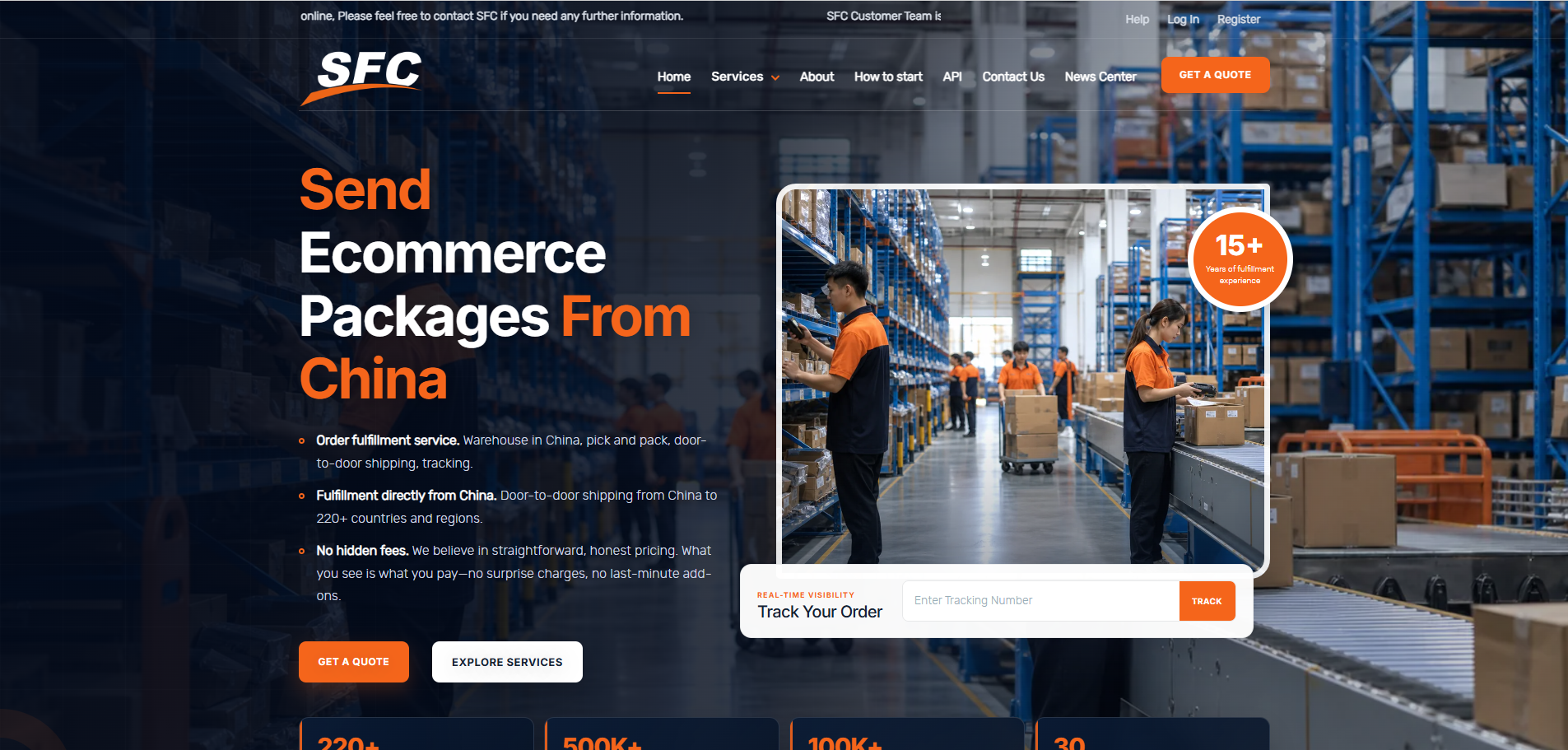
SendFromChina is a China-based 3PL. It handles China warehousing, so receiving, quality checks, labeling, storage and inventory management. Then pick and pack and international shipping with tracking. It also prepares stock for Amazon, does kitting and custom packaging, and has dedicated teams for creators and game publishers.
Where it tends to fit: crowdfunding projects with tiers and add-ons, board game publishers with lots of SKUs and expansions, and Shopify or Amazon sellers whose goods are made in China. Our crowdfunding fulfillment team, for example, maps each reward tier to products and packaging rules before anything ships.
Pricing is quote-based, there's no public rate card. Your bill is built from storage, shipping (route, weight, size, category), pick and pack, packaging materials if you want them, and sometimes VAT, barcodes or insurance. For delivery, the reference time to the US is about 7 to 12 business days. Treat that as a reference, since routes, carriers, customs, category and season all move it.
Who it's not for: products in heavily regulated categories like medical devices, food, drugs or dangerous goods, very low volume that needs lots of manual work, or anyone who needs guaranteed delivery dates. If you want to see how it lines up against NextSmartShip and ChinaDivision head to head, we wrote a separate three-way comparison.
ChinaDivision
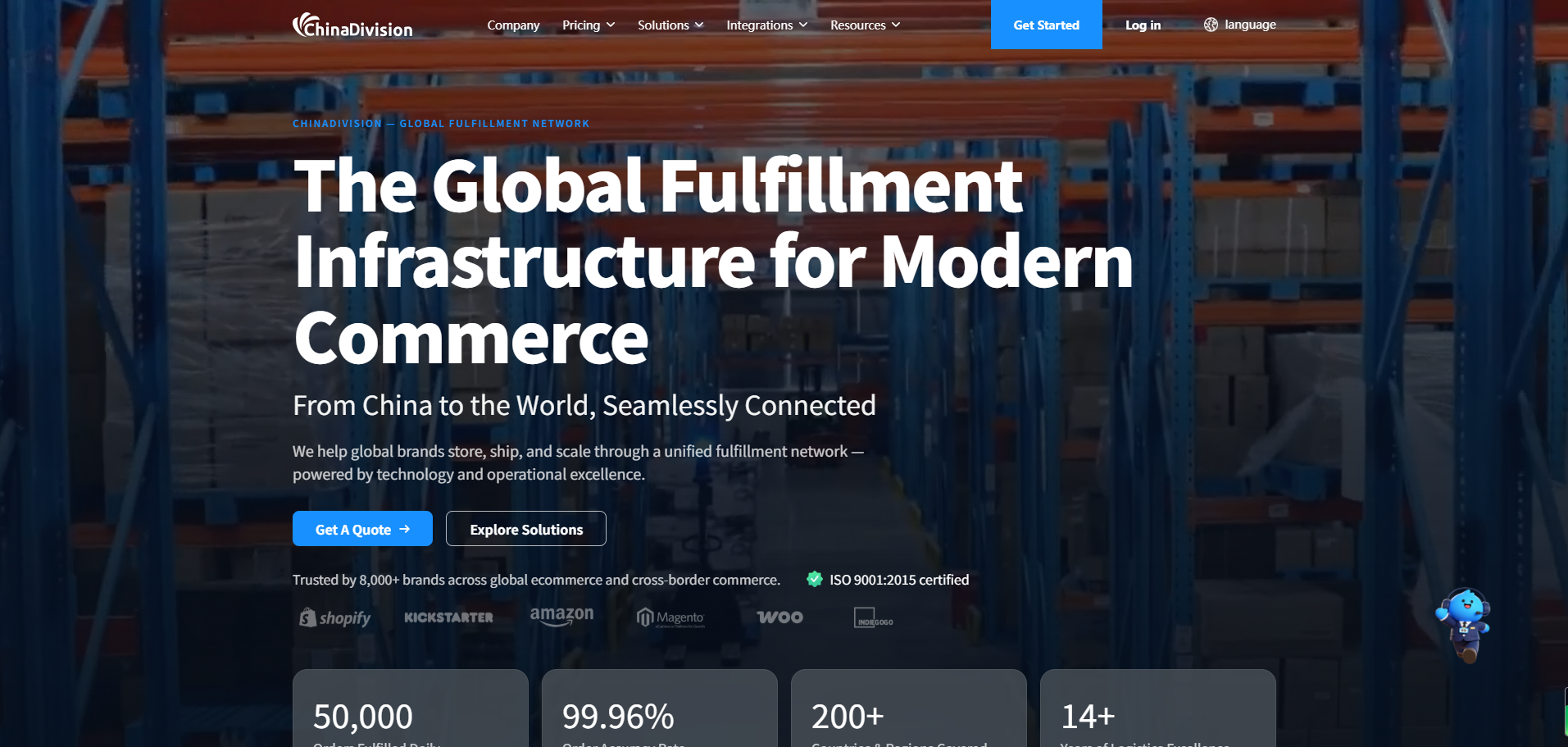
ChinaDivision runs fulfillment out of Shenzhen. Its site lists DTC order fulfillment, crowdfunding batch fulfillment, Amazon FBA prep, warehousing and value-added services. It connects with Shopify, Amazon, TikTok Shop, WooCommerce and BigCommerce, and offers a REST API plus CSV uploads. Pricing is by quote. It's a solid fit if your setup is API-heavy or you sell across several channels.
Portless
Portless ships orders directly from its warehouses in China by air, so you don't stock regional warehouses at all. Its site says it works with brands shipping at least 1,000 orders a month, so it's aimed at brands that already have traction. Good if you want to keep cash out of overseas inventory.
Floship
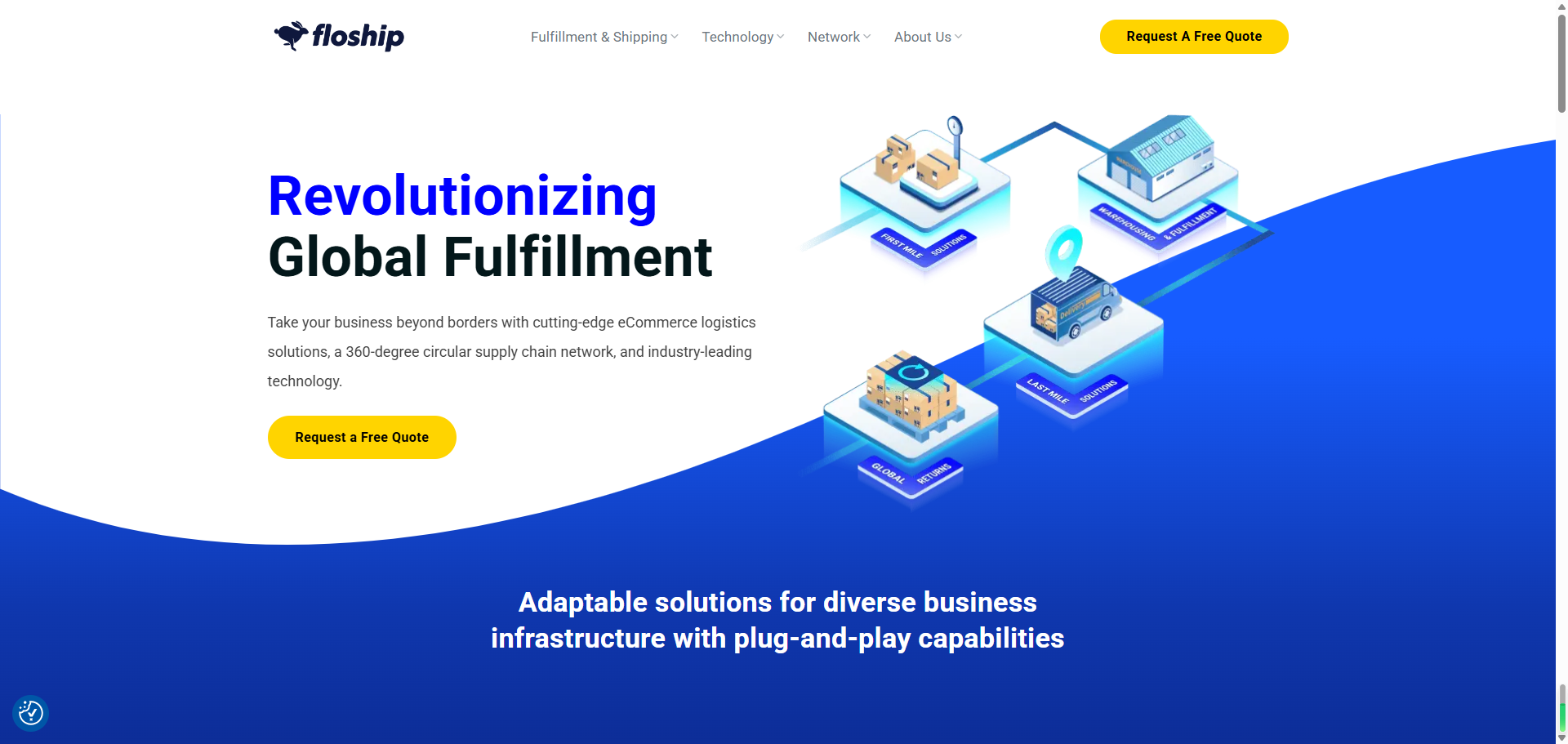
Floship offers DTC fulfillment, crowdfunding, Amazon FBA prep, returns and import services, plus a self-serve platform for smaller sellers. A big part of its pitch is landed cost, meaning duties and taxes worked out upfront. Ask which of its centers your stock would actually sit in, since its network spans several continents.
Fulfillmen
Fulfillmen mixes sourcing with fulfillment. It sources from manufacturers, handles quality control and ships to your customers, with warehouses in China, Hong Kong and India according to its site. It says there are no minimums and you pay for the units you dispatch. Handy if you'd rather have one team handle both buying and shipping.
Dropshipping-Style Alternatives (No Stock Upfront)
Some sellers look at NextSmartShip alternatives because they aren't ready to hold inventory yet. The two providers below work per order, so you don't buy stock upfront. You do give up some control over quality, packaging and sometimes timing.
CJdropshipping

CJdropshipping combines product sourcing, store connection and order automation. It lists more than ten shipping warehouses globally. You pay product and service fees as orders come in. It's mostly useful for testing products before you commit to a real inventory buy.
EPROLO
EPROLO is a free-to-use dropshipping platform with warehouses in the US, UK, EU and China. Its branding option (labels, hangtags, packaging) has no minimum order quantity and starts at $19.90 a year plus a per-order fee, per its site. Nice middle ground if you want your logo on the box without a big run.
Once a product sells steadily, per-order sourcing usually costs more per unit than buying stock and using a 3PL. That's usually when sellers move up.
Local-Market Warehouse Alternatives
These two hold your stock in your main market. You'd ship in bulk from your factory, then the 3PL ships domestic orders.
ShipBob
ShipBob runs fulfillment centers in the US, plus locations in Canada, the UK, the EU and Australia. Pricing is by quote. It's built for brands with steady order volume who want fast domestic delivery.
ShipMonk
ShipMonk operates its own fulfillment centers across several US states, plus Canada, the UK and mainland Europe. Its pitch is tech: inventory, order and returns software, plus a carrier network for rate shopping. Fits higher-SKU catalogs with steady volume.
Many brands use both. They keep the long tail in China and only send top sellers to a domestic warehouse. That's roughly what NextSmartShip's hybrid model does, and you can build it with two separate partners too.
Picking an Alternative by Industry and Use Case
The same provider can be great for one product and meh for another. A few common cases:
|
Business type
|
What really matters
|
Model to start with
|
|---|---|---|
|
Kickstarter and Indiegogo creators
|
Tier sorting, add-ons, backer address changes, one big shipping wave
|
China-based 3PL with crowdfunding experience
|
|
Board game publishers
|
Many SKUs, expansions, heavy boxes, protective packaging
|
China-based 3PL with game experience
|
|
Apparel and soft goods
|
Light but bulky, poly mailers, size variants
|
China-based 3PL, watch dimensional weight
|
|
Amazon sellers
|
Labeling, cartons that meet Amazon rules, prep before inbound
|
3PL that offers FBA prep
|
|
Subscription boxes
|
Recurring kitting on a set date
|
3PL with kitting and stable monthly volume
|
|
New Shopify stores
|
Low cash, testing products
|
Dropshipping-style, then move to a 3PL
|
For games specifically, a team that already does board game fulfillment knows how to deal with deluxe editions and add-ons, which, trust me, is not the same as shipping phone cases.
How to Compare Fulfillment Costs Beyond the Pick Fee
Pick fees are easy to compare, so everyone compares them. But they're often a small slice of the total. The bigger lines are usually shipping and storage. A low pick fee won't help much if storage is expensive.
|
Cost line
|
What drives it
|
What to ask
|
|---|---|---|
|
Receiving
|
Per hour, per carton or free
|
Is there a fee for unlabeled or mixed cartons?
|
|
Storage
|
Space used and how long
|
What happens after the free period ends?
|
|
Pick and pack
|
Per order and per extra item
|
Does it include standard packing materials?
|
|
Packaging materials
|
Custom boxes, mailers, inserts
|
Which materials cost extra?
|
|
Shipping
|
Route, weight, size, category, carrier
|
Is it billed on actual or dimensional weight?
|
|
Duties and taxes
|
Destination rules, DDP or DDU
|
Who pays, and when?
|
|
Extras
|
Barcodes, kitting, insurance, returns
|
Is there a list of extra fees in writing?
|
Packaging materials matter more than people think. A light pillow shipped in a big carton gets billed on its size, not its weight. Swapping to a poly mailer, or vacuum packing soft goods, can bring the billable weight down a lot. Ask any provider you talk to whether they'll suggest packaging changes.
The most reliable comparison is a boring one: take 20 real orders from last month, with real SKUs, dims and destinations, and ask each shortlisted provider to price them. You'll learn more from that than from any rate card.
Duties, DDP and DDU After the US De Minimis Change
The US suspended duty-free de minimis treatment for imports from all countries starting August 29, 2025, according to a CBP announcement, and that changed the cost math for a lot of sellers. Low-value parcels to US buyers can now face duties, and someone has to pay them.
DDP and DDU decide who pays. With DDP (delivered duty paid), duties are included in the shipping charge, so the buyer doesn't get a surprise bill at the door. With DDU (delivered duty unpaid), the buyer handles any duties or VAT on arrival. Both are fine, as long as your buyers know which one they're getting.
At SendFromChina, for example, DDP applies to parcels with a declared value of up to $150, and doesn't cover Alaska, Puerto Rico, Hawaii or Guam. Other providers have their own limits. Ask for them in writing, and check current customs guidance yourself, since rules keep moving. We can't give legal or tax advice here.
Questions to Ask Before You Sign with a New 3PL
Bring this list to every sales call. If a provider won't answer one clearly, write that down.
|
Question
|
Why it matters
|
|---|---|
|
What does storage cost after the free period, per unit or per cubic meter?
|
Slow movers can quietly eat your margin
|
|
Are there monthly minimums on spend or orders?
|
Some 3PLs need steady volume to work
|
|
How do you connect to my store or ERP?
|
Manual uploads get old fast
|
|
How do you handle lost or damaged parcels?
|
Claims process and timelines vary a lot
|
|
What happens to returns from overseas?
|
Shipping returns back to China rarely makes sense
|
|
What does it cost to move stock out if I leave?
|
Exit fees are easy to miss at signing
|
|
Which carriers do you use for my top three countries?
|
Tracking quality depends on the last carrier
|
|
Who is my day-to-day contact?
|
Repeating instructions to new people wastes time
|
On China-origin routes, a parcel usually changes hands from one carrier to another. Tracking can go quiet in between, even when the parcel is moving fine. No provider fully removes this. The good ones explain it upfront and help you set buyer expectations.
How to Switch from NextSmartShip Without Breaking Orders
Switching takes planning more than anything else. This six-step order works for most brands:
|
Step
|
What to do
|
Tip
|
|---|---|---|
|
1. Export your data
|
Download SKU list, dims, weights, current stock and last 3 months of orders
|
Check dims are real, not supplier estimates
|
|
2. Get real quotes
|
Send that order sample to 2 or 3 shortlisted providers
|
Compare the full landed cost per order
|
|
3. Test with a pilot
|
Send a small batch of one or two SKUs first
|
Watch receiving time and first orders closely
|
|
4. Plan the stock move
|
Create an inbound shipment notice and book transfer
|
Move in waves so you never hit zero stock
|
|
5. Run in parallel
|
Keep the old 3PL shipping while the new one ramps up
|
Route orders by SKU during the overlap
|
|
6. Switch integrations and tell buyers
|
Connect your store, update tracking emails and FAQs
|
Close the old account only after stock is out
|
Do not switch during your peak season or right before a crowdfunding wave. Wait a month if you have to. Starting in a quiet period gives you room to fix small things.
Conclusion
There's no single right NextSmartShip alternative. Start with the model: China-based, hybrid, local stock or per order. Then shortlist two or three providers that match it, price the same set of real orders with each, and ask the uncomfortable questions about storage, returns and exit fees.
If your products are made in China and you ship to many countries, especially crowdfunding rewards or board games, a China-based 3PL is usually worth a look. Send your SKUs and target countries and get a quote, and you'll have numbers to compare in hand.
FAQs
Who are NextSmartShip's main competitors?
It depends on the model you compare. On the China side, names like SendFromChina, ChinaDivision, Portless and Fulfillmen come up often. For local warehouses, ShipBob and ShipMonk. For no-inventory selling, CJdropshipping and EPROLO.
Is NextSmartShip legit and reliable?
It's an established fulfillment company with public pricing and many customer reviews. Reviews are mixed, as with most 3PLs, so read recent ones and test with a small batch before moving all your stock.
How much does NextSmartShip charge for fulfillment?
Its pricing page (checked November 16, 2026) lists free setup and receiving, two months of free storage, and $0.5 for the first pick plus $0.1 per extra pick. Shipping is priced separately, and centers outside mainland China may differ.
Are NextSmartShip alternatives cheaper?
Not automatically. Pick fees are only one part. Compare total cost per order, including storage, packaging, shipping and duties, using your own real orders.
Where are NextSmartShip's warehouses?
It has fulfillment in China and offers warehouses in other markets, including the US. Ask them which locations would hold your stock, since pricing can differ outside mainland China.
What is the difference between a China 3PL and a dropshipping agent?
A 3PL stores inventory you own and ships it for you. A dropshipping agent sources each product when an order comes in, so you don't hold stock, but you get less control over quality and packaging.
Which fulfillment company works for Kickstarter rewards?
Look for one that handles reward tiers, add-ons, address changes and big shipping waves. Several China-based 3PLs offer crowdfunding fulfillment, so ask each for their process and a quote based on your backer list.
How long does fulfillment from China to the US take?
It depends on the route and service. As a reference, SendFromChina's US routes take about 7 to 12 business days. Customs, carrier, category and season can change that, so treat any number as an estimate.
How do I move inventory from one 3PL to another?
Export your SKU and stock data, run a small pilot with the new provider, move stock in waves, run both providers in parallel for a while, then switch integrations. Avoid doing it during peak season.
Do I need DDP shipping for US customers after de minimis ended?
Not necessarily, but your buyers should know who pays duties. DDP builds duties into shipping so buyers aren't charged at delivery. DDU means the buyer pays on arrival. Check each provider's DDP limits.
 Want to know about our services, fees or receive a custom quote?