



Table of Contents
Table of Contents
Picture a small brand that makes enamel camping mugs in Guangdong. Most orders go to the US, a fair chunk to Canada and the UK, and a few odd ones to places like Norway. They've been with ChinaDivision for two years and don't have any big complaint. They just want to know what else is out there.
That's pretty common, actually. Sometimes there's a trigger, like a Kickstarter that got bigger than planned or a US duty bill that suddenly showed up on parcels. Sometimes it's just a gut feeling that you should get a second quote.
If you searched "ChinaDivision alternatives," this guide is for you. We're not going to name a winner. The right pick depends on what you sell and where it goes. Below you'll find the main fulfillment models, nine providers sorted by model, the questions we'd ask on a sales call, and a plan for moving stock without missing orders.
What ChinaDivision Does Well, and Why Sellers Still Shop Around
ChinaDivision is a China-based 3PL with its headquarters in Bao'an, Shenzhen. On its website it lists DTC fulfillment, crowdfunding fulfillment, marketplace and FBA prep, product sourcing, warehousing and value-added services. Shopify, Amazon, TikTok Shop, WooCommerce and BigCommerce are named as integrations, and there's a REST API for larger setups.
We checked its pricing page on November 17, 2026. It says account setup is free, standard receiving is free, the first 30 days of storage are free, and pick and pack starts from $0.59 per order. No minimum order volume. After the free month, storage is charged daily by the space you use. The page doesn't show that rate, so you'd have to ask.
For a small brand, that's an easy way in, and it explains why so many start there. Reviews are mixed, the way 3PL reviews usually are. Some people mention helpful account managers and fair rates. Others write about slow parcels or a lost package that didn't get sorted the way they hoped. A lot of these review pages only have a handful of entries, and some are a few years old. Check the date on a review before you weigh it.
Common Reasons Sellers Start Comparing ChinaDivision Competitors
Usually the reasons are small and practical:
|
What you notice
|
What's usually behind it
|
|---|---|
|
Storage bills grow after the first month
|
Slow sellers are sitting in China too long
|
|
Your landed cost to the US jumped
|
Duty handling changed, not just the shipping rate
|
|
Crowdfunding tiers and add-ons got confusing
|
You need tighter kitting rules, not more staff
|
|
You want stock closer to US buyers
|
Your setup is changing, and the provider may follow
|
|
You want sourcing and QC handled upstream
|
Your 3PL starts at receiving, but you need help earlier
|
A list like this isn't a verdict on ChinaDivision. Most of these come from a brand growing, and the needs moving with it.

First, Figure Out Which Fulfillment Model You Need
Before comparing names, decide what kind of setup you want. Bestfulfill's 2026 comparison frames it as a question of where a provider's responsibility starts. Some start when your finished cartons arrive at their dock. Others get involved back at the factory.
If you switch to a provider with the same model, you may get better service. You won't get a different setup. Roughly, there are four options:
|
Model
|
Where stock sits
|
Works well for
|
Watch out for
|
|---|---|---|---|
|
China-based 3PL
|
A warehouse in China
|
Brands making goods in China, crowdfunding, buyers spread across many countries
|
Longer transit than domestic shipping
|
|
Sourcing plus fulfillment
|
China, managed from factory to parcel
|
Brands that need supplier follow-up, QC and branded packing in one place
|
Higher minimums and more scoping up front
|
|
Local warehouse in your market
|
US, EU, UK or Australia
|
Stable sales in one market, quick local delivery
|
You still need someone to move goods from China
|
|
Hybrid
|
China plus some local stock
|
A few proven top sellers plus a long tail
|
Two inventories to plan and pay for
|
Our rough rule. When demand is spread out or hard to predict, keeping stock in China usually makes sense. When one market is big and steady, local stock starts paying for itself. A lot of brands end up somewhere in between.
Carrier Networks vs Warehouse 3PLs
You'll also see names like YunExpress, 4PX or Cainiao in the same searches. Those are mainly cross-border parcel networks. They move packages, but they don't check your stock, build your bundles or pack reward tiers. A warehouse 3PL does that part and then hands parcels to carriers like these. China Fulfillment International makes the same point in its own comparison. It's a useful reminder not to compare a warehouse with a postal line.
ChinaDivision Alternatives at a Glance
The shortlist is below. Numbers 1 to 9 are labels, not a ranking. Details come from each provider's own website as of November 17, 2026, so double-check anything important with them directly.
|
#
|
Provider
|
Model
|
Fits
|
Check before signing
|
|---|---|---|---|---|
|
1
|
SendFromChina
|
China-based 3PL
|
Finished inventory shipping worldwide, crowdfunding, board games, FBA prep
|
Route-level transit estimates and DDP conditions
|
|
2
|
NextSmartShip
|
China 3PL plus overseas warehouses
|
DTC, crowdfunding, subscription boxes
|
Storage after the free period; overseas warehouse fees
|
|
3
|
China Fulfillment International
|
China-based 3PL
|
Sellers who want published prices before talking
|
What the published rates include and exclude
|
|
4
|
Wefulfil
|
China-based 3PL
|
Shopify brands selling to Australia and Europe
|
Route and product eligibility, EU VAT setup
|
|
5
|
Fulfillmen
|
Sourcing plus China 3PL
|
Brands wanting sourcing, storage and shipping together
|
Written scope for sourcing and QC
|
|
6
|
FFOrder
|
Sourcing plus fulfillment
|
Brands that need factory-side QC and branded packing
|
Product MOQ vs packaging MOQ
|
|
7
|
EcommOps
|
Sourcing plus fulfillment
|
Established DTC brands with steady volume
|
Volume minimums and restricted goods
|
|
8
|
ShipBob
|
Local warehouses
|
Brands with steady demand in the US and other markets
|
How goods get from China to their docks
|
|
9
|
ShipMonk
|
Local warehouses
|
US-focused DTC and marketplace brands
|
Inbound process and storage fees
|
China-Based 3PL Alternatives
These five keep your stock in China and ship each order straight to the buyer. If your products are finished and made in China, this is the group to look at first.
1. SendFromChina
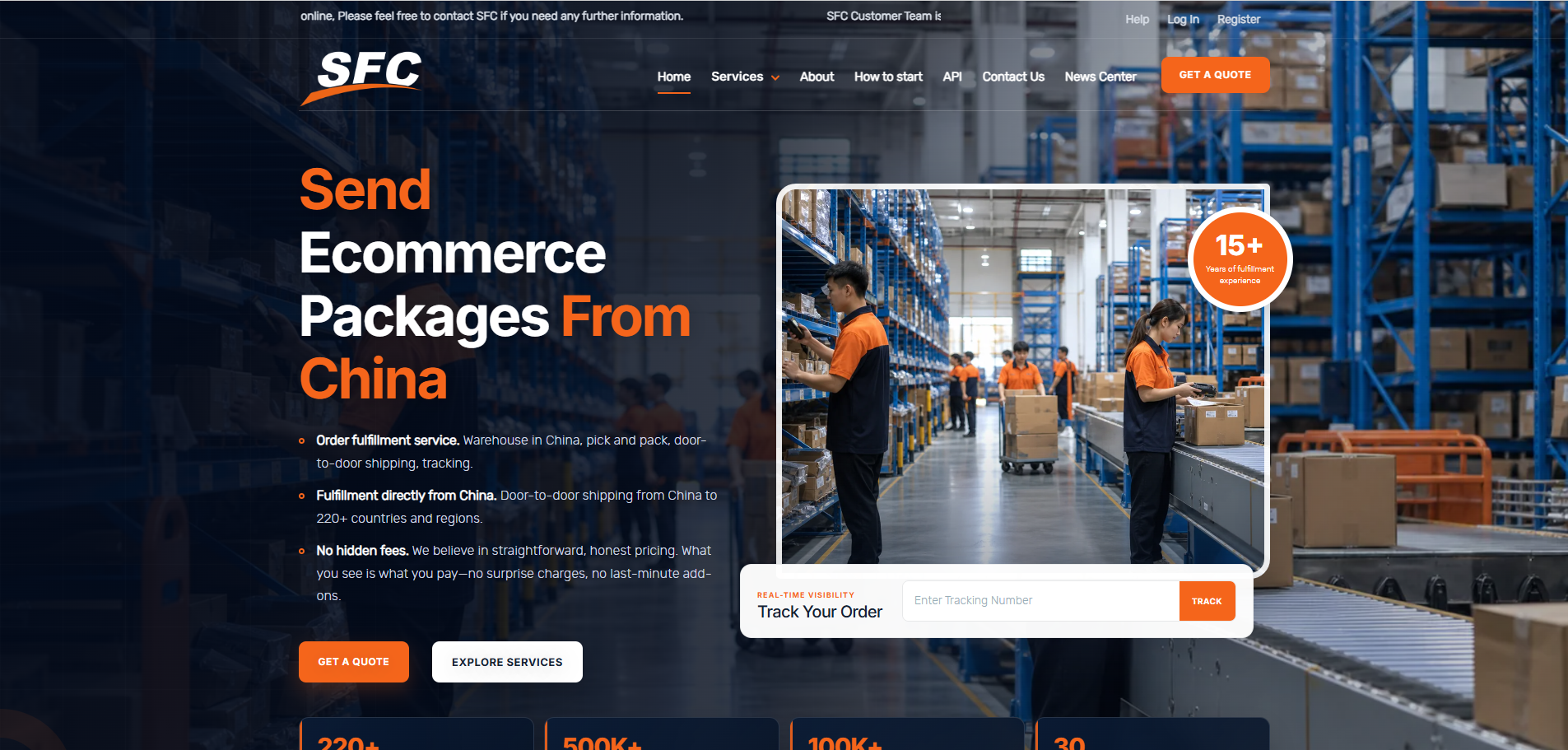
SendFromChina is a China-based fulfillment partner for ecommerce sellers, DTC brands and crowdfunding creators. Day to day, that means China warehousing (receiving, checking, labeling, storage), order fulfillment, pick and pack, and international shipping with tracking.
The project side is where it gets more specific. For crowdfunding fulfillment, each pledge tier becomes a packing rule, add-ons are tracked on their own, and backer address changes get checked before parcels go out. Tabletop publishers deal with expansions, deluxe editions and heavy boxes, and that's what the board game fulfillment workflow is built around.
Pricing is by quote. It's made up of storage, shipping, pick and pack and packaging, plus barcodes, insurance and VAT where they apply. For reference only, US routes usually take about 7 to 12 business days, the UK about 3 to 6, and Canada, Australia and the EU about 8 to 13. Customs, the carrier, the product and the season can all push those numbers around.
2. NextSmartShip
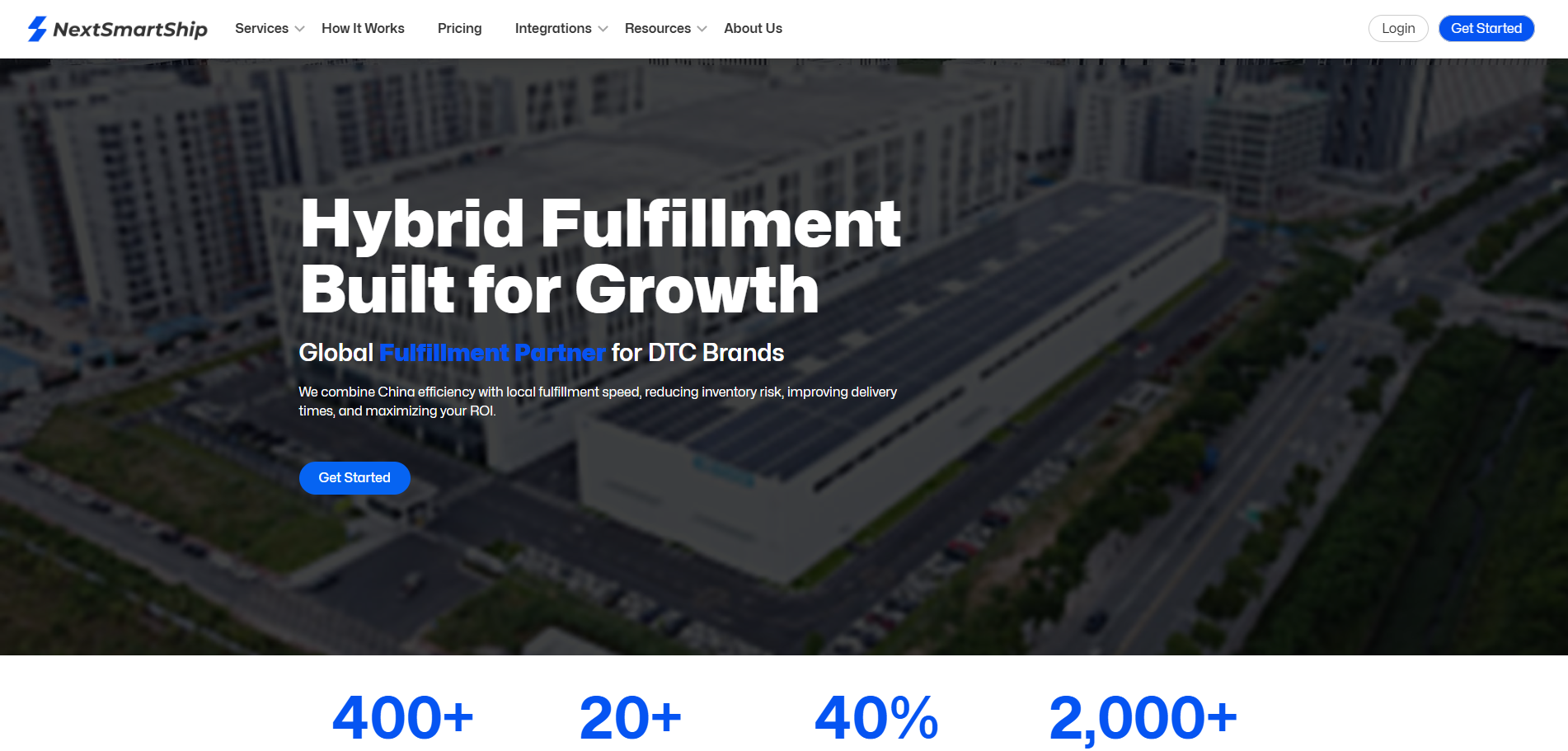
NextSmartShip does China fulfillment and also offers warehouses outside China. That suits brands keeping most stock in China with a bit near buyers. Its pricing page shows free setup and receiving, two months of free storage, and $0.5 for the first pick plus $0.1 for each extra one. It says no MOQ is needed. Ask how its centers outside mainland China are priced, because that's where costs usually differ.
3. China Fulfillment International
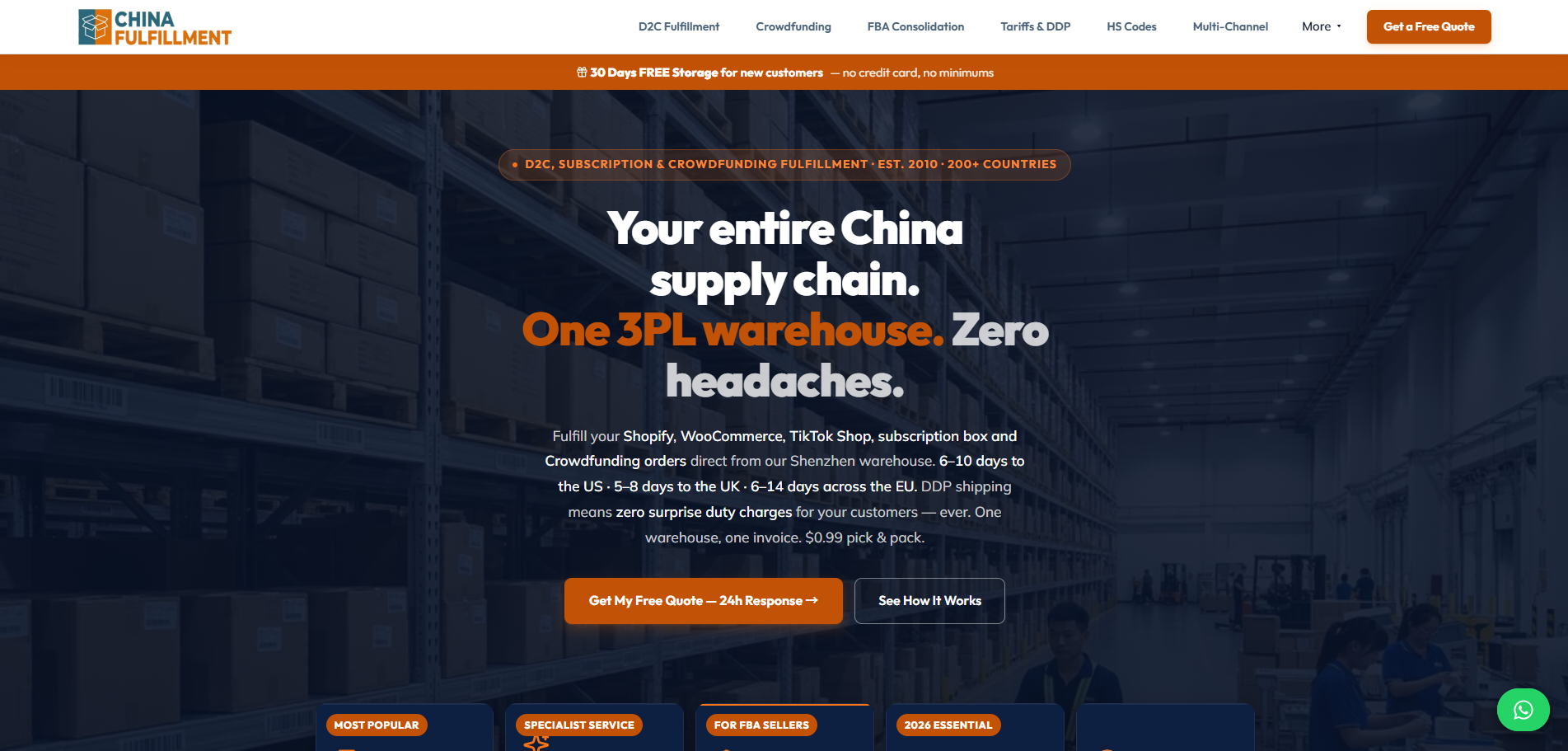
This Shenzhen 3PL publishes its prices, which not many do. Its site lists pick and pack at $0.99 per order, storage at $0.49 per cubic meter per day, free receiving, and 30 free storage days for new customers. Shipping is quoted separately. It handles D2C orders, crowdfunding, FBA consolidation and QC. Good to know if you'd rather see numbers before a sales call.
4. Wefulfil
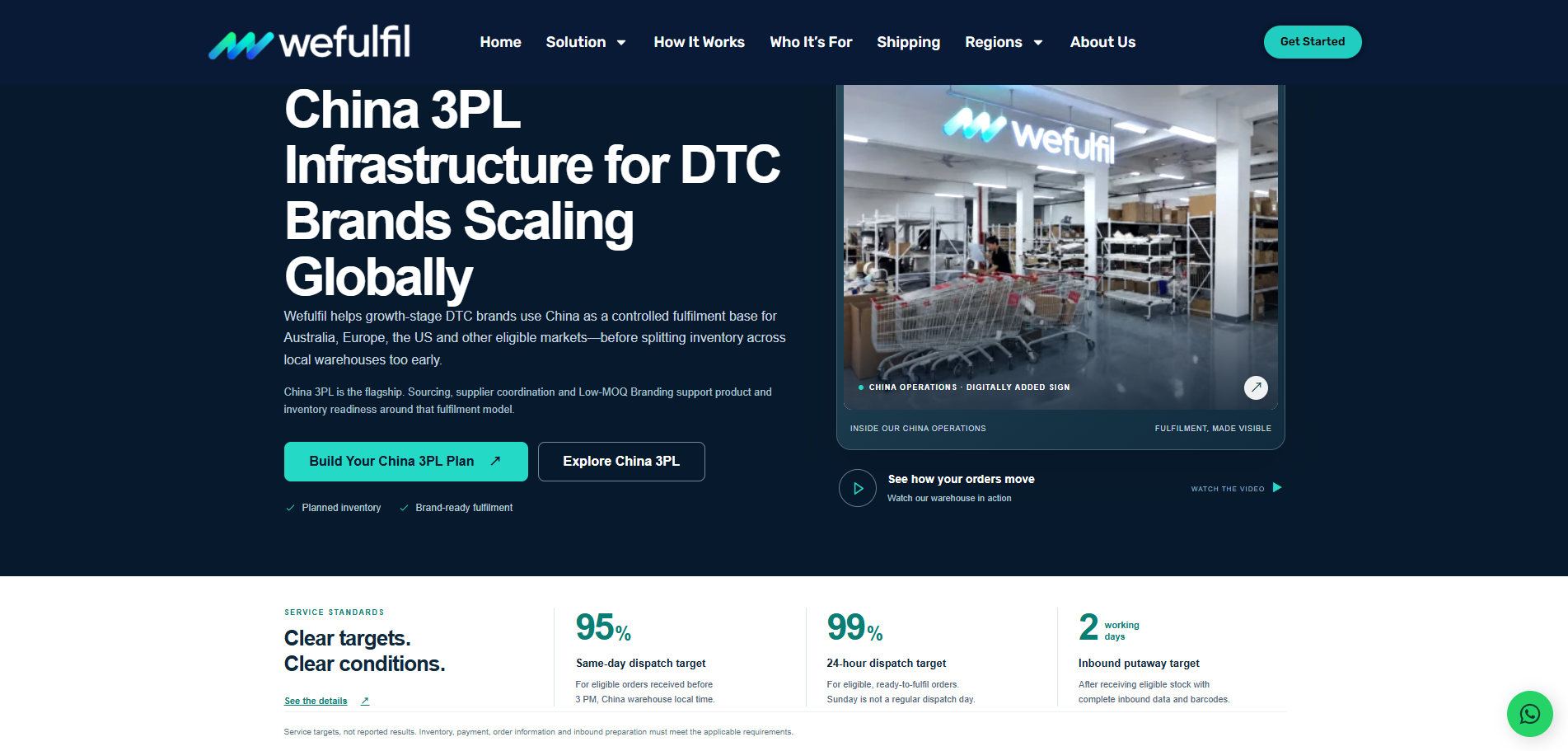
Wefulfil works mostly with growth-stage Shopify brands that hold stock in China, and it has dedicated gateways for Australia and Europe. It also offers low-MOQ branding and some sourcing help. No prices on the site. It says product, destination and customs eligibility are reviewed case by case, so you'll need to ask about your own items.
5. Fulfillmen
Fulfillmen puts sourcing, storage, branded packing and multi-carrier shipping under one roof, with warehouses listed in China, Hong Kong and India. It says there's no MOQ and no monthly commitment. With any provider that also sources, scope is the thing to pin down. Get in writing what QC and supplier follow-up actually cover.
Sourcing-Plus-Fulfillment Alternatives
Sometimes the warehouse isn't the problem. The supplier is. If you keep finding defects after goods arrive, or you're coordinating three factories for one bundle, a partner that starts further upstream may help more than a new warehouse.
6. FFOrder
FFOrder handles factory sourcing, sampling, quality control and branded packaging, then runs fulfillment in the same workflow. Pricing is scoped per project and isn't published. One tip from its own guide is worth borrowing. Product MOQ, packaging MOQ, storage and monthly spend are separate terms, so ask about each one.
7. EcommOps
EcommOps is based in Shenzhen and covers factory relations, supplier QC, warehousing and order fulfillment, crowdfunding included. Its site says it isn't a fit for startups or low-volume shops. It lists a minimum of 30 to 35 orders per product per day, or a 500-unit upfront commitment, and restricted goods like supplements and food. Parts of the site look older, so confirm these terms are still current.
Local Warehouse Alternatives and Hybrid Setups
Neither of these two keeps stock in China. They're here because many people searching for ChinaDivision alternatives are really asking whether some stock should live in the US.
8. ShipBob
ShipBob has fulfillment centers in the US, Canada, the UK, the EU and Australia. Its own pages say there's no center in Asia. It fits steady sellers who want quick local delivery. You'd still need freight or a China partner to get goods to it.
9. ShipMonk
ShipMonk lists US campuses in Nevada, Texas, Kentucky and Pennsylvania and handles DTC, marketplace and B2B orders. No China location is mentioned. Same idea as ShipBob.
How China Stock and Local Stock Work Together
A typical hybrid setup goes like this. The top three SKUs travel by sea to a US warehouse. Everything else ships straight from China, including new launches, slow sellers and orders for other countries. You pay local storage only on products that sell fast. Think of it as keeping the milk in the fridge and the canned stuff in the pantry.
Choosing a ChinaDivision Alternative by Industry
What you sell cuts the list down quickly. A rough guide:
|
Use case
|
What matters most
|
Where to look first
|
|---|---|---|
|
Kickstarter and Indiegogo campaigns
|
Tier sorting, add-ons, address changes, big shipping waves
|
China 3PLs with dedicated crowdfunding teams
|
|
Board games
|
Heavy boxes, expansions, deluxe editions, corner protection
|
Providers with board game workflows
|
|
Apparel and bulky light goods
|
Volumetric weight, compression, carton choice
|
3PLs that offer repacking and custom cartons
|
|
Amazon FBA sellers
|
Labels, cartons and prep that match Amazon rules
|
3PLs offering Amazon FBA prep in China
|
|
Subscription boxes and bundles
|
Kitting, inserts, the same box built the same way each month
|
Providers with kitting and assembly services
|
|
Small Shopify stores
|
Low minimums, easy store sync
|
China 3PLs with no MOQ and a Shopify app
|
Take a tabletop publisher with a heavy deluxe box and three expansions. Now compare that with a T-shirt brand. The publisher worries about crushed corners, mixed-up tiers and freight per backer. The T-shirt brand cares about poly mailers and volumetric weight. Both are buying "3PL services," but the jobs barely overlap.
Restricted products need their own conversation. Batteries, liquids, supplements and food each come with carrier and customs rules that change by route. Ask for the written policy before you send samples.
How to Compare China Fulfillment Costs Beyond the Pick Fee
Most comparisons go wrong right here. People look at the pick fee because it's the number on the pricing page. FFOrder's guide says it plainly: free access isn't free fulfillment. Storage, packing, shipping and extras still add up.
|
Cost item
|
What to ask
|
|---|---|
|
Receiving
|
Is it free for standard cartons? What about mixed SKUs or missing labels?
|
|
Storage
|
How long is free? After that, priced by cubic meter, pallet or bin? Billed daily or monthly?
|
|
Pick and pack
|
First item vs extra items? Is standard packing material included?
|
|
Packaging
|
Custom boxes, mailers and inserts, and who holds that stock?
|
|
Shipping
|
Rate by route, weight and size. Is volumetric weight used?
|
|
Duties and taxes
|
DDP or DDU, and what are the limits?
|
|
Extras
|
Kitting, barcodes, insurance, returns, photos, relabeling
|
A simple way to compare: pull 20 real orders from last month, with their weights, sizes and destinations. Send that same list to every provider and ask for the total cost per delivered order. Then you're comparing like with like.
Duties, DDP and DDU After the US De Minimis Change
This matters a lot if you sell to the US. According to US Customs and Border Protection, the US de minimis exemption ended on August 29, 2025. It applies to imports from every country, postal shipments included. Low-value parcels from China don't enter the US duty-free by default anymore.
So the DDP or DDU choice carries more weight now. With DDP, duties are folded into the shipping cost, so the buyer doesn't get a bill at the door. With DDU, the buyer pays any duties or VAT on arrival. At SendFromChina, DDP covers parcels with a declared value of $150 or less, and it doesn't cover Alaska, Puerto Rico, Hawaii or Guam. Ask each provider for its own limits, and bring in a customs broker for anything tricky.
Questions to Ask Before You Sign with a New 3PL
Take these into every sales call. A provider that's a good fit should answer them without much trouble.
- What happens after the free storage period, and how is storage measured?
- Is there any minimum order volume, monthly spend or contract length?
- Which store platforms do you support, and what syncs: orders, stock, tracking, cancellations?
- How do you handle receiving problems like missing labels or short shipments?
- Who pays when a parcel is lost, damaged or sent with the wrong SKU? What proof do you need?
- How are returns handled from my main markets?
- Which products or batteries can't you ship, and is that written down?
- Can I run a pilot with one SKU before moving all stock?
Small Red Flags Worth Noticing
No need for a full audit. A few things to watch in the first conversations:
- The quote shows a pick fee and nothing else.
- Nobody can explain how storage is measured after the free period.
- Questions about lost parcels get a vague "we will handle it."
- They promise exact delivery dates for every country.
- The rep goes quiet once you ask for a pilot.
One of these on its own isn't a deal breaker. If you see two or three, we'd keep looking.
For a closer look at three of the names above, see our three-way comparison of SendFromChina, NextSmartShip and ChinaDivision.
How to Switch from ChinaDivision Without Breaking Orders
Changing 3PLs is less dramatic than it sounds. It's mostly a lot of small steps done in the right order:
- Export your data. Pull SKU lists, current stock, dimensions and weights, and open orders from your current account.
- Run a pilot. Send one or two SKUs to the new provider and ship real orders to your top markets for a couple of weeks.
- Create inbound orders. Book receiving with the new warehouse, label cartons to its rules, and plan transfers in waves.
- Run both in parallel. Let the old warehouse keep shipping what it still holds while the new one ramps up. Check stock levels daily.
- Switch integrations. Connect your store through the store and API integration options, test cancellations and tracking sync, then turn off the old connection.
- Tell your buyers. If carriers or tracking pages change, update your shipping policy and order emails.
And try not to do this in November. A quiet month gives you room for the mistakes that will happen anyway.
Conclusion
Most people looking at ChinaDivision alternatives aren't unhappy so much as outgrowing their first setup. Decide on the model first, whether that's China stock, sourcing plus fulfillment, local stock or a mix. Then pick two or three providers that match, send them the same real order list, and run a small pilot before moving everything.
If you ship finished goods from China to buyers in many countries, or you're running a crowdfunding campaign, SendFromChina is worth a quote. Get a quote with your product list, destinations and monthly volume, and you'll get a cost breakdown you can put next to the others.
FAQs
Who are ChinaDivision's main competitors?
Other China-based 3PLs such as SendFromChina, NextSmartShip, China Fulfillment International, Wefulfil and Fulfillmen. Brands thinking about local stock also compare it with US warehouses like ShipBob and ShipMonk.
Is ChinaDivision legit and reliable?
It's an established Shenzhen company, and its site dates its operations back to 2013. Reviews are mixed, as with most 3PLs. Look at recent, dated reviews, and get claims and delivery terms in writing.
How much does ChinaDivision charge for fulfillment?
Its pricing page (checked November 17, 2026) lists free setup and receiving, 30 days of free storage, and pick and pack from $0.59 per order. Storage after that and shipping are quoted.
Where are ChinaDivision's warehouses located?
Its headquarters is in Bao'an District, Shenzhen. It also mentions overseas local warehousing, so ask which location would hold your stock.
Is a China 3PL cheaper than a US 3PL?
Not always. Storage tends to cost less in China, but shipping each parcel internationally adds up. Compare total cost per delivered order using your own orders.
What is the difference between a China 3PL and a freight forwarder?
A forwarder moves bulk cargo from one place to another. A 3PL stores your stock and ships single orders to buyers. Plenty of brands use both.
Which China fulfillment company works for Kickstarter rewards?
Look for a dedicated crowdfunding process with tier packing rules, add-on tracking and address checks. Ask each provider to quote from your actual backer list.
How long does fulfillment from China to the US take?
It depends on the route and service. For reference, SendFromChina's US routes take about 7 to 12 business days. Customs, the carrier, the product and the season can change that.
How do I move inventory from one China 3PL to another?
Export your SKU and stock data, run a pilot, book inbound orders, move stock in waves, run both warehouses side by side for a while, then switch your store connection.
Do I need DDP shipping for US customers after de minimis ended?
It isn't required, but buyers should know who pays duties. DDP puts duties into the shipping price. DDU means the buyer pays on arrival. Check each provider's DDP limits.
 Want to know about our services, fees or receive a custom quote?