




Table of Contents
Get Custom eCommerce Fulfillment Service
Book a Meeting
How to Build a Global Fulfillment Strategy for a China-Sourced Brand
Time: Aug 05,2026 Author: SFC Source: www.sendfromchina.com
Start simple: control inventory near your Chinese suppliers, ship globally while demand is still uncertain, and move proven bestsellers closer to customers when the numbers support it.

That is the short answer.
A global fulfillment strategy is not a pile of courier accounts or colorful pins on a warehouse map. It is a set of rules. Those rules decide where stock sits, how orders are routed, which shipping service is used, who prepares customs data, what customers see, and what happens when a parcel goes sideways.
Think of a band. Every player can be talented, but the song still falls apart when nobody follows the same beat. Suppliers, warehouses, carriers, customs brokers, storefronts, and return partners work the same way.
This guide shows how to make them play one song. We will build the strategy from China outward, then add complexity only where it earns its keep.
What Is a Global Fulfillment Strategy?
A global fulfillment strategy is the operating plan for getting products from inventory to customers in more than one country. For a China-sourced brand, it begins before export.
The plan needs five flows to agree:
- Product flow: Supplier to warehouse to carrier to customer.
- Inventory flow: Stock moving between China, regional warehouses, and marketplaces.
- Order flow: Store orders reaching the correct fulfillment location.
- Data flow: SKUs, customs details, labels, tracking, and delivery status.
- Return flow: Refunds, replacements, local returns, inspection, and recovery.
Miss one flow and the others become noisy. A product may arrive on time but have no usable SKU label. An order may route correctly but carry weak customs data. A return may reach a local address, then sit there because nobody owns the next step.
It also helps to separate the players:
- A sourcing agent helps find or coordinate suppliers.
- A fulfillment center or 3PL receives, stores, picks, packs, and ships orders.
- A freight forwarder moves larger shipments between locations.
- A customs broker supports import declarations and clearance.
These roles may sit under one provider, but the responsibilities should remain clear. For the basic operating model, review how China fulfillment works.
Start With the Customer Promise and Product Reality
Do not begin by asking, "Where can I rent warehouse space?" Begin with what the customer expects and what the product can tolerate.
Define the Markets You Actually Serve
List countries by orders, revenue, margin, and growth. A country with many orders may still be weak after shipping, duties, refunds, and support costs.
For each important market, write down:
- Promised delivery window
- Tracking expectation
- Duties and tax experience
- Preferred carriers or delivery points
- Return expectation
- Acceptable cost per successful order
Use real orders where possible. A strategy built on "Europe seems promising" is a little foggy. Germany, France, Spain, and Poland are separate operating environments.
Build a Product Profile
Record the actual packed parcel, not just the item:
- Product and packed weight
- Final length, width, and height
- Product value and margin
- Fragility
- Battery, liquid, powder, magnet, or restricted status
- Return rate
- Resale or recovery value
- Product update frequency
Packaging materials matter here. A thicker master carton, molded insert, divider, poly bag, branded box, tape, or pallet can improve protection. It can also increase dimensional weight and storage volume.
Find the Existing Bottleneck
Map one order from factory completion to successful delivery. Mark where time, money, and errors collect.
Is the problem supplier delay? Warehouse receiving? Stockouts? Customs questions? Slow last mile? Weak tracking? Returns?
Fixing the wrong stage is expensive theater. Faster air transport will not repair a two-day warehouse queue.
Choose a Fulfillment Model That Fits the Business Stage
Most China-sourced brands use one or more of four models.
|
Fulfillment Model
|
Best Fit
|
Main Strength
|
Main Risk
|
When to Use It
|
|
Direct parcels from China
|
New products, global demand, lightweight goods
|
One flexible inventory pool near suppliers
|
Longer delivery and harder returns
|
Demand is scattered or still unproven
|
|
Destination warehouse
|
Stable demand in one country or region
|
Faster domestic delivery and local returns
|
Upfront import, storage, and overstock risk
|
Regional volume is predictable
|
|
Marketplace fulfillment
|
Strong Amazon or marketplace sales
|
Platform-native delivery and customer trust
|
Platform fees, prep rules, and locked inventory
|
A channel has proven sales velocity
|
|
Hybrid network
|
Growing multichannel brands
|
Balances local speed with China flexibility
|
More routing and inventory complexity
|
Some SKUs are proven while others remain uncertain
|
The model does not need to cover the whole catalog.
A brand can send its top US seller to a US warehouse, replenish Amazon FBA separately, and keep new colors or long-tail accessories in China. This is normal. In fact, it is usually smarter than forcing every SKU into the same route.
The tradeoffs become clearer in a direct comparison of China and US fulfillment.
Build a China-Origin Control Point Near Suppliers
A China warehouse is most useful when it becomes the clean handoff between production and global delivery.
Standardize Supplier Inbound
Every supplier shipment should arrive with an Advance Shipping Notice and enough data to identify the stock.
At minimum, include:
- Purchase-order reference
- Supplier name
- Supplier SKU and warehouse SKU
- Quantity by SKU
- Carton count
- Packing list
- Batch or version where needed
- Expected arrival date
- Required labels
If three factories all call an item "black cable," the warehouse has not received useful master data. Give each sellable item one controlled SKU.
Official GS1 guidance explains how an SSCC connects a logistics unit to electronic records during movement and receiving. Small brands may use a simpler barcode system, but unique identification is the goal.
Inspect Before International Movement
Define what receiving includes. Carton count and visible damage are not the same as product QC.
For higher-risk products, document:
- Sampling method
- Pass and fail criteria
- Photo evidence
- Quarantine location
- Rework approval
- Supplier replacement process
- Who pays for shortages or defects
A nearby China warehousing operation can shorten the correction loop. A wrong insert or missing accessory is easier to fix before 1,000 units reach three overseas warehouses.
Consolidate and Finish the Product
China-sourced brands often buy the product, packaging, manuals, and accessories from different factories. Send those components to one control point.
The warehouse can create a finished kit, apply labels, insert manuals, replace weak cartons, and record the final parcel dimensions. Supplier consolidation also reduces scattered inbound shipments and duplicated handling.
This stage is where a manufactured object becomes a fulfillment-ready SKU. That sounds obvious. It is surprisingly often skipped.
Place Inventory by SKU Velocity and Market Maturity
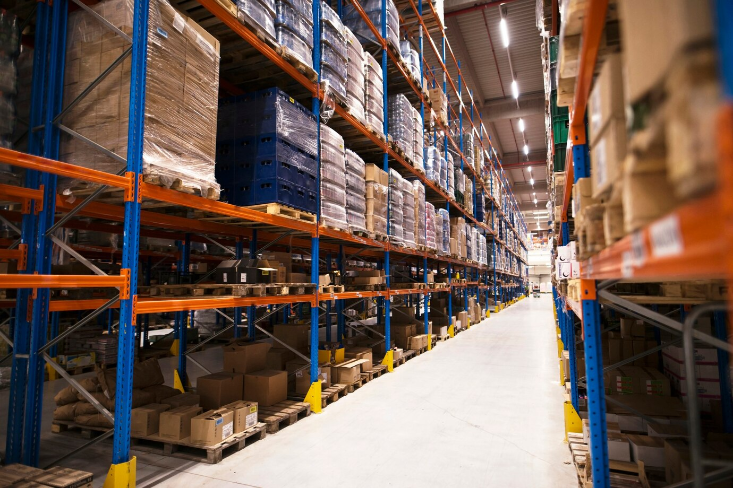
Inventory placement should happen at the intersection of a SKU and a market.
A practical starting rule looks like this:
- New SKU with uncertain demand: Keep it in China.
- Long-tail SKU sold across many countries: Keep one pooled inventory in China.
- Proven bestseller in one region: Test a destination warehouse.
- High-return SKU: Add local return capability before adding large stock.
- Marketplace bestseller: Hold a replenishment buffer for that platform.
- Replacement part: Keep flexible stock near production unless local speed is critical.
Avoid Too Many Pools Too Soon
Every warehouse creates another forecast, receiving flow, reorder point, and safety-stock requirement.
Suppose a brand has 40 SKUs and opens warehouses in the US, UK, and EU. That is potentially 120 SKU-location decisions before marketplace stock enters the picture. The spreadsheet gets ambitious rather quickly.
Inventory pooling reduces this burden. One central China pool can serve uncertain global demand. Regional stock then earns its place when a SKU has:
- Stable weekly sales
- Reliable forecast accuracy
- A clear shipping-cost advantage
- A meaningful delivery-speed gain
- Enough margin for bulk import and storage
- A workable local return process
Review these rules every quarter. Yesterday's hero SKU can become tomorrow's slow stock.
Design a Route Portfolio, Not One Global Shipping Method
No single shipping service is best for every order.
A useful route portfolio may include:
- Economy tracked shipping for low-value, non-urgent goods
- Standard ecommerce lines for the normal customer promise
- Express courier for urgent or high-value orders
- Bulk air freight for fast regional replenishment
- Sea freight for stable, planned inventory
- Destination injection for concentrated parcel volume
Route selection should consider destination, packed weight, dimensions, value, product restrictions, tracking quality, delivery target, and total cost.
The wider lesson in this guide to improving delivery speed from China is useful: speed is a chain of handling and transit stages, not only time in the air.
Build Customs Data Once, Then Maintain It
Create a product master with:
- Plain product description
- Material and intended use
- HS classification
- Declared value method
- Country of origin
- Weight and dimensions
- Battery or restricted-goods details
- Destination-specific requirements
Avoid descriptions such as "accessory," "sample," or "gift" when they do not accurately describe the goods. Vague data invites questions.
Define Responsibilities Clearly
Use a named delivery point and agreed trade term with suppliers, freight partners, and regional warehouses. The ICC Incoterms rules help define delivery obligations, cost allocation, and risk transfer.
For customer parcels, decide whether duties and taxes are prepaid where a suitable DDP service exists, or collected at delivery under a DAP-style experience. The right answer depends on the product, route, destination, and seller setup.
Tax and customs rules change. Confirm market-specific arrangements with a qualified adviser or broker. A blog can map the questions. It cannot register as your importer while making coffee.
Connect Orders, Inventory, Shipping, and Tracking

The physical network needs a matching data network.
A basic flow is: Store -> OMS or routing rules -> WMS -> shipping platform -> carrier -> tracking back to store
The system should:
- Map store SKUs to warehouse SKUs
- Sync available inventory
- Prevent overselling
- Route orders by destination and stock
- Apply packaging and shipping rules
- Create labels and customs data
- Return tracking numbers and statuses
- Flag exceptions
Ask who owns the product master and order-routing rules. Also confirm that you can export inventory, order, tracking, and billing data if you change providers.
Fancy dashboards are pleasant. Clean data ownership is better.
Design the Customer Experience Before Dispatch
International customers do not see your warehouse design. They see the promise, tracking, parcel, taxes, and response when something goes wrong.
Promise a Real Delivery Window
Use handling time plus transit time. Include warehouse cutoffs and realistic route performance. Do not advertise the best delivery ever recorded as the normal service level.
A dependable eight-day promise can build more trust than "three to seven days" that often becomes 14.
Make Tracking Understandable
Different carriers use different events. Normalize the important milestones:
- Order confirmed
- Packed
- Carrier accepted
- Exported
- Arrived in destination
- Customs released
- Last-mile handoff
- Out for delivery
- Delivered or exception
Send proactive messages when customs, address, or delivery problems need customer action.
Build Returns in Tiers
Do not make every return travel back to China.
Use the product value and recovery potential to choose among:
- Returnless refund
- Replacement shipment
- Local return address
- Consolidated return shipment
- Local inspection and restocking
- Repair, recycling, donation, or disposal
A broader international fulfillment workflow should treat returns and customs as planned operations, not awkward surprises after launch.
Adjust the Strategy by Product and Industry
The same network will not fit a phone cable and a pet bed.
|
Product or Industry
|
China-Origin Need
|
Destination Need
|
Likely Starting Model
|
|
Electronics accessories
|
Component checks, labels, kits, battery routing
|
Fast replacements and compliance control
|
China or hybrid
|
|
Apparel
|
Variant sorting, tags, poly bags, packaging
|
Local exchanges and high return handling
|
Hybrid
|
|
Beauty tools
|
Visual QC, kits, branded inserts
|
Product-claim and market requirements
|
China or hybrid
|
|
Pet products
|
Bundle and packaging control
|
Bulky-item economics
|
Depends on parcel size
|
|
Home goods
|
Supplier consolidation and damage checks
|
Local delivery for heavy items
|
Hybrid
|
|
Board games and crowdfunding
|
Multi-supplier components and reward assembly
|
Launch-wave capacity and tracking
|
China first
|
|
Bulky equipment
|
Factory coordination
|
Bulk import and local delivery
|
Destination-led
|
|
Regulated goods
|
Batch, document, and supplier control
|
Specialist import and storage
|
Specialist network
|
High component count, frequent product changes, and global demand favor control near Chinese suppliers. High weight, high return rates, or strict local delivery promises push stock toward customers.
Measure Cost to Serve and Operational Health
The useful financial measure is cost per successfully delivered order.
Use this formula:
Supplier inbound + receiving/QC + storage + pick and pack + packaging + outbound shipping + duties/taxes + returns + replacements + inventory carrying cost
Do not hide returns, errors, and aging stock outside the fulfillment calculation. They are part of the model.
The China fulfillment cost structure can help identify fee categories before comparing routes or providers.
|
KPI
|
What It Reveals
|
Example Action Trigger
|
|
Supplier-to-available lead time
|
Upstream speed and receiving efficiency
|
Investigate slow factories or check-in queues
|
|
Inventory accuracy
|
Whether system stock matches physical stock
|
Cycle count and correct SKU controls
|
|
Order accuracy
|
Picking, kitting, and packing quality
|
Add scanning or revise pack instructions
|
|
Dispatch time
|
Warehouse handling performance
|
Adjust cutoff, labor, or order release rules
|
|
On-time delivery
|
Route reliability against promise
|
Change route or customer estimate
|
|
First-attempt delivery
|
Address and last-mile quality
|
Improve validation and delivery alerts
|
|
Customs exception rate
|
Product-data and route quality
|
Correct descriptions, values, or documents
|
|
Damage or replacement rate
|
Packaging and handling quality
|
Test packaging or supplier QC
|
|
Inventory aging
|
Overstock and poor placement
|
Stop replenishment or relocate stock
|
|
Cost per successful order
|
True commercial performance
|
Reprice, reroute, or redesign the network
|
Set a target, owner, and review frequency for each KPI. A dashboard without action rules is decorative wallpaper.
When providers submit pricing, compare the same product, packed dimensions, market mix, volume, and service level. This guide to comparing China fulfillment quotes explains why a low headline rate may not produce the lowest real cost.
Make the Network Resilient Without Making It Huge
Resilience does not require ten warehouses.
Start with:
- Backup carriers for key markets
- Alternative export gateways
- Peak-season capacity and cutoff plans
- Safety stock for proven SKUs
- Written exception and claim ownership
- Data backups
- A provider exit process
Add regional inventory when demand earns it. An INFORMS study of Amazon's regionalization reported 15% less distance between sites and customers, 12% fewer middle-mile touchpoints, and an increase in in-region fulfillment from 62% to 76%.
That is useful evidence for customer proximity at scale. It is not a command for a small brand to imitate Amazon. More nodes also mean more inventory, systems, and coordination.
A Practical 90-Day Rollout

Days 1-15: Map and Clean
- Build the product master.
- Confirm packed dimensions and restrictions.
- Rank markets by orders, margin, and service problems.
- Calculate current cost per successful order.
- Map supplier, warehouse, shipping, customs, and return handoffs.
Days 16-30: Design
- Choose the initial fulfillment model by SKU and market.
- Define delivery promises and route tiers.
- Assign customs-data ownership.
- Document inbound, QC, packing, and return rules.
- Set KPIs and action thresholds.
Days 31-60: Pilot
Use a small group of representative SKUs. Include a bestseller, a long-tail item, a multi-component product, and an awkward parcel. Test the main destination countries.
Measure receiving, inventory, packing, shipping, tracking, customs, delivery, and customer support.
Days 61-90: Stabilize
- Compare actual results with quoted assumptions.
- Fix weak packaging and routes.
- Increase volume gradually.
- Prepare one backup route per core market.
- Schedule quarterly inventory-placement reviews.
Do not launch every country, carrier, warehouse, and return process on Monday morning. A controlled rollout is slower for a few weeks and faster for the next few years.
Conclusion: Let the Network Grow With the Evidence
A strong global fulfillment strategy starts with control near Chinese suppliers and a clear customer promise. Keep inventory pooled while products and markets are uncertain. Move proven, fast-selling SKUs closer to customers when delivery speed, returns, or total cost justify the extra node.
Build clean product data. Maintain several shipping options. Connect orders, inventory, customs, and tracking. Measure the complete result, not one freight rate.
Most importantly, keep the network adjustable. Global fulfillment is not a building project that ends. It is a set of operating decisions that should improve as the brand learns.
FAQs About Global Fulfillment for China-Sourced Brands
1. What is a global fulfillment strategy?
A global fulfillment strategy defines where inventory is stored, how international orders are routed and shipped, how customs and tracking data are managed, and how returns and exceptions are handled across markets.
2. What is the best fulfillment model for a brand sourcing from China?
There is no universal best model. China-direct fulfillment often suits new or global demand. Regional warehouses suit proven market volume. Many growing brands use a hybrid of both.
3. Should I ship orders directly from China or use overseas warehouses?
Ship directly from China when goods are light, demand is spread out, and inventory flexibility matters. Use overseas warehouses when regional demand is stable, local delivery is important, or returns are frequent.
4. When should I add a US or European warehouse?
Add one when SKU-level demand is predictable, the delivery or shipping-cost improvement is meaningful, and the brand can support bulk import, receiving, storage, returns, and additional safety stock.
5. How should I split inventory between China and regional fulfillment centers?
Keep new products and long-tail SKUs in China. Place proven fast sellers near strong markets. Base quantities on sales velocity, replenishment lead time, forecast accuracy, and safety-stock targets.
6. How do I calculate the true cost of global fulfillment?
Include supplier inbound, receiving, QC, storage, handling, packaging, outbound shipping, duties, taxes, returns, replacements, software, and inventory carrying cost. Divide by successfully delivered orders.
7. Is DDP better than DAP for international ecommerce orders?
DDP can create a smoother customer experience because charges are handled before delivery. DAP may be suitable in some setups but can lead to customer-paid import charges. Availability and responsibility depend on the route and market.
8. How do I keep inventory accurate across several warehouses?
Use consistent SKUs, barcode-based receiving and picking, integrated WMS or OMS data, clear adjustment rules, cycle counts, and one source of truth for available inventory.
9. What is the best way to handle international returns?
Use tiers. Low-value products may receive a refund or replacement without return. Higher-value products may go to a local return hub for inspection, consolidation, repair, or restocking.
10. How do I choose a global 3PL for products made in China?
Check supplier receiving, QC scope, SKU controls, systems integration, route coverage, customs-data support, tracking, pricing, claims, returns, peak capacity, and data portability. Run a pilot before moving the full catalog.
 Post Views:5
 TAGS:
TAGS:
Copyright statement: The copyright of this article belongs to the original author. Please indicate the source for reprinting.
Previous Post
Next Post
Best China Ecommerce Fulfillment Companies in 2026: The Complex-Operations Stress Test
TAGS
Hot Research
Get Custom eCommerce Fulfillment Service
Book a Meeting
Get a Custom China Fulfillment Solution with FREE Storage for 30 Days
Want to know about our services, fees or receive a custom quote?
 Want to know about our services, fees or receive a custom quote?
Please fill out the form on the right and we will get back to you within a business day.
The more information you provide, the better our initial response will be.