




Table of Contents
Get Custom eCommerce Fulfillment Service
Book a Meeting
Country of Origin Rules for Products Shipped From China
Time: Oct 13,2026 Author: SFC Source: www.sendfromchina.com
“Ships from China” and “Made in China” sound similar, but they answer different questions.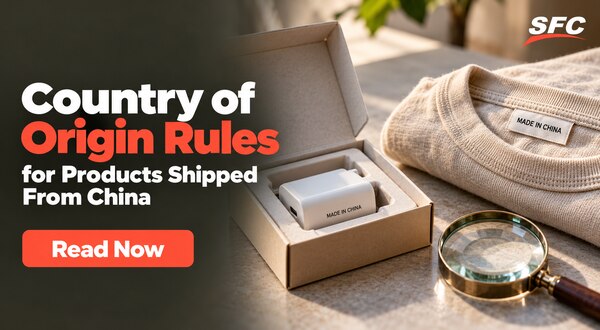
The first describes the parcel's route. The second makes a statement about how and where the product was made. Those facts often line up. Sometimes they do not.
A product can be manufactured in Vietnam, stored in a Shenzhen warehouse, and shipped to a customer in the United States. A product can also contain components from three countries and receive meaningful manufacturing in a fourth. In each case, the country of origin depends on the applicable rule and the actual production facts, not on the final shipping label.
This matters for ecommerce brands because origin can affect more than one customs field. It may affect duty treatment, origin marking, trade remedies, quotas, admissibility, preferential claims, procurement requirements, and customer-facing product information.
The practical workflow is:
Map the product -> Identify the rule -> Trace the production -> Test the transformation -> Verify the evidence -> Mark and declare consistently -> Escalate uncertainty
This guide explains that workflow for products shipped from China. It uses fictional examples and general principles. A real origin conclusion still needs the destination, product classification, manufacturing records, and the rule used for the exact purpose.
Shipping Country Is Not Automatically Country of Origin
If a product leaves a China warehouse, the country of dispatch is China. That does not automatically make China the product's country of origin.
Likewise, routing Chinese goods through Vietnam, Hong Kong, Singapore, Europe, Mexico, or another country does not automatically give the goods that country's origin.
The key question is usually something like this:
Where did the product receive the manufacturing or processing that matters under the applicable origin rule?
That sounds simple. The tricky part is that “matters” changes with the destination, product, purpose, and legal framework.
For a straightforward product made entirely in China, the answer may be easy to support. For a product assembled from imported components, processed in several countries, or sold under a preference program, the analysis can become much more detailed.
What Does Not Automatically Change Origin?
These operations should not be treated as automatic origin-changing shortcuts:
- Storing goods in another country.
- Moving goods through a third-country port.
- Changing the outer carton.
- Adding a shipping label.
- Replacing a barcode label.
- Performing a basic inspection.
- Taking product photographs.
- Sorting finished units.
- Applying simple stickers.
Some operations can matter in a specific product and jurisdiction. The point is not that every listed activity is legally irrelevant in every situation. The point is that a route or light handling step is not enough by itself to prove a new origin.

What Does Country of Origin Mean?
Country of origin is the country assigned to a product under the origin rule relevant to the transaction or regulatory purpose.
In plain English, it is usually connected with where the goods were produced, manufactured, or sufficiently transformed. It is not automatically the country of the seller, brand, warehouse, shipper, or customer.
The U.S. International Trade Administration explains that rules of origin help determine where a product comes from for trade purposes and that different programs can use different rules. Its official rules-of-origin guidance is useful background, but it does not turn one framework into a universal answer for every country.
Wholly Obtained or Produced Goods
Some goods are produced entirely in one country from qualifying materials. Examples can include certain agricultural, mineral, or natural-resource products. The concept is easier to understand because there is no multi-country manufacturing story to untangle.
Even then, the actual applicable rule matters. A product can contain imported packaging, accessories, or processing inputs that create additional questions. Keep the description narrow and fact-based.
Goods Made in Two or More Countries
For multi-country goods, the analysis usually looks at the operations performed in each country. Which country made the important change? Did the product become a new article? Did its name, character, use, classification, or essential function change? Does a specific tariff rule apply instead?
There is no safe universal answer based only on the percentage of cost spent in one country or the number of assembly minutes. Those facts may be relevant, but they are not a substitute for the applicable rule.

Country of Origin vs. Shipping Country and Other Terms
These terms are easy to mix up in a busy ecommerce operation.
|
Term
|
Meaning in plain English
|
Why it can be confused
|
|
Country of origin
|
Country assigned under the relevant origin rule
|
People often replace it with the shipping location
|
|
Country of dispatch
|
Country from which the parcel physically leaves
|
A warehouse may dispatch products made elsewhere
|
|
Country of export
|
Country whose export process covers the shipment
|
Exporter and manufacturer may be different parties
|
|
Country of manufacture
|
Country or countries where production operations occurred
|
Multi-country production needs a rule to select or report origin
|
|
Country of warehouse
|
Country where goods are stored or handled
|
Storage alone does not establish manufacture
|
|
Country of brand
|
Country associated with the brand owner or seller
|
Brand ownership does not automatically determine product origin
|
|
Country of sale
|
Market where the product is sold
|
Selling location is not manufacturing origin
|
A Simple Example
Imagine a phone case made in Vietnam, imported into China, stored in Shenzhen, and shipped to a customer in Canada.
- Country of dispatch: China.
- Warehouse country: China.
- Seller's brand country: perhaps Canada or the United States.
- Product manufacturing country: Vietnam.
- Country of origin: determined under the relevant Canadian rule and product facts.
The same parcel can therefore have several country fields, each with a different job.
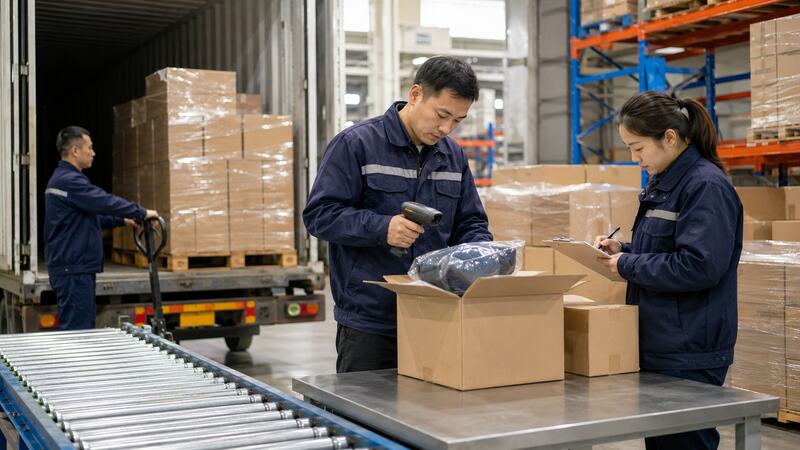
Non-Preferential, Preferential, Marking, and Trade-Remedy Origin
“Country of origin” is not always answering the same legal question. This is one of the biggest reasons online explanations become confusing.
Non-Preferential Origin
Non-preferential origin is commonly used for ordinary customs treatment, origin marking, trade statistics, and certain trade measures. The exact use depends on the jurisdiction.
This is often what a merchant means when asking, “What country do I put on the customs form?” But even this question may need a product-specific answer.
Preferential Origin
Preferential origin determines whether goods qualify for a reduced or zero duty rate under a particular trade agreement or preference program.
The rules can be stricter than ordinary origin rules. They may require a tariff shift, regional value content, a specific production process, a certificate, a declaration, or a combination of conditions.
Do not assume that a product's ordinary origin automatically qualifies it for a preferential rate.
Marking Origin
Marking origin concerns the origin statement shown on the article, packaging, label, or related materials. Placement, wording, language, visibility, and exceptions can vary.
A customs invoice field and a retail “Made in” claim may be connected, but they are not necessarily governed by an identical test.
Trade-Remedy Origin
Anti-dumping, countervailing, safeguard, quota, and special tariff programs can have their own scope and origin analysis. A product that has one ordinary origin conclusion may still need a separate review for a trade-remedy measure.
Marketing and “Made In” Claims
Website copy, packaging claims, marketplace content, and advertisements can create consumer-facing expectations. “Designed in,” “assembled in,” “engineered in,” and “Made in” are not interchangeable claims.
Before publishing a strong origin claim, make sure the wording is supported for the relevant market. A small label is not a magic eraser for a complicated supply chain.

Substantial Transformation for Multi-Country Products
Substantial transformation is a common way of analyzing origin for goods made in more than one country. At a high level, the question is whether processing creates a new and different article with a new name, character, or use.
That phrase is useful, but it is not a universal shortcut.
The outcome can depend on:
- The destination jurisdiction.
- The product's tariff classification.
- The operation performed.
- The identity and importance of imported components.
- The product's essential character.
- The production sequence.
- The level of skill, equipment, and processing.
- The value and cost structure where relevant.
- Specific rules for the product or trade program.
- Available evidence.
Why Final Assembly Is Not Automatically Enough
Consider a product made from a finished motor, finished circuit board, casing, display, and battery. A factory in Country B installs screws and connects cables. The product may be “assembled” in Country B, but whether that operation creates a new origin depends on the applicable rule and the importance of the work.
Now consider a factory that turns raw materials and unfinished parts into a new product through a complex sequence of molding, machining, programming, testing, and finishing. That may raise a different analysis.
The label “assembly” does not tell the whole story. Record the steps.
Evidence That Helps
Keep:
- Bills of materials.
- Product specifications.
- Factory process flows.
- Work instructions.
- Production records.
- Component invoices and origin statements.
- Labor and equipment information where relevant.
- Photos or videos of meaningful operations.
- Costed BOMs where relevant.
- Classification records.
- Supplier and factory identities.
The goal is not to create a giant file for every simple product. It is to make the conclusion supportable if a broker, buyer, customs authority, or auditor asks how the origin was determined.

Do Assembly, Packaging, Testing, or Relabeling Change Origin?
These activities need context. Avoid both extremes: “assembly always changes origin” and “assembly never changes origin.” Neither is a safe general rule.
|
Operation
|
Why it needs analysis
|
Evidence to review
|
|
Simple screw-together assembly
|
May leave the product's essential identity unchanged
|
BOM, component identity, process steps, tools, labor, classification
|
|
Complex manufacturing
|
May create a new article, subject to the relevant threshold
|
Production records, engineering files, process sequence, classification
|
|
Repackaging
|
Usually changes presentation rather than the underlying product
|
Before/after packaging, product identity, destination rule
|
|
Relabeling
|
A label does not automatically establish a new origin
|
Original marking, processing facts, label records
|
|
Testing or inspection
|
Quality activity may not create a new article
|
Test procedure and whether physical transformation occurred
|
|
Cutting or finishing
|
Could matter differently by product and rule
|
Material state, operation, classification, records
|
|
Repair or refurbishment
|
May raise separate original-origin and re-import questions
|
Original origin, repair country, process, value, procedure
|
Repackaging and Relabeling
Moving a finished product from one box to another usually does not change the product's manufacturing origin. Adding a shipping label does not change it either.
That does not mean packaging is unimportant. Packaging can carry an origin marking, affect consumer claims, and create a mismatch if the carton says one thing while the customs data says another. Treat the origin mark as a controlled compliance field, not a design detail added at the last minute.
Testing and Inspection
Testing, quality checks, photography, and sorting may be important operational work without being origin-changing manufacture. Again, the exact product and rule matter.
If testing includes a meaningful production operation, repair, programming, or transformation, record what actually happened instead of using the broad word “testing.”
Third-Country Routing and Transshipment
A third-country route can be legitimate. It can also create risk when someone treats routing as an origin shortcut.
Shipping Chinese goods through Vietnam does not automatically make them Vietnamese-origin. Storing Chinese goods in Europe does not automatically make them European-origin. Moving a product through Hong Kong does not automatically erase its manufacturing history.
Customs or trade authorities may review:
- Factory location.
- Production sequence.
- Component origin.
- Shipping records.
- Commercial invoices.
- Bills of materials.
- Export declarations.
- Supplier and factory relationships.
- Processing performed in the third country.
- Product markings and label changes.
Do not remove marks, change documents, or route goods through a third country to disguise Chinese origin or avoid duties. That can create serious customs, penalty, seizure, audit, and commercial risks.
The correct approach is boring but solid: describe the actual route, record the real operations, apply the relevant rule, and keep the evidence.
China Warehouse and Multi-Origin Inventory Examples
Finished Product Made in China
A product is manufactured in China, packed in China, stored in Shenzhen, and shipped to a customer in the United Kingdom.
The warehouse location and dispatch country are China. The origin analysis still depends on the product facts and destination rule, but the manufacturing record supports the obvious starting point.
The product master should connect the SKU to its approved origin, description, classification, marking requirement, and evidence source.
Product Made in Vietnam, Stored in China
A product is completed in Vietnam, imported into China for storage, and shipped from Shenzhen.
The product may have a different origin from the dispatch country. The fulfillment system should not overwrite the product's origin simply because the parcel leaves China.
Chinese Components Assembled in Another Country
A factory in Country B receives Chinese components and performs several operations before shipping the finished article from Country B.
The answer depends on the product classification, production steps, component identity, and applicable origin test. “Made from Chinese parts” is not enough to decide the result. Neither is “assembled in Country B.”
Mixed-Origin Kit or Bundle
A kit contains a Chinese-made device, a Vietnamese-made silicone accessory, and a Japanese-made charger. The kit is packed in China.
The origin record may need component-level detail. Classification, essential character, set rules, and destination treatment can affect the result. Do not assign one origin to the kit merely because the ecommerce listing uses one SKU.
Textiles, Apparel, Sets, Kits, and Special Product Categories

Textiles and Apparel
Textile and apparel origin rules can be specialized. Fiber content, yarn, fabric, cutting, sewing, finishing, garment type, and production countries may all matter.
Do not apply an ordinary manufactured-goods shortcut to a shirt, jacket, bag, or textile accessory without checking the relevant destination framework.
Sets, Kits, Mixtures, and Composite Goods
Sets and kits can involve several components with different origins. The classification and essential character of the complete set may affect the analysis, but the supporting component records still matter.
Keep the product listing, invoice line, origin record, and physical kit contents connected.
Batteries and Electronics
Electronics may contain cells, boards, screens, housings, software, and other components from several places. Battery transport, safety, export control, and product compliance can exist alongside origin questions.
Do not let the country where final firmware is installed become an automatic origin answer. Record the actual manufacturing operations.
Food, Cosmetics, and Medical-Related Goods
These products may involve ingredients, formulations, batch records, expiry data, registrations, permits, labeling, and importer requirements. Origin analysis is only one part of market access.
Steel, Aluminum, and Trade-Remedy-Sensitive Materials
Products containing sensitive materials may require deeper records about melt, cast, manufacture, processing, or input origin. Additional duties and measures can change over time.
Country of Origin on Ecommerce and Shipping Documents
Origin data can appear in multiple places:
- Commercial invoice.
- Packing list.
- Shipping label or electronic customs data.
- Certificate or declaration of origin where required.
- Product packaging and origin mark.
- Product listing and customer disclosures where relevant.
- Supplier declaration.
- Importer and broker instructions.
These fields do not always need identical wording or placement. They should not contradict each other on material facts.
Example of a Dangerous Mismatch
The commercial invoice states “Origin: Vietnam.” The product packaging says “Made in China.” The supplier declaration says “China.” The warehouse product master has no origin source.
That is not a formatting problem. It is an unresolved origin problem. Stop the shipment and escalate it before dispatch.
Brand Claims Need Their Own Review
An ecommerce listing that says “Designed in the USA” is not necessarily claiming “Made in the USA.” A product described as “European quality” is not an origin statement. A label that says “Made in China” may create a different customer expectation from a customs field.
Keep marketing, labeling, and customs review connected, but do not assume one approval automatically covers all three.

Country of Origin Records to Keep
The exact retention period depends on the relevant jurisdiction, trade program, product, and business policy. The important point is to keep enough evidence to explain the conclusion later.
|
Record
|
What it can support
|
|
Supplier origin declaration
|
Supplier's stated origin and responsibility
|
|
Commercial invoice and purchase order
|
Transaction and supplier relationship
|
|
Bill of materials
|
Component origins and product construction
|
|
Factory production records
|
Where and how manufacturing occurred
|
|
Process flow and work instructions
|
Nature and sequence of operations
|
|
Costed BOM and labor records
|
Economic and production context where relevant
|
|
Certificates or declarations
|
Preference or customer-specific origin support
|
|
Product photos and labels
|
Marking and packaging evidence
|
|
Import and export documents
|
Movement, routing, and party records
|
|
Binding ruling or professional memo
|
Documented conclusion for defined facts
|
Supplier Statements Are a Starting Point
A supplier may write “Made in China” on a spreadsheet. That is helpful, but it is not automatically the whole origin file.
Ask:
- Which factory made the product?
- Which components are imported?
- What operations happen at each site?
- Did the design, form, function, or classification change?
- Is the statement for ordinary origin, preference, marking, or another purpose?
- When was it last reviewed?
- What happens if the factory, material, or process changes?
The more sensitive the tariff, product, or market, the more important the underlying evidence becomes.

China 3PL Workflow for Origin Data
A China 3PL can maintain and transmit approved origin data. It should not make an unsupported legal determination simply because the dispatch address is in China.
1. Create an Origin Field Per SKU and Variant
Do not keep origin only in a free-text note. Make it a controlled product-master field with source, review date, purpose, and escalation status.
2. Store Multi-Origin Details Where Needed
A simple finished product may need one origin. A kit, bundle, batch, or product with changing factories may need additional component or batch detail.
3. Connect Origin to Shipping Documents
The approved origin should flow to the commercial invoice, packing list, label, and electronic customs data where applicable. This is especially important when a warehouse has multiple sellers, products, or shipping entities.
4. Check Product Marking During Receiving or Packing
For products that require origin marking, inspect the article, packaging, insert, and label according to the approved instruction. Photograph exceptions and hold unclear goods.
The packing and customization process should not add or cover an origin mark without an approved instruction.
5. Block Missing or Disputed Data
If origin is blank, expired, disputed, or inconsistent with the physical product, do not let the order move automatically through the normal order fulfillment workflow. Send it to an exception queue.
6. Log Sourcing and Factory Changes
A new factory, material, country, process, component, or packaging arrangement can trigger an origin review. Connect change control to the product master.
7. Escalate Legal Uncertainty
The merchant, customs broker, trade adviser, or relevant authority should decide unresolved origin questions. The warehouse can hold the product, preserve evidence, and provide records.
For brands using China warehousing, origin data should connect receiving, storage, batch control, picking, packing, and export-document generation.
How Origin Can Affect Cost and Market Access
Origin can affect:
- Ordinary duty rate.
- Additional tariffs or trade measures.
- Anti-dumping and countervailing duties.
- Safeguards and quotas.
- Preferential rates under trade agreements.
- Marking and labeling.
- Import admissibility.
- Procurement or customer requirements.
- Product claims and customer disclosures.
Do not hard-code current duty percentages into a general article. Rates and measures can change by date, classification, origin, product scope, and destination.
The same SKU can also have different commercial outcomes in different markets. A product with a manageable duty in one country may face a marking or trade-remedy issue in another. This is one reason product-level origin data is more useful than a single company-wide assumption.
Common Country-of-Origin Mistakes

Treating Warehouse Country as Product Origin
Storage and dispatch are not the same as manufacture. A warehouse should not overwrite approved origin data with its own address.
Treating Shipping Route as Manufacturing Evidence
A third-country port, hub, or fulfillment center does not automatically establish a new origin.
Assuming Final Assembly Always Changes Origin
Assembly can range from simple fastening to complex manufacturing. Analyze the actual steps and applicable rule.
Relying on a Supplier Statement Alone
The statement may be incomplete, outdated, or intended for a different purpose. Keep supporting production and component evidence where appropriate.
Removing or Covering an Origin Mark
Do not treat a label change as a harmless packaging task. Marking rules and false-origin risk can be serious.
Copying One Origin Across Every SKU
Products in one catalog category can have different factories, components, materials, or manufacturing countries.
Ignoring Batch and Factory Changes
A sourcing change can change the origin facts. Trigger a review rather than continuing with the old record.
Confusing Preferential and Ordinary Origin
An ordinary origin conclusion does not automatically qualify goods for a trade-agreement preference.
Using “Made In” Language Without Substantiation
Packaging, product listings, and advertisements should use approved claims for the relevant market.
Asking a 3PL to Decide a Legal Question
The 3PL can follow an approved rule and preserve records. It should not guess when the product facts are unclear.
3PL, Supplier, and System Requirements
When origin data is outsourced or shared, define ownership clearly.
|
Requirement
|
Questions to define
|
|
Product master
|
Which origin fields are mandatory before fulfillment?
|
|
Approval
|
Who approves origin, marking, classification, and preference data?
|
|
Supplier records
|
How often are declarations and evidence refreshed?
|
|
Factory traceability
|
Can each batch be linked to a factory and production record?
|
|
Multi-origin kits
|
How are component origins stored and transmitted?
|
|
Document output
|
Which invoice, packing-list, label, and customs fields use origin?
|
|
Marking checks
|
Who verifies the article and packaging mark?
|
|
Change control
|
What sourcing, material, or process changes trigger review?
|
|
Integration
|
Which WMS, OMS, ERP, carrier, and API fields are synchronized?
|
|
Exceptions
|
What blocks dispatch and who receives the escalation?
|
|
Retention
|
How long are evidence, revisions, and approvals stored?
|
|
Audit
|
Can the merchant retrieve the origin file by SKU, batch, and shipment?
|
The API and integration workflow should pass the approved origin field into the relevant systems, but it should not silently resolve an empty or disputed value.
Conclusion
A product shipped from China does not automatically have Chinese origin. A product routed through another country does not automatically gain that country's origin.
The correct answer comes from the applicable rule and the actual production facts. For a one-country product, the evidence may be straightforward. For a multi-country product, the work can involve classification, component identity, manufacturing steps, substantial transformation, marking, preference, trade remedies, and destination-specific requirements.
For ecommerce brands, the practical solution is to separate the fields that are often thrown into one bucket. Store dispatch country, warehouse country, manufacturing country, country of origin, seller country, and brand country as different data points. Keep the supporting evidence. Connect approved origin data to invoices, packing lists, labels, listings, and 3PL systems.
And when the facts do not support a confident answer, stop before dispatch and escalate. A short pause is much cheaper than explaining an unsupported origin claim after customs has questions.
FAQs
1. Is country of origin always China for products shipped from China?
No. China may be the country of dispatch, export, or warehousing while the product was manufactured elsewhere. The country of origin depends on the applicable rule, product facts, manufacturing operations, and purpose of the determination.
2. What is the difference between country of origin and country of dispatch?
Country of dispatch identifies where the parcel physically leaves. Country of origin identifies the product's origin under the relevant customs or trade rule. A China warehouse can dispatch products whose origin is Vietnam, Italy, Japan, or another country.
3. What does substantial transformation mean?
It is a general concept used in some origin analyses for goods made in more than one country. The question is whether processing creates a new and different article with a new name, character, or use under the applicable framework. The exact test is jurisdiction- and product-specific.
4. Does assembling a Chinese product in Vietnam change its origin?
Not automatically. The result depends on the product classification, components, exact assembly and manufacturing steps, and the rule used by the destination. Simple assembly may be treated differently from complex manufacturing.
5. Does repackaging or relabeling change country of origin?
Usually, packaging or relabeling alone should not be treated as an automatic origin change. It can still affect marking, customer disclosures, and document consistency. Review the actual product and destination requirements before changing labels.
6. What country should appear on the commercial invoice?
The invoice should show the origin supported by the applicable rule and product records, not simply the country from which the parcel leaves. Origin may need to be shown by line for a multi-origin order. Confirm the destination and carrier requirements.
7. Do country-of-origin rules differ for apparel and textiles?
They can. Textile and apparel goods may use specialized origin rules involving fiber, yarn, fabric, cutting, sewing, finishing, garment type, and production countries. Do not apply a general manufactured-goods shortcut without reviewing the relevant framework.
8. What records should an ecommerce seller keep?
Keep supplier declarations, bills of materials, factory and production records, process flows, component origins, product labels, invoices, purchase orders, certificates, import and export documents, and any professional or official origin determination. The right retention period depends on the applicable rules and business policy.
9. Can a 3PL determine country of origin for a merchant?
A 3PL can store approved origin data, check labels, connect origin to shipping documents, and escalate inconsistencies. It should not make an unsupported legal determination based only on the warehouse or dispatch country. The merchant and responsible trade professionals should own the conclusion.
10. When should a business request a binding ruling or professional review?
Consider escalation when the product has multi-country production, high duty exposure, trade-remedy risk, preference claims, special marking, regulated materials, frequent factory changes, or conflicting supplier records. Also escalate when the business cannot explain the origin using reliable evidence.
 Post Views:49
 TAGS:
TAGS:
Copyright statement: The copyright of this article belongs to the original author. Please indicate the source for reprinting.
Previous Post
Next Post
Commercial Invoice for Ecommerce Shipping From China: Required Fields and Examples
TAGS
Hot Research
Recent News
Get Custom eCommerce Fulfillment Service
Book a Meeting
Get a Custom China Fulfillment Solution with FREE Storage for 30 Days
Want to know about our services, fees or receive a custom quote?
 Want to know about our services, fees or receive a custom quote?
Please fill out the form on the right and we will get back to you within a business day.
The more information you provide, the better our initial response will be.