Warehouse management rarely fails in obvious ways. Instead, problems creep in quietly—an inventory mismatch here, a delayed shipment there—until costs rise and customer satisfaction slips. For third-party logistics (3PL) providers like SendFromChina, these challenges are not just operational—they directly affect client trust and long-term scalability.
This article breaks down the most common warehouse management challenges, why they happen, and, more importantly, how to solve them with practical, real-world strategies.
The Reality of Modern Warehouse Management
Warehousing today is no longer just about storing goods. It’s a dynamic system involving
inventory control,
order fulfillment, labor coordination, and real-time data synchronization. Even small inefficiencies can cascade into major operational disruptions.
Research shows that warehouse operations are increasingly complex due to rising order volumes, omnichannel distribution, and customer expectations for faster delivery.
At the same time, many warehouses still rely partially on manual processes—creating a mismatch between modern demand and outdated workflows.
Inventory Inaccuracy: The Silent Profit Killer
The Problem
Inventory discrepancies are one of the most persistent warehouse issues. These can stem from:
Manual data entry errors
Misplaced or untracked items
Delayed system updates
Supplier inconsistencies
The Solution
Adopt real-time inventory tracking systems
Implement barcode or RFID scanning
Enable cycle counting instead of full inventory audits
Automation significantly reduces human error while providing real-time visibility into stock levels.
Pro tip: A “single source of truth” inventory system is essential—especially for multi-channel eCommerce brands.
Inefficient Warehouse Layout and Space Utilization
The Problem
Poor layout design leads to:
Longer picking routes
Congestion in high-traffic zones
Underutilized vertical space
This directly slows down operations and increases labor costs.
The Solution
Optimize layout using data-driven slotting
Place fast-moving SKUs closer to packing stations
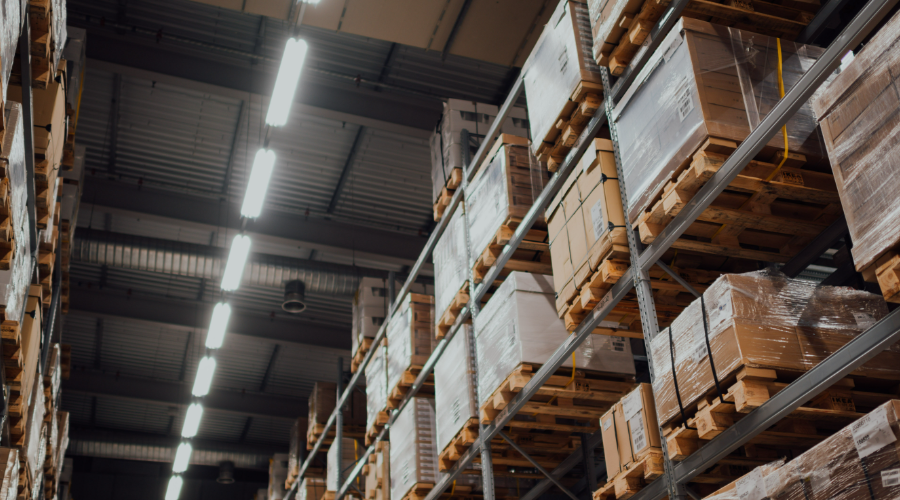
Use vertical storage systems (e.g., pallet racking, mezzanines)
Design zones based on product categories
Optimizing warehouse space improves both speed and storage capacity without expanding physical footprint.
Slow Order Fulfillment and Processing Delays
The Problem
Manual picking and packing processes are often too slow to handle modern order volumes. During peak seasons, this becomes even worse:
Backlogs increase
Orders are delayed
Customer complaints rise
Some systems even fail to handle high-volume orders effectively.
The Solution
Introduce automation and smart picking strategies
Batch picking or wave picking
Pick-to-light or voice picking systems
Automated sorting systems
Additionally, integrating WMS with order management systems ensures seamless workflow from order placement to dispatch.
Lack of Real-Time Visibility
The Problem
Many warehouses operate with delayed or fragmented data. This creates:
Poor decision-making
Inaccurate stock reporting
Difficulty tracking shipments
Without visibility, teams often rely on spreadsheets or manual checks—leading to inefficiencies.
The Solution
Implement centralized, real-time dashboards
Integrate WMS, ERP, and transportation systems
Use analytics tools for KPI tracking
Enable live order and inventory tracking
Real-time visibility allows managers to identify bottlenecks early and respond proactively.
Labor Challenges and Workforce Inefficiency
The Problem
Warehouses depend heavily on labor, yet face:
High turnover rates
Skill gaps
Repetitive manual tasks leading to errors
Labor inefficiencies often result in inconsistent performance and higher operational costs.
The Solution
Combine training with automation
Standardize workflows and SOPs
Invest in continuous staff training
Use robotics or automation for repetitive tasks
Emerging technologies like autonomous mobile robots (AMRs) are increasingly used to fill labor gaps and improve efficiency.
Scaling Operations with Business Growth
The Problem
As businesses grow, warehouse complexity increases:
More SKUs
More sales channels
Multiple warehouse locations
Without scalable systems, operations become chaotic—inventory may be available but not in the right location.
The Solution
Build a scalable logistics infrastructure
Use distributed inventory systems
Implement multi-warehouse management tools
Automate order routing based on location
Scaling is not just about handling more orders—it’s about maintaining efficiency as complexity grows.
Poor Integration with Transportation and Last-Mile Delivery
The Problem
Warehouse operations don’t exist in isolation. Poor integration with shipping leads to:
Delivery delays
Incorrect routing
Increased costs
The “last mile” alone can account for a significant portion of logistics costs and errors.
The Solution
Integrate warehouse and transportation systems
Sync WMS with carrier platforms
Use route optimization tools
Automate shipping label generation and tracking
Seamless integration ensures faster, more accurate deliveries.
Redundant and Inefficient Processes
The Problem
Many warehouses still operate with outdated workflows:
Multiple handling steps
Repetitive movements
Manual checks
These redundancies increase labor costs and reduce productivity.
The Solution
Streamline and standardize operations
Map workflows and eliminate unnecessary steps
Introduce lean warehousing principles
Automate repetitive tasks
Efficiency often comes not from doing more—but from doing less, better.
Technology Adoption Challenges
The Problem
Implementing new systems (like WMS or automation) isn’t always smooth:
High upfront costs
Resistance to change
Long implementation timelines
Many companies underestimate the complexity of digital transformation.
The Solution
Adopt a phased implementation approach
Start with high-impact areas (inventory tracking, picking)
Train staff before full rollout
Choose flexible, scalable systems
Technology should support operations—not disrupt them.
Safety and Risk Management
The Problem
Warehouses are high-risk environments:
Equipment accidents
Improper storage
Worker injuries
Safety issues can lead to downtime, legal risks, and reputational damage.
The Solution
Prioritize safety systems and culture
Implement safety protocols and regular audits
Use IoT sensors and monitoring tools
Train staff on compliance and emergency procedures
A safe warehouse is not just ethical—it’s operationally efficient.
How SendFromChina Helps Solve These Challenges
For eCommerce brands and crowdfunding sellers, partnering with a professional 3PL like
SendFromChina can significantly reduce warehouse complexity.
A reliable 3PL typically provides:
Advanced WMS with real-time tracking
Optimized warehouse layouts and processes
Scalable fulfillment solutions
Integrated global shipping
Instead of building infrastructure from scratch, businesses can leverage proven systems and expertise.
Conclusion
Warehouse management is full of hidden challenges—but most are solvable with the right combination of technology, process optimization, and strategic planning.
The key takeaway?
Efficiency doesn’t come from working harder—it comes from building smarter systems.
Businesses that proactively address warehouse challenges will not only reduce costs but also gain a competitive edge in speed, accuracy, and customer satisfaction.
FAQs
What is the most common warehouse management problem?
Inventory inaccuracy is the most common issue, often caused by manual errors and lack of real-time tracking.
How can warehouse efficiency be improved?
By using automation, optimizing layout, and implementing a robust WMS.
Why is real-time visibility important in warehousing?
It helps track inventory accurately, prevent errors, and improve decision-making.
What role does automation play in warehouse management?
Automation reduces manual errors, speeds up operations, and lowers labor costs.
When should a business outsource to a 3PL?
When order volume grows, operations become complex, or internal resources are limited.







 Post Views:2333
 TAGS:
TAGS:
 Want to know about our services, fees or receive a custom quote?