




Table of Contents
Get Custom eCommerce Fulfillment Service
Book a Meeting
Pet Product Fulfillment from China 2026: Storage and Shipping Best Practices
Time: Jul 20,2026 Author: SFC Source: www.sendfromchina.com
Pet products look simple until they reach a warehouse.
A leash may come in five colors and four sizes. A pet fountain may include a pump, filter, cable, and lithium-powered accessory. Treats can have expiry dates, animal-origin ingredients, and strict import rules. Grooming liquids may leak. Fabric beds take up far more space than their selling price suggests.
These details make fulfillment a serious operating decision for pet brands. The warehouse must receive the right stock, preserve its condition, pick the correct variant, pack it safely, prepare accurate customs data, and choose a shipping route that accepts the product.
For brands that manufacture in Shenzhen, Dongguan, Guangzhou, Yiwu, or other sourcing centers, fulfillment from China shortens the distance between the factory and the first quality check. It can also support worldwide sales from one inventory pool. The right setup still depends on the product, destination, and promised delivery speed.
This guide explains how to build a reliable pet product fulfillment operation in China in 2026. It covers storage, quality control, SKU management, packaging, shipping, customs, returns, and provider selection.
What Is Pet Product Fulfillment from China?
Pet product fulfillment from China means holding finished inventory at a Chinese third-party logistics warehouse and shipping customer orders from that location. The stock may arrive directly from one factory or from several suppliers.
The fulfillment partner normally handles:
SKU labeling and inventory put-away
Storage by product type or handling requirement
Order synchronization from ecommerce channels
Picking, packing, and parcel labeling
Export paperwork and carrier handover
Tracking updates and delivery exception support
Returns, replacements, or reshipments under an agreed process
Some brands also use the warehouse for kitting. A dog walking set, for example, may combine a leash from Dongguan, a collapsible bowl from Shenzhen, and waste-bag rolls from Yiwu. The warehouse receives each component, checks it, and assembles the final kit after an order arrives or in planned batches.
This setup is a form of order fulfillment from China. It differs from freight forwarding. A freight forwarder usually moves bulk cargo between locations. A fulfillment provider manages individual units and customer orders every day. The distinction is explained further in what a China 3PL does compared with a freight forwarder.
Which Pet Products Need Specialized Fulfillment?
“Pet products” is a broad label. The warehouse process for a stainless-steel bowl is not suitable for every other item in the category.
Before requesting a quote, divide the catalog by physical and regulatory characteristics. Do not group products only by the animal they serve.
|
Pet product category
|
Common fulfillment risks
|
Recommended controls
|
|
Collars, leashes, harnesses, and apparel
|
Size or color mis-picks, buckle defects, odor, moisture
|
Clear variant codes, buckle checks, dry storage, barcode scanning
|
|
Toys and chews without edible ingredients
|
Loose parts, sharp edges, material claims, compression damage
|
Sample inspection, age or use warnings, shape-protective packing
|
|
Beds, mats, blankets, and carriers
|
High dimensional weight, fabric contamination, crushed filling
|
Sealed bags, clean zones, carton optimization, compression testing
|
|
Bowls, feeders, and hard accessories
|
Scratches, cracks, nested-item confusion
|
Protective separators, drop tests, component verification
|
|
Grooming liquids and hygiene products
|
Leakage, pressure changes, restricted ingredients
|
Cap seals, secondary bags, absorbent material, route approval
|
|
Electronic feeders, fountains, trackers, and toys
|
Battery restrictions, missing parts, functional defects
|
Power-on QC, battery data, protected terminals, approved carriers
|
|
Pet food, supplements, and treats
|
Expiry, pests, temperature, animal-origin import controls
|
Lot and expiry tracking, FEFO, food-grade storage, market approval
|
The final row needs special attention. Pet food and treats are regulated products, not ordinary accessories. A carrier accepting the parcel does not prove that customs will admit it. The brand and importer should confirm product, ingredient, establishment, label, and destination requirements before stock enters a direct-to-consumer shipping program.
The same caution applies to products presented as treating disease or changing an animal’s health. Marketing language can affect regulatory classification. A warehouse cannot solve an incorrect product claim after customs or a marketplace flags it.
Why Pet Brands Use a China Fulfillment Center in 2026

China remains a major manufacturing base for pet accessories, textiles, electronics, packaging, and private-label products. Keeping stock close to those suppliers can remove several handoffs from the supply chain.
Faster factory-to-warehouse receiving
Domestic transport from a Chinese supplier to a China warehouse often takes days. Brands can release stock sooner and address shortages while the supplier is still close enough to help. If harnesses arrive without retail labels, the warehouse can hold them and coordinate rework before international shipping.
One inventory pool for several markets
A growing pet brand may sell to the United States, Canada, the UK, the EU, Australia, and parts of Asia. Splitting stock into six local warehouses too early creates stranded inventory. Popular colors sell out in one country while slow variants remain elsewhere.
A central China inventory pool can serve several markets. The brand can later place its fastest sellers in regional warehouses once demand becomes predictable.
The wider operating model is covered in how to store inventory in China and ship globally.
Easier consolidation from multiple pet product suppliers
Many pet brands buy from several factories. A fulfillment center can receive those products, apply consistent labels, and build subscription boxes, starter kits, influencer bundles, or seasonal gift sets.
Earlier quality control and rework
A warehouse is not a testing laboratory. A defined inbound inspection can still catch barcode, quantity, variant, stitching, packaging, missing-part, plug, and leakage problems. More detailed checks can be added through value-added services when the scope is documented.
How to Set Up China Pet Product Fulfillment Before Stock Arrives
Good fulfillment starts before the first carton reaches the warehouse. A provider cannot build a stable process from incomplete product data and changing instructions.
Classify every pet product before choosing a shipping route
Create a product master file for every SKU. It should include:
SKU and barcode
Color, size, and model
Unit dimensions and weight
Packed dimensions and weight
Materials and intended use
Country of origin and proposed HS code
Battery type, quantity, and Watt-hour rating when relevant
Liquid or food details, including lot and expiry data when relevant
Target countries and known restrictions
Avoid descriptions such as “pet item,” “accessory,” or “sample” on shipping documents. Customs and carriers need enough detail to identify the goods. “Polyester adjustable dog harness” is more useful than “pet accessory.” “Automatic plastic pet feeder with electric motor” is more useful than “machine.”
The World Customs Organization’s Harmonized System overview explains the international structure behind customs product classification. The final code can vary by destination, so the importer should confirm it for each market.
Give the warehouse a complete SKU map
Pet catalogs often contain visually similar variants. A medium black harness and a large black harness may use almost identical packaging. Human-readable names are not enough for daily picking.
Use one unique SKU and one scannable barcode for each sellable variant. Bundles also need their own codes and bills of materials. If a replacement filter can be sold alone and included with a fountain, define both uses clearly.
The SKU map should state which supplier code corresponds to the brand’s sales code. This prevents a factory label from being mistaken for a warehouse barcode.
Create an inbound plan for every supplier
Ask suppliers to provide an advance shipping notice before delivery. It should list the purchase order, SKU quantities, carton count, expected arrival date, and any lot or expiry information.
Each master carton should display a readable reference, and mixed-SKU cartons should be declared. For a multi-supplier kit, decide whether factories send components separately or one supplier performs pre-assembly.
Write measurable QC rules
“Check quality” is not an actionable instruction. Define what the team checks, how many units it checks, and what counts as a failure.
For a pet collar, the checklist might cover size label, color, logo position, stitching, buckle closure, D-ring condition, barcode, and retail bag. For a fountain, it might cover plug type, visible damage, parts count, cable, filter count, power-on result, and manual language.
Set a response rule too. The warehouse should know whether to quarantine the batch, inspect more units, request rework, or accept a small variance.
Pet Product Warehousing in China: Storage Best Practices

Storage quality affects more than whether inventory can be found. It can change odor, appearance, battery condition, fabric shape, food safety, and shelf life.
Keep dry accessories clean, separated, and traceable
Collars, harnesses, clothing, toys, and bedding should remain in clean, dry storage. Products with strong rubber or chemical odors should be separated from absorbent textiles where possible.
Keep unpackaged light fabric away from products that may transfer dye or dust. Store inventory off the floor and use sealed inner packaging where needed.
Large beds and mats need a separate space calculation. Vacuum compression can reduce volume, but test whether the filling recovers before adopting it.
Use lot and expiry control for pet food and treats
Food products need batch-level traceability. The warehouse should record lot numbers and expiry dates at receiving, preserve that data through picking, and support recall or hold instructions.
Use first-expired, first-out, or FEFO, rather than simple first-in, first-out. A later delivery can have an earlier expiry date. Picking only by arrival order may leave short-dated stock behind.
Set a minimum remaining shelf-life rule by sales channel and destination. A product may be technically in date when shipped but still be unsuitable if international delivery and customer use consume too much of the remaining period.
Food and treats should follow manufacturer storage conditions. Pest prevention, sanitation, package integrity, and temperature records may be relevant. Do not assume a general-goods warehouse is qualified to hold animal food.
Protect grooming liquids from leaks and temperature stress
Shampoo, dental gel, ear cleaner, deodorizer, and similar products need leak controls. Use induction seals, shrink bands, locking pumps, or cap tape where suitable. A secondary sealed bag protects the rest of the order if the primary container fails.
Ask the manufacturer for the validated storage range. Heat or cold can affect viscosity, seals, pressure, or separation. Share safety and ingredient information with the provider before offering international delivery.
Store pet electronics by battery and component status
Electronic pet products should be grouped by model, plug type, battery configuration, and sales market. A US plug and an EU plug cannot share the same pick location unless scanning reliably distinguishes them.
Protect lithium batteries from short circuits, damage, and heat. Defective, swollen, leaking, or recalled batteries must remain outside sellable inventory.
Battery-powered feeders, trackers, cameras, grooming tools, and toys may require dangerous-goods documentation and carrier approval. The IATA 2026 guidance for lithium and sodium-ion batteries is a useful starting point for air transport, but the shipper must apply the rule that matches the exact battery and packing configuration.
For a deeper operational breakdown, read electronics fulfillment from China.
SKU, Lot, and Inventory Control for Pet Supplies Fulfillment
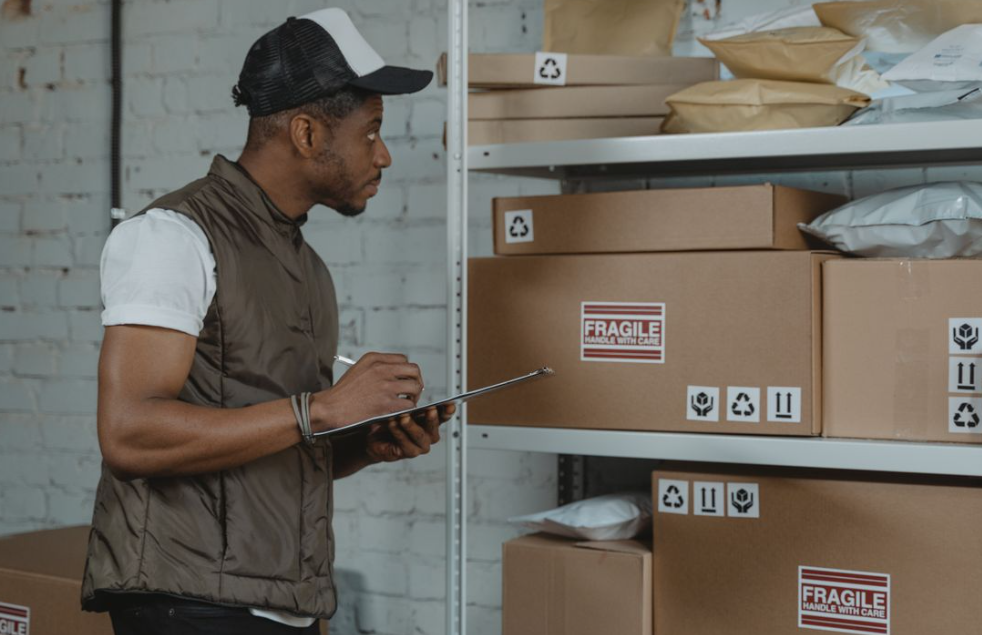
A pet brand can have hundreds of variants without having hundreds of different product designs. Size, color, pattern, species, flavor, and pack count quickly multiply the SKU count.
Use barcode scanning at each inventory movement
Scanning should happen at receiving, put-away, picking, and exception handling. The system should block a barcode that does not belong to the order.
For high-confusion products, add a weight or visual check to detect a missing component or wrong variant.
Separate sellable, held, damaged, and returned stock
Inventory status must be physical as well as digital. A returned dog bowl should not sit in the same bin as new units while waiting for inspection. A batch of treats under review should be blocked from allocation.
Useful inventory statuses include:
Reserved for open orders
QC hold
Compliance hold
Damaged
Supplier rework
Returned pending inspection
Short-dated
Expired or disposal required
The available quantity sent to a store should exclude stock that cannot actually ship.
Run cycle counts based on risk
Count fast-moving, high-value, expiry-controlled, and high-confusion SKUs more often. Record adjustment reasons. Repeated discrepancies may reveal a bad barcode, unclear bundle, supplier shortage, or picking problem.
Pet Product Packaging and Shipping Best Practices
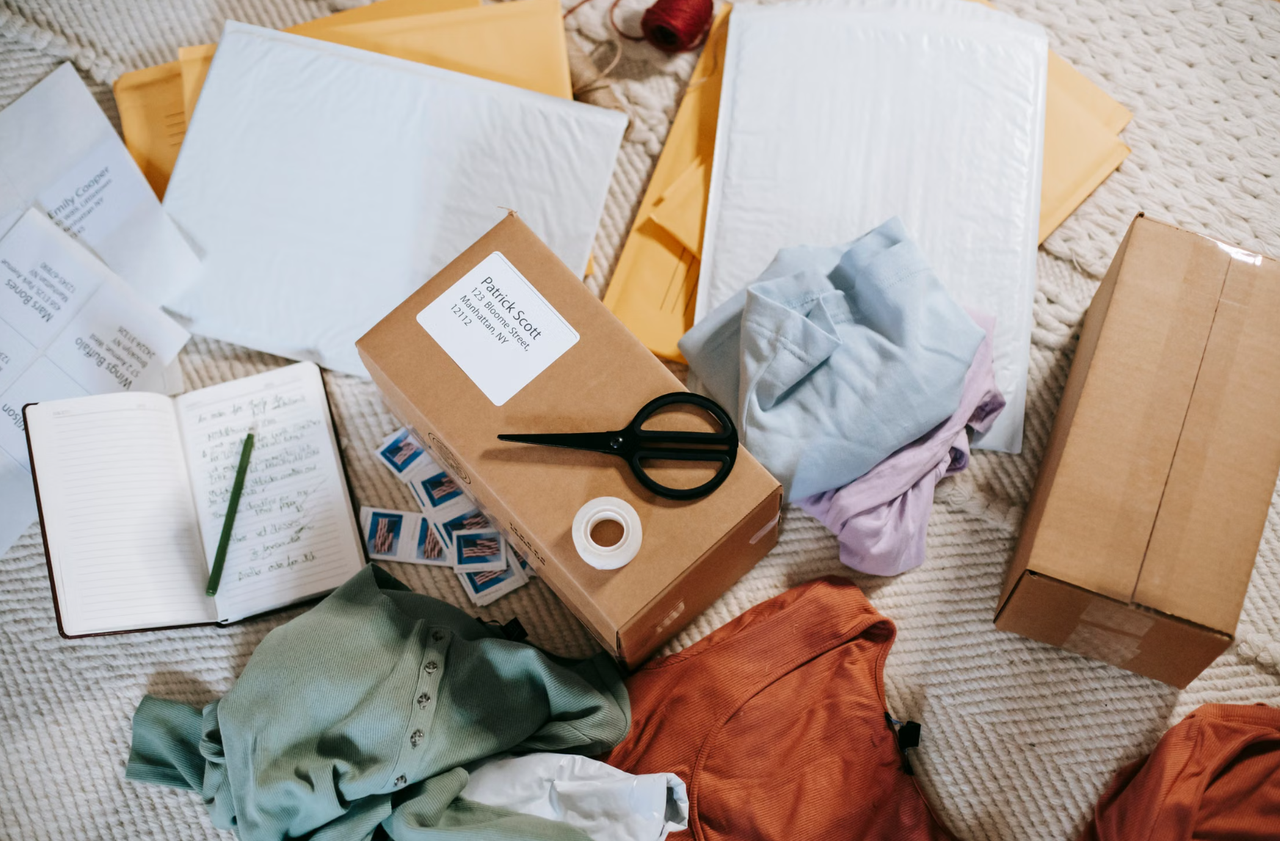
Packaging has four jobs: protect the product, keep the parcel within carrier limits, support customs inspection, and give the customer an acceptable arrival experience.
Match protection to the product rather than its retail price
A low-priced ceramic bowl can still generate an expensive replacement. A premium fabric leash may need little impact protection but strong moisture and abrasion control.
Use dividers or sleeves for bowls and feeders. Protect buckles and metal clips from scratching adjacent items. Prevent sharp toy edges from puncturing the mailer. Keep food separate from leaking liquids. Do not let heavy litter tools crush lightweight retail boxes in a mixed order.
SendFromChina offers different packing materials for parcel size, product protection, and presentation needs. The right choice should follow pack tests, not appearance alone.
Test the complete packed order
A supplier’s retail box may fail after several international sorting hubs. Test the final parcel for drops, compression, vibration, leaks, barcode readability, and dimensions. Test liquids in different orientations and check whether internal parts can strike a product housing.
Photograph the approved packing standard. Written instructions such as “add bubble wrap” leave too much room for interpretation.
Control dimensional weight
Carriers often charge by the greater of actual weight and dimensional weight. Pet beds, carriers, large toys, and protective cones can be expensive to ship because they occupy space.
Reduce empty air without weakening protection. Right-size cartons and compare nested or disassembled configurations. Test new dimensions against carrier weight bands because a small reduction can lower the billable tier.
Keep branded packaging practical
Pet owners enjoy thoughtful presentation, but heavy boxes and oversized inserts raise postage. Branded tape, a small card, or a neat product arrangement can create a strong experience without adding much weight.
For subscriptions and bundles, use a packing slip so small items are easy to verify.
How to Ship Pet Products from China to Global Customers
There is no single best shipping method. Choose routes by product eligibility, parcel profile, destination, delivery promise, tracking, customs handling, and cost.
|
Shipping option
|
Best suited to
|
Main tradeoffs
|
|
Postal or economy parcel
|
Lightweight, low-value, non-restricted accessories
|
Lower cost, slower delivery, variable tracking and exception handling
|
|
Dedicated ecommerce line
|
Regular B2C parcels to established markets
|
Better cost-speed balance, but product and size restrictions vary
|
|
Express courier
|
Urgent, higher-value, replacement, or sample orders
|
Fast and well tracked, but expensive and subject to remote-area or brokerage fees
|
|
Air freight plus local injection
|
Higher order volume concentrated in one region
|
Good scale economics, but needs consolidation planning and local partners
|
|
Sea or rail freight to a regional warehouse
|
Stable, high-volume inventory for local fulfillment
|
Low bulk transport cost, but slower and requires forecasting and import setup
|
Use economy routes for simple, lightweight accessories
Collars, waste-bag holders, small grooming tools, and fabric accessories may fit tracked ecommerce lines. Confirm maximum dimensions, declared-value limits, prohibited materials, and destination coverage.
Also review tracking, loss claims, customs processing, and undeliverable-parcel handling.
Use express service selectively
Express shipping can protect the customer experience for high-value devices, launch samples, replacement parts, and urgent orders. It may be unsuitable for bulky beds or low-margin accessories.
Remote-area fees and dimensional weight can change the final cost, so compare packed parcels.
Move predictable demand closer to customers
Direct shipping from China is useful while demand is spread across markets or hard to forecast. Once one region generates steady volume, bulk replenishment to a local warehouse can improve delivery speed and unit economics.
Keep long-tail colors, parts, and low-volume items in China while placing fast sellers near customers.
Brands serving EU customers can review China to Europe fulfillment options. SendFromChina’s multiple logistics solutions can also support route comparison across different parcel types and destinations.
Customs and Product Compliance for Pet Products Shipping from China

Compliance is product- and destination-specific. A logistics provider can support shipment data, but the seller and importer must confirm whether the product can enter and be sold.
Prepare accurate customs data for ordinary pet accessories
Each SKU needs a defensible description, value, origin, quantity, weight, and HS classification. Keep supplier invoices, product specifications, and material information available.
Avoid undervaluation. Promotional products and replacements still need a customs value under the applicable rules.
Choose the delivery duty model before checkout. Under DAP-style delivery, the customer may be asked to pay import charges before receiving the parcel. Under a properly arranged DDP workflow, duties and taxes are handled before final delivery. The exact responsibilities should be agreed with the logistics provider and importer. See the practical guide to DDP shipping from China.
Treat pet food and animal-origin treats as controlled goods
For the United States, imported animal food must meet FDA requirements. The FDA states that prior notice applies to imported food, including animal food, and import checks may verify facility registration, FSVP importer information, and labeling. Its guidance on importing animal and veterinary products should be reviewed before shipping.
Animal-origin ingredients may add USDA requirements. The FDA’s animal food import guidance notes that a USDA APHIS permit is generally required for certain animal food, chews, treats, or ingredients containing animal-origin material from countries affected by specified livestock diseases.
The EU also applies specific controls to pet food and animal by-products. Relevant goods may need to come from authorized countries and establishments, carry official certificates, and enter through an approved Border Control Post. The European Commission explains that animal products entering the EU are subject to animal-health conditions and official controls. Its pet food import FAQ also points to labeling rules under EU feed and animal by-product legislation.
Confirm market access, ingredients, establishment status, labels, importer responsibility, certificates, and border route before offering the product.
Check general product safety and online listing duties
Non-food pet products can still create safety risks. Breakable parts, choking hazards, sharp edges, electrical faults, chemical exposure, and misleading instructions may trigger product safety rules.
For EU sales, the European Commission’s product safety guidance provides an overview of the General Product Safety Regulation and business obligations. Brands should keep traceability information, safety documentation, warnings, and responsible-party details consistent across the product, packaging, and online listing where required.
Approve battery-powered pet products before launch
Do not wait until the first order to discover that a carrier rejects the battery configuration. Collect the battery specification, UN test information where required, safety data, packing details, and product photos during sourcing.
Rules differ for batteries installed in equipment, packed with equipment, or shipped alone. Ask the provider to approve the exact SKU and route in writing.
Pick and Pack Best Practices for Pet Ecommerce Orders
Pet brands often sell mixed baskets. A customer may order a harness, toy, treat pouch, and waste-bag refill in one checkout. Accuracy depends on a clear process.
Scan variants and verify bundles
The picker should scan each item against the order. For kits, the system should show every required component. Pre-kitted products need a kit barcode and a record of the component batch when traceability matters.
If two sizes share a barcode, fix the source data. Visual checks alone will not scale.
Use packing rules by SKU combination
Set rules for combinations that should not touch. Food should be protected from grooming liquids. Heavy bowls should not sit on fragile electronic retail boxes. Strong-smelling rubber toys should be separated from absorbent textiles.
The pick and pack service should be configured around these product rules, not just order item count.
Capture evidence for high-risk orders
Pack photos, recorded weights, and scan logs help resolve disputes. They are especially useful for high-value electronics, large multipacks, subscription boxes, and orders with many small components.
This evidence helps identify whether a problem began in the warehouse or in transit.
Returns Management for Pet Products Shipped Internationally

International returns can cost more than the product. Decide the policy by product value, hygiene risk, destination, and resale potential.
Separate customer service decisions from physical returns
A refund does not always require the item to travel back to China. The brand may offer a refund, reship a part, send a replacement unit, use a local return address, or request disposal.
Set value thresholds and approval rules. A replacement pump may solve a fountain claim more cheaply than a full replacement.
Do not automatically restock used pet products
Pet products can carry hair, saliva, food residue, odor, fleas, or other contamination. Used bedding, toys, grooming tools, food, and bowls may not be suitable for resale.
Create disposition rules for unopened, opened, used, damaged, expired, and recalled goods. Returned electronics should be inspected before they are marked sellable. Returned food should follow the applicable safety policy and generally should not re-enter normal inventory without a validated process.
Use return reasons to fix upstream problems
“Did not fit” may indicate a size chart issue. “Not as shown” may point to photography or color descriptions. “Stopped working” may reveal a supplier batch problem. “Box damaged” may call for a stronger outer pack.
Review reasons by SKU, batch, destination, and carrier, then use the findings to improve the product or packaging.
Pet Product Fulfillment Costs and Hidden Charges
The lowest fulfillment quote is not always the lowest cost per delivered order. Pet products create charges through space, handling complexity, packaging, route restrictions, and exceptions.
|
Cost area
|
What changes the charge
|
What to ask the 3PL
|
|
Receiving
|
Carton count, mixed SKUs, labeling, inspection depth
|
Is receiving charged by carton, pallet, SKU, unit, or labor hour?
|
|
Storage
|
Bin, shelf, cubic volume, pallet, food-grade zone
|
How is daily or monthly volume measured?
|
|
Pick and pack
|
First item, additional items, bundles, inserts
|
Are kit components and promotional samples extra picks?
|
|
Packaging
|
Mailer, carton, void fill, seals, branded materials
|
Is material cost separate from packing labor?
|
|
Shipping
|
Actual or dimensional weight, destination, product class
|
Which surcharges, fuel fees, and remote-area fees apply?
|
|
Special handling
|
Batteries, liquids, food, expiry tracking, relabeling
|
Which SKUs need approval or a handling fee?
|
|
Exceptions and returns
|
Address changes, failed delivery, reshipment, disposal
|
What is charged when a parcel cannot be delivered?
|
Bulky beds cost more to store and ship. Electronics can carry route costs, while treats may need lot control and restricted-market handling.
Build sample baskets and ask each provider to price the same scenarios. Include a one-item accessory order, a mixed order, a bulky order, an electronic product, and a return. Compare total cost per successful delivery.
The guides to comparing China fulfillment quotes and hidden fulfillment costs ecommerce sellers miss provide a fuller quote-review framework. You can also use the shipping calculator for an initial route estimate.
How Pet Brands Can Prepare for Peak Seasons in 2026
Demand can rise around Black Friday, Christmas, Lunar New Year, summer travel, launches, and influencer campaigns.
Forecast at SKU level
Forecast by SKU, country, and week. Hold extra packaging for the parcel formats likely to grow.
Plan around Chinese factory and carrier closures
Before Lunar New Year, confirm production, factory handover, receiving cutoff, and restart dates. Build time for QC. During global peaks, allow for carrier surcharges, capacity limits, and longer transit.
How to Choose a China 3PL for Pet Product Ecommerce
A suitable provider must understand the specific products in your catalogue.
Ask for product-level acceptance
Send the provider a SKU list with materials, dimensions, batteries, liquids, food ingredients, expiry controls, and target countries. Ask which items it can store and which routes it can use.
Acceptance should be specific. A provider may ship a USB fountain but not a tracker with a spare battery. It may handle accessories but lack a suitable process for pet food.
Review inventory and traceability controls
Ask for examples of receiving records, inventory statuses, lot data, expiry alerts, pick scans, and stock adjustments. Confirm how the system handles bundles and replacement parts.
For food or high-risk products, confirm that a batch can be blocked and traced to affected orders.
Test the process with a pilot
Start with a limited number of SKUs and destinations. Send real orders with different variants and product combinations. Review receiving time, inventory accuracy, packaging, tracking, delivery, billing, and support response.
Use the pilot to refine packing instructions and product data before moving the full catalog.
Compare communication and exception ownership
International fulfillment always produces exceptions. Addresses fail validation. Customs requests information. Parcels stop moving. Products arrive damaged.
Ask who monitors exceptions, how quickly the brand is notified, and what evidence is available.
For a broader provider checklist, see what to look for in a reliable China 3PL provider.
Pet Product Fulfillment Checklist for Ecommerce Sellers
Before launching fulfillment from China, confirm the following:
Customs descriptions, values, materials, origin, and proposed HS codes are documented.
Batteries, liquids, food, treats, and animal-origin goods are identified.
Destination requirements and shipping-route acceptance have been checked.
Suppliers send inbound notices and labeled cartons.
QC rules state the sample size and pass or fail criteria.
Storage, lot, expiry, and FEFO controls match the product.
Final parcels have been tested and checkout shows clear delivery terms.
Picking uses scans, and returns have disposition rules.
Quotes and peak capacity have been tested with realistic order baskets.
Review the checklist whenever a SKU, ingredient, battery, destination, carrier, or pack format changes.
Final Thoughts on Pet Product Fulfillment from China
Pet product fulfillment from China works best when the operating process follows the product. Simple accessories need accurate SKU control and sensible packaging. Bulky beds need volume management. Liquids need leak and route controls. Electronics need battery documentation. Food and treats need traceability and market-specific approval.
The China warehouse can support early inspection, multi-supplier consolidation, and several markets from one stock pool. Start with product classification, then set receiving, QC, packaging, and route rules. Track cost per successful delivery, not only the pick fee.
SendFromChina supports warehouse storage, order fulfillment, pick and pack, packaging, and international shipping options for ecommerce sellers. Brands can contact the team with their SKU list, product details, destination mix, and expected order volume to assess a suitable workflow.
FAQs About Pet Product Fulfillment from China
1. What is pet product fulfillment from China?
It is a service in which a China-based 3PL receives and stores pet inventory, processes ecommerce orders, packs parcels, and ships them worldwide. It may also handle labels, bundles, inspection, tracking, and returns.
2. Which pet products are easiest to ship internationally from China?
Lightweight, non-electronic, non-liquid accessories are usually simplest. Examples include fabric collars, leashes, bandanas, waste-bag holders, and some grooming tools. Accurate customs data is still required.
3. Can a China fulfillment center store and ship pet food or treats?
Only when the warehouse is suitable and the destination permits import. Food and animal-origin treats may require registration, an importer, certificates, labels, prior notice, permits, or border controls. Confirm approval before selling.
4. How should pet food inventory be rotated in a warehouse?
Use lot and expiry records with first-expired, first-out picking. Set a minimum remaining shelf life, and quarantine damaged, short-dated, expired, or recalled stock.
5. Can battery-powered pet products ship by air from China?
Many can, but acceptance depends on chemistry, capacity, test documents, condition, packing, and carrier rules. Installed and separately packed batteries may follow different rules. Approve the SKU and route before launch.
6. How can pet brands reduce shipping costs from China?
Reduce package volume, right-size cartons, and select routes by order value and urgency. Move predictable fast sellers to regional warehouses while keeping slower variants in China. Compare packed dimensions and real order baskets.
7. Is direct shipping from China too slow for pet ecommerce?
It depends on the destination and route. Direct shipping suits demand testing and widely distributed markets. A hybrid model becomes attractive when one region has enough volume for local stock.
8. What quality checks should a pet product warehouse perform?
Checks should match the SKU. They may cover quantity, barcode, variant, packaging, stitching, buckles, parts, leakage, plug type, and power-on results. Define sample sizes and acceptance rules in writing.
9. How should international returns for pet products be handled?
Base decisions on value, hygiene risk, condition, and destination. Not every refund requires a return to China. Keep used or contaminated items out of sellable stock, and use replacement parts where practical.
10. What information does a China 3PL need to quote pet product fulfillment?
Provide SKU count, dimensions, weights, materials, battery or liquid details, food and expiry needs, order volume, destination mix, packaging, returns, and peak forecasts. Sample orders improve quote accuracy.
 Post Views:12
 TAGS:
TAGS:
Copyright statement: The copyright of this article belongs to the original author. Please indicate the source for reprinting.
Previous Post
Next Post
China to Europe Fulfillment: What Ecommerce Sellers Need to Know
TAGS
Hot Research
Recent News
Get Custom eCommerce Fulfillment Service
Book a Meeting
Get a Custom China Fulfillment Solution with FREE Storage for 30 Days
Want to know about our services, fees or receive a custom quote?
 Want to know about our services, fees or receive a custom quote?
Please fill out the form on the right and we will get back to you within a business day.
The more information you provide, the better our initial response will be.