




Table of Contents
Table of Contents
You built the thing. The prototype works, the photos look good, and you've got a list of friends who swear they'll back it.
Then you hit a wall. Maybe Kickstarter doesn't accept creators from your country. Maybe your project is a science study or an indie film, and it gets lost next to gadgets. Or maybe most of your future backers live in Tokyo or Seoul, not New York.
It's a bit like having a great product and no shelf to put it on. The good news is that there are more shelves than most people think.
This guide covers 15 Kickstarter type websites. They all work roughly the same way: you set a goal, you offer rewards, backers pledge, and you deliver later. We split them into three groups: general platforms, niche sites for specific projects, and regional platforms where local backers already hang out.
One note before we start. Fees and rules below were checked against public pages in late October 2026. These platforms change pricing more often than you'd expect, so please open the live page before you launch. Honestly, that's just a good habit.
What Makes a Website "Kickstarter Type"?
A lot of lists throw every fundraising site into one bucket. That's confusing. So here's what we mean.
A Kickstarter type website is a reward-based crowdfunding platform. It usually has four things:
- A deadline. Your campaign runs for a set number of days.
- A goal. You pick a target amount.
- Rewards, not shares. Backers get a product, a copy, an experience, or a thank-you. They don't get equity.
- Make it after you fund it. The money comes first, and production and shipping happen later.
That last point matters more than people think. It means you're making a promise. And the promise isn't done until the box lands on someone's doorstep.
Reward, Donation, Equity or Membership?
Here's a quick way to tell the models apart:
|
Model
|
What backers get
|
Typical use
|
Examples
|
|---|---|---|---|
|
Reward-based
|
A product, copy or perk
|
Games, gadgets, books, films
|
Kickstarter, Gamefound, Makuake
|
|
Donation
|
A good feeling
|
Personal causes, charity
|
GoFundMe
|
|
Equity
|
A small share of the company
|
Startups raising investment
|
Wefunder, StartEngine
|
|
Membership
|
Ongoing content every month
|
Podcasters, artists, writers
|
Patreon, Ko-fi
|
Why Patreon, GoFundMe and Wefunder Aren't on This List
Plenty of "alternatives" lists include them. They're good platforms. They just do a different job.
Patreon pays you every month for ongoing work. GoFundMe is built for donations, so there's no reward to ship. Wefunder sells shares, and that comes with securities rules. None of these is what you want if you're trying to pre-sell 2,000 copies of a board game.
So we left them out. Every site below works like Kickstarter: one campaign, one goal, rewards for backers.

Why Creators Look Beyond Kickstarter
Kickstarter is still the name everyone knows. Even so, there are some pretty normal reasons to look elsewhere.
Your Country Isn't on the List
Kickstarter only lets creators launch from 25 countries right now, including the US, the UK, Canada, Australia, Japan, Hong Kong, Singapore and much of Europe. If you live somewhere else, you either set up a business in an eligible country or you pick another platform.
Lots of hardware founders work with factories in China. Many of them are based in an eligible country, so that's fine. But if your company is registered somewhere outside that list, a Kickstarter type website with wider access can save you weeks of paperwork.
Your Project Doesn't Fit the Crowd
Kickstarter is a big general store. A tabletop game, a research study and an open-source circuit board all compete for the same homepage. Niche platforms put you in front of people who already love your category. That's often worth more than raw traffic.
Fees and Funding Model
Kickstarter takes 5% of funds from successful projects, and payment processing adds roughly 3% to 5% on top. Most rivals sit in a similar range. A few go much lower, and a few go higher in exchange for more marketing.
All-or-Nothing vs Flexible Funding
This is the other big difference.
- All-or-nothing: If you miss your goal, nobody is charged and you get nothing. Kickstarter works this way.
- Flexible (keep what you raise): You keep whatever comes in, even if you fall short.
Flexible sounds safer. But here's the catch. If you raise 40% of what you need, you still owe rewards to every backer. That can be worse than raising nothing. Also worth knowing: Indiegogo, the platform most people linked with flexible funding, stopped offering it to new campaigns in October 2025. So if flexible funding is a must for you, check each platform's current rules.
Where Your Backers Actually Live
If your product is designed for Japanese homes or Korean skincare fans, a local platform can reach those buyers faster than any ad budget. Backers trust sites in their own language and currency. That's not a small thing.

How We Picked These 15 Sites
We didn't just grab the biggest names. Each platform had to pass a few simple checks:
- Reward-based. Backers get something tangible or a clear perk, not shares.
- Still active in 2026. We dropped sites we couldn't confirm were still running live campaigns.
- Clear about who can launch. Some regional sites only take local businesses, and we note that.
- Useful after the campaign. Pledge tools, add-ons and shipping support got bonus points.
We also left Kickstarter itself off the count. It's the baseline we compare against.
General Platforms Closest to Kickstarter
These three feel the most like Kickstarter. They take a wide range of projects and don't need you to fit a niche.
1. Indiegogo
Indiegogo is the name most people say right after Kickstarter. It has long been popular with tech and design products.
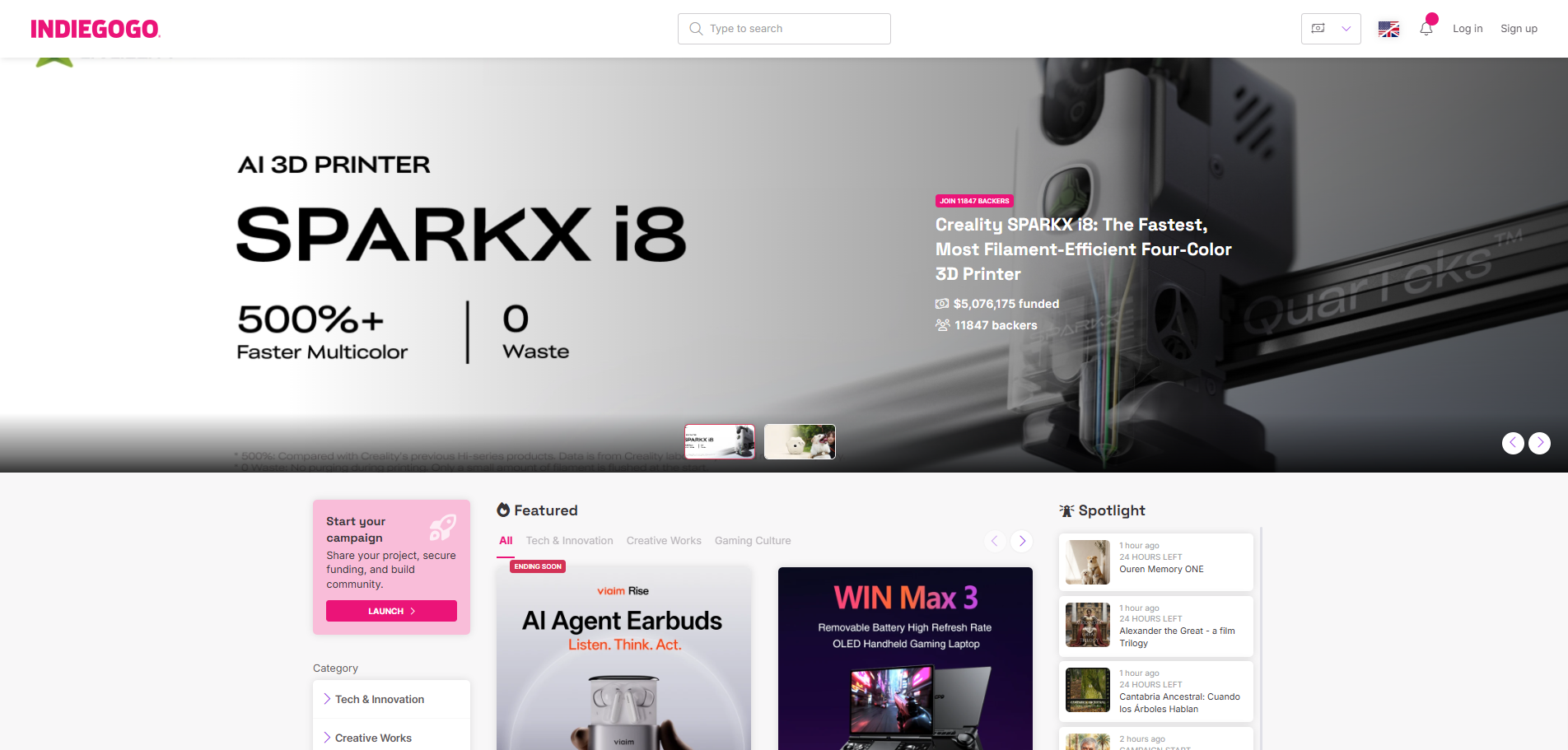
The big news: Gamefound bought Indiegogo in July 2025, and the platform moved to new technology on October 16, 2025. According to Indiegogo's own help page on the upgrade, new campaigns now pay a flat 5% platform fee plus payment processing of 3% + $0.20 per transaction, and flexible funding is no longer offered to new campaigns.
So in 2026, Indiegogo works a lot more like Kickstarter than it used to. If you want the background, here's how Indiegogo works in more detail.
Good for: gadgets, consumer tech, design products.
Watch out for: older guides that still describe flexible funding. They're out of date.
2. Ulule
Ulule is one of Europe's biggest reward-based platforms, especially strong in France and the French-speaking world. In December 2024, Ulule bought the crowdfunding business of KissKissBankBank, another well-known French platform. Both brands are kept for now.
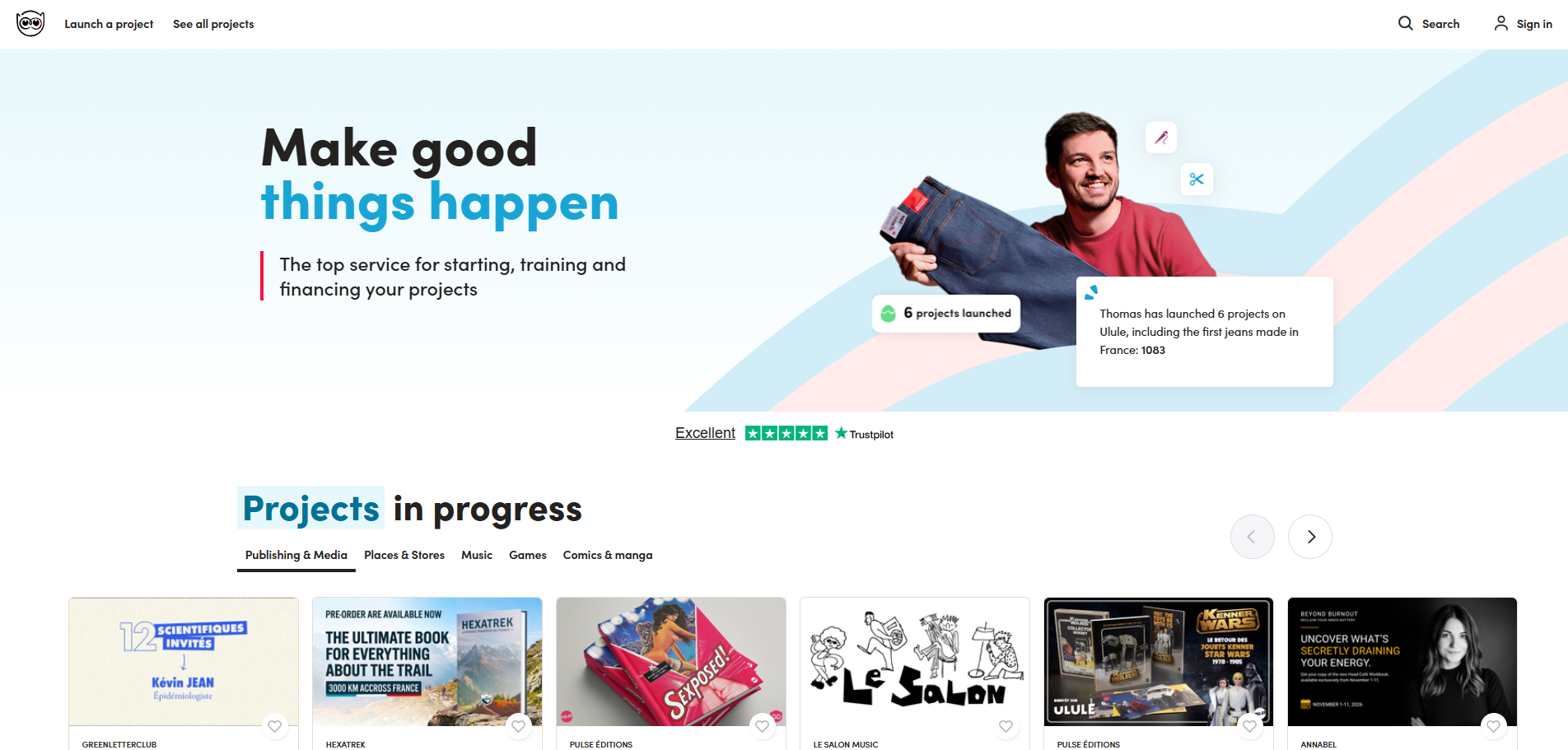
Ulule reviews projects before they go live, so you'll need a clear plan. Since April 2025, backers pay a small service fee on each contribution. Creators still pay a commission on what they raise, so check the current rate on Ulule's help center.
Good for: European creators, books, music, food, craft products.
Watch out for: a smaller audience outside Europe.
3. Crowdfundr
Crowdfundr is a lighter, lower-cost option. Its pricing page offers a zero platform fee option, or a model where supporters are asked to cover a 5% platform fee. Payment processor fees from Stripe or PayPal still apply, and the money goes straight to your own account.
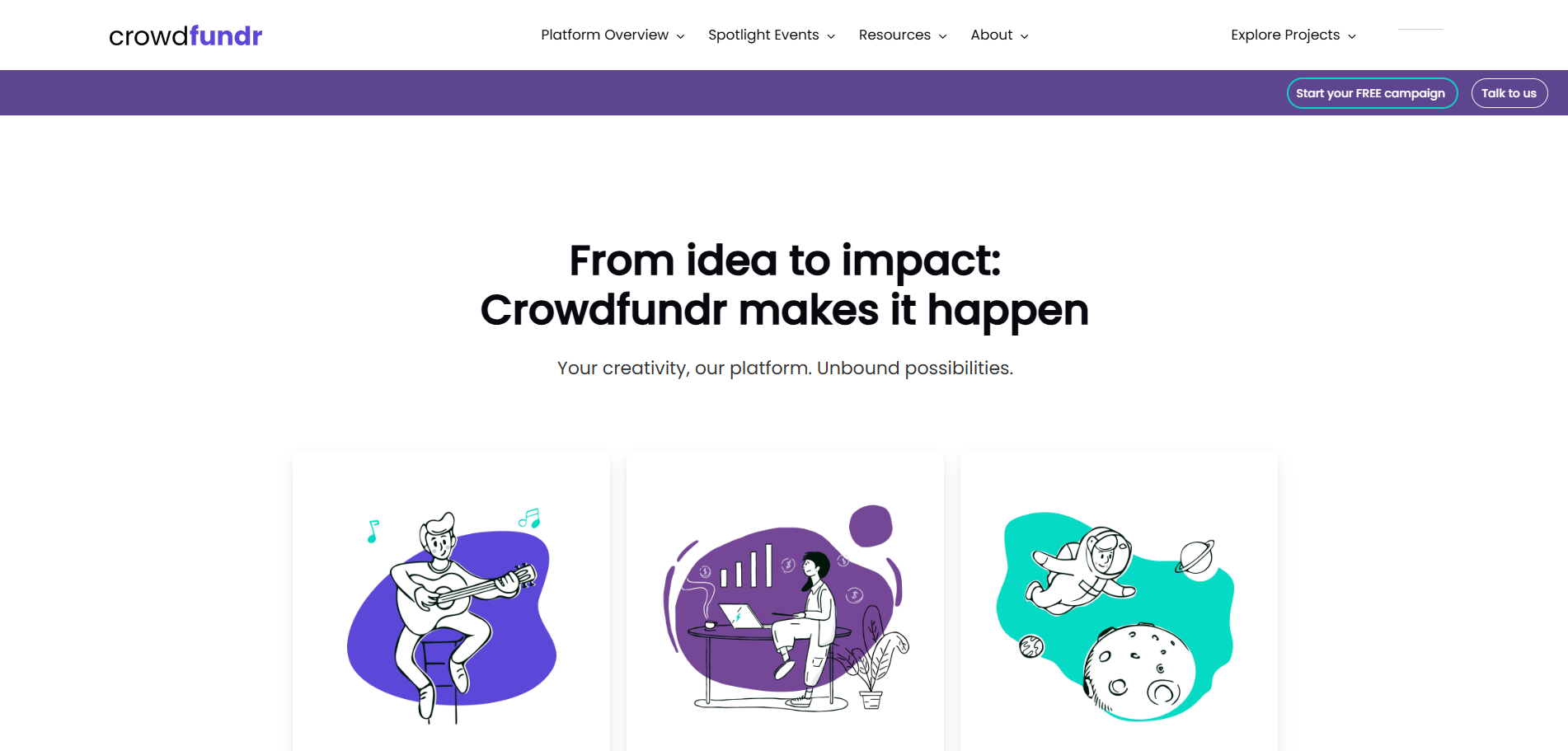
The trade-off? Crowdfundr doesn't bring you a huge built-in crowd. It works best when you already have fans on email or social media.
Good for: creators with an existing audience who want to keep more of each dollar.
Watch out for: relying on the platform for discovery. It won't do that job for you.
Niche Kickstarter Type Websites for Specific Projects
Now it gets interesting. These platforms are smaller, but they're full of people who already care about your category.
4. Gamefound
If you make tabletop games, you've heard of Gamefound. It started as a pledge manager and grew into a full crowdfunding platform. It now owns Indiegogo too.
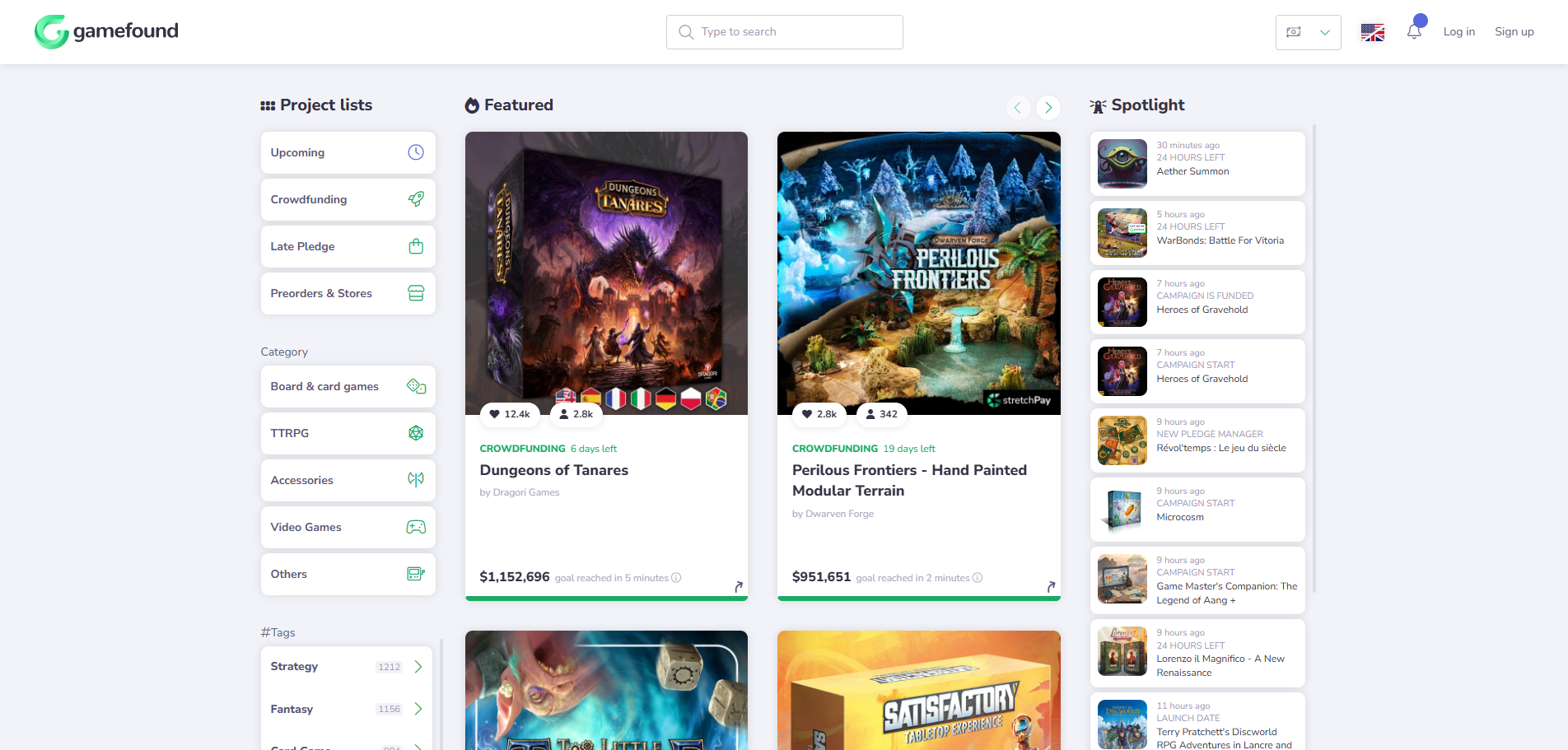
Gamefound's help center lists a 5% platform fee on funds collected, plus payment processing. If the project doesn't fund, you pay nothing. The real draw is that the campaign and the pledge manager live in one place. Add-ons, late pledges and shipping charges don't need a second tool.
If you're planning a game launch, our guide for board game creators on Kickstarter covers prep that applies to Gamefound too.
Good for: board games, miniatures, RPGs.
Watch out for: a smaller audience outside tabletop.
5. BackerKit Crowdfunding
BackerKit was the go-to pledge manager for years. Now it runs its own crowdfunding platform as well. Its pricing page lists a 5% platform fee on funds raised, plus payment processing of 2.9% + $0.30 per pledge in the US. Fees only apply if you hit your goal.
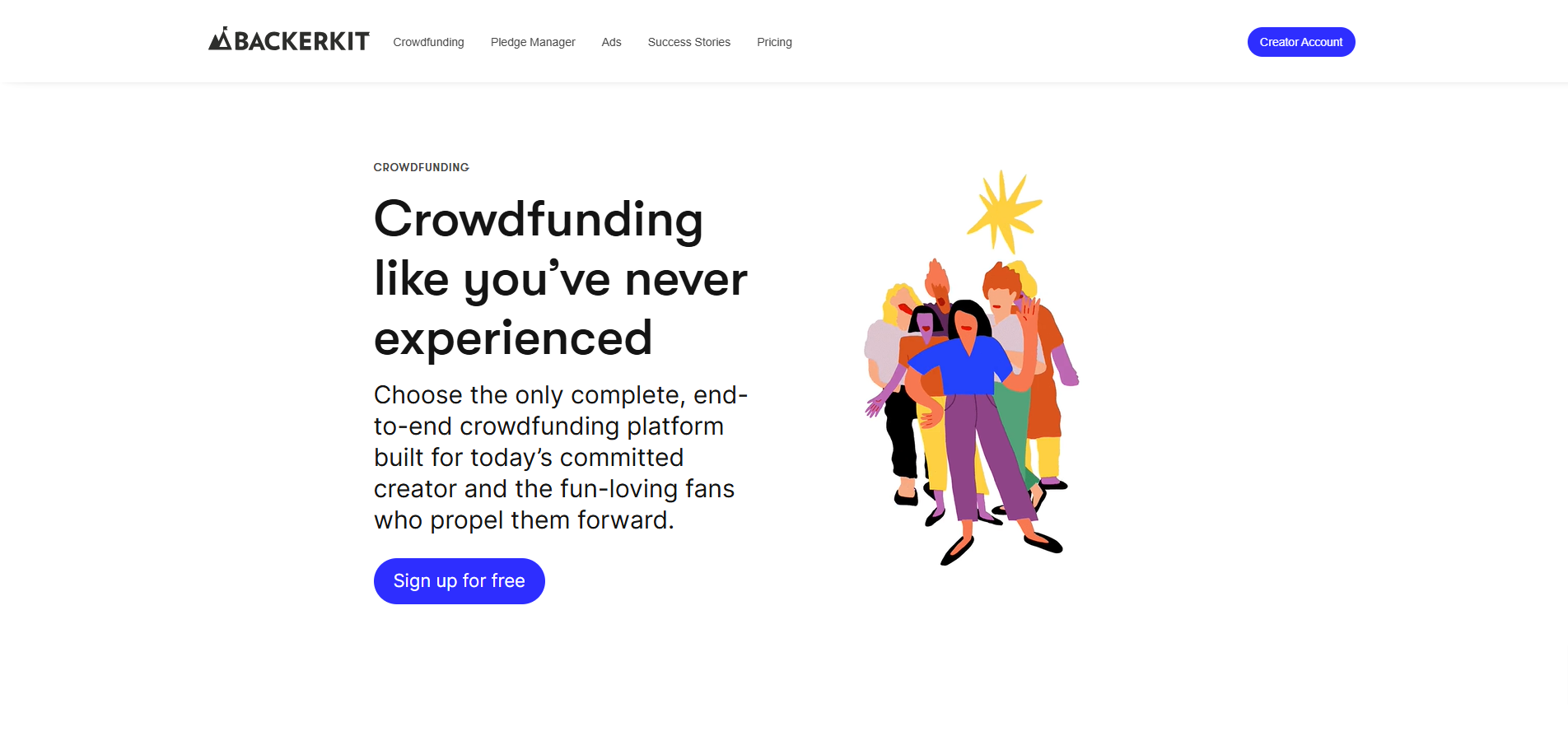
Like Gamefound, the big plus is one system from launch to shipping. Lots of comic, tabletop and publishing creators like that.
Good for: tabletop games, comics, art books, publishing.
Watch out for: a smaller general audience than Kickstarter.
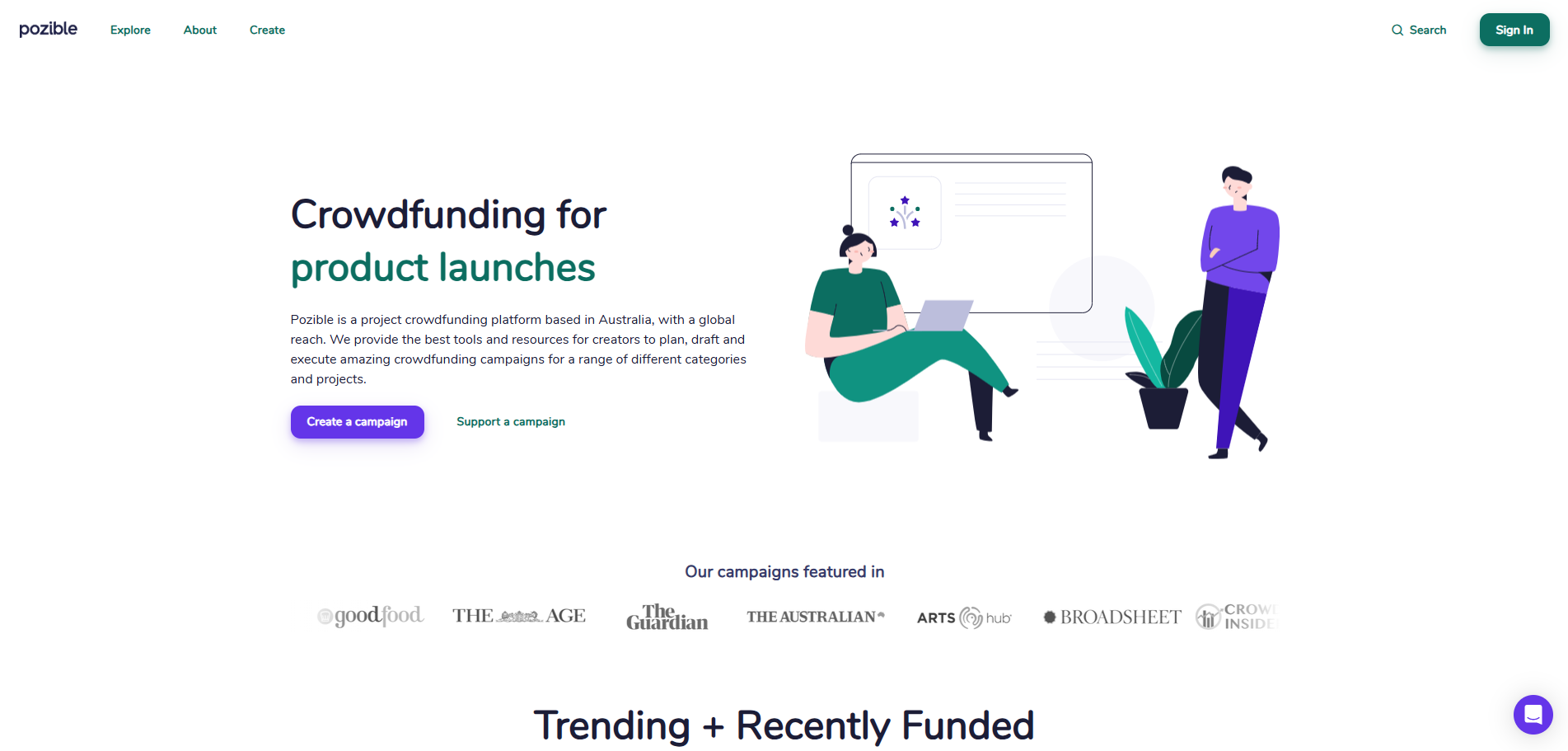
6. Pozible
Pozible is an Australian platform. It's popular with creative and community projects across Australia and the Asia-Pacific region. Older reviews describe a tiered fee that drops as you raise more, with no fee if you miss your target. Those numbers are a few years old, so check the current fee page.
Small honest note: our first draft had a tabletop-only platform in this spot. We couldn't confirm it was still running live campaigns in 2026, so we swapped in Pozible.
Good for: Australian and New Zealand creators, arts, community projects.
Watch out for: limited reach in the US and Europe.
7. Crowd Supply
Crowd Supply is where hardware nerds go. Think open-source electronics, dev boards and maker tools. It's picky about what it accepts, and it acts a bit like a store as well as a crowdfunding site.
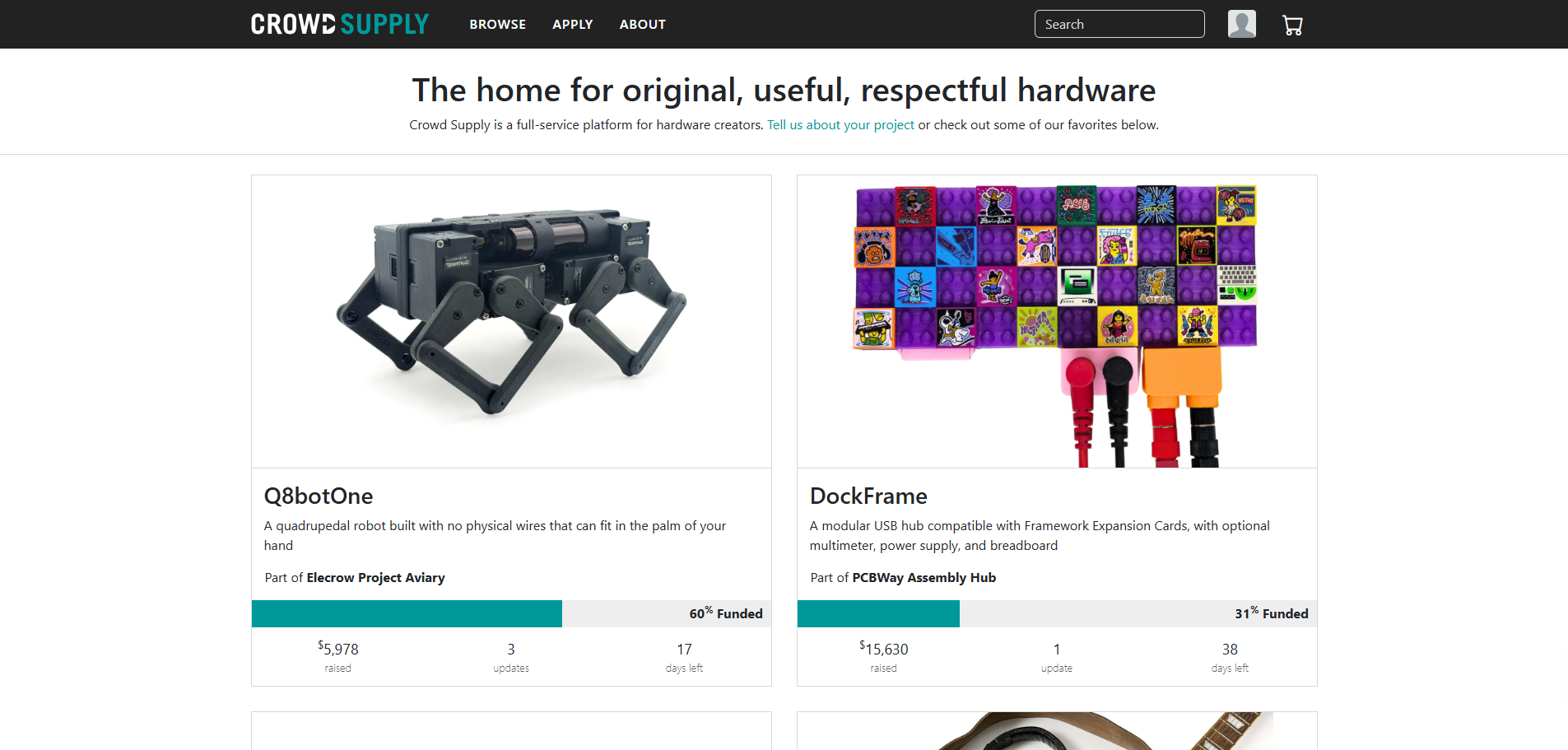
Its published fees are a 5% crowdfunding fee and 2.9% + $0.30 card processing, with optional pre-order and fulfillment fees after the campaign. Crowd Supply also says some pricing is negotiated, so ask.
Good for: electronics, open hardware, engineering tools.
Watch out for: a strict review. If your product isn't technical, it's not a fit.
8. Seed&Spark
Seed&Spark is built for filmmakers and storytellers. The community is full of people who back indie films and series.
Its FAQ says it charges zero platform fees to creators. You only pay Stripe's processing fees. That's rare.
Good for: short films, features, documentaries, web series.
Watch out for: a smaller audience if your project isn't film or TV.
9. IFundWomen
IFundWomen focuses on women-led businesses. It mixes crowdfunding with coaching and a supportive community, so it's more than a campaign page. Check the current fee directly on its site. Older reviews mention a 5% platform fee, but things may have changed.
Good for: female founders, small product businesses, first-time creators who want coaching.
Watch out for: paid coaching plans. They're optional, so only buy what you need.
10. Experiment
Experiment is crowdfunding for science. Researchers post a project, set a goal, and backers support the study. The rewards are mostly lab notes, updates and results, not physical products.
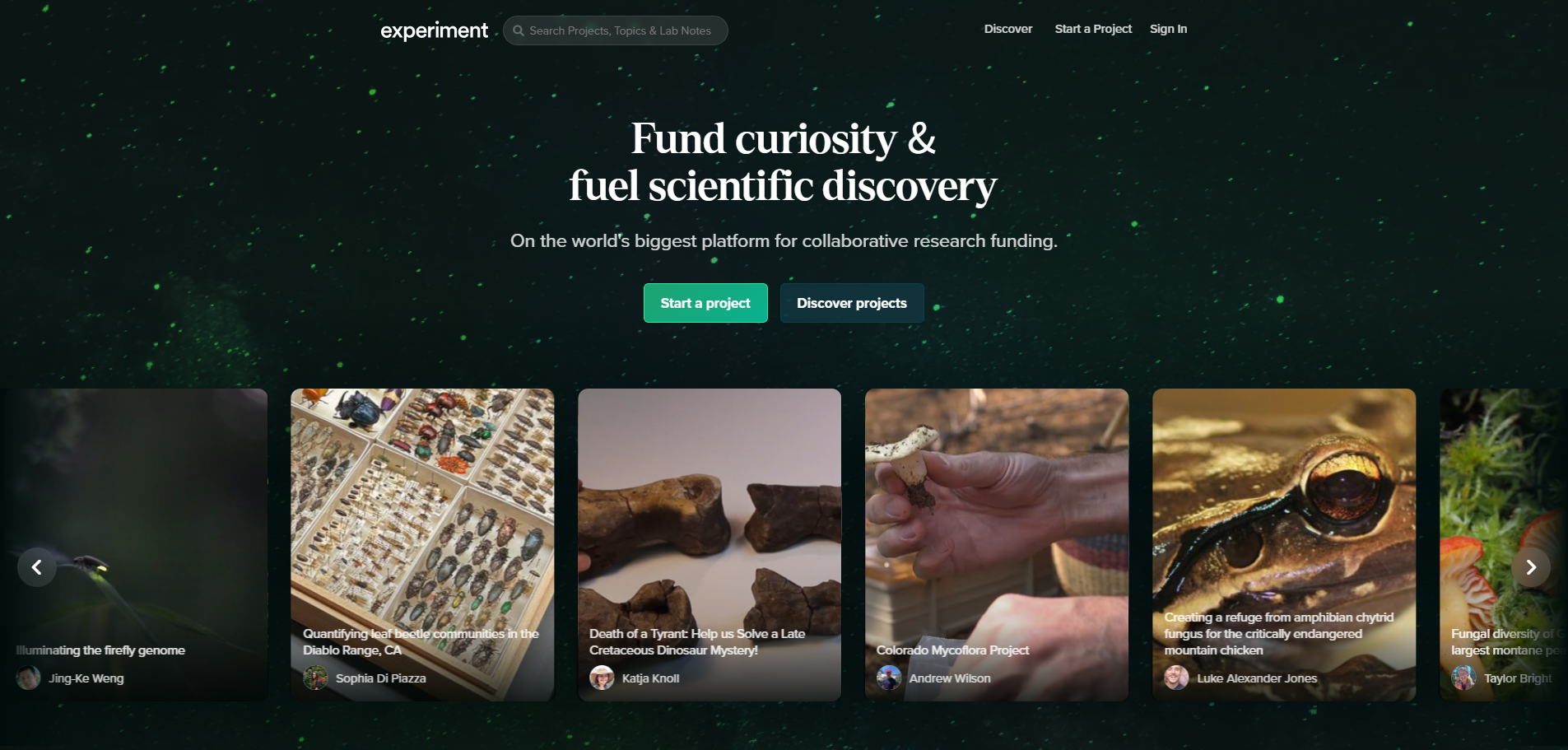
It's all-or-nothing, and fees are charged only if the project is funded. Public sources give different numbers for the platform fee, so confirm the rate with Experiment before you plan.
Good for: researchers, students, citizen science.
Watch out for: this is not the place to pre-sell a product.
Regional Kickstarter Alternatives for Local Backers
These platforms are huge at home. If your buyers live in one of these markets, they can beat a global platform easily.
11. Makuake (Japan)
Makuake is one of Japan's biggest crowdfunding platforms. It's listed on the Tokyo Stock Exchange. Japanese backers use it like a launchpad for new products, from kitchen tools to travel gear.
.png)
According to Makuake's legal notice page, the success fee for domestic projects is 20% of funds raised (excluding tax). That's high compared to Kickstarter. But it often comes with real promotion and a very engaged audience.
Good for: consumer products made for Japanese buyers.
Watch out for: Japanese-language pages and local support are pretty much required.
12. Wadiz (South Korea)
Wadiz is Korea's biggest crowdfunding platform. In May 2025, it opened a global service that lets overseas backers join Korean projects too.
.png)
Wadiz's pricing page lists a single plan from February 2026: a 12% service fee plus a payment settlement fee. Wadiz has also published a guide for foreign makers. Read it closely, because business registration rules apply.
Good for: beauty, lifestyle, gadgets aimed at Korean buyers.
Watch out for: customs duties. Wadiz notes that in some markets, like Japan, the maker may have to cover them.
13. zeczec (Taiwan)
zeczec (嘖嘖) is one of Taiwan's main crowdfunding platforms. It's strong in design, tech accessories and creative projects, and Taiwanese backers are active and quite generous. Most Taiwanese platforms run all-or-nothing, and zeczec refunds backers if a project fails.
.png)
We couldn't find a current public fee page, so ask the zeczec team for the rate.
Good for: design products, tech accessories, creative brands targeting Taiwan.
Watch out for: Chinese-language content and local payment habits.
14. Startnext (Germany)
Startnext is one of the biggest platforms in the German-speaking world. It runs all-or-nothing. Payment fees apply, and after a successful campaign, creators can choose a voluntary contribution to the platform.
.png)
Good for: German, Austrian and Swiss creators, culture and sustainable products.
Watch out for: German-language pages work much better than English ones.
15. Verkami (Spain)
Verkami is a Spanish platform built for cultural projects: comics, music, games, books and film. Its community likes backing local artists. Check the current commission and funding rules on its site before you plan your budget.
.png)
Good for: Spanish creators, comics, music, tabletop games.
Watch out for: a mostly Spanish-speaking audience.
What Foreign Creators Need for Regional Platforms
Before you get excited about Makuake or Wadiz, check three things:
- A business entity. Many regional sites want a local company or a registered business in an approved country.
- Language. A rough machine translation won't win trust. Budget for a native writer.
- Payouts and taxes. Check how money reaches your bank, in which currency, and who handles VAT or duties.
15 Kickstarter Type Websites Compared
Here's everything in one table. Fees are as published in October 2026. Always check the live page.
|
#
|
Platform
|
Group
|
Best for
|
Funding model
|
Fees (check live page)
|
|---|---|---|---|---|---|
|
—
|
Kickstarter (baseline)
|
General
|
Most creative projects
|
All-or-nothing
|
5% + processing ~3-5%
|
|
1
|
Indiegogo
|
General
|
Tech and design
|
Fixed goal for new campaigns
|
5% + 3% + $0.20 per transaction
|
|
2
|
Ulule
|
General
|
European creators
|
Goal-based
|
Commission on funds raised; backers pay a small service fee
|
|
3
|
Crowdfundr
|
General
|
Creators with fans
|
Campaign-based
|
0% option, or 5% covered by supporters, plus processing
|
|
4
|
Gamefound
|
Niche
|
Tabletop games
|
All-or-nothing
|
5% + processing
|
|
5
|
BackerKit Crowdfunding
|
Niche
|
Games, comics, books
|
All-or-nothing
|
5% + 2.9% + $0.30 (US)
|
|
6
|
Pozible
|
Niche
|
Australia and NZ projects
|
Goal-based
|
Tiered fee, check current rate
|
|
7
|
Crowd Supply
|
Niche
|
Open hardware
|
All-or-nothing
|
5% + 2.9% + $0.30, partly negotiable
|
|
8
|
Seed&Spark
|
Niche
|
Film and video
|
Goal-based
|
0% platform fee + Stripe fees
|
|
9
|
IFundWomen
|
Niche
|
Women-led businesses
|
Campaign-based
|
Check current rate
|
|
10
|
Experiment
|
Niche
|
Science research
|
All-or-nothing
|
Fee only if funded, check rate
|
|
11
|
Makuake
|
Regional
|
Japan
|
Goal-based
|
20% (excl. tax) for domestic projects
|
|
12
|
Wadiz
|
Regional
|
South Korea
|
Goal-based
|
12% + settlement fee (from Feb 2026)
|
|
13
|
zeczec
|
Regional
|
Taiwan
|
All-or-nothing
|
Ask the platform
|
|
14
|
Startnext
|
Regional
|
German-speaking markets
|
All-or-nothing
|
Payment fees + optional contribution
|
|
15
|
Verkami
|
Regional
|
Spain
|
Check on site
|
Check current rate
|
Which Site Fits Your Project?
Still not sure? Start with your project type, then think about where your backers live.
|
If you're making...
|
Look at first
|
Also worth a look
|
|---|---|---|
|
A board game or RPG
|
Gamefound, BackerKit
|
Verkami (Spain), Startnext (Germany)
|
|
A gadget or consumer tech
|
Indiegogo
|
Makuake, Wadiz, zeczec
|
|
Open-source hardware
|
Crowd Supply
|
Indiegogo
|
|
A film or web series
|
Seed&Spark
|
Ulule, Verkami
|
|
A comic or art book
|
BackerKit
|
Ulule, Verkami
|
|
A science project
|
Experiment
|
—
|
|
A product for Japan, Korea or Taiwan
|
Makuake, Wadiz, zeczec
|
—
|
|
A women-led small business
|
IFundWomen
|
Crowdfundr
|
A quick tip. Lots of creators run on Kickstarter first, then open a second campaign in Japan or Korea later. That's normal. Just check each platform's rules on running the same project elsewhere, and keep your reward list and shipping plan tidy across both.
Shipping Rewards No Matter Which Site You Pick
Here's the part most "alternatives" lists skip. Every platform above has one thing in common: once the campaign ends, you have to deliver.
And delivery is where many campaigns go wrong. Not the idea. Not the marketing. The boxes.
Use a Pledge Manager
After the campaign, you need to collect addresses, confirm reward choices, sell add-ons and charge shipping. Gamefound and BackerKit have this built in. On other platforms, you'll usually add one. Here's why a pledge manager matters more than most first-timers think.
Price Shipping Before You Launch
Shipping costs depend on weight, box size, destination and product type. If you guess, you'll probably guess low. So get real quotes for your main backer countries before you set reward prices. This guide shows how to plan shipping costs before launch, step by step.
When Backers Are Spread Across Many Countries
Regional platforms add a twist. You might have backers in Japan from Makuake, in Korea from Wadiz, and in the US and Europe from your first campaign. Each market has its own customs rules, duties and carriers.
If your product is made in China, shipping rewards straight from China is often simpler than sending pallets to warehouses in every region first. That's what crowdfunding fulfillment at SendFromChina is built for. We receive your rewards in our China warehouse, check them, pack them by reward tier and add-on, and ship them to backers in most major markets with tracking. Which countries we can reach depends on the route and the product. Delivery times depend on the route, carrier, customs and season, so we plan them with you before you ship.
A few things to sort early:
- Box sizes. A slightly smaller box can cut volume-based shipping costs.
- Duties. Decide if backers pay duties on delivery or if you include them up front.
- Restricted items. Batteries, magnets and liquids may need special handling or routes.

Mistakes Creators Make When Switching Platforms
We see a few of these again and again:
- Assuming your fans will follow you. Kickstarter backers don't automatically move to a new platform. Build your email list first.
- Copying Kickstarter fees into a new budget. Makuake and Wadiz charge more, Seed&Spark charges less. Re-do the math.
- Using machine translation for a regional launch. Local backers can tell. Pay for a native writer.
- Ignoring local shipping and duty rules. Japan, Korea and the EU all handle low-value imports differently. Check before you set reward prices.
- Forgetting the platform's review process. Ulule, Crowd Supply and others review projects. Build that time into your schedule.
- Trusting old blog posts. Indiegogo's 2025 changes made lots of advice outdated overnight. Always check the platform's own help pages.
And if you're still deciding whether to go with Kickstarter at all, this honest look at is Kickstarter legit might help.
Conclusion
There's no single best Kickstarter type website. There's only the best one for your project and your backers.
If you want broad reach, look at Indiegogo or Ulule. If you make games, comics or hardware, niche sites like Gamefound, BackerKit or Crowd Supply put you in front of the right crowd. And if your buyers live in Japan, Korea, Taiwan, Germany or Spain, a regional platform can feel a lot like home turf.
Whatever you pick, plan the delivery side before you launch. A funded campaign is only half the job. The other half is getting every reward into every backer's hands.
FAQs
Are there other websites like Kickstarter?
Yes. Indiegogo, Ulule, Gamefound and BackerKit Crowdfunding all work in a similar reward-based way. There are also niche sites like Crowd Supply and Seed&Spark, and regional ones like Makuake and Wadiz.
Who are Kickstarter's biggest competitors?
Indiegogo is the best-known rival. In tabletop games, Gamefound has become a serious competitor, and it now owns Indiegogo. BackerKit is also growing, especially for games and comics.
Is Gamefound better than Kickstarter for board games?
It depends. Kickstarter has the larger general audience. Gamefound is built for tabletop games and has a pledge manager built in. Many publishers look at where their past backers are before choosing.
Is Indiegogo still worth using after the Gamefound deal?
It can be. Since October 2025, new Indiegogo campaigns use a flat 5% platform fee plus processing, and flexible funding is gone for new campaigns. It's now closer to Kickstarter, so compare audience fit rather than funding style.
Which Kickstarter type website has the lowest fees?
Seed&Spark says it charges no platform fee, and Crowdfundr has a zero-fee option. You still pay payment processing on both. Fees change often, so check each site's live pricing.
Can I use these sites if I don't live in the US?
Yes, many of them. Kickstarter accepts creators from 25 countries. Regional platforms like Wadiz and Makuake have their own rules for foreign businesses, so check entity and payout requirements first.
What is the difference between reward-based and equity crowdfunding?
With reward-based crowdfunding, backers get a product or perk. With equity crowdfunding, they get a small share of your company. Equity platforms come with securities rules and are aimed at startups raising investment.
Can I run a campaign on Kickstarter and another site at the same time?
Some creators do, but it can split your audience and confuse backers. A more common approach is to run one main campaign, then a regional one later. Always check each platform's terms first.
What is the best Kickstarter alternative for hardware?
For open-source electronics, Crowd Supply is a strong pick. For consumer gadgets, Indiegogo is the usual choice. If your buyers are in Asia, Makuake, Wadiz or zeczec are worth a look.
How do I ship rewards to backers in many countries?
Use a pledge manager to collect addresses and shipping fees. Then work with a fulfillment partner that can pack by reward tier and ship internationally with tracking. Get shipping quotes before launch so reward prices cover the real cost.
 Want to know about our services, fees or receive a custom quote?