For ecommerce businesses shipping internationally—especially from China to global markets—choosing the right courier is more than a logistics decision. It directly affects delivery speed, customer satisfaction, return rates, and ultimately profit margins.
Two commonly used options are EMS (Express Mail Service) and FedEx. Both are widely used in cross-border ecommerce, yet they operate very differently in terms of pricing structure, delivery speed, tracking technology, and customs handling.
Some ecommerce sellers default to FedEx because it is fast and globally recognized. Others prefer EMS because it is cheaper and more flexible for certain products. The truth is that neither service is universally better. The right choice depends on your product type, shipping volume, and customer expectations.
In this guide, we’ll break down the real differences between EMS and FedEx, examine costs and transit times, and help ecommerce businesses determine which option works best for their shipping strategy.
Understanding EMS and FedEx
Before comparing them directly, it helps to understand how each network operates.
What Is EMS?
EMS (Express Mail Service) is an international postal express service operated through national postal systems worldwide. It is coordinated by the Universal Postal Union (UPU) network and handled locally by national carriers such as postal services in each country.
For example:
China → China Post EMS
United States → USPS
Japan → Japan Post EMS
Because EMS works through postal networks, it often integrates directly with domestic mail systems in destination countries.
Typical EMS characteristics include:
Delivery time: 5–15 business days for many international shipments
Moderate shipping costs
Maximum weight usually around 30 kg
Standard tracking with periodic updates
For ecommerce merchants shipping mid-value goods internationally, EMS is often seen as a balanced option between speed and cost.
What Is FedEx?
FedEx is a global logistics and express shipping company operating a massive private delivery network across 220+ countries and territories.
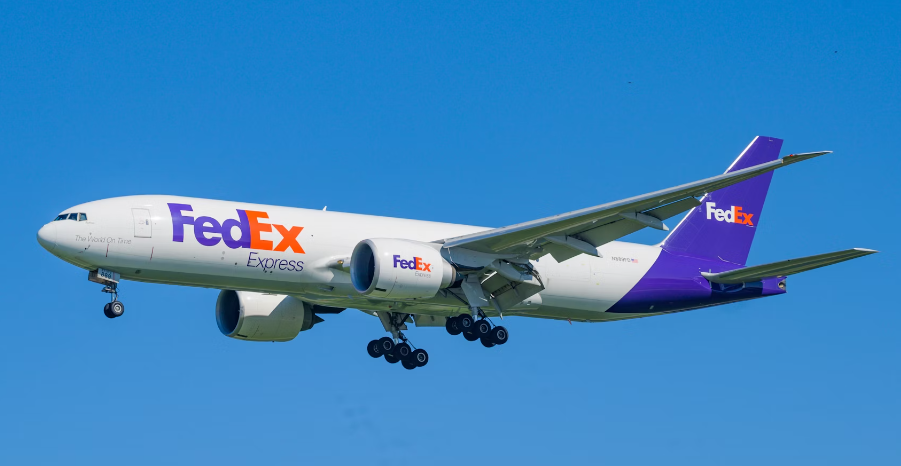
Unlike EMS, which relies on postal partnerships, FedEx manages its own aircraft fleet, sorting hubs, and delivery infrastructure.
FedEx offers several international services, including:
FedEx International Priority (1–3 days)
Same-day and overnight services
For international ecommerce shipments, FedEx often delivers within 2–5 days, making it significantly faster than most postal shipping solutions.
Because of this speed and reliability, FedEx is widely used for:
High-value goods
urgent deliveries
B2B shipments
However, this speed usually comes with higher costs.
EMS vs. FedEx: Key Differences for Ecommerce
Let’s examine the most important factors ecommerce businesses should consider.
Shipping Speed
Speed is often the first factor ecommerce sellers consider.
EMS Delivery Speed
EMS is faster than traditional postal shipping but slower than premium courier services.
Typical transit times:
China → USA: 5–15 business days
China → Europe: 7–14 days
Asia regional shipping: 3–7 days
These timelines can vary depending on customs processing and destination postal systems.
Because EMS relies on national postal services for final delivery,
delays sometimes occur during high-volume seasons.
FedEx Delivery Speed
FedEx is designed for express logistics.
Typical transit times:
International Priority: 1–3 days
International Economy: 3–7 days
Some routes from Asia to the United States may even arrive next business day depending on the service level.
Speed Verdict
If delivery time is critical, FedEx clearly wins.
However, for ecommerce products that are not urgent, EMS delivery speeds are often acceptable.
Shipping Costs
EMS Pricing
EMS is generally much cheaper than private courier services.
Typical shipping cost from China:
1 kg: $25–$30
5 kg: $65–$75
10 kg: $110–$130
The price per kilogram becomes more economical as shipment weight increases.
EMS works best for:
packages 2–10 kg
medium-value ecommerce orders ($30–$80)
FedEx Pricing
FedEx is more expensive due to faster transit and premium services.
International shipping costs often range between:
$20–$50 per kg depending on destination and service level.
Additionally, FedEx uses
dimensional weight pricing, meaning large but lightweight packages may cost more due to the space they occupy during transport.
Cost Verdict
For budget-conscious ecommerce sellers, EMS is usually the cheaper option.
FedEx becomes cost-effective when:
speed is essential
items are high value
customers expect premium shipping
Tracking and Visibility
Customers increasingly expect real-time tracking for their orders.
EMS Tracking
EMS provides basic tracking through postal networks.
Tracking events usually include:
shipment acceptance
export processing
final delivery
However, updates can be less frequent compared with private courier services.
FedEx Tracking
FedEx provides advanced real-time tracking, often including:
GPS-based package location
predictive delivery windows
delivery notifications
FedEx systems also integrate easily with ecommerce platforms and warehouse software.
Tracking Verdict
FedEx offers significantly more detailed tracking, which improves customer experience.
Customs Clearance
Customs processing is a critical part of cross-border ecommerce.
EMS Customs Process
EMS shipments are usually processed through national postal customs channels.
Advantages:
simpler procedures
often fewer documentation requirements
However, customs processing may be slower depending on the destination country.
FedEx Customs Process
FedEx has dedicated customs brokerage teams that handle documentation and clearance quickly.
Advantages include:
faster customs processing
assistance with duties and taxes
compliance support
However, FedEx may require more detailed documentation.
Customs Verdict
FedEx generally clears customs faster, while EMS may involve less paperwork.
Reliability and Delivery Success
Delivery reliability matters for ecommerce customer satisfaction.
Private courier networks typically perform slightly better in on-time delivery.
For example, recent logistics comparisons show:
Postal carriers slightly lower depending on region.
However, EMS reliability is still considered good for mid-speed international shipping.
Package Restrictions
Another practical difference involves shipping restrictions.
EMS often accepts certain items that private couriers restrict.
Examples may include:
cosmetics
electronics with batteries
sensitive goods
Postal systems tend to be more flexible with restricted goods, while private couriers apply stricter regulations.
For ecommerce sellers shipping specialty products, this can be an important factor.
EMS vs. FedEx Comparison Table
| Feature |
EMS |
FedEx |
| Delivery Speed |
5–15 days |
2–5 days |
| Cost |
Lower |
Higher |
| Tracking |
Basic |
Advanced |
| Customs |
Simple but slower |
Faster with brokerage |
| Reliability |
Good |
Very high |
| Ideal For |
Mid-range ecommerce shipping |
Urgent or high-value orders |
When Should Ecommerce Businesses Choose EMS?
EMS works best in several common ecommerce scenarios.
Budget Shipping
If your store offers free shipping or low-cost shipping options, EMS helps keep logistics costs manageable.
Medium-Value Products
Products priced between $20 and $80 often work well with EMS because the shipping cost stays proportional to the order value.
Non-Urgent Deliveries
If customers are willing to wait 1–2 weeks, EMS can be a cost-effective option.
Sensitive Items
Some products that private couriers reject may still ship via EMS.
When Should Ecommerce Businesses Choose FedEx?
FedEx is the better option in several cases.
High-Value Products
Luxury goods, electronics, and high-priced items benefit from faster and more secure delivery.
Time-Sensitive Orders
If customers expect delivery within a few days, FedEx is a better solution.
Premium Customer Experience
Fast shipping can improve customer satisfaction and reduce refund requests.
B2B or Wholesale Orders
Business buyers often expect fast, reliable delivery with professional tracking.
Hybrid Shipping Strategy for Ecommerce
Many successful ecommerce businesses don’t choose just one courier.
Instead, they use multiple shipping options depending on order type.
A common strategy looks like this:
| Order Type |
Recommended Carrier |
| Low-value items |
EMS |
| Standard ecommerce orders |
EMS or economy courier |
| High-value goods |
FedEx |
| Urgent shipments |
FedEx Priority |
Using a hybrid approach allows businesses to balance cost efficiency and customer experience.
The Role of 3PL in Shipping Decisions
For growing ecommerce businesses, managing multiple shipping carriers can become complex.
A good 3PL partner can:
integrate multiple courier networks
compare real-time shipping rates
automate label generation
manage customs documentation
For ecommerce brands shipping internationally from China, this type of logistics support can significantly simplify operations.
Conclusion
Choosing between EMS and FedEx ultimately comes down to a simple trade-off: cost versus speed.
EMS is an excellent option for ecommerce businesses that prioritize affordability and can accept slightly longer delivery times. It works well for medium-value goods and international standard shipping.
FedEx, on the other hand, provides faster delivery, superior tracking, and higher reliability. It is ideal for urgent shipments, high-value products, and businesses that want to offer premium delivery experiences.
For many ecommerce brands, the smartest approach is not choosing one over the other—but using both strategically.
FAQs
Is EMS cheaper than FedEx?
Yes. EMS is generally cheaper than FedEx, especially for international parcels between 2 kg and 10 kg.
Which is faster, EMS or FedEx?
FedEx is significantly faster. FedEx international shipping usually takes 2–5 days, while EMS typically takes 5–15 days.
Is EMS reliable for ecommerce shipping?
Yes. EMS is considered reliable for mid-speed international shipping and provides standard tracking through postal networks.
Does FedEx handle customs better than EMS?
FedEx usually clears customs faster because it has dedicated customs brokerage services.
Can ecommerce businesses use both EMS and FedEx?
Yes. Many ecommerce sellers use EMS for standard orders and FedEx for urgent or high-value shipments.





 Post Views:1627
 TAGS:
TAGS:
 Want to know about our services, fees or receive a custom quote?